劊

See also: 刽
劊 U+528A, 劊
CJK UNIFIED IDEOGRAPH-528A
← 劉
[U+5289]
CJK Unified Ideographs 劋 →
[U+528B]

Translingual

Han character

劊 (Kangxi radical 18, 刀+13, 15 strokes, cangjie input 人日中弓 (OALN), four-corner 82600, composition ⿰會刂)

References

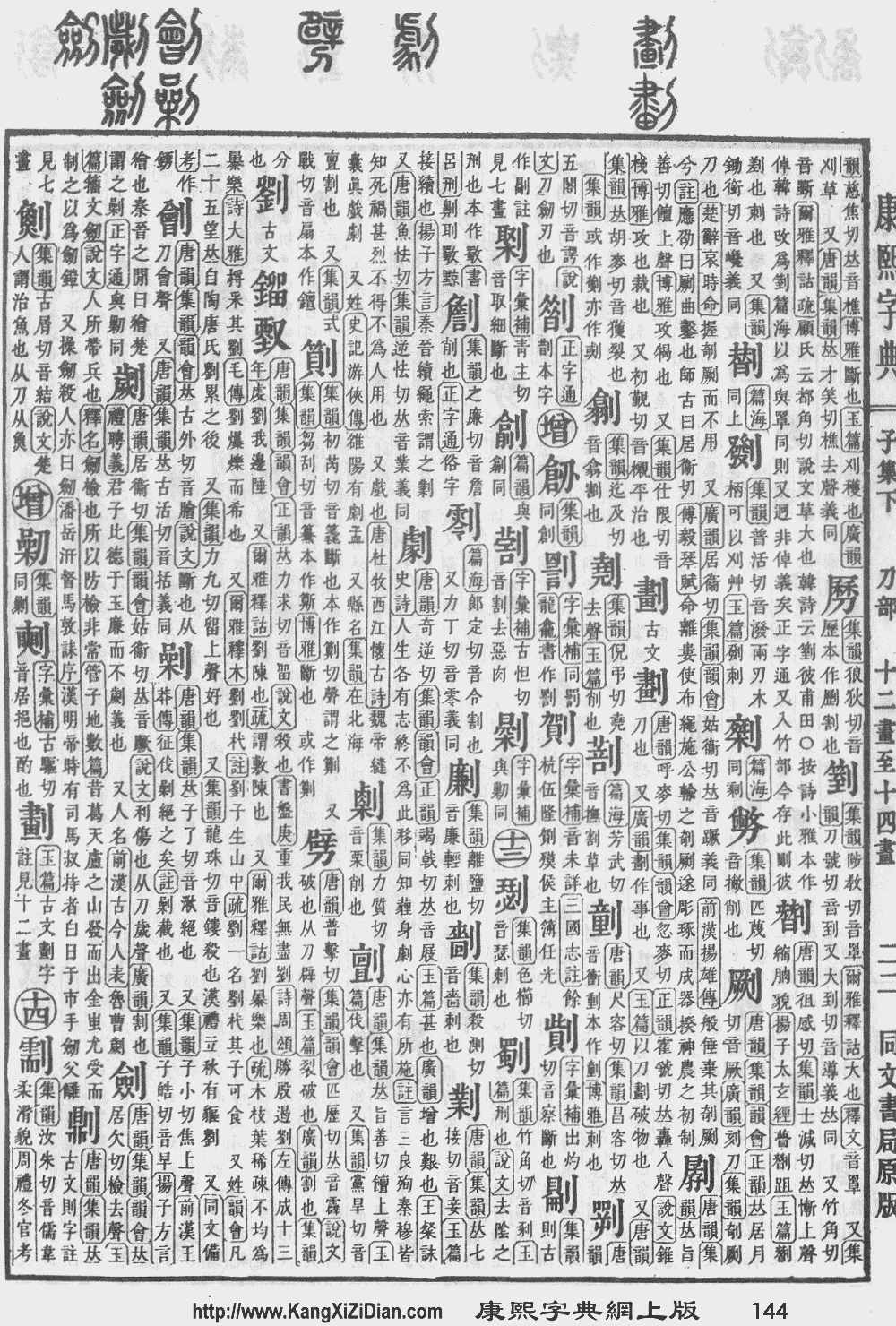
  • Kangxi Dictionary: page 144, character 42
  • Dai Kanwa Jiten: character 2225
  • Dae Jaweon: page 326, character 1
  • Hanyu Da Zidian (first edition): volume 1, page 359, character 1
  • Unihan data for U+528A

Chinese

trad. 劊
simp. 刽

Glyph origin

Pronunciation


Rime
Character 劊 劊
Reading # 1/2 2/2
Initial (聲) 見 (28) 見 (28)
Final (韻) 泰 (26) 末 (64)
Tone (調) Departing (H) Checked (Ø)
Openness (開合) Closed Closed
Division (等) I I
Fanqie 古外切 古活切
Baxter kwajH kwat
Reconstructions
Zhengzhang
Shangfang
/kuɑiH/ /kuɑt̚/
Pan
Wuyun
/kʷɑiH/ /kʷɑt̚/
Shao
Rongfen
/kuɑiH/ /kuɑt̚/
Edwin
Pulleyblank
/kwajH/ /kwat̚/
Li
Rong
/kuɑiH/ /kuɑt̚/
Wang
Li
/kuɑiH/ /kuɑt̚/
Bernard
Karlgren
/kuɑiH/ /kuɑt̚/
Expected
Mandarin
Reflex
guì guo
Expected
Cantonese
Reflex
gui3 gut3
Zhengzhang system (2003)
Character 劊 劊
Reading # 1/2 2/2
No. 5505 5520
Phonetic
component
會 會
Rime
group
蓋 月
Rime
subdivision
3 3
Corresponding
MC rime
儈 括
Old
Chinese
/*koːbs/ /*koːd/

Definitions

劊

  1. (literary) to sever; to cut off; to chop off
  2. † to cut open

Compounds

Japanese

Kanji

劊

(uncommon “Hyōgai” kanji, kyūjitai kanji, shinjitai form 刽)

  1. This term needs a translation to English. Please help out and add a translation, then remove the text {{rfdef}}.

Readings

  • On (unclassified): かい (kai); け (ke); かつ (katsu)
  • Kun: たつ (tatsu)

Korean

Hanja

劊 • (hoe, goe) (hangeul 회, 괴, revised hoe, goe, McCune–Reischauer hoe, koe)

  1. This term needs a translation to English. Please help out and add a translation, then remove the text {{rfdef}}.
This article is issued from Wiktionary. The text is licensed under Creative Commons - Attribution - Sharealike. Additional terms may apply for the media files.