古
| ||||||||
Translingual
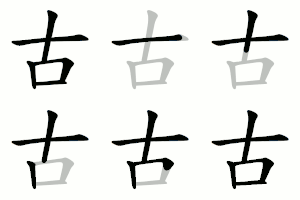
| Stroke order | |||
|---|---|---|---|
 | |||
| Stroke order | |||
|---|---|---|---|
 | |||
Han character
古 (Kangxi radical 30, 口+2, 5 strokes, cangjie input 十口 (JR), four-corner 40600, composition ⿱十口)
- Shuowen Jiezi radical №53
Derived characters
References
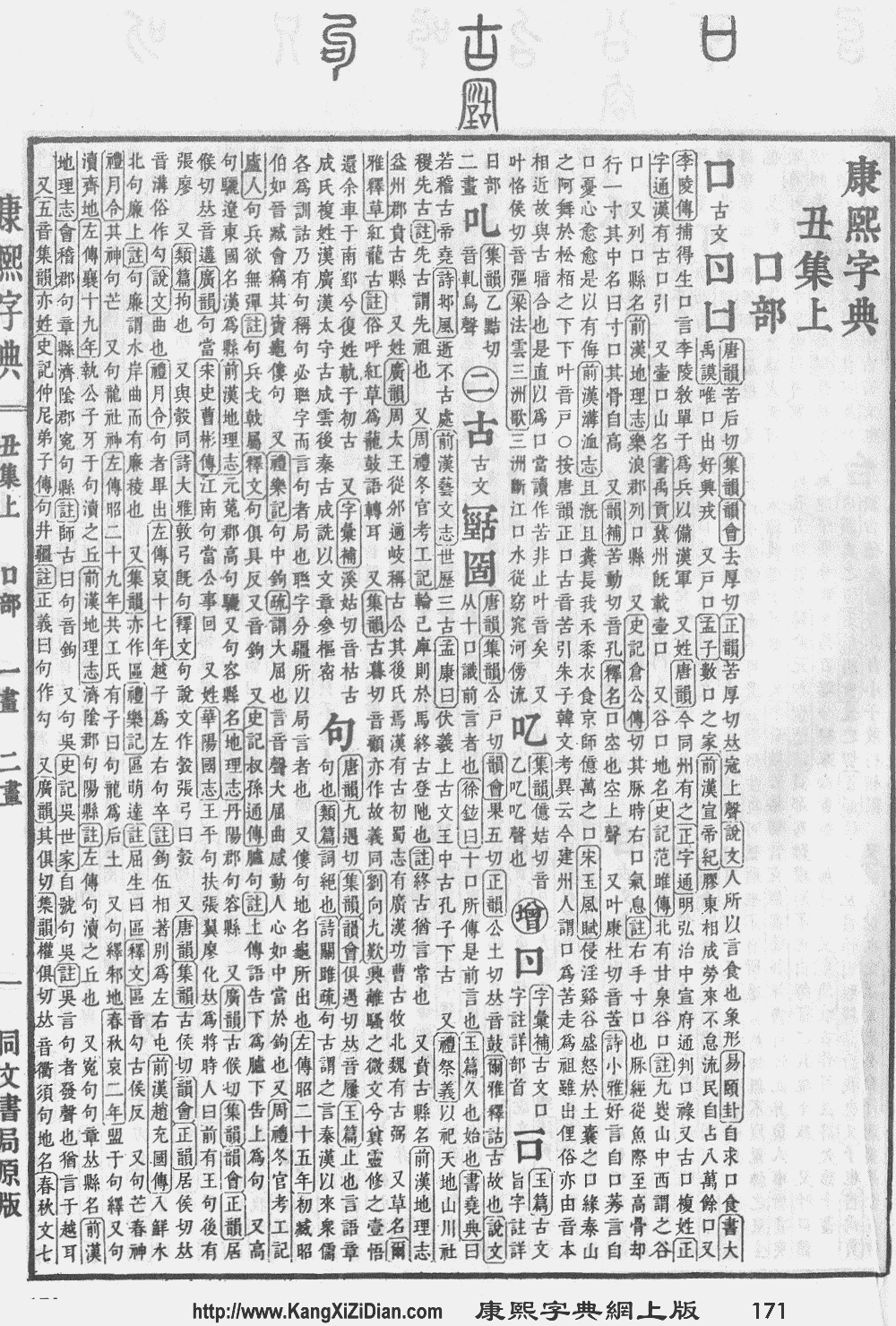
- Kangxi Dictionary: page 171, character 8
- Dai Kanwa Jiten: character 3233
- Dae Jaweon: page 380, character 6
- Hanyu Da Zidian (first edition): volume 1, page 568, character 3
- Unihan data for U+53E4
Chinese
| simp. and trad. |
古 | |
|---|---|---|
| alternative forms | 𠖠 ‡ 故 Cantonese "story" | |
Glyph origin
| Historical forms of the character 古 | ||||
|---|---|---|---|---|
| Shang | Western Zhou | Warring States | Shuowen Jiezi (compiled in Han) | Liushutong (compiled in Ming) |
| Oracle bone script | Bronze inscriptions | Chu slip and silk script | Small seal script | Transcribed ancient scripts |
 |
 |
 |
 |
 |
Characters in the same phonetic series (古) (Zhengzhang, 2003)
| Old Chinese | |
|---|---|
| 箇 | *kaːls |
| 個 | *kaːls |
| 居 | *kɯ, *kas |
| 橭 | *kaː, *kʰaː |
| 嫴 | *kaː |
| 姑 | *kaː |
| 辜 | *kaː |
| 酤 | *kaː, *kaːs, *ɡaːʔ |
| 蛄 | *kaː |
| 鴣 | *kaː |
| 沽 | *kaː, *kaːʔ, *kaːs |
| 盬 | *kaː, *kaːʔ |
| 古 | *kaːʔ |
| 罟 | *kaːʔ |
| 估 | *kaːʔ |
| 鈷 | *kaːʔ |
| 詁 | *kaːʔ |
| 牯 | *kaːʔ |
| 故 | *kaːs |
| 固 | *kaːs |
| 稒 | *kaːɡs |
| 痼 | *kaːɡs |
| 錮 | *kaːɡs |
| 鯝 | *kaːɡs |
| 棝 | *kaːɡs |
| 凅 | *kaːɡs |
| 枯 | *kʰaː |
| 軲 | *kʰaː |
| 跍 | *kʰaː |
| 骷 | *kʰaː |
| 苦 | *kʰaːʔ, *kʰaːs |
| 葫 | *qʰaː, *ɡaː |
| 餬 | *ɡaː |
| 瑚 | *ɡaː |
| 湖 | *ɡaː |
| 鶘 | *ɡaː |
| 猢 | *ɡaː |
| 醐 | *ɡaː |
| 糊 | *ɡaː |
| 箶 | *ɡaː |
| 蝴 | *ɡaː |
| 胡 | *ɡaː |
| 瓳 | *ɡaː |
| 怙 | *ɡaːʔ |
| 祜 | *ɡaːʔ |
| 岵 | *ɡaːʔ |
| 婟 | *ɡaːʔ, *ɡaːɡs |
| 楛 | *ɡaːʔ |
| 据 | *ka |
| 裾 | *ka |
| 琚 | *ka |
| 椐 | *ka, *kas, *kʰa |
| 鶋 | *ka |
| 蜛 | *ka |
| 崌 | *ka |
| 涺 | *ka |
| 腒 | *ka, *ɡa |
| 鋸 | *kas |
| 倨 | *kas |
| 踞 | *kas |
| 涸 | *ɡaːɡ |
Unknown.
Fang (1982) finds evidence for the 十 component originally being a depiction of a piece of food and the character originally being a depiction of someone spitting out a piece of food. Thus, Fang argues this character is the original form of 苦 (kǔ).
Shuowen: Ideogrammic compound (會意/会意) : 十 (“ten”) + 口 (“mouth”).
Etymology
From Proto-Sino-Tibetan *r-ga (“old”). Cognate with 故 (OC *kaːs, “old things; former; dead”) and Tibetan རྒ (rga, “to be old; aged”).
Pronunciation 1
Definitions
古
Compounds
- 七古
- 上古 (shànggǔ)
- 不古
- 中古 (zhōnggǔ)
- 五古
- 亙古/亘古 (gèngǔ)
- 仿古 (fǎnggǔ)
- 作古 (zuògǔ)
- 來古/来古
- 先古 (xiāngǔ)
- 千古 (qiāngǔ)
- 博古 (bógǔ)
- 反古 (fǎngǔ)
- 口古月
- 古井 (gǔjǐng)
- 古井無波/古井无波
- 古人 (gǔrén)
- 古今 (gǔjīn)
- 古今中外 (gǔjīnzhōngwài)
- 古代 (gǔdài)
- 古作
- 古來/古来 (gǔlái)
- 古例
- 古典 (gǔdiǎn)
- 古典主義/古典主义 (gǔdiǎnzhǔyì)
- 古冊/古册 (kó͘-chheh) (Min Nan)
- 古制 (gǔzhì)
- 古剎/古刹 (gǔchà)
- 古勁/古劲
- 古勒巴格 (Gǔlèbāgé)
- 古動物學/古动物学 (gǔdòngwùxué)
- 古厝 (gǔcuò)
- 古史 (gǔshǐ)
- 古國/古国 (gǔguó)
- 古坑 (Gǔkēng)
- 古城 (gǔchéng)
- 古城口 (Gǔchéngkǒu)
- 古堡
- 古墓 (gǔmù)
- 古夫 (Gǔfū)
- 古奧/古奥
- 古妝/古妆
- 古始
- 古姆 (Gǔmǔ)
- 古學/古学
- 古寫/古写
- 古寺
- 古屋 (gǔwū)
- 古山 (Gǔshān)
- 古巴 (Gǔbā)
- 古幣/古币 (gǔbì)
- 古廟/古庙 (gǔmiào)
- 古式 (gǔshì)
- 古往今來/古往今来 (gǔwǎngjīnlái)
- 古德
- 古怪 (gǔguài)
- 古意 (gǔyì)
- 古憋
- 古拙 (gǔzhuó)
- 古文 (gǔwén)
- 古文字 (gǔwénzì)
- 古方 (gǔfāng)
- 古方兒/古方儿
- 古早 (gǔzǎo)
- 古昔 (gǔxī)
- 古時/古时 (gǔshí)
- 古晉/古晋 (Gǔjìn)
- 古曆/古历
- 古書/古书 (gǔshū)
- 古本 (gǔběn)
- 古板 (gǔbǎn)
- 古柯 (gǔkē)
- 古植物學/古植物学 (gǔzhíwùxué)
- 古樓/古楼 (Gǔlóu)
- 古槧/古椠
- 古樂/古乐 (gǔyuè)
- 古樸/古朴 (gǔpǔ)
- 古橋溝/古桥沟 (Gǔqiáogōu)
- 古氣/古气
- 古江巴格 (Gǔjiāngbāgé)
- 古法
- 古渡 (gǔdù)
- 古為今用/古为今用
- 古爾邦節/古尔邦节 (Gǔ'ěrbāngjié)
- 古物 (gǔwù)
- 古猿
- 古玉
- 古玩 (gǔwán)
- 古琴 (gǔqín)
- 古瓷
- 古生代 (Gǔshēng Dài)
- 古生物 (gǔshēngwù)
- 古生界
- 古畫/古画 (gǔhuà)
- 古白文 (gǔbáiwén)
- 古石 (Gǔshí)
- 古磚/古砖
- 古祠
- 古稀 (gǔxī)
- 古箏/古筝 (gǔzhēng)
- 古籀
- 古籍 (gǔjí)
- 古老 (gǔlǎo)
- 古老肉
- 古者 (gǔzhě)
- 古舊/古旧 (gǔjiù)
- 古色古香 (gǔsègǔxiāng)
- 古茶
- 古董 (gǔdǒng)
- 古蘭經/古兰经 (Gǔlánjīng)
- 古裝/古装 (gǔzhuāng)
- 古記/古记
- 古訓/古训 (gǔxùn)
- 古話/古话 (gǔhuà)
- 古詩/古诗 (gǔshī)
- 古語/古语 (gǔyǔ)
- 古調不彈/古调不弹
- 古諺/古谚 (gǔyàn)
- 古賦/古赋
- 古賢/古贤 (gǔxián)
- 古趣
- 古路 (Gǔlù)
- 古跡/古蹟/古迹 (gǔjì)
- 古道 (gǔdào)
- 古遊/古游
- 古道熱腸/古道热肠 (gǔdàorècháng)
- 古遠/古远
- 古邈
- 古都 (gǔdū)
- 古鄰/古邻
- 古銅/古铜
- 古銅色/古铜色 (gǔtóngsè)
- 古錢/古钱 (gǔqián)
- 古錐/古锥 (kó͘-chui) (Min Nan)
- 古門/古门
- 古陸/古陆
- 古隸/古隶
- 古雅 (gǔyǎ)
- 古音 (gǔyīn)
- 古韻/古韵 (gǔyùn)
- 古風/古风 (gǔfēng)
- 古驛/古驿 (Gǔyì)
- 古體詩/古体诗 (gǔtǐshī)
- 唐古拉 (Tánggǔlā)
- 大古
- 太古 (tàigǔ)
- 好古 (hàogǔ)
- 存古 (cúngǔ)
- 希古
- 師古/师古
- 弔古/吊古
- 往古
- 待古
- 徐古 (Xúgǔ)
- 復古/复古 (fùgǔ)
- 慕古
- 懷古/怀古 (huáigǔ)
- 振古
- 擬古/拟古 (nǐgǔ)
- 敻古
- 暮古
- 曠古/旷古 (kuànggǔ)
- 汲古 (jígǔ)
- 泥古 (nìgǔ)
- 治古
- 海西蒙古族藏族自治州
- 淳古
- 特古
- 玍古 (gǎgu)
- 疑古 (yígǔ)
- 盤古/盘古 (Pángǔ)
- 盤古壋/盘古垱 (Pángǔdàng)
- 萬古/万古 (wàngǔ)
- 秦古 (Qíngǔ)
- 稽古 (jīgǔ)
- 積古/积古
- 終古/终古 (zhōnggǔ)
- 考古 (kǎogǔ)
- 肅北蒙古族自治縣/肃北蒙古族自治县
- 自古 (zìgǔ)
- 艾古斯 (Àigǔsī)
- 花古 (Huāgǔ)
- 蒙古 (měnggǔ)
- 蒙古族 (měnggǔzú)
- 覽古/览古 (lǎngǔ)
- 訪古/访古
- 說古/说古
- 講古/讲古
- 譀古/𰶆古 (hàm-kó͘) (Min Nan)
- 變古/变古
- 轢古/轹古
- 近古 (jìngǔ)
- 述古
- 遠古/远古 (yuǎngǔ)
- 邃古 (suìgǔ)
- 門古寺/门古寺 (Méngǔsì)
- 高古
Pronunciation 2
Pronunciation 3
Definitions
古
- † Only used in 古成.
References
- “古”, in 漢語多功能字庫 (Multi-function Chinese Character Database), 香港中文大學 (the Chinese University of Hong Kong), 2014–
Japanese
Readings
Compounds
Etymology 1
| Kanji in this term |
|---|
| 古 |
| いにしえ Grade: 2 |
| kun’yomi |
| For pronunciation and definitions of 古 – see the following entry. | ||
| ||
| (This term, 古, is an alternative spelling of the above term.) |
Etymology 2
| Kanji in this term |
|---|
| 古 |
| ふる Grade: 2 |
| kun’yomi |
| Alternative spellings |
|---|
| 旧 故 |
Stem of adjective 古い (furui, “old”).
References
- Matsumura, Akira, editor (2006), 大辞林 [Daijirin] (in Japanese), Third edition, Tōkyō: Sanseidō, →ISBN
Korean
Compounds
Compounds
- 고금 (古琴, gogeum, “guqin, Chinese zither”)
- 고고 (考古, gogo)
- 고고학 (考古學, gogohak, “archaeology”)
- 고전 (古典, gojeon, “classic”)
- 고어 (古語, go'eo, “archaism”)
- 고옥 (古屋, gook)
- 고조선 (古朝鮮, gojoseon, “Gojoseon”)
- 고풍 (古風, gopung, “old customs, antique”)
- 고서 (古書, goseo)
- 중고 (中古, junggo)
- 몽고 (蒙古, monggo, “Mongolia”)
- 상고 (上古, sanggo)
Vietnamese
Han character
古: Hán Việt readings: cổ (
古: Nôm readings: cổ[1][2][4][5][6], cỗ[2][3][7][4][6], của[1][2], có[1], cỏ[1], kẻ[3]
References
- Nguyễn (2014).
- Nguyễn et al. (2009).
- Trần (2004).
- Bonet (1899).
- Génibrel (1898).
- Taberd & Pigneau de Béhaine (1838).
- Hồ (1976).
This article is issued from Wiktionary. The text is licensed under Creative Commons - Attribution - Sharealike. Additional terms may apply for the media files.