匕

See also: ヒ, ビ, ピ, 七, and 𠤎
匕 U+5315, 匕
CJK UNIFIED IDEOGRAPH-5315
← 匔
[U+5314]
CJK Unified Ideographs 化 →
[U+5316]
⼔ U+2F14, ⼔
KANGXI RADICAL SPOON
← ⼓
[U+2F13]
Kangxi Radicals ⼕ →
[U+2F15]

Translingual

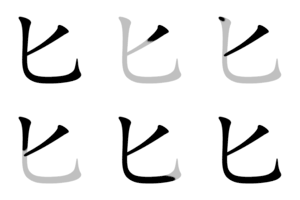
Stroke order

Alternative forms

  • In Taiwan, the upper right stroke of 匕 is written with a straight line (一) from left to right.
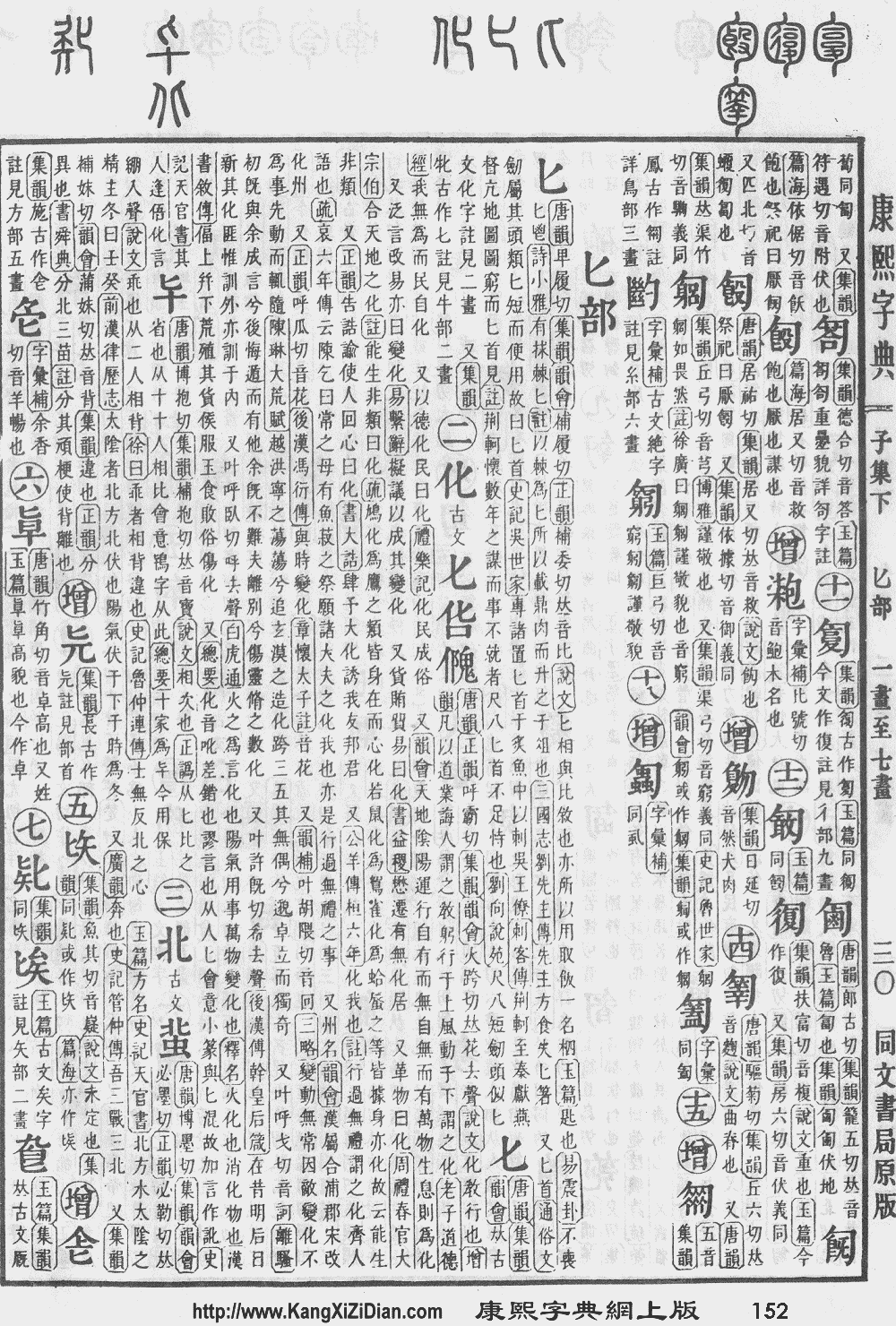
  • In other regions, the upper right stroke of 匕 is written with a curve (丿) from the top right corner towards the middle left, which is also the historical form found in the Kangxi Dictionary.

Han character

匕 (Kangxi radical 21, 匕+0, 2 strokes, cangjie input 山竹 (UH), four-corner 22710, composition ⿺乚丿(GJKH) or ⿺乚一(T))

  1. Kangxi radical #21, ⼔.

Derived characters

Further reading

Wikisource

  • Kangxi Dictionary: page 152, character 18
  • Dai Kanwa Jiten: character 2570
  • Dae Jaweon: page 342, character 2
  • Hanyu Da Zidian (first edition): volume 1, page 261, character 15
  • Unihan data for U+5315

Chinese

trad. 匕
simp. # 匕

Glyph origin

Historical forms of the character 匕
Shang Western Zhou Warring States Shuowen Jiezi (compiled in Han) Liushutong (compiled in Ming)
Bronze inscriptions Oracle bone script Bronze inscriptions Chu slip and silk script Small seal script Transcribed ancient scripts

Pictogram (象形) – a spoon.

Pronunciation


Rime
Character 匕
Reading # 1/1
Initial (聲) 幫 (1)
Final (韻) 脂 (15)
Tone (調) Rising (X)
Openness (開合) Open
Division (等) III
Fanqie 卑履切
Baxter pjijX
Reconstructions
Zhengzhang
Shangfang
/piɪX/
Pan
Wuyun
/piX/
Shao
Rongfen
/pjɪX/
Edwin
Pulleyblank
/piX/
Li
Rong
/piX/
Wang
Li
/piX/
Bernard
Karlgren
/piX/
Expected
Mandarin
Reflex
bǐ
Expected
Cantonese
Reflex
bei2
Baxter–Sagart system 1.1 (2014)
Character 匕 匕
Reading # 1/2 2/2
Modern
Beijing
(Pinyin)
bǐ bǐ
Middle
Chinese
‹ pjijX › ‹ pjijX ›
Old
Chinese
/*pijʔ/ /*pijʔ/
English ladle, spoon spoon

Notes for Old Chinese notations in the Baxter–Sagart system:

* Parentheses "()" indicate uncertain presence;
* Square brackets "[]" indicate uncertain identity, e.g. *[t] as coda may in fact be *-t or *-p;
* Angle brackets "<>" indicate infix;
* Hyphen "-" indicates morpheme boundary;

* Period "." indicates syllable boundary.
Zhengzhang system (2003)
Character 匕
Reading # 1/1
No. 484
Phonetic
component
匕
Rime
group
脂
Rime
subdivision
1
Corresponding
MC rime
匕
Old
Chinese
/*pilʔ/

Definitions

匕

  1. (historical) a kind of spoon in ancient China
  2. (literary) dagger
  3. † arrow
  4. † people
  5. ‡ Original form of 妣 (bǐ, “deceased mother”).

Compounds

Etymology 2

For pronunciation and definitions of 匕 – see 牝 (“(of an animal) female”).
(This character is recorded in one or more historical dictionaries as a variant form of 牝).

Japanese

Kanji

匕

(uncommon “Hyōgai” kanji)

Readings

  • Go-on: ひ (hi)
  • Kan-on: ひ (hi)
  • Kun: さじ (saji, 匕)

Compounds

Definitions

Kanji in this term
匕
ひ
Hyōgaiji
on’yomi
Kanji in this term
匕
さじ
Hyōgaiji
kun’yomi
For pronunciation and definitions of 匕 – see the following entry.
【匙ひ】H
[affix] spoon, scoop
【匙かい】H
[noun] (obsolete) a scoop for food
[noun] (archaic, rare) a wooden sword for training
【匙さじ】H
[noun] spoon, scoop used for food
[noun] more specifically, a spoon or scoop used for compounding medicine
[noun] by extension, medicine
[noun] by further extension, a doctor
(This term, 匕, is an alternative spelling of the above term.)

Korean

Hanja

匕 (eumhun 비수 비 (bisu bi))

  1. spoon
  2. dagger

Vietnamese

Han character

匕: Hán Nôm readings: chủy/chuỷ

匕 is used as an iteration marker here such as in the line, 埃匕𠳺匕麻𦖑 (Ai ai lẳng lặng mà nghe)
  1. In Vietnamese Hán Nôm texts, 匕 is used as an iteration marker.
This article is issued from Wiktionary. The text is licensed under Creative Commons - Attribution - Sharealike. Additional terms may apply for the media files.