化
| ||||||||
Translingual
| Stroke order | |||
|---|---|---|---|
 | |||
Han character
化 (Kangxi radical 21, 匕+2, 4 strokes, cangjie input 人心 (OP), four-corner 24210, composition ⿰亻𠤎(GV) or ⿰亻匕(HTJK))
Derived characters
References
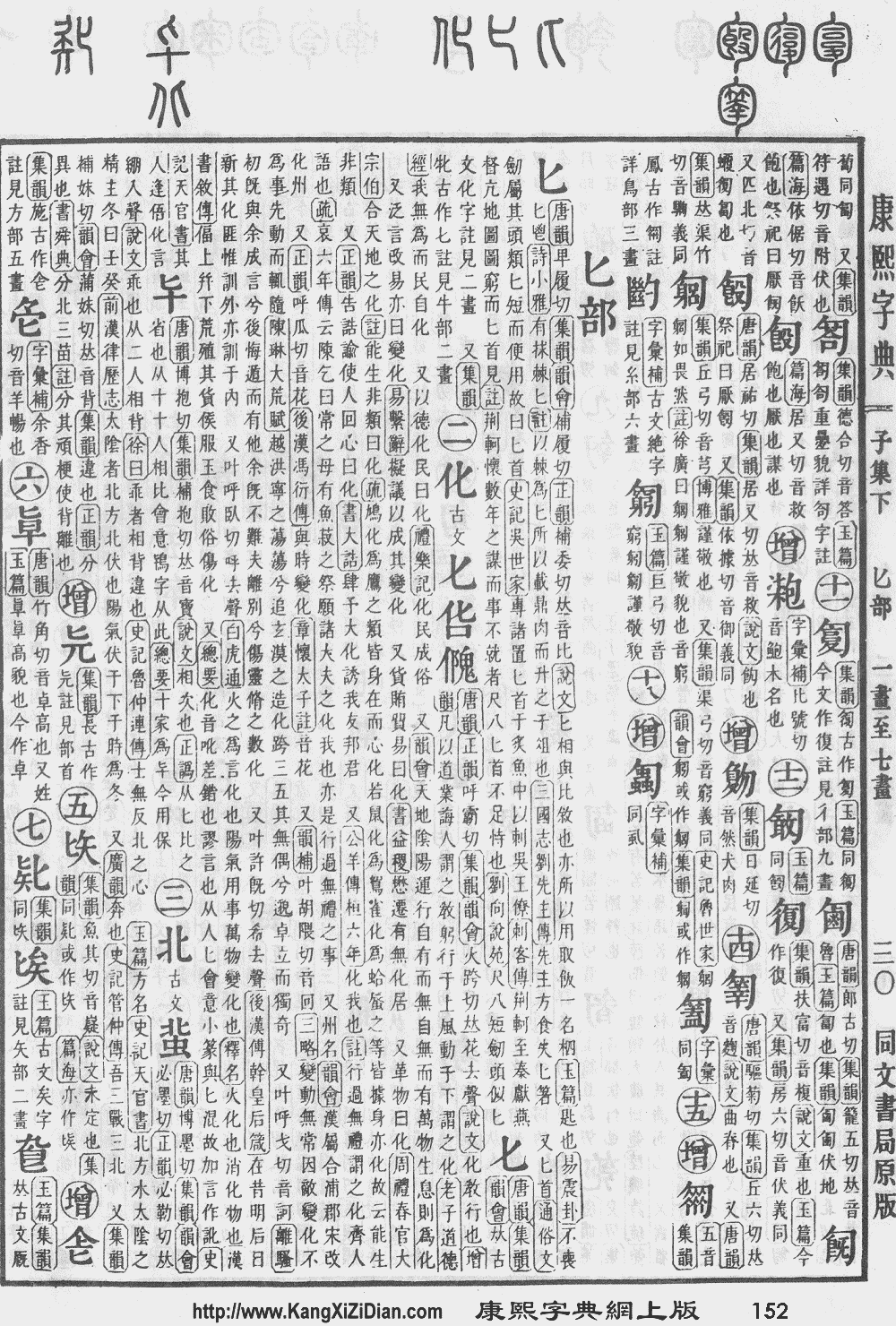
- Kangxi Dictionary: page 152, character 20
- Dai Kanwa Jiten: character 2572
- Dae Jaweon: page 342, character 4
- Hanyu Da Zidian (first edition): volume 1, page 109, character 4
- Unihan data for U+5316
Chinese
| trad. | 化 | |
|---|---|---|
| simp. # | 化 | |
| alternative forms | 㐶 | |
Glyph origin
| Historical forms of the character 化 | ||||
|---|---|---|---|---|
| Shang | Western Zhou | Warring States | Shuowen Jiezi (compiled in Han) | Liushutong (compiled in Ming) |
| Oracle bone script | Bronze inscriptions | Chu slip and silk script | Small seal script | Transcribed ancient scripts |
 |
 |
 |
 |
 |
Characters in the same phonetic series (化) (Zhengzhang, 2003)
Ideogrammic compound (會意/会意) of two 人 (“person”), one upright (亻) and one upside down (𠤎) — reversal; change. Shuowen also considers 𠤎 to be a phonetic component.
Pronunciation
Definitions
化
- to change; to transform
- to become; to turn into
- † to die
- to melt
- to dissolve
- Suffix denoting "change into ...". Akin to English -ize and -ization.
- 民主化 ― mínzhǔhuà ― democratize
- (chemistry) Affix denoting combination.
- Short for 教化 (jiàohuà, “enlightenment; cultivation”).
- (in compounds) Short for 化學/化学 (huàxué, “chemistry”).
- to burn (clarification of this definition is needed)
- 化寶/化宝 ― huàbǎo ― to burn offerings
- (Cantonese) open-minded; enlightened
Compounds
- 一元化 (yīyuánhuà)
- 一氧化物 (yīyǎnghuàwù)
- 一氧化碳 (yīyǎnghuàtàn)
- 一胎化 (yītāihuà)
- 三化螟蟲/三化螟虫
- 不化 (bùhuà)
- 不言而化
- 乘化
- 乞化
- 乳化 (rǔhuà)
- 二化螟
- 二氧化硫 (èryǎnghuàliú)
- 二氧化碳 (èryǎnghuàtàn)
- 二氧化鈦/二氧化钛 (èryǎnghuàtài)
- 二氧化錳/二氧化锰 (èryǎnghuàměng)
- 亡化
- 人口老化
- 人格化 (réngéhuà)
- 企業化/企业化 (qǐyèhuà)
- 仰韶文化
- 俗化
- 催化 (cuīhuà)
- 催化劑/催化剂 (cuīhuàjì)
- 傷化敗俗/伤化败俗
- 傳統文化/传统文化
- 僵化 (jiānghuà)
- 優養化/优养化
- 元化
- 光化 (Guānghuà)
- 光化作用
- 光化學/光化学 (guānghuàxué)
- 光天化日 (guāngtiānhuàrì)
- 兒化/儿化 (érhuà)
- 兒化音/儿化音 (érhuàyīn)
- 兒化韻/儿化韵 (érhuàyùn)
- 兩極化/两极化
- 公式化
- 具體化/具体化 (jùtǐhuà)
- 最適化/最适化 (zuìshìhuà)
- 出神入化 (chūshénrùhuà)
- 分化 (fēnhuà)
- 分析化學/分析化学 (fēnxī huàxué)
- 制度化 (zhìdùhuà)
- 刺激類化/刺激类化
- 剋化/克化
- 副文化
- 劍化/剑化
- 劣化 (lièhuà)
- 劣化警報/劣化警报
- 動脈硬化/动脉硬化 (dòngmài yìnghuà)
- 募化 (mùhuà)
- 勸化/劝化
- 化世
- 化人場/化人场 (huàrénchǎng)
- 化作 (huàzuò)
- 化俗
- 化出化入
- 化分 (huàfēn)
- 化去 (huàqù)
- 化合 (huàhé)
- 化名 (huàmíng)
- 化合物 (huàhéwù)
- 化境 (huàjìng)
- 化外 (huàwài)
- 化外之地 (huàwàizhīdì)
- 化妝/化妆 (huàzhuāng)
- 化妝劇/化妆剧
- 化妝品/化妆品 (huàzhuāngpǐn)
- 化妝箱/化妆箱
- 化學/化学 (huàxué)
- 化學作用/化学作用
- 化學元素/化学元素 (huàxué yuánsù)
- 化學分析/化学分析 (huàxué fēnxī)
- 化學反應/化学反应 (huàxué fǎnyìng)
- 化學家/化学家 (huàxuéjiā)
- 化學工業/化学工业 (huàxué gōngyè)
- 化學式/化学式 (huàxuéshì)
- 化學性質/化学性质 (huàxué xìngzhì)
- 化學戰/化学战 (huàxuézhàn)
- 化學戰劑/化学战剂
- 化學武器/化学武器 (huàxué wǔqì)
- 化學治療/化学治疗 (huàxué zhìliáo)
- 化學當量/化学当量 (huàxué dāngliàng)
- 化學療法/化学疗法 (huàxué liáofǎ)
- 化學符號/化学符号
- 化學纖維/化学纤维 (huàxué xiānwéi)
- 化學肥料/化学肥料 (huàxué féiliào)
- 化學能/化学能 (huàxuénéng)
- 化學變化/化学变化 (huàxué biànhuà)
- 化學鍵/化学键 (huàxuéjiàn)
- 化州 (Huàzhōu)
- 化工 (huàgōng)
- 化度
- 化度寺碑
- 化形
- 化性
- 化敵為友/化敌为友 (huàdíwéiyǒu)
- 化整為零/化整为零 (huàzhěngwéilíng)
- 化暗為明/化暗为明
- 化武 (huàwǔ)
- 化民
- 化油器 (huàyóuqì)
- 化為泡影/化为泡影 (huàwéi pàoyǐng)
- 化為烏有/化为乌有 (huàwéiwūyǒu)
- 化瓦糧/化瓦粮
- 化生 (huàshēng)
- 化痰 (huàtán)
- 化石 (huàshí)
- 化石學/化石学
- 化糞池/化粪池 (huàfènchí)
- 化紙/化纸
- 化緣/化缘 (huàyuán)
- 化繁為簡/化繁为简 (huàfánwéijiǎn)
- 化纖/化纤 (huàxiān)
- 化育 (huàyù)
- 化膿/化脓 (huànóng)
- 化蝶
- 化裝/化装 (huàzhuāng)
- 化裝舞會/化装舞会
- 化解 (huàjiě)
- 化誨/化诲
- 化身 (huàshēn)
- 化除 (huàchú)
- 化險為夷/化险为夷 (huà xiǎn wéi yí)
- 化雨 (huàyǔ)
- 化雨春風/化雨春风 (huàyǔchūnfēng)
- 化零為整/化零为整
- 化驗/化验 (huàyàn)
- 化驗單/化验单 (huàyàndān)
- 化鴟為鳳/化鸱为凤
- 化鶴/化鹤
- 化齋/化斋
- 化龍堰/化龙堰 (Huàlóngyàn)
- 千變萬化/千变万化 (qiānbiànwànhuà)
- 半開化/半开化
- 卑南文化
- 南化 (Nánhuà)
- 南化塘 (Nánhuàtáng)
- 反文化
- 向化
- 同化 (tónghuà)
- 同化作用 (tónghuà zuòyòng)
- 合法化 (héfǎhuà)
- 合理化 (hélǐhuà)
- 善化 (Shànhuà)
- 四化 (Sìhuà)
- 固有文化
- 國防化學/国防化学
- 國際化/国际化 (guójìhuà)
- 土質液化/土质液化
- 地下化
- 坐化 (zuòhuà)
- 執而不化/执而不化
- 多元化 (duōyuánhuà)
- 多樣化/多样化 (duōyànghuà)
- 多角化
- 大化 (Dàhuà)
- 大化革新
- 大河文化
- 大眾化/大众化 (dàzhònghuà)
- 大眾文化/大众文化 (dàzhòng wénhuà)
- 大而化之 (dà'érhuàzhī)
- 天地造化
- 天生天化
- 奴化 (núhuà)
- 好造化
- 妖化
- 妨害風化/妨害风化
- 威化餅/威化饼 (wēihuàbǐng)
- 孵化 (fūhuà)
- 孵化期
- 宣化 (xuānhuà)
- 專業化/专业化 (zhuānyèhuà)
- 尖銳化/尖锐化 (jiānruìhuà)
- 崇化厲俗/崇化厉俗
- 工作簡化/工作简化
- 工業化/工业化 (gōngyèhuà)
- 巧同造化
- 巨石文化
- 市場深化/市场深化
- 年輕化/年轻化 (niánqīnghuà)
- 幻化 (huànhuà)
- 幾化/几化
- 弱化 (ruòhuà)
- 強化/强化 (qiánghuà)
- 強化玻璃/强化玻璃
- 強化食品/强化食品
- 彌生文化/弥生文化
- 形象化
- 彩陶文化
- 彰化 (Zhānghuà)
- 彰化孔廟/彰化孔庙
- 得沾化雨
- 德化 (déhuà)
- 怛化
- 惡化/恶化 (èhuà)
- 愚化
- 感化 (gǎnhuà)
- 感化教育
- 感化院 (gǎnhuàyuàn)
- 愛琴文化/爱琴文化
- 慕化
- 成化 (Chénghuà)
- 成化窯/成化窑
- 打化
- 抄化
- 抗氧化劑/抗氧化剂 (kàngyǎnghuàjì)
- 擬人化/拟人化 (nǐrénhuà)
- 放射化學/放射化学 (fàngshè huàxué)
- 政治文化
- 敗俗傷化/败俗伤化
- 教化 (jiàohuà)
- 敗化傷風/败化伤风
- 敦化 (Dūnhuà)
- 數位化/数位化 (shùwèihuà)
- 敷化 (fūhuà)
- 文化 (wénhuà)
- 文化事業/文化事业
- 文化交流 (wénhuà jiāoliú)
- 文化人 (wénhuàrén)
- 文化區/文化区
- 文化層/文化层
- 文化村
- 文化模式
- 文化水準/文化水准
- 文化特質/文化特质
- 文化變遷/文化变迁
- 文化資產/文化资产
- 文化體系/文化体系
- 新化 (Xīnhuà)
- 新文化
- 昌化石 (chānghuàshí)
- 春化作用
- 春化處理/春化处理
- 春風化雨/春风化雨 (chūnfēnghuàyǔ)
- 晶化 (jīnghuà)
- 普化 (pǔhuà)
- 普同文化
- 智性化
- 暖化 (nuǎnhuà)
- 更化
- 有傷風化/有伤风化 (yǒushāngfēnghuà)
- 有機化學/有机化学 (yǒujī huàxué)
- 有理化 (yǒulǐhuà)
- 木化
- 木化石
- 本土化 (běntǔhuà)
- 本土文化
- 染化
- 柔化 (róuhuà)
- 核化學/核化学 (héhuàxué)
- 植物馴化/植物驯化
- 極化/极化 (jíhuà)
- 極頭麻化/极头麻化
- 槽化
- 橘化為枳/橘化为枳
- 機械化/机械化 (jīxièhuà)
- 次文化 (cìwénhuà)
- 次級文化/次级文化
- 歐化/欧化 (ōuhuà)
- 正常化 (zhèngchánghuà)
- 歸化/归化 (guīhuà)
- 歸化植物/归化植物
- 毒化
- 民主化 (mínzhǔhuà)
- 民族同化
- 民族文化
- 民營化/民营化 (mínyínghuà)
- 氟化 (fúhuà)
- 氟化物 (fúhuàwù)
- 氣候順化/气候顺化
- 氣化/气化 (qìhuà)
- 氧化 (yǎnghuà)
- 氨化作用
- 氧化作用
- 氧化劑/氧化剂 (yǎnghuàjì)
- 氧化焰
- 氣化熱/气化热
- 氧化物 (yǎnghuàwù)
- 氧化鈣/氧化钙 (yǎnghuàgài)
- 氧化鈉/氧化钠 (yǎnghuànà)
- 氧化鉛/氧化铅
- 氧化銅/氧化铜 (yǎnghuàtóng)
- 氧化鋁/氧化铝 (yǎnghuàlǚ)
- 氧化鐵/氧化铁 (yǎnghuàtiě)
- 氫化/氢化 (qīnghuà)
- 氫化物/氢化物 (qīnghuàwù)
- 氫氧化物/氢氧化物 (qīngyǎnghuàwù)
- 氯化 (lǜhuà)
- 氯化氫/氯化氢 (lǜhuàqīng)
- 氮化法
- 氰化物 (qínghuàwù)
- 氯化物 (lǜhuàwù)
- 氮化物 (dànhuàwù)
- 氯化鈣/氯化钙 (lǜhuàgài)
- 氯化鈉/氯化钠 (lǜhuànà)
- 氰化鉀/氰化钾 (qínghuàjiǎ)
- 氯化鉀/氯化钾 (lǜhuàjiǎ)
- 氯化銀/氯化银 (lǜhuàyín)
- 氯化銨/氯化铵 (lǜhuà'ǎn)
- 氯化鋅/氯化锌 (lǜhuàxīn)
- 氯化鎂/氯化镁 (lǜhuàměi)
- 沙化 (shāhuà)
- 汽化 (qìhuà)
- 汽化器 (qìhuàqì)
- 汽化熱/汽化热
- 法化
- 泛化 (fànhuà)
- 治化
- 泥古不化
- 河套文化
- 洋化 (yánghuà)
- 洪化
- 活化 (huóhuà)
- 活化石 (huóhuàshí)
- 活化能 (huóhuànéng)
- 活化部位
- 活血化瘀
- 消化 (xiāohuà)
- 消化不良 (xiāohuà bùliáng)
- 消化作用
- 消化器官 (xiāohuà qìguān)
- 消化液 (xiāohuàyè)
- 消化系統/消化系统 (xiāohuà xìtǒng)
- 消化腔
- 消化腺 (xiāohuàxiàn)
- 消化道 (xiāohuàdào)
- 消化酶 (xiāohuàméi)
- 海水淡化 (hǎishuǐ dànhuà)
- 海洋化學/海洋化学 (hǎiyáng huàxué)
- 淨化/净化 (jìnghuà)
- 清化 (qīnghuà)
- 淑化
- 深化 (shēnhuà)
- 涵化 (hánhuà)
- 淡化 (dànhuà)
- 液化 (yèhuà)
- 淺化/浅化 (qiǎnhuà)
- 淳化 (Chúnhuà)
- 淨化作用/净化作用
- 淨化燃煤/净化燃煤
- 液化瓦斯
- 淳化閣帖/淳化阁帖
- 渾化/浑化
- 溶化 (rónghuà)
- 溴化物 (xiùhuàwù)
- 溴化鈉/溴化钠 (xiùhuànà)
- 溴化銀/溴化银 (xiùhuàyín)
- 溴化鎂/溴化镁
- 漢化/汉化 (hànhuà)
- 演化 (yǎnhuà)
- 演化論/演化论 (yǎnhuàlùn)
- 潛移暗化/潜移暗化
- 潛移默化/潜移默化 (qiányímòhuà)
- 激化 (jīhuà)
- 濡化
- 火化 (huǒhuà)
- 炭化 (tànhuà)
- 焦化 (jiāohuà)
- 焚化 (fénhuà)
- 焚化爐/焚化炉 (fénhuàlú)
- 無機化學/无机化学 (wújī huàxué)
- 無為自化/无为自化
- 煤化
- 熔化 (rónghuà)
- 熱化/热化
- 熟化
- 熱化學/热化学 (rèhuàxué)
- 燒化/烧化 (shāohuà)
- 爛化/烂化
- 牛步化
- 物化 (wùhuà)
- 物理變化/物理变化 (wùlǐ biànhuà)
- 獸化人/兽化人 (shòuhuàrén)
- 玄化
- 王化 (wánghuà)
- 玻化
- 現代化/现代化 (xiàndàihuà)
- 理化 (lǐhuà)
- 理想化 (lǐxiǎnghuà)
- 生化 (shēnghuà)
- 生化湯/生化汤
- 生生化化
- 異化/异化 (yìhuà)
- 異化作用/异化作用 (yìhuà zuòyòng)
- 白化症
- 白熱化/白热化 (báirèhuà)
- 皂化 (zàohuà)
- 矮化 (ǎihuà)
- 石化 (shíhuà)
- 石化作用
- 石化工業/石化工业
- 石化材料
- 硫化 (liúhuà)
- 硬化 (yìnghuà)
- 硝化 (xiāohuà)
- 硝化作用
- 硫化物 (liúhuàwù)
- 硝化甘油 (xiāohuàgānyóu)
- 硫化銀/硫化银 (liúhuàyín)
- 碳化 (tànhuà)
- 磁化 (cíhuà)
- 碳化物 (tànhuàwù)
- 磷化物
- 礦化作用/矿化作用
- 社會化/社会化 (shèhuìhuà)
- 神化 (shénhuà)
- 窮神知化/穷神知化
- 窮神觀化/穷神观化
- 筆參造化/笔参造化
- 筆補造化/笔补造化
- 簡化/简化 (jiǎnhuà)
- 簡化字/简化字 (jiǎnhuàzì)
- 簡化漢字/简化汉字
- 精神文化
- 糖化 (tánghuà)
- 系統化/系统化 (xìtǒnghuà)
- 紅山文化/红山文化 (Hóngshān wénhuà)
- 純化/纯化 (chúnhuà)
- 素衣化緇/素衣化缁
- 綠化/绿化 (lǜhuà)
- 網路化/网路化
- 美化 (měihuà)
- 羽化 (yǔhuà)
- 羽化登仙
- 羽化飛天/羽化飞天
- 老化 (lǎohuà)
- 肝硬化症
- 脣化/唇化
- 腐化 (fǔhuà)
- 腐化分子
- 膠化/胶化 (jiāohuà)
- 膠體化學/胶体化学 (jiāotǐ huàxué)
- 自動化/自动化 (zìdònghuà)
- 興化戲/兴化戏
- 芝蘭之化/芝兰之化
- 萇弘化碧/苌弘化碧
- 蛻化/蜕化 (tuìhuà)
- 蝶化
- 融化 (rónghuà)
- 血化為碧/血化为碧
- 血管硬化 (xuèguǎn yìnghuà)
- 行化如神
- 表面化 (biǎomiànhuà)
- 西化 (xīhuà)
- 託化/托化
- 話題化/话题化 (huàtíhuà)
- 說化/说化
- 變化/变化 (biànhuà)
- 變化不測/变化不测
- 變化多端/变化多端 (biànhuàduōduān)
- 變化無常/变化无常 (biànhuàwúcháng)
- 變化無方/变化无方
- 變化無窮/变化无穷
- 變化球/变化球
- 變化萬端/变化万端
- 變化莫測/变化莫测 (biànhuàmòcè)
- 貪汙腐化/贪污腐化
- 貧窮文化/贫穷文化
- 赤化 (chìhuà)
- 軟化/软化 (ruǎnhuà)
- 轉化/转化 (zhuǎnhuà)
- 轉化作用/转化作用
- 轉化爐/转化炉
- 轉化酶/转化酶
- 農業化學/农业化学 (nóngyè huàxué)
- 迪化街
- 退化 (tuìhuà)
- 退化現象/退化现象
- 逢凶化吉 (féngxiōnghuàjí)
- 造化小兒/造化小儿
- 造化弄人
- 透明化
- 進化/进化 (jìnhuà)
- 進化論/进化论 (jìnhuàlùn)
- 遁化
- 過化存神/过化存神
- 遷化/迁化
- 邊緣化/边缘化 (biānyuánhuà)
- 都市化 (dūshìhuà)
- 酒化酶
- 醇化
- 醜化/丑化 (chǒuhuà)
- 量化 (liànghuà)
- 金氰化鉀/金氰化钾
- 鈣化作用/钙化作用
- 銀杯羽化/银杯羽化
- 錯化合物/错化合物
- 鋼化玻璃/钢化玻璃 (gānghuà bōli)
- 鎔化/镕化
- 鑼群文化/锣群文化
- 長濱文化/长滨文化
- 開化史/开化史
- 開運化妝/开运化妆
- 陶化
- 陳化店/陈化店 (Chénhuàdiàn)
- 電化/电化 (diànhuà)
- 電化設備/电化设备
- 電影文化/电影文化
- 電氣化/电气化 (diànqìhuà)
- 電腦化/电脑化 (diànnǎohuà)
- 順化/顺化 (Shùnhuà)
- 顎化作用/颚化作用
- 類化/类化
- 顯化/显化
- 風化/风化 (fēnghuà)
- 風化作用/风化作用
- 風化場所/风化场所
- 風成化習/风成化习
- 食古不化 (shígǔbùhuà)
- 食洋不化
- 食而不化
- 馴化/驯化 (xùnhuà)
- 骨化 (gúhuà)
- 鬼化狐
- 魚龍變化/鱼龙变化
- 鹵化物/卤化物 (lǔhuàwù)
- 鹵化銀/卤化银 (lǔhuàyín)
- 麒麟文化
- 黃化/黄化
- 黑陶文化
- 點化/点化
- 鼻化 (bíhuà)
- 鼻化元音 (bíhuà yuányīn)
- 龍山文化/龙山文化 (Lóngshān Wénhuà)
Japanese
Readings
Compounds
- 化育 (kaiku): evolution, growth
- 化学 (kagaku): chemistry
- 化合 (kagō): chemical combination
- 化生 (kasei): growth, metamorphosis
- 化成 (kasei): change, transformation
- 化石 (kaseki): fossil, petrifaction
- 化繊 (kasen): synthetic fiber
- 化膿 (kanō): suppuration, festering
- 化粧 (keshō): makeup, cosmetics
- 化身 (keshin): (Buddhism) incarnation
- 化け物, 化物, 化けもの (bakemono): goblin, apparition
- 悪化 (akka): deterioration, aggravation
- 一元化 (ichigenka): unification, centralization
- 液化 (ekika): liquefaction
- 塩化 (enka): chloride
- 欧化 (ōka): Europeanization, westernization
- お化け, 御化け (obake): goblin, apparition
- 感化 (kanka): influence, inspiration
- 帰化 (kika): naturalization
- 気化 (kika): vaporization
- 機械化 (kikaika): mechanization, computerization
- 強化 (kyōka): strengthen, intensify
- 教化 (kyōka): culture, education
- 近代化 (kindaika): modernization
- 具体化 (gutaika): embodiment
- 激化 (gekika), 激化 (gekka): intensification, aggravation
- 硬化 (kōka): hardening; sclerosis
- 合理化 (gōrika): rationalization
- 固化 (koka): solidification
- 国際化 (kokusaika): internationalization
- 誤魔化す (gomakasu): deceive, falsify
- 権化 (gonge): incarnation, avatar
- 酸化 (sanka): oxidation
- 自動化 (jidōka): automation
- 自由化 (jiyūka): liberalization
- 消化 (shōka): digestion
- 浄化 (jōka): purification, cleanup
- 情報化 (jōhōka): informatization
- 進化 (shinka): evolution, progress
- 深刻化 (shinkokuka): becoming more serious
- 正常化 (seijōka): normalization
- 造化 (zōka): the Creator, the Universe
- 多様化 (tayōka): diversification
- 電化 (denka): electrification
- 同化 (dōka): assimilation, absorption
- 鈍化 (donka): becoming dull
- 軟化 (nanka): softening, mollification
- 砒化 (hika): arsenication
- 美化 (bika): beautification, glorification
- 文化 (bunka): culture, civilization
- 分化 (bunka): specialization
- 変化 (henka): change, variation
- 変化 (henge): goblin, ghost
- 本格化 (honkakuka): regularization
- 民営化 (min'eika): privatization
- 明文化 (meibunka): stipulate
- 硫化 (ryūka): sulfuration
- 緑化 (ryokka): tree planting
- 劣化 (rekka): deterioration, degradation
- 老化 (rōka): aging, senile deterioration
- グローバル化 (gurōbaru-ka): globalization
- コンピュータ化 (konpyūta-ka): computerization
Pronunciation
- IPA(key): [ka̠]
Korean
Etymology
From Middle Chinese 化 (MC xwaeH).
| Historical Readings | ||
|---|---|---|
| Dongguk Jeongun Reading | ||
| Dongguk Jeongun, 1448 | 황〮 (Yale: hwá) | |
| Middle Korean | ||
| Text | Eumhun | |
| Gloss (hun) | Reading | |
| Hunmong Jahoe, 1527 | 도욀 (Yale: twòwòyl) | 화〯 (Yale: hwǎ) |
Pronunciation
- (SK Standard/Seoul) IPA(key): [ɸwa̠(ː)]
- Phonetic hangul: [화(ː)]
- Though still prescribed in Standard Korean, most speakers in both Koreas no longer distinguish vowel length.
Compounds
Vietnamese
| chữ Hán Nôm in this term |
|---|
| 化 |
References
- Nguyễn (2014).
- Nguyễn et al. (2009).
- Trần (2004).
This article is issued from Wiktionary. The text is licensed under Creative Commons - Attribution - Sharealike. Additional terms may apply for the media files.