旨
| ||||||||
Translingual
Han character
旨 (Kangxi radical 72, 日+2, 6 strokes, cangjie input 心日 (PA) or 難心日 (XPA), four-corner 21601, composition ⿱匕日)
References
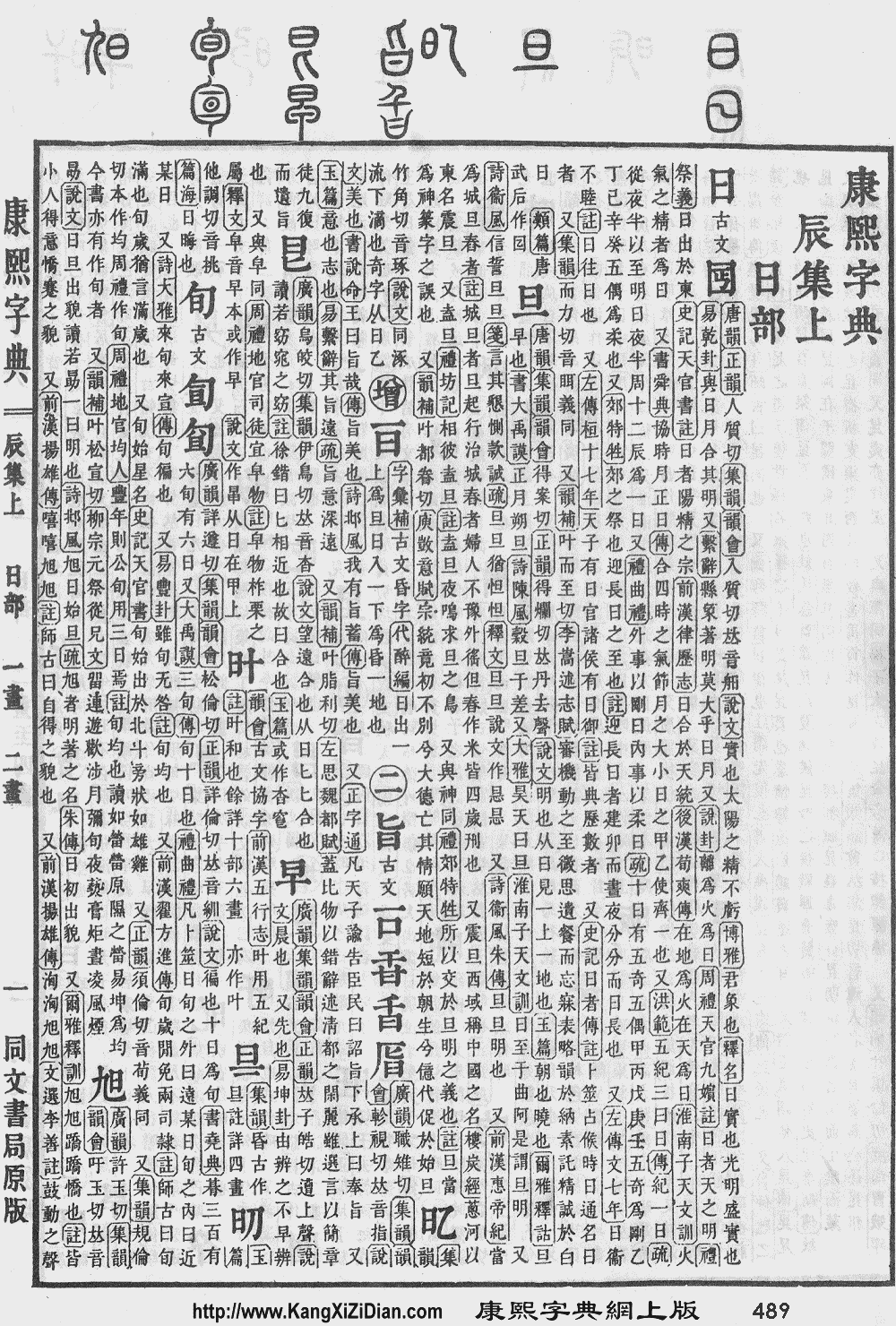
- Kangxi Dictionary: page 489, character 6
- Dai Kanwa Jiten: character 13738
- Dae Jaweon: page 850, character 5
- Hanyu Da Zidian (first edition): volume 2, page 1485, character 7
- Unihan data for U+65E8
Chinese
| trad. | 旨 | |
|---|---|---|
| simp. # | 旨 | |
| alternative forms | ||
Glyph origin
| Historical forms of the character 旨 | ||||
|---|---|---|---|---|
| Shang | Western Zhou | Warring States | Shuowen Jiezi (compiled in Han) | Liushutong (compiled in Ming) |
| Oracle bone script | Bronze inscriptions | Chu slip and silk script | Small seal script | Transcribed ancient scripts |
 |
 |
 |
 |
 |
Characters in the same phonetic series (旨) (Zhengzhang, 2003)
Phono-semantic compound (形聲/形声, OC *kjiʔ) : phonetic 匕 (OC *pilʔ) + semantic 甘 (“delicious”) – according to the Shuowen.
Ideogrammic compound (會意/会意) interpretations: 匕, a man tasting, or a spoon (匙).
Pronunciation
Compounds
- 下旨
- 中旨
- 主旨 (zhǔzhǐ)
- 令旨
- 俞旨
- 候旨
- 傳旨/传旨 (chuánzhǐ)
- 先意希旨
- 先意承旨
- 和旨
- 回旨
- 大旨 (dàzhǐ)
- 奉旨 (fèngzhǐ)
- 奧旨/奥旨 (àozhǐ)
- 宏旨 (hóngzhǐ)
- 宗旨 (zōngzhǐ)
- 宣旨 (xuānzhǐ)
- 密旨
- 御旨
- 恩旨
- 意旨 (yìzhǐ)
- 懿旨 (yìzhǐ)
- 承旨
- 承顏順旨/承颜顺旨
- 承風希旨/承风希旨
- 敕旨 (chìzhǐ)
- 教育宗旨
- 旨意 (zhǐyì)
- 旨甘
- 旨蓄
- 旨要 (zhǐyào)
- 旨趣 (zhǐqù)
- 旨酒
- 旨酒嘉肴
- 望風承旨/望风承旨
- 本旨 (běnzhǐ)
- 法旨
- 無關宏旨/无关宏旨
- 玄旨
- 甘旨
- 甘旨肥濃/甘旨肥浓
- 睿旨
- 聖旨/圣旨 (shèngzhǐ)
- 背旨
- 臺旨/台旨
- 芳旨
- 要旨 (yàozhǐ)
- 言微旨遠/言微旨远
- 言近旨遠/言近旨远
- 諭旨/谕旨 (yùzhǐ)
- 趣旨 (qùzhǐ)
- 辭微旨遠/辞微旨远
- 辭旨/辞旨
- 迎意承旨
- 違旨/违旨
- 金樽旨酒
- 鈞旨/钧旨
- 阿意順旨/阿意顺旨
- 阿諛順旨/阿谀顺旨
- 降旨 (jiàngzhǐ)
- 領旨/领旨
- 題旨/题旨
References
- “旨”, in 漢語多功能字庫 (Multi-function Chinese Character Database), 香港中文大學 (the Chinese University of Hong Kong), 2014–
- Dictionary of Chinese Character Variants (教育部異體字字典), A01774
Japanese
Etymology
| Kanji in this term |
|---|
| 旨 |
| むね Grade: S |
| kun’yomi |
| Alternative spelling |
|---|
| 宗 |
(This etymology is missing or incomplete. Please add to it, or discuss it at the Etymology scriptorium.)
Pronunciation
References
- Matsumura, Akira, editor (2006), 大辞林 [Daijirin] (in Japanese), Third edition, Tōkyō: Sanseidō, →ISBN
Korean
This article is issued from Wiktionary. The text is licensed under Creative Commons - Attribution - Sharealike. Additional terms may apply for the media files.