唄

See also: 呗
唄 U+5504, 唄
CJK UNIFIED IDEOGRAPH-5504
← 唃
[U+5503]
CJK Unified Ideographs 唅 →
[U+5505]

Translingual

Han character

唄 (Kangxi radical 30, 口+7, 10 strokes, cangjie input 口月山金 (RBUC) or 難口月山金 (XRBUC), four-corner 66080, composition ⿰口貝)

References

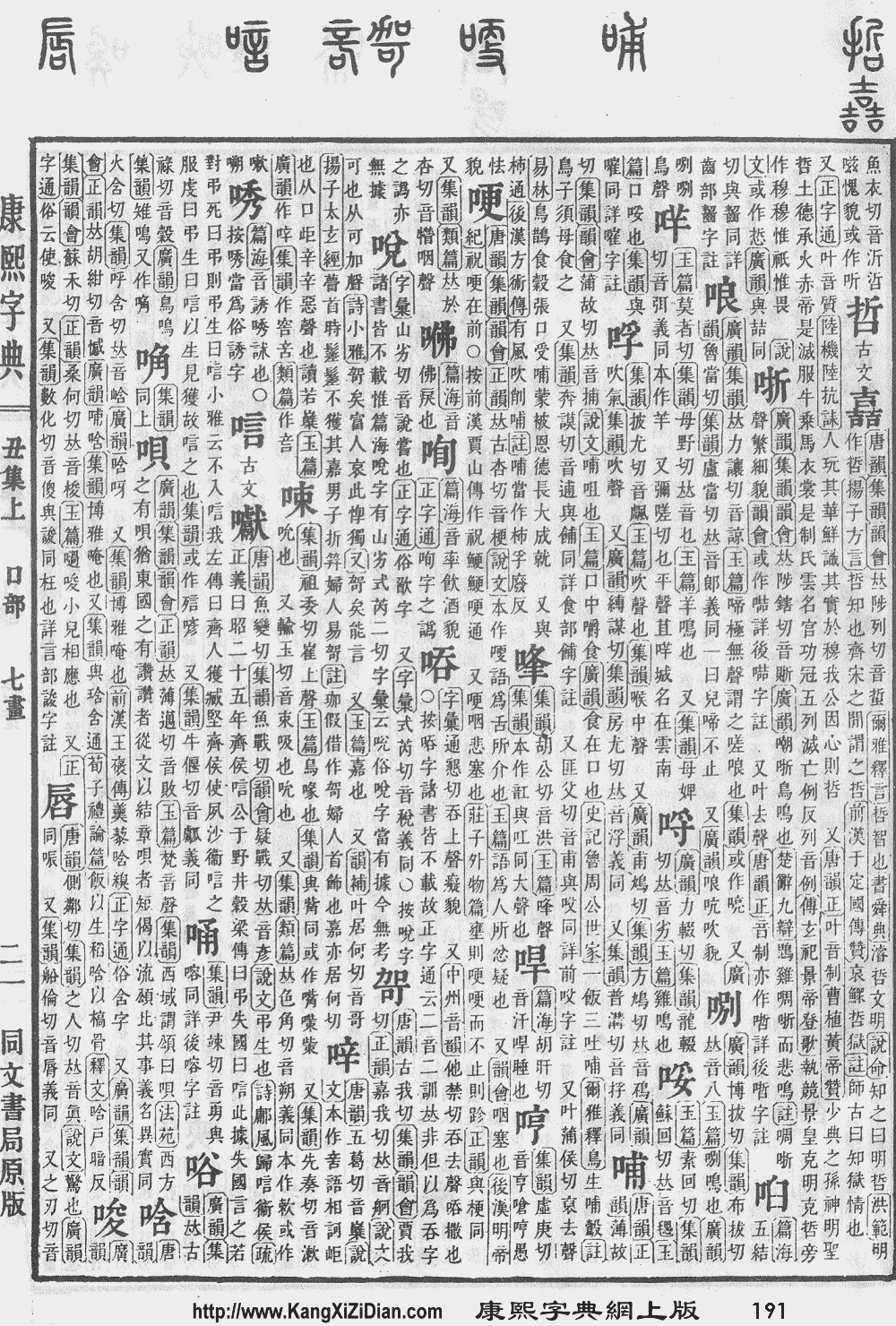
  • Kangxi Dictionary: page 191, character 29
  • Dai Kanwa Jiten: character 3694
  • Dae Jaweon: page 411, character 5
  • Hanyu Da Zidian (first edition): volume 1, page 628, character 5
  • Unihan data for U+5504

Chinese

trad. 唄
simp. 呗

Etymology 1

(This etymology is missing or incomplete. Please add to it, or discuss it at the Etymology scriptorium. Particularly: “related to 吧?”)

Pronunciation


Definitions

唄

  1. (colloquial) Particle indicating obviousness or grudging agreement.
    甲:為啥你穿校服?
    乙:去上課唄。
    [MSC, trad.]
    甲:为啥你穿校服?
    乙:去上课呗。
    [MSC, simp.]
    Jiǎ: Wèishá nǐ chuān xiàofú?
    Yǐ: Qù shàngkè bei.
    [Pinyin]
    A: Why are you wearing school uniform?
    B: Err, I'm off to school... (duh!)

Etymology 2

Likely from Sanskrit or a related Prakrit. The Yiqiejing Yinyi lists the form 唄匿 (MC baejH nrik), likely related Buddhist Hybrid Sanskrit भाणक (bhāṇaka, “chanter; speaker”), from Sanskrit भणति (bhaṇati) and cognate with Pali bhāṇaka (“reciter of the scriptures”); and also the more "orthodox" 婆師 (MC ba srij), likely from भाषते (bhāṣate, “to speak”), compare Gandhari 𐨧𐨮𐨡𐨁 (bhaṣadi, “speaks; to speak”), Sanskrit भाषा (bhāṣā, “speech”). In the Pali parallels, the verb for chanting or reciting a verse (gāthā) is often the cognate bhāsati.

Some older works suggest derivation from Sanskrit पाठ (pāṭha) (e.g. Soothill & Hodous, 1937), but with semantic and phonological difficulties.

Pronunciation


Rime
Character 唄
Reading # 1/1
Initial (聲) 並 (3)
Final (韻) 夬 (29)
Tone (調) Departing (H)
Openness (開合) Open
Division (等) II
Fanqie 薄邁切
Baxter baejH
Reconstructions
Zhengzhang
Shangfang
/bˠaiH/
Pan
Wuyun
/bᵚaiH/
Shao
Rongfen
/baiH/
Edwin
Pulleyblank
/baɨjsH/
Li
Rong
/baiH/
Wang
Li
/bæiH/
Bernard
Karlgren
/bʱaiH/
Expected
Mandarin
Reflex
bài
Expected
Cantonese
Reflex
baai6
Zhengzhang system (2003)
Character 唄
Reading # 1/1
No. 423
Phonetic
component
貝
Rime
group
祭
Rime
subdivision
1
Corresponding
MC rime
敗
Old
Chinese
/*braːds/
Notes 省譯pāthaka

Definitions

唄

  1. † (Buddhism) chanting; sound of chanting
  2. † (Buddhism) to chant

Compounds

  • 唄唱/呗唱
  • 唄讚/呗赞
  • 梵唄/梵呗 (fànbài)
  • 讚唄/赞呗

Japanese

Kanji

唄

(common “Jōyō” kanji)

  1. song (especially when played with a shamisen)

Readings

Definitions

Kanji in this term
唄
うた
Grade: S
kun’yomi
For pronunciation and definitions of 唄 – see the following entry.
【歌うた】2
[noun] (music) a song
[noun] (poetry) poetry
Alternative spellings
詩, 謳
(This term, 唄, is an alternative spelling of the above term.)

Korean

Hanja

唄 • (pae) (hangeul 패, revised pae, McCune–Reischauer p'ae)

  1. (Buddhism) The sound of reciting the Buddhist scriptures

Vietnamese

Han character

唄: Hán Nôm readings: bái

  1. This term needs a translation to English. Please help out and add a translation, then remove the text {{rfdef}}.
This article is issued from Wiktionary. The text is licensed under Creative Commons - Attribution - Sharealike. Additional terms may apply for the media files.