唅
| ||||||||
Translingual
Han character
唅 (Kangxi radical 30, 口+7, 10 strokes, cangjie input 口人戈口 (ROIR) or 難口人戈口 (XROIR), four-corner 68062, composition ⿰口含)
References
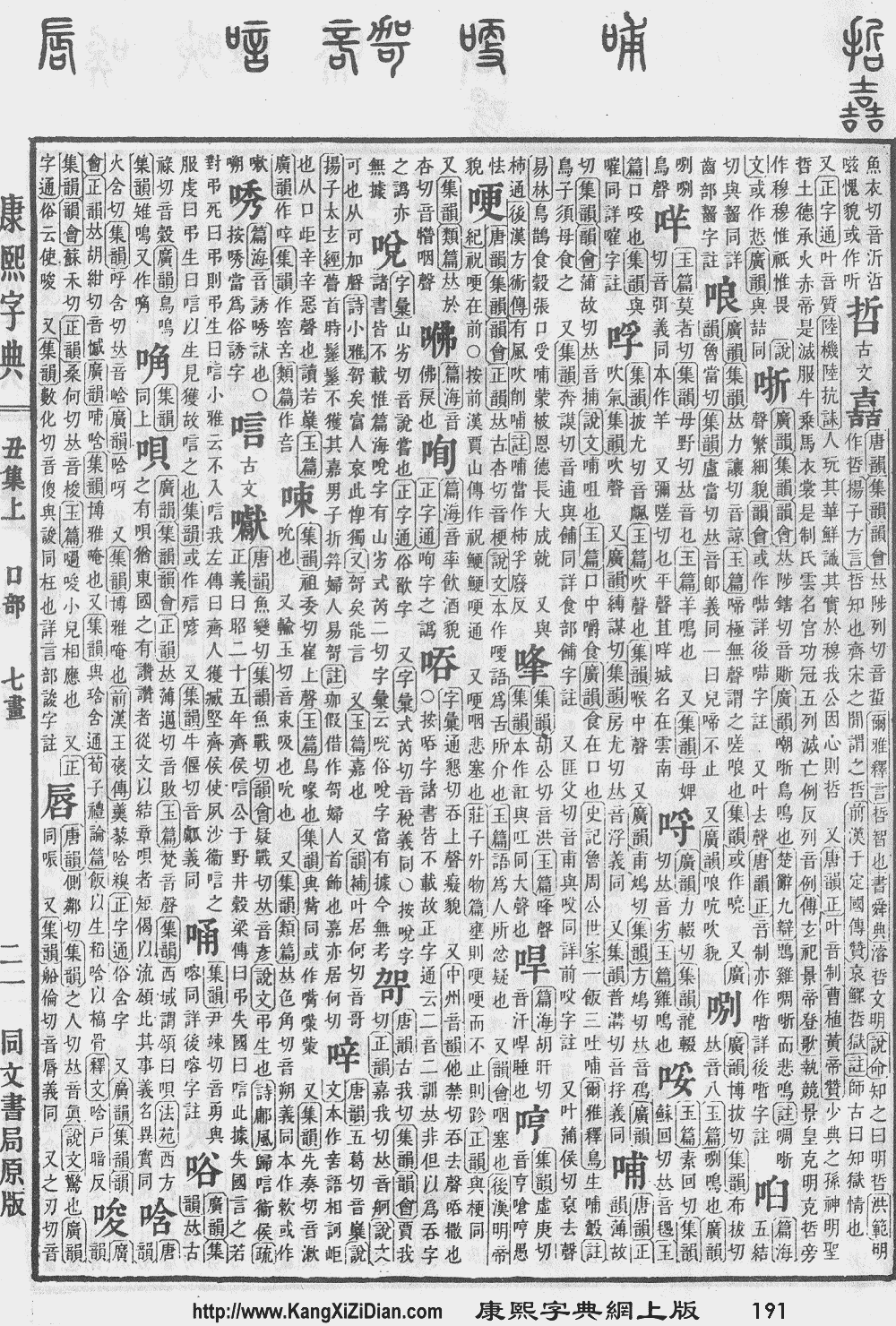
- Kangxi Dictionary: page 191, character 30
- Dai Kanwa Jiten: character 3695
- Dae Jaweon: page 411, character 6
- Hanyu Da Zidian (first edition): volume 1, page 632, character 4
- Unihan data for U+5505
Chinese
| trad. | 唅 | |
|---|---|---|
| simp. # | 唅 | |
Pronunciation
Definitions
唅
- † a piece of jade or gemstone put into the mouth of a dead body at funeral
- † Alternative form of 含
References
- 唅 in ZDIC
Pronunciation
Interjection
唅
- (Taiwanese Hokkien) Used to indicate confusion or pondering when the speaker did not hear or comprehend clearly: huh; hmm; what; pardon?; what did (they/you/he/she) say?
- (Taiwanese Hokkien) Used to express doubt or disbelief: huh?; hmm?; what?; oh?; what do you mean?
- (Taiwanese Hokkien) Used to express subtle surprise or amusement/astonishment: huh!; oh!; what!
- (Taiwanese Hokkien) Used to express consent or agreement or approval: huh ok; oh alright; yeah; sure; ah yes
Usage notes
- When the vowel phoneme is pronounced lengthily, it usually means that the speaker is expressing either their displeasure, surprise, disregard, level of difficulty in hearing, or unwillingness to listen.
Descendants
- →? Taiwanese Mandarin: 蛤 (há)
References
- “Entry #5802”, in 臺灣閩南語常用詞辭典 [Dictionary of Frequently-Used Taiwan Minnan] (overall work in Mandarin and Hokkien), Ministry of Education, R.O.C., 2023.
- Embree, Bernard L.M. (1973) “hâⁿ”, in A Dictionary of Southern Min (overall work in Hokkien, English, and Mandarin), Hong Kong: Hong Kong Language Institute, page 76.
- 小川尚義 (OGAWA Naoyoshi), editor (1931–1932), “唯”, in 臺日大辭典 [Taiwanese-Japanese Dictionary] (overall work in Hokkien and Japanese), Taihoku: Government-General of Taiwan, →OCLC, page 510
- William Campbell (1913) “hâⁿ”, in A dictionary of the Amoy vernacular spoken throughout the prefectures of Chin-Chiu, Chiang-Chiu and Formosa (in Hokkien), 8th edition, Tainan: Taiwan Church Press, published 1961, →OCLC, page 156.
- Douglas, Carstairs (1873) “hâⁿ”, in Chinese-English Dictionary of the Vernacular or Spoken Language of Amoy, [With 1923 Supplement after the Appendix by Thomas Barclay, Shanghai: Commercial Press, Ltd.] edition (overall work in Hokkien and English), London: Trübner & Co., page 115; New Edition (With Chinese Character Glosses) edition, London: Presbyterian Church of England, 1899, page 115
Japanese
Korean
Hanja
唅 • (ham) (hangeul 함)
- This term needs a translation to English. Please help out and add a translation, then remove the text
{{rfdef}}.
Vietnamese
This article is issued from Wiktionary. The text is licensed under Creative Commons - Attribution - Sharealike. Additional terms may apply for the media files.