啻
| ||||||||
Translingual
Han character
啻 (Kangxi radical 30, 口+9, 12 strokes, cangjie input 卜月口 (YBR) or 卜月中月口 (YBLBR), four-corner 00602, composition ⿱帝口)
Derived characters
- 𠽜, 𡡿, 𢕮, 𢴨, 𣾪, 𨗁, 𣚌, 膪, 𧝐, 𦔝, 𧬍, 𨅙, 𨬙, 𩪙, 𪍼, 𢿪, 𪯙, 𪆡, 𰱼
References
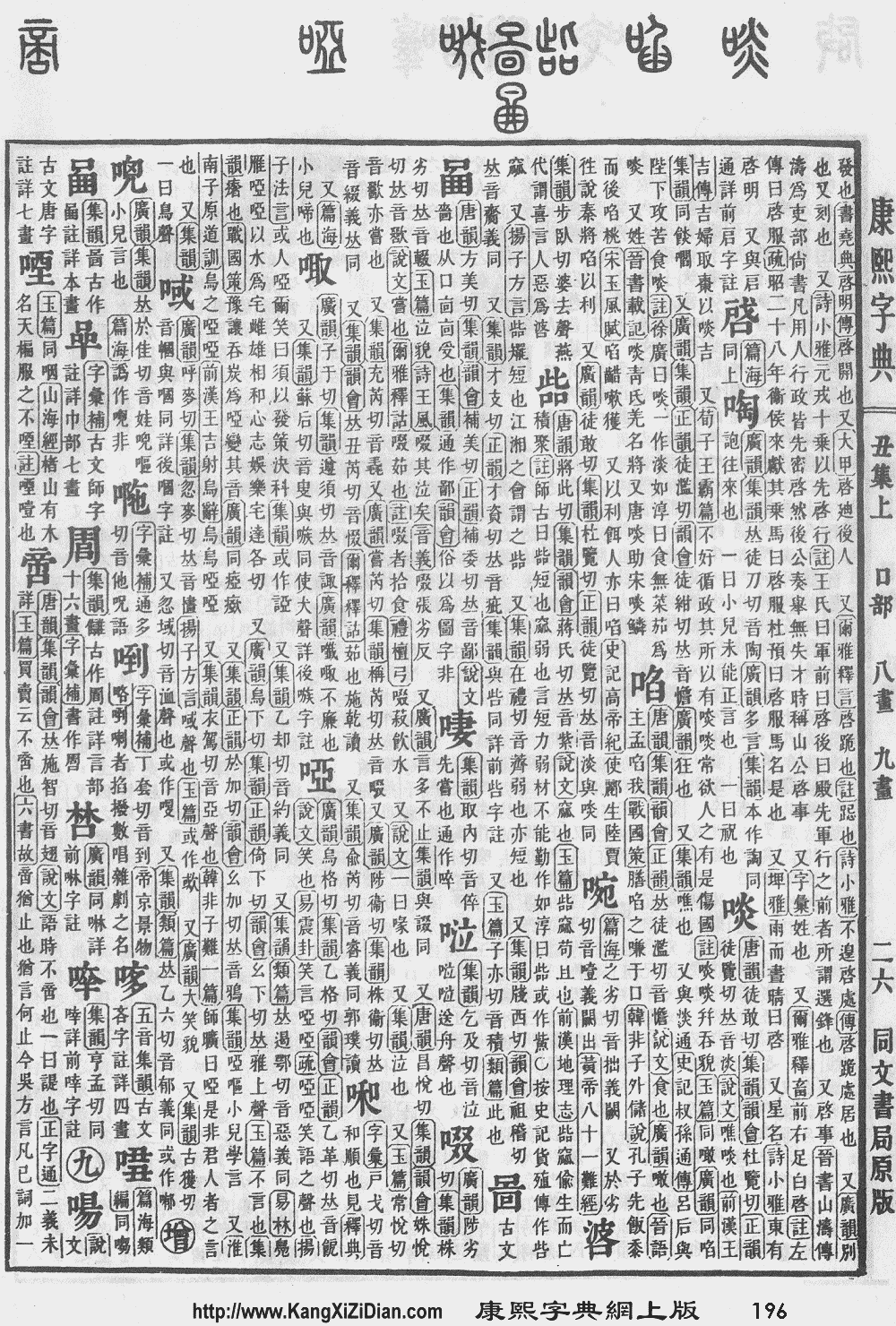
- Kangxi Dictionary: page 196, character 29
- Dai Kanwa Jiten: character 3886
- Dae Jaweon: page 418, character 21
- Hanyu Da Zidian (first edition): volume 1, page 660, character 1
- Unihan data for U+557B
Chinese
| simp. and trad. |
啻 | |
|---|---|---|
| alternative forms | 𠺏 | |
Glyph origin
Characters in the same phonetic series (帝) (Zhengzhang, 2003)
| Old Chinese | |
|---|---|
| 膪 | *rtaːɡs, *rteːɡs |
| 揥 | *tʰeds, *teː |
| 腣 | *teː, *teːɡs |
| 諦 | *teːɡs |
| 偙 | *teːɡs |
| 渧 | *teːɡs |
| 帝 | *teːɡs |
| 楴 | *tʰeːɡs |
| 啼 | *deː |
| 蹄 | *deː |
| 締 | *deː, *deːɡs |
| 崹 | *deː |
| 鶙 | *deː |
| 禘 | *deːɡs |
| 啻 | *hljeɡs |
| 嫡 | *rteɡ, *teːɡ |
| 摘 | *rteːɡ, *tʰeːɡ |
| 謫 | *rteːɡ |
| 讁 | *rteːɡ |
| 擿 | *deɡ |
| 蹢 | *deɡ, *teːɡ |
| 適 | *tjeɡ, *hljeɡ, *teːɡ |
| 啇 | *teːɡ |
| 滴 | *teːɡ |
| 鏑 | *teːɡ |
| 甋 | *teːɡ |
| 樀 | *teːɡ, *deːɡ |
| 敵 | *deːɡ |
Pronunciation
References
- “啻”, in 漢語多功能字庫 (Multi-function Chinese Character Database), 香港中文大學 (the Chinese University of Hong Kong), 2014–
Japanese
Kanji
啻
- This term needs a translation to English. Please help out and add a translation, then remove the text
{{rfdef}}.
Korean
Hanja
啻 • (si) (hangeul 시)
- This term needs a translation to English. Please help out and add a translation, then remove the text
{{rfdef}}.
This article is issued from Wiktionary. The text is licensed under Creative Commons - Attribution - Sharealike. Additional terms may apply for the media files.