壅
| ||||||||
Translingual
Han character
壅 (Kangxi radical 32, 土+13, 16 strokes, cangjie input 卜女土土 (YVGG), four-corner 00104, composition ⿱雍土)
Derived characters
- 𡄐, 𤃟
References
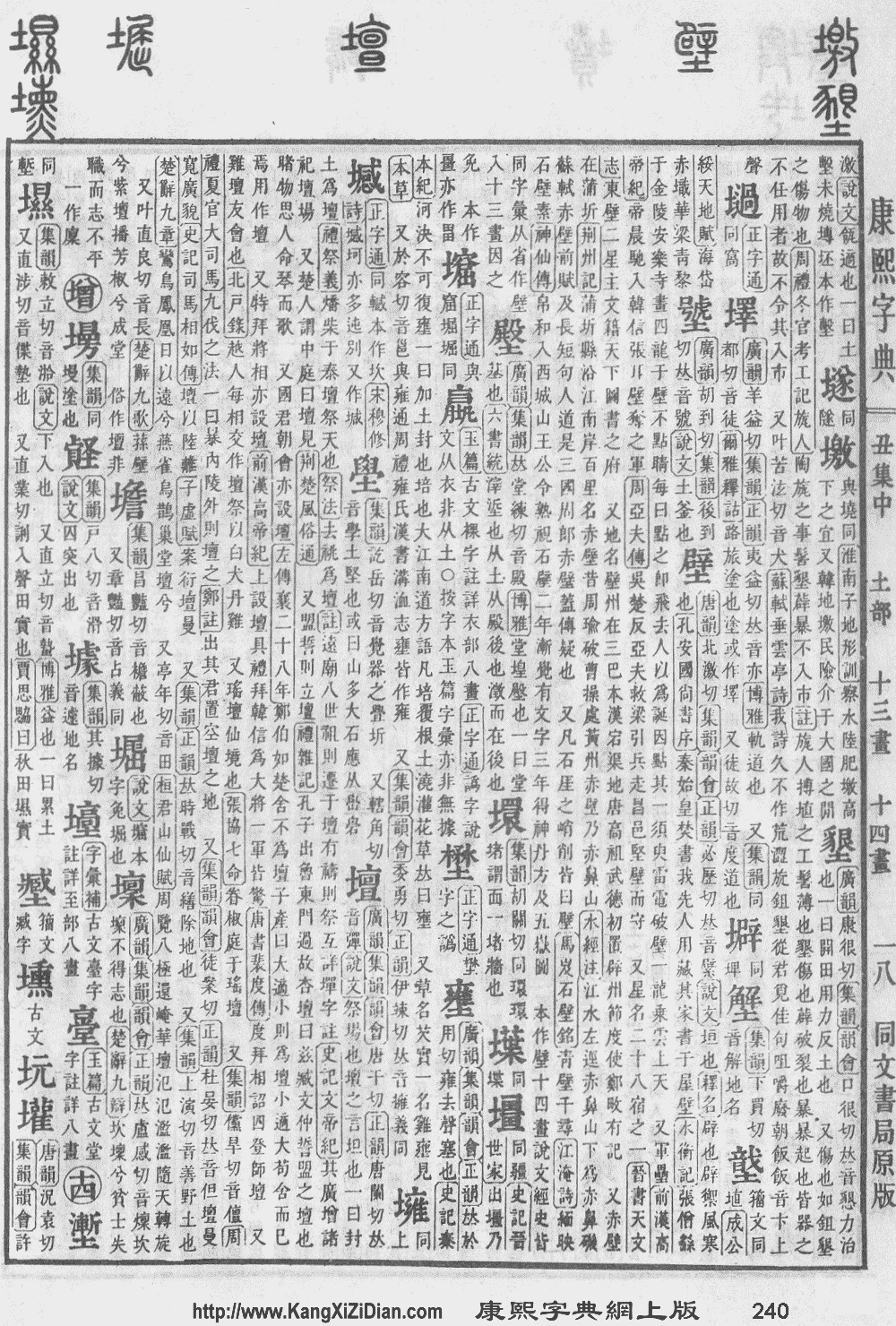
- Kangxi Dictionary: page 240, character 18
- Dai Kanwa Jiten: character 5524
- Dae Jaweon: page 480, character 4
- Hanyu Da Zidian (first edition): volume 1, page 493, character 4
- Unihan data for U+58C5
Chinese
| simp. and trad. |
壅 | |
|---|---|---|
| alternative forms | ||
Glyph origin
Characters in the same phonetic series (邕) (Zhengzhang, 2003)
Phono-semantic compound (形聲/形声, OC *qoŋ, *qoŋʔ, *qoŋs) : phonetic 雍 (OC *qoŋ, *qoŋs) + semantic 土 (“soil; ground”).
Pronunciation
Definitions
壅
References
- “壅”, in 漢語多功能字庫 (Multi-function Chinese Character Database), 香港中文大學 (the Chinese University of Hong Kong), 2014–
Japanese
Korean
Etymology
From Middle Chinese 壅 (MC 'jowngX).
| Historical Readings | ||
|---|---|---|
| Dongguk Jeongun Reading | ||
| Dongguk Jeongun, 1448 | Recorded as Middle Korean ᅙᅩᇰ〯 (Yale: qwǒng) in Dongguk Jeongun (東國正韻 / 동국정운), 1448. | |
| Middle Korean | ||
| Text | Eumhun | |
| Gloss (hun) | Reading | |
| Hunmong Jahoe, 1527 | 붓도돌〮 오ᇰ〯 | Recorded as Middle Korean 오ᇰ〯 (wǒng) (Yale: wǒng) in Hunmong Jahoe (訓蒙字會 / 훈몽자회), 1527. |
| Gwangju Cheonjamun, 1575 | 마ᄀᆞᆯ 옹 | Recorded as Middle Korean 옹 ( wong) (Yale: wong) in Sinjeung Yuhap (新增類合 / 신증유합), 1576. |
Pronunciation
- (SK Standard/Seoul) IPA(key): [o̞(ː)ŋ]
- Phonetic hangul: [옹(ː)]
- Though still prescribed in Standard Korean, most speakers in both Koreas no longer distinguish vowel length.
Vietnamese
Han character
- This term needs a translation to English. Please help out and add a translation, then remove the text
{{rfdef}}.
References
This article is issued from Wiktionary. The text is licensed under Creative Commons - Attribution - Sharealike. Additional terms may apply for the media files.