夬
| ||||||||
Translingual
Han character
夬 (Kangxi radical 37, 大+1, 4 strokes, cangjie input 木大 (DK), four-corner 50037, composition ⿻𠃍大 or ⿻ユ人)
Derived characters
References
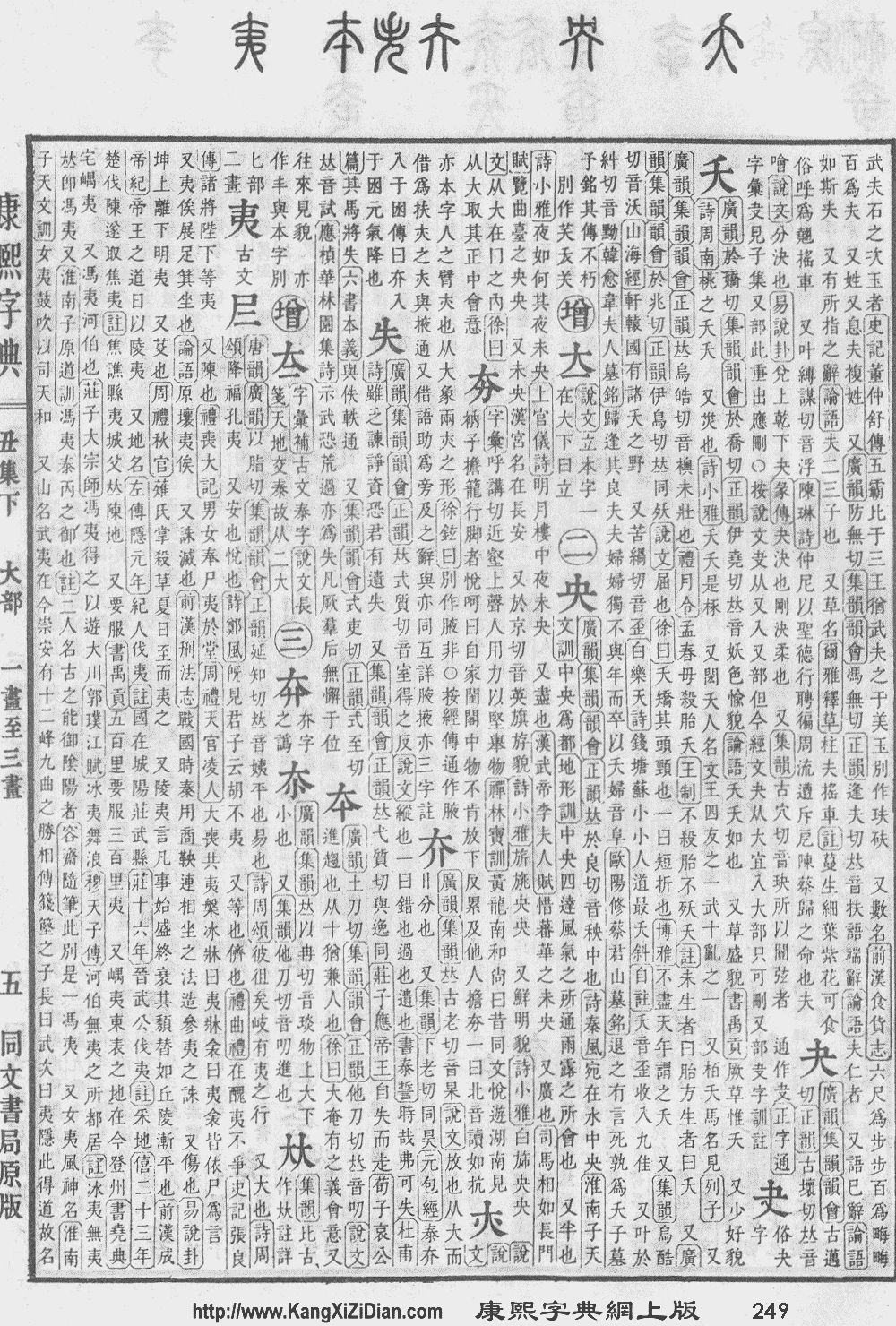
- Kangxi Dictionary: page 249, character 1
- Dai Kanwa Jiten: character 5836
- Dae Jaweon: page 507, character 2
- Hanyu Da Zidian (first edition): volume 1, page 51, character 11
- Unihan data for U+592C
Chinese
| trad. | 夬 | |
|---|---|---|
| simp. # | 夬 | |
| alternative forms | 叏 | |
Glyph origin
| Historical forms of the character 夬 | ||||
|---|---|---|---|---|
| Shang | Western Zhou | Warring States | Shuowen Jiezi (compiled in Han) | Liushutong (compiled in Ming) |
| Oracle bone script | Bronze inscriptions | Qin slip script | Small seal script | Transcribed ancient scripts |
 |
 |
 |
 |
 |
Characters in the same phonetic series (夬) (Zhengzhang, 2003)
Pictogram (象形) — a hand wearing an archer's thumb ring (Li Xueqing, 2012).

Pronunciation
Etymology 2
| For pronunciation and definitions of 夬 – see 決 (“to dredge; to dig; to burst; to break; to breach; etc.”). (This character is a variant form of 決). |
Etymology 3
| For pronunciation and definitions of 夬 – see 缺 (“incomplete; uncompleted; deficient; imperfect; flawed; etc.”). (This character is the second-round simplified and variant form of 缺). |
Notes:
|
Japanese
Kanji
夬
- This term needs a translation to English. Please help out and add a translation, then remove the text
{{rfdef}}.
Korean
Hanja
夬 • (kwae) (hangeul 쾌, revised kwae, McCune–Reischauer k'wae)
- This term needs a translation to English. Please help out and add a translation, then remove the text
{{rfdef}}.
Vietnamese
Han character
- This term needs a translation to English. Please help out and add a translation, then remove the text
{{rfdef}}.
References
This article is issued from Wiktionary. The text is licensed under Creative Commons - Attribution - Sharealike. Additional terms may apply for the media files.