怜
See also: 憐
| ||||||||
| ||||||||
Translingual
Han character
怜 (Kangxi radical 61, 心+5, 8 strokes, cangjie input 心人戈戈 (POII), four-corner 98037, composition ⿰忄令)
References
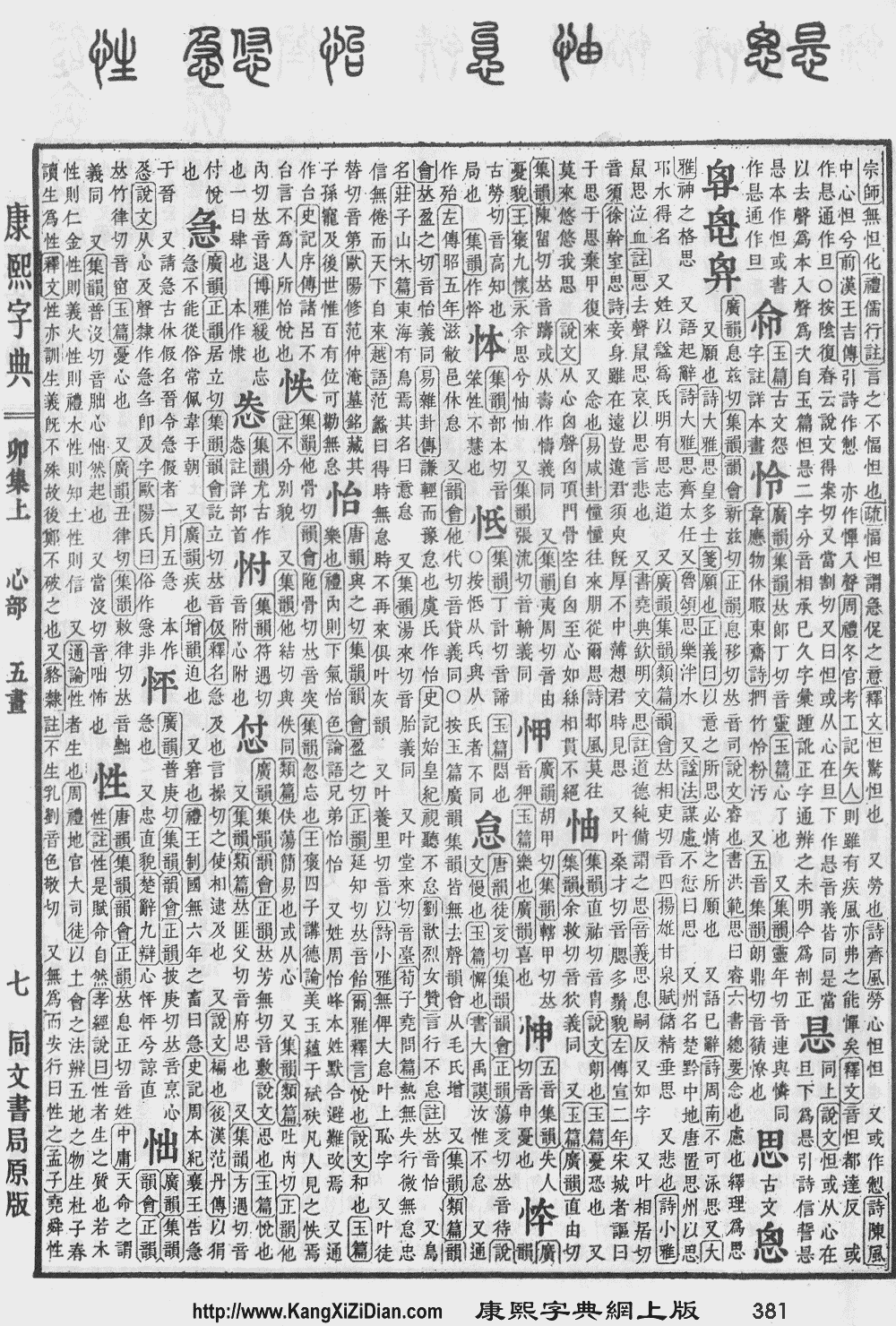
- Kangxi Dictionary: page 381, character 3
- Dai Kanwa Jiten: character 10461
- Dae Jaweon: page 709, character 5
- Hanyu Da Zidian (first edition): volume 4, page 2287, character 4
- Unihan data for U+601C
- Unihan data for U+F9AC
Chinese
Glyph origin
Characters in the same phonetic series (令) (Zhengzhang, 2003)
| Old Chinese | |
|---|---|
| 令 | *ren, *reŋ, *reŋs, *reːŋ, *reːŋs |
| 怜 | *riːn, *reːŋ |
| 零 | *riːŋ, *reːŋ, *reːŋs |
| 魿 | *ɡriŋ, *reːŋ |
| 命 | *mreŋs |
| 冷 | *raːŋʔ, *reːŋ, *reːŋʔ |
| 跉 | *reŋ, *reːŋ |
| 嶺 | *reŋʔ |
| 領 | *reŋʔ |
| 阾 | *reŋʔ, *reːŋ |
| 柃 | *reŋʔ, *reːŋ |
| 袊 | *reŋʔ |
| 詅 | *reŋs, *reːŋ |
| 旍 | *ʔsleŋ |
| 舲 | *reːŋ |
| 齡 | *reːŋ |
| 囹 | *reːŋ |
| 鴒 | *reːŋ |
| 蛉 | *reːŋ |
| 鈴 | *reːŋ |
| 苓 | *reːŋ |
| 伶 | *reːŋ |
| 泠 | *reːŋ |
| 瓴 | *reːŋ |
| 拎 | *reːŋ |
| 刢 | *reːŋ |
| 玲 | *reːŋ |
| 聆 | *reːŋ |
| 竛 | *reːŋ |
| 軨 | *reːŋ |
| 笭 | *reːŋ, *reːŋʔ |
| 翎 | *reːŋ |
| 閝 | *reːŋ |
| 鹷 | *reːŋ |
| 昤 | *reːŋ |
| 駖 | *reːŋ |
| 彾 | *reːŋ |
| 呤 | *reːŋ |
| 狑 | *reːŋ |
| 秢 | *reːŋ |
| 岭 | *reːŋ |
| 紷 | *reːŋ |
| 砱 | *reːŋ |
| 羚 | *reːŋ |
| 姈 | *reːŋ |
| 蕶 | *reːŋ |
| 澪 | *reːŋ |
Etymology 1
| For pronunciation and definitions of 怜 – see 憐 (“to pity; to sympathize; to love tenderly”). (This character is the simplified form of 憐). |
Notes:
|
Pronunciation
Pronunciation
Japanese
Readings
Korean
This article is issued from Wiktionary. The text is licensed under Creative Commons - Attribution - Sharealike. Additional terms may apply for the media files.