思
| ||||||||
Translingual
| Stroke order | |||
|---|---|---|---|
 | |||
Han character
思 (Kangxi radical 61, 心+5, 9 strokes, cangjie input 田心 (WP), four-corner 60330, composition ⿱田心)
Derived characters
References
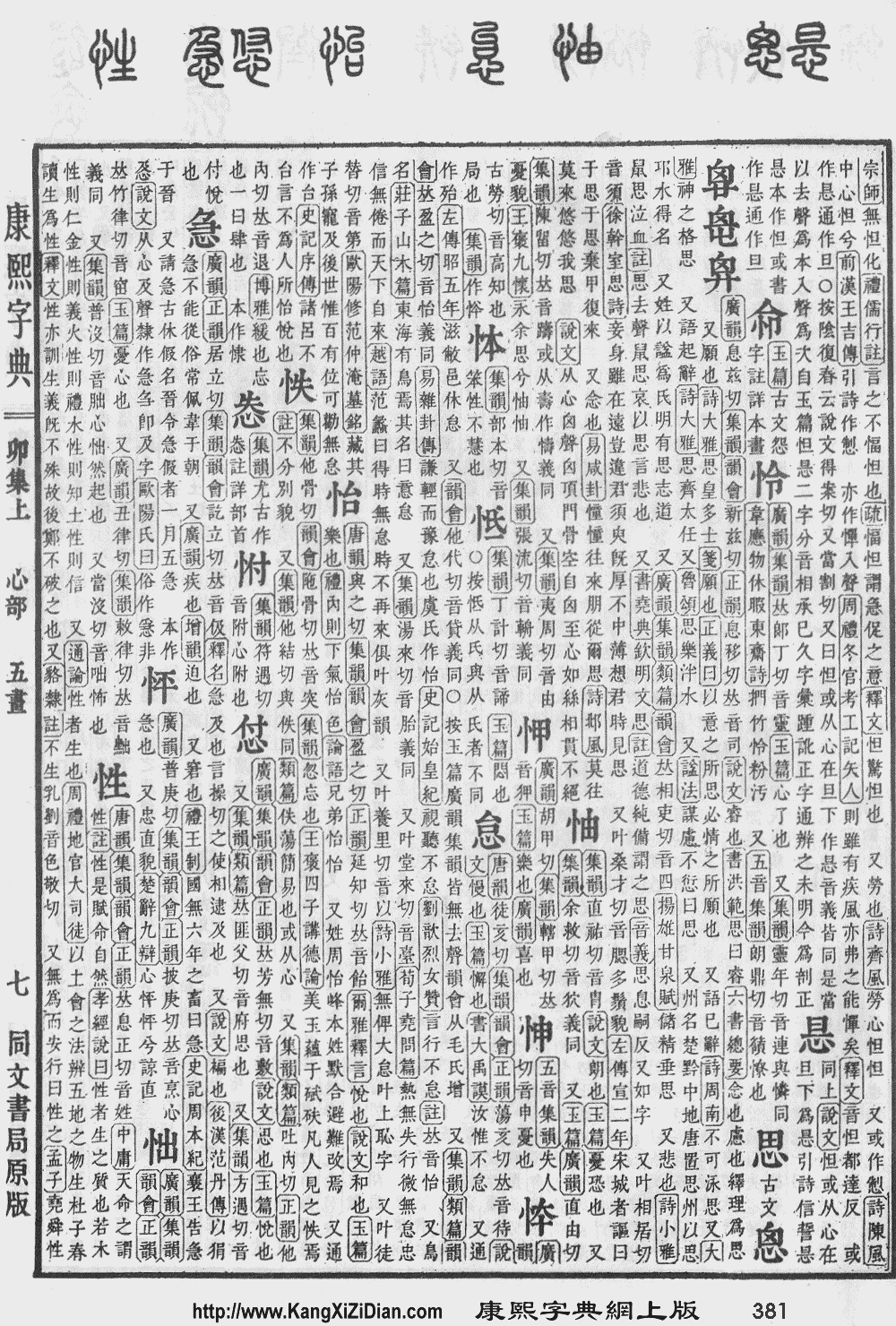
- Kangxi Dictionary: page 381, character 4
- Dai Kanwa Jiten: character 10462
- Dae Jaweon: page 709, character 7
- Hanyu Da Zidian (first edition): volume 4, page 2280, character 4
- Unihan data for U+601D
Chinese
| simp. and trad. |
思 | |
|---|---|---|
| alternative forms | ||
Glyph origin
| Historical forms of the character 思 | |
|---|---|
| Shuowen Jiezi (compiled in Han) | Liushutong (compiled in Ming) |
| Small seal script | Transcribed ancient scripts |
 |
 |
Characters in the same phonetic series (囟) (Zhengzhang, 2003)
Original form was 恖 (OC *snɯ), considered by Shuowen to be a phono-semantic compound (形聲/形声, OC *snɯ, *snɯs) : phonetic 囟 (OC *snɯns) + semantic 心 (“heart”). It may also be a ideogrammic compound (會意/会意) : 囟 (“fontanel”) + 心 (“heart”).
囟 started to corrupt into the unrelated 田 as early as the silk script.
Pronunciation 1
Definitions
思
- (literary, or in compounds) to think; to cogitate
- 沉思 ― chénsī ― to ponder; to contemplate
- 子曰:「學而不思則罔,思而不學則殆。」 [Classical Chinese, trad.]
- From: The Analects of Confucius, c. 475 – 221 BCE, translated based on James Legge's version
- Zǐ yuē: “Xué ér bù sī zé wǎng, sī ér bù xué zé dài.” [Pinyin]
- The Master said, "Learning without thought is labor lost; thought without learning is perilous."
子曰:「学而不思则罔,思而不学则殆。」 [Classical Chinese, simp.]
- (literary, or in compounds) to miss; to yearn for
- (literary, or in compounds) to hope; to wish
- (literary, or in compounds) feeling; mood
- (literary, or in compounds) thought; thinking
- 文思 ― wénsī ― thread of ideas in writing
- (obsolete) to lament; to grieve for
- (obsolete) meaningless sentence-initial particle
- (obsolete) meaningless sentence-medial particle
- (obsolete) sentence-final interjectional particle
- a surname
Synonyms
- (to think):
- 冥思 (míngsī)
- 冥想 (míngxiǎng)
- 品味 (pǐnwèi)
- 尋味/寻味 (xúnwèi)
- 尋思/寻思
- 念 (niàn)
- 思想 (sīxiǎng)
- 思慮/思虑 (sīlǜ)
- 思索 (sīsuǒ)
- 思維/思维 (sīwéi)
- 思考 (sīkǎo)
- 思裁 (si1 cai2) (Sichuanese)
- 思量 (sīliáng)
- 慎思 (shènsī)
- 掂掇 (diānduo) (colloquial)
- 推敲 (tuīqiāo)
- 掂量 (diānliáng)
- 揣摩 (chuǎimó)
- 斟酌 (zhēnzhuó) (figuratively)
- 沉思 (chénsī)
- 深思 (shēnsī)
- 照顧/照顾 (zhàogù)
- 玩味 (wánwèi)
- 玩弄 (Classical Chinese)
- 琢磨 (zuómo)
- 算計/算计 (suànjì)
- 考慮/考虑 (kǎolǜ)
- 苦思 (kǔsī)
- 著想/着想 (zhuóxiǎng)
- 計算/计算 (jìsuàn)
- 計較/计较
- 設想/设想 (shèxiǎng)
- 顧全/顾全 (gùquán)
- 顧及/顾及 (gùjí)
- (to miss):
- (to hope):
- 企待 (qǐdài) (literary)
- 企望 (qǐwàng)
- 企盼 (qǐpàn)
- 冀望 (jìwàng) (literary)
- 向望 (ǹg-bāng) (Hokkien)
- 夢想/梦想 (mèngxiǎng)
- 寄望 (jìwàng)
- 巴望 (bāwàng) (regional)
- 希冀 (xījì) (literary)
- 希望 (xīwàng)
- 幸 (xìng) (literary)
- 引領/引领 (yǐnlǐng) (literary)
- 想望 (xion2 von3) (Jin)
- 指望 (zhǐwàng)
- 期待 (qīdài)
- 期望 (qīwàng)
- 渴望 (kěwàng)
- 盼 (pàn)
- 盼望 (pànwàng)
- 願/愿 (yuàn)
- 願意/愿意 (yuànyì)
- 鵠望/鹄望 (húwàng) (literary)
- (feeling):
Compounds
- 上思 (Shàngsī)
- 三思
- 三思而行
- 三思臺/三思台
- 不三思
- 不假思索 (bùjiǎ-sīsuǒ)
- 不加思索 (bùjiā-sīsuǒ)
- 不可思議/不可思议 (bùkěsīyì)
- 不思 (bùsī)
- 不思進取/不思进取 (bùsījìnqǔ)
- 不犯尋思/不犯寻思
- 中心思想 (zhōngxīn sīxiǎng)
- 九思
- 亟思
- 俯思
- 八斗陳思
- 冥思 (míngsī)
- 冥思苦想 (míngsīkǔxiǎng)
- 冥思苦索 (míngsīkǔsuǒ)
- 凝思 (níngsī)
- 前思後想/前思后想
- 勉思
- 動人遐思/动人遐思
- 勞心焦思/劳心焦思
- 勞身焦思/劳身焦思
- 匪夷所思 (fěiyísuǒsī)
- 千思萬想/千思万想
- 反思 (fǎnsī)
- 反覆思維/反覆思维
- 周情孔思
- 哀思 (āisī)
- 單思病/单思病
- 單相思/单相思 (dānxiāngsī)
- 回思
- 土思
- 夜思
- 大費神思/大费神思
- 好學深思/好学深思
- 子思
- 孝思
- 安必思危
- 寒泉之思
- 封建思想
- 專精覃思/专精覃思
- 尋思/寻思
- 導向思考/导向思考
- 居安思危 (jū'ānsīwēi)
- 居高思危
- 巧思
- 左思右想 (zuǒsīyòuxiǎng)
- 席夢思/席梦思 (xímèngsī)
- 幽思 (yōusī)
- 引人遐思
- 得寸思尺
- 復思/复思
- 心思 (xīnsī)
- 忖前思後/忖前思后
- 忒敬思
- 思不出位
- 思凡
- 思前想後/思前想后 (sīqiánxiǎnghòu)
- 思前算後/思前算后
- 思力 (sīlì)
- 思勞/思劳
- 思古幽情
- 思如泉湧/思如泉涌
- 思如湧泉/思如涌泉
- 思婦/思妇
- 思存
- 思忖 (sīcǔn)
- 思念 (sīniàn)
- 怨思
- 思惟 (sīwéi)
- 思想 (sīxiǎng)
- 思想史 (sīxiǎngshǐ)
- 思想家 (sīxiǎngjiā)
- 思想庫/思想库 (sīxiǎngkù)
- 思惹情牽/思惹情牵
- 思想戰/思想战
- 思慮/思虑 (sīlǜ)
- 思慕 (sīmù)
- 思戀/思恋
- 思文
- 思春 (sīchūn)
- 怪沒意思/怪没意思
- 思深憂遠/思深忧远
- 思深語近/思深语近
- 思渴
- 思潮 (sīcháo)
- 思無邪/思无邪
- 思省
- 思索 (sīsuǒ)
- 思維/思维 (sīwéi)
- 思緒/思绪 (sīxù)
- 思考 (sīkǎo)
- 思致
- 思舊/思旧
- 思若湧泉/思若涌泉
- 思謀/思谋 (sīmóu)
- 思議/思议 (sīyì)
- 思賢如渴/思贤如渴
- 思路 (sīlù)
- 思辨 (sībiàn)
- 思辯/思辩 (sībiàn)
- 思過/思过 (sīguò)
- 思過半/思过半
- 思鄉/思乡 (sīxiāng)
- 思鄉病/思乡病
- 思量 (sīliáng)
- 思高本 (sīgāoběn)
- 思鱸/思鲈
- 思齊/思齐
- 悠思
- 情思 (qíngsī)
- 悲思
- 愁思 (chóusī)
- 意思主義/意思主义
- 意思能力
- 意思表示 (yìsi biǎoshì)
- 意意思思
- 慎思 (shènsī)
- 慎思明辨
- 慧心巧思
- 慧思
- 憂思/忧思 (yōusī)
- 憂深思遠/忧深思远
- 懷新思舊/怀新思旧
- 成吉思汗 (Chéngjísīhán)
- 戰略思想/战略思想
- 所思
- 才思 (cáisī)
- 才思敏捷 (cáisīmǐnjié)
- 挖空心思 (wākōngxīnsī)
- 搆思/构思 (gòusī)
- 敬思
- 文思 (wénsī)
- 文思泉湧/文思泉涌
- 旅思
- 春思
- 暮想朝思
- 有所思
- 朝思夕想
- 朝思夕計/朝思夕计
- 朝思暮想 (zhāosīmùxiǎng)
- 李思訓碑/李思训碑
- 構思/构思 (gòusī)
- 樂不思蜀/乐不思蜀 (lèbùsīshǔ)
- 止渴思梅
- 正思惟
- 殫思極慮/殚思极虑
- 殫精極思/殚精极思
- 殫精畢思/殚精毕思
- 毫不思量
- 沒三思/没三思
- 沉思 (chénsī)
- 深思 (shēnsī)
- 淵思寂慮/渊思寂虑
- 深思極慮/深思极虑
- 深思熟慮/深思熟虑
- 深思遠慮/深思远虑
- 渭陽之思/渭阳之思
- 澄思寂慮/澄思寂虑
- 潛神默思/潜神默思
- 火不思 (huǒbùsī)
- 焦心勞思/焦心劳思
- 無思無慮/无思无虑
- 無慮無思/无虑无思
- 熟思 (shúsī)
- 熟讀精思/熟读精思
- 用盡心思/用尽心思
- 病相思 (bìngxiāngsī)
- 痛定思痛 (tòngdìngsītòng)
- 白費心思/白费心思 (báifèixīnsī)
- 百思不解 (bǎisībùjiě)
- 百思莫解
- 目盼心思
- 省思 (xǐngsī)
- 相思 (xiāngsī)
- 相思債/相思债
- 相思卦
- 相思套
- 相思子
- 相思木
- 相思樹/相思树 (xiāngsīshù)
- 相思病 (xiāngsībìng)
- 相思草
- 相思豆
- 相思鳥/相思鸟
- 眠思夢想/眠思梦想
- 睹物思人 (dǔwùsīrén)
- 研精苦思
- 研精覃思
- 神仙思想
- 神思 (shénsī)
- 神思恍惚
- 秋思
- 穆思林
- 空勞神思/空劳神思
- 窮則思變/穷则思变
- 竭盡心思/竭尽心思
- 綺思/绮思 (qǐsī)
- 縈思/萦思
- 繆思女神/缪思女神
- 翹思/翘思
- 老莊思想/老庄思想
- 耄思
- 耽思
- 肚裡尋思/肚里寻思
- 胡思
- 胡思亂想/胡思乱想 (húsīluànxiǎng)
- 胡思亂量/胡思乱量
- 胠沙思水
- 腸枯思竭/肠枯思竭
- 致思
- 色思溫/色思温
- 花心思
- 苦思 (kǔsī)
- 苦思惡想/苦思恶想
- 茶思飯想/茶思饭想
- 茶飯不思/茶饭不思
- 藻思
- 處安思危/处安思危 (chǔ'ānsīwēi)
- 行思
- 行思坐想
- 行思坐憶/行思坐忆
- 行成於思/行成于思
- 行無越思/行无越思
- 覃思 (tánsī)
- 見利思義/见利思义
- 見德思齊/见德思齐
- 見異思遷/见异思迁 (jiànyìsīqiān)
- 見賢思齊/见贤思齐 (jiànxiánsīqí)
- 見鞍思馬/见鞍思马
- 費思量/费思量
- 近思錄/近思录
- 逆向思考
- 迷思 (mísī)
- 追思 (zhuīsī)
- 退思補過/退思补过
- 運思/运思 (yùnsī)
- 遐思 (xiásī)
- 遠慮深思/远虑深思
- 遷思迴慮/迁思回虑
- 遺風餘思/遗风余思
- 鄉思/乡思 (xiāngsī)
- 長思/长思
- 長相思/长相思
- 閉目沉思/闭目沉思
- 閉門思過/闭门思过 (bìménsīguò)
- 閉閣思過/闭阁思过
- 陳思王/陈思王
- 集思廣益/集思广益 (jísīguǎngyì)
- 霜露之思
- 靜極思動/静极思动
- 面壁思過/面壁思过 (miànbìsīguò)
- 顧名思義/顾名思义 (gùmíngsīyì)
- 顧思/顾思
- 風情月思/风情月思
- 風木之思/风木之思
- 飲水思源/饮水思源 (yǐnshuǐsīyuán)
- 首丘之思
- 體大思精/体大思精
- 默思
- 鼠思
Pronunciation 2
Pronunciation 3
Compounds
- 于思
- 䯱思
References
- “思”, in 漢語多功能字庫 (Multi-function Chinese Character Database), 香港中文大學 (the Chinese University of Hong Kong), 2014–
Japanese
Readings
Korean
Etymology 1
From Middle Chinese 思 (MC si).
| Historical Readings | ||
|---|---|---|
| Dongguk Jeongun Reading | ||
| Dongguk Jeongun, 1448 | Recorded as Middle Korean ᄉᆞᆼ (Yale: sò?) in Dongguk Jeongun (東國正韻 / 동국정운), 1448. | |
| Middle Korean | ||
| Text | Eumhun | |
| Gloss (hun) | Reading | |
| Hunmong Jahoe, 1527 | ᄉᆡᆼ각 ᄉᆞ | Recorded as Middle Korean ᄉᆞ (so) (Yale: so) in Sinjeung Yuhap (新增類合 / 신증유합), 1576. |
| Gwangju Cheonjamun, 1575 | ᄉᆞ량 ᄉᆞ | Recorded as Middle Korean ᄉᆞ (so) (Yale: so) in Gwangju Cheonjamun (光州千字文 / 광주천자문), 1575. |
| Early Modern Korean | ||
| Text | Final (韻) | Reading |
| Samun Seonghwi, 1751 | ᄉᆡᆼ각 ᄉᆞ | Recorded as Early Modern Korean ᄉᆞ (Yale: so) in Juhae Cheonjamun (註解千字文 / 주해천자문), 1804. |
Pronunciation
- (to think; etc.):
- (SK Standard/Seoul) IPA(key): [sʰa̠]
- Phonetic hangul: [사]
- (in 사상 (思想, sasang, “thought”)):
- (SK Standard/Seoul) IPA(key): [sʰa̠(ː)]
- Phonetic hangul: [사(ː)]
- Though still prescribed in Standard Korean, most speakers in both Koreas no longer distinguish vowel length.
Compounds
Etymology 2
From Middle Chinese 思 (MC siH).
| Historical Readings | ||
|---|---|---|
| Dongguk Jeongun Reading | ||
| Dongguk Jeongun, 1448 | Recorded as Middle Korean ᄉᆞᆼ〮 (Yale: só?) in Dongguk Jeongun (東國正韻 / 동국정운), 1448. | |
| Middle Korean | ||
| Text | Eumhun | |
| Gloss (hun) | Reading | |
| Hunmong Jahoe, 1527 | ᄠᅳᆮ ᄉᆞ[1] | Recorded as Middle Korean ᄉᆞ (so) (Yale: so) in Sinjeung Yuhap (新增類合 / 신증유합), 1576. |
| Early Modern Korean | ||
| Text | Final (韻) | Reading |
| Samun Seonghwi, 1751 | 의ᄉᆞ ᄉᆞ | Recorded as Early Modern Korean ᄉᆞ (Yale: so) in Juhae Cheonjamun (註解千字文 / 주해천자문), 1804. |
| ||
Pronunciation
- (SK Standard/Seoul) IPA(key): [sʰa̠]
- Phonetic hangul: [사]
Etymology 3
Related to Middle Chinese 䰄 (MC soj).
Hanja
Vietnamese
This article is issued from Wiktionary. The text is licensed under Creative Commons - Attribution - Sharealike. Additional terms may apply for the media files.