怨
| ||||||||
Translingual
Han character
怨 (Kangxi radical 61, 心+5, 9 strokes, cangjie input 弓山心 (NUP), four-corner 27331, composition ⿱夗心)
References
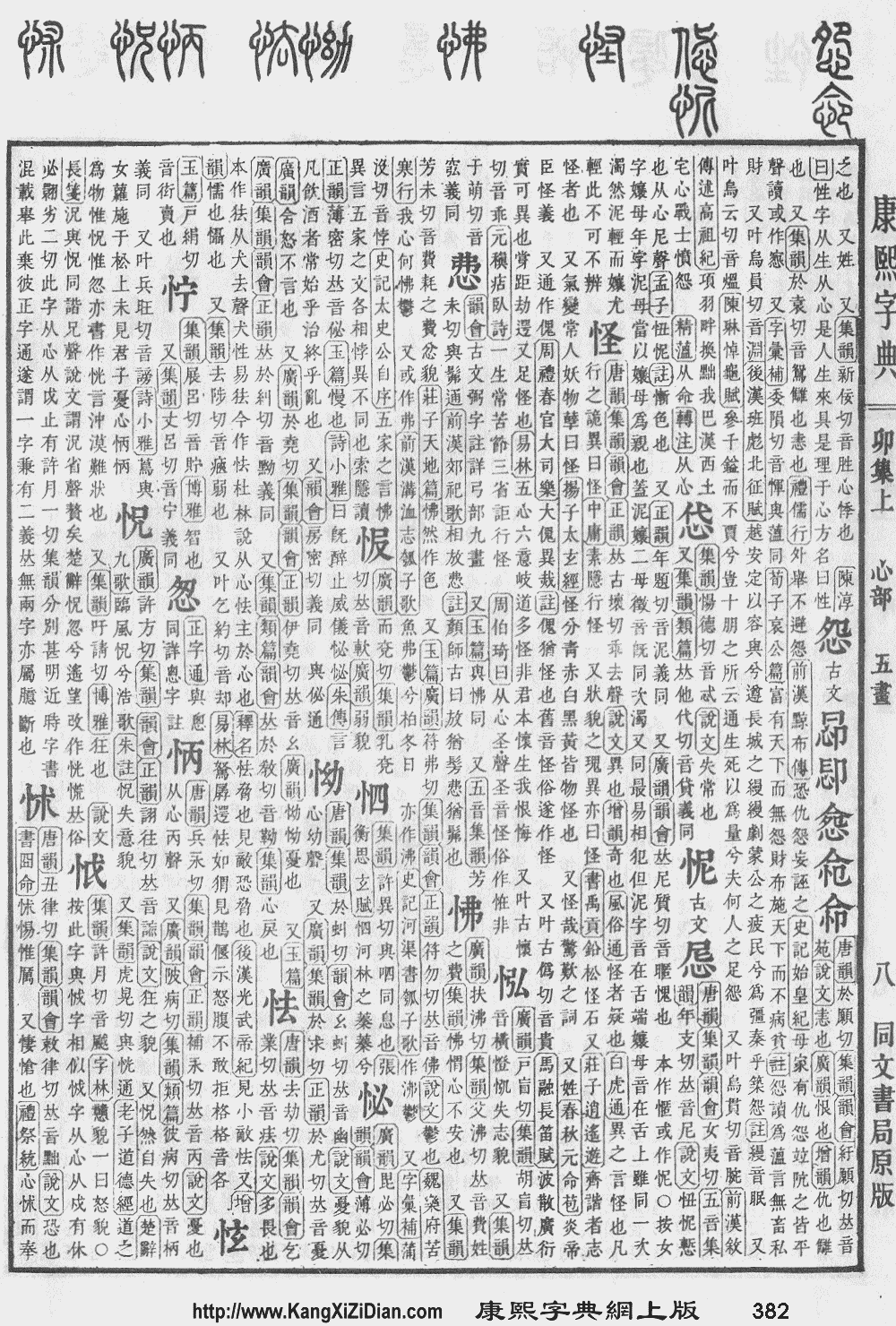
- Kangxi Dictionary: page 382, character 1
- Dai Kanwa Jiten: character 10479
- Dae Jaweon: page 711, character 1
- Hanyu Da Zidian (first edition): volume 4, page 2281, character 7
- Unihan data for U+6028
Chinese
| trad. | 怨 | |
|---|---|---|
| simp. # | 怨 | |
Glyph origin
Characters in the same phonetic series (夗) (Zhengzhang, 2003)
| Old Chinese | |
|---|---|
| 涴 | *qoːls, *qoːn, *qonʔ |
| 埦 | *qoːn |
| 豌 | *qoːn |
| 剜 | *qoːn |
| 眢 | *qoːn, *qon |
| 蜿 | *qoːn, *qon, *qonʔ |
| 帵 | *qoːn |
| 碗 | *qoːnʔ |
| 椀 | *qoːnʔ |
| 盌 | *qoːnʔ |
| 腕 | *qoːns |
| 惋 | *qoːns |
| 捥 | *qoːns |
| 睕 | *qoːns, *qonʔ, *qoːd |
| 琬 | *qoːns, *qonʔ |
| 鴛 | *quːn, *qon |
| 鵷 | *qon |
| 惌 | *qon, *qonʔ |
| 宛 | *qon, *qonʔ |
| 怨 | *qon, *qons |
| 葾 | *qon |
| 夗 | *qonʔ |
| 婉 | *qonʔ |
| 菀 | *qonʔ, *qud |
| 苑 | *qonʔ, *qons |
| 踠 | *qonʔ |
| 畹 | *qonʔ, *qons |
| 倇 | *qonʔ |
| 晼 | *qonʔ |
| 黦 | *qod, *qod, *qud |
| 焥 | *qoːd |
Phono-semantic compound (形聲/形声, OC *qon, *qons) : phonetic 夗 (OC *qonʔ) + semantic 心 (“heart”).
Etymology
(This etymology is missing or incomplete. Please add to it, or discuss it at the Etymology scriptorium. Particularly: “Possibly related to 冤?”)
Pronunciation
Definitions
怨
Compounds
- 不怨
- 不怨不尤
- 不辭勞怨/不辞劳怨
- 中懷怨恨/中怀怨恨
- 交怨
- 人怨神怒
- 仇怨 (chóuyuàn)
- 以德報怨/以德报怨 (yǐdébàoyuàn)
- 以怨報德/以怨报德 (yǐyuànbàodé)
- 以直報怨/以直报怨 (yǐzhíbàoyuàn)
- 任勞任怨/任劳任怨
- 勇動多怨/勇动多怨
- 匿怨
- 含怨 (hányuàn)
- 哀怨 (āiyuàn)
- 嗟怨 (jiēyuàn)
- 埋天怨地
- 埋怨 (mányuàn)
- 報怨/报怨 (bàoyuàn)
- 夙怨 (sùyuàn)
- 大怨
- 天怒人怨 (tiānnùrényuàn)
- 媒怨
- 嫌怨
- 寄怨
- 宿怨 (sùyuàn)
- 帶怨/带怨
- 幽怨 (yōuyuàn)
- 彥倫鶴怨/彦伦鹤怨
- 德以報怨/德以报怨
- 怨不得
- 怨世罵時/怨世骂时
- 怨仇 (yuànchóu)
- 怨偶
- 怨入骨髓
- 怨咨
- 怨嘆/怨叹 (oàn-thàn)
- 怨天尤人 (yuàntiān-yóurén)
- 怨天怨地 (yuàntiānyuàndì)
- 怨女 (yuànnǚ)
- 怨女曠夫/怨女旷夫 (yuànnǚ kuàngfū)
- 怨家
- 怨尤
- 怨府
- 怨念 (yuànniàn)
- 急忿怨痛
- 怨思
- 怨恨 (yuànhèn)
- 怨悔
- 怨慕
- 怨憤/怨愤
- 怨憎會苦/怨憎会苦
- 怨懟/怨怼 (yuànduì)
- 怨懣/怨懑
- 怨抑
- 怨敵/怨敌
- 怨暢/怨畅
- 怨望 (yuànwàng)
- 怨歎/怨叹
- 怨毒 (yuàndú)
- 怨氣/怨气 (yuànqì)
- 怨氣沖天/怨气冲天
- 怨氣滿腹/怨气满腹
- 怨結/怨结
- 怨而不言
- 怨耦
- 怨聲/怨声 (yuànshēng)
- 怨聲滿道/怨声满道
- 怨聲盈路/怨声盈路
- 怨聲載路/怨声载路
- 怨聲載道/怨声载道 (yuànshēngzàidào)
- 怨艾 (yuànyì)
- 怨言 (yuànyán)
- 怨詈
- 怨謗/怨谤
- 怨讟/怨𮙋
- 怨骨
- 怨鼓
- 恩怨 (ēnyuàn)
- 恩怨分明
- 悔怨
- 悽怨/凄怨
- 懷怨/怀怨 (huáiyuàn)
- 招怨
- 抱怨 (bàoyuàn)
- 搆怨/构怨 (gòuyuàn)
- 斂怨/敛怨
- 斂怨求媚/敛怨求媚
- 昭君怨
- 曠夫怨女/旷夫怨女 (kuàngfū yuànnǚ)
- 東征西怨
- 柳啼花怨
- 構怨/构怨 (gòuyuàn)
- 構怨連兵/构怨连兵
- 樹怨/树怨
- 死而無怨/死而无怨
- 民怨 (mínyuàn)
- 民怨沸騰/民怨沸腾
- 民怨盈塗/民怨盈涂
- 無怨無悔/无怨无悔
- 狂魂怨鬼
- 玉階怨/玉阶怨
- 痴男怨女 (chīnányuànnǚ)
- 白華之怨/白华之怨
- 盜怨主人/盗怨主人
- 睚眥之怨/睚眦之怨
- 神怒人怨
- 神怒民怨
- 神怒鬼怨
- 私怨
- 積怨/积怨 (jīyuàn)
- 結怨/结怨 (jiéyuàn)
- 絲恩髮怨/丝恩发怨
- 自怨自歎/自怨自叹
- 自怨自艾 (zìyuànzìyì)
- 舊怨/旧怨 (jiùyuàn)
- 虛恭實怨/虚恭实怨
- 謈怨
- 賈怨/贾怨
- 資怨助禍/资怨助祸
- 載道怨聲/载道怨声
- 閨怨/闺怨 (guīyuàn)
- 閨怨詩/闺怨诗
Japanese
Readings
Synonyms
Etymology 1
| Kanji in this term |
|---|
| 怨 |
| えん Grade: S |
| kan’on |
From Middle Chinese 怨 (MC 'jwon|'jwonH).
The kan'on pronunciation, so likely a later borrowing.
Pronunciation
- IPA(key): [ẽ̞ɴ]
Etymology 2
| Kanji in this term |
|---|
| 怨 |
| おん Grade: S |
| goon |
From Middle Chinese 怨 (MC 'jwon|'jwonH).
The goon pronunciation, so likely the initial borrowing.
Pronunciation
- IPA(key): [õ̞ɴ]
Korean
Hanja
怨 • (won) (hangeul 원, revised won, McCune–Reischauer wŏn, Yale wen)
- This term needs a translation to English. Please help out and add a translation, then remove the text
{{rfdef}}.
Vietnamese
This article is issued from Wiktionary. The text is licensed under Creative Commons - Attribution - Sharealike. Additional terms may apply for the media files.