恨
| ||||||||
Translingual
| Stroke order | |||
|---|---|---|---|
 | |||
Han character
恨 (Kangxi radical 61, 心+6, 9 strokes, cangjie input 心日女 (PAV), four-corner 97032, composition ⿰忄艮)
Derived characters
- 𭉆, 𭦼, 𥈥, 𪬲, 𭏂, 𢝧
References
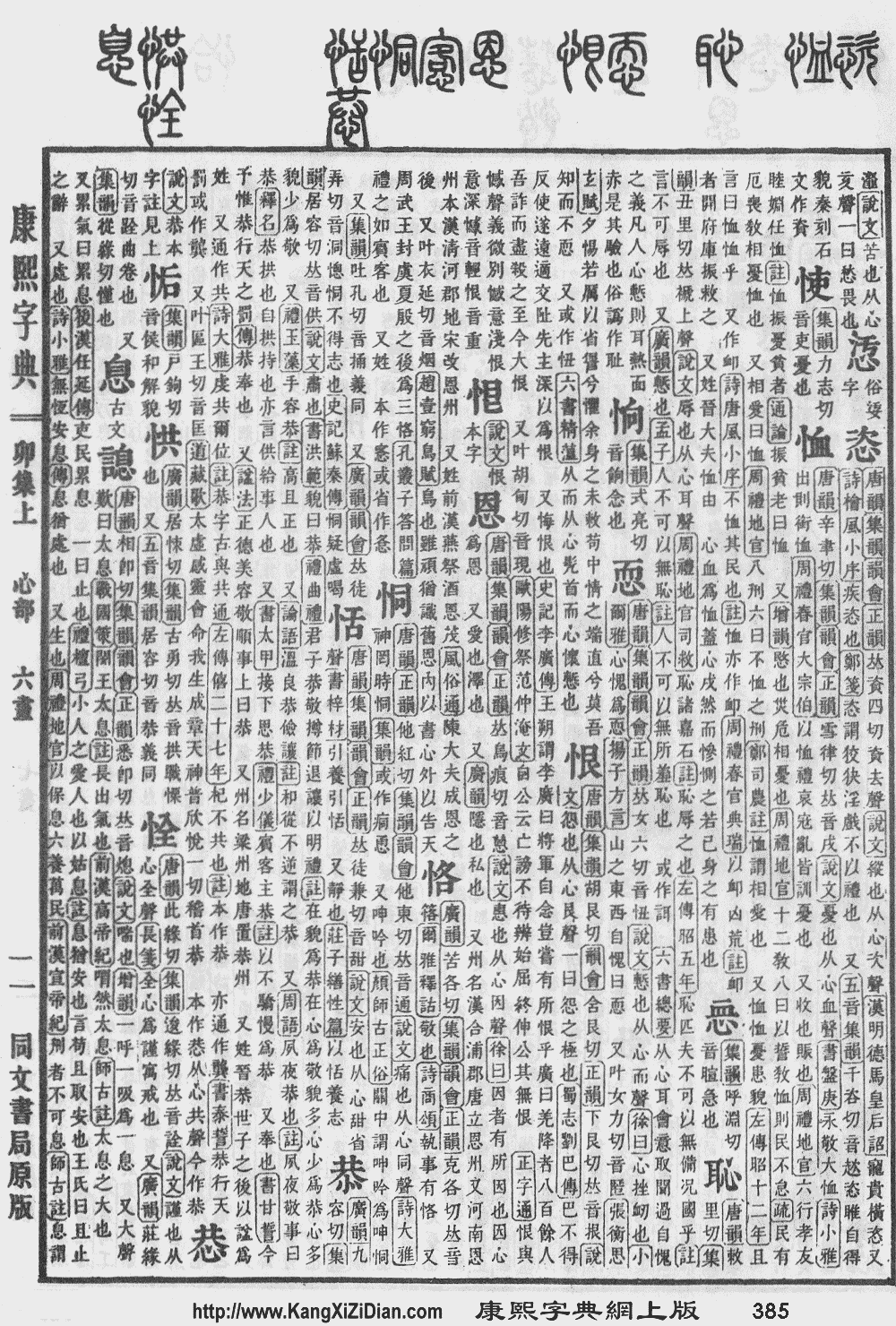
- Kangxi Dictionary: page 385, character 9
- Dai Kanwa Jiten: character 10588
- Dae Jaweon: page 716, character 5
- Hanyu Da Zidian (first edition): volume 4, page 2299, character 3
- Unihan data for U+6068
Chinese
| simp. and trad. |
恨 | |
|---|---|---|
Glyph origin
Characters in the same phonetic series (艮) (Zhengzhang, 2003)
| Old Chinese | |
|---|---|
| 艱 | *krɯːn |
| 齦 | *kʰrɯːnʔ, *kʰɯːnʔ, *ŋɯn |
| 眼 | *ŋrɯːnʔ |
| 蛝 | *ɡrɯːn |
| 限 | *ɡrɯːnʔ |
| 硍 | *ɡrɯːnʔ |
| 豤 | *kʰɯːnʔ, *kʰɯːnʔ, *kʰuːn |
| 詪 | *ɡlɯːnʔ, *kɯːnʔ, *kɯːns |
| 根 | *kɯːn |
| 跟 | *kɯːn |
| 珢 | *kɯːn, *kɯːns, *ŋrɯn |
| 艮 | *kɯːns |
| 茛 | *kɯːns |
| 墾 | *kʰɯːnʔ |
| 懇 | *kʰɯːnʔ |
| 垠 | *ŋɯːn, *ŋrɯn, *ŋɯn |
| 泿 | *ŋɯːn, *ŋrɯn |
| 痕 | *ɡɯːn |
| 拫 | *ɡɯːn |
| 鞎 | *ɡɯːn |
| 很 | *ɡɯːnʔ |
| 恨 | *ɡɯːns |
| 銀 | *ŋrɯn |
| 檭 | *ŋrɯn |
Phono-semantic compound (形聲/形声, OC *ɡɯːns) : semantic 忄 (“heart; thought; emotion”) + phonetic 艮 (OC *kɯːns).
Pronunciation
Definitions
恨
- to resent; to hate
- to regret; to pity
- 恨不得 ― hènbùdé ― to wish that one could ("to regret that one may not")
- 恨鐵不成鋼/恨铁不成钢 ― hèntiěbùchénggāng ― to pity someone's lack of improvement
- (chiefly literary) to pine; to long for; to miss; to suffer from intense desire
- 輟耕之壟上,悵恨久之,曰:「苟富貴,無相忘。」 [Classical Chinese, trad.]
- From: The Records of the Grand Historian, by Sima Qian, c. 91 BCE
- Chuò gēng zhī lǒng shàng, chànghèn jiǔzhī, yuē: “Gǒu fùguì, wú xiāngwàng.” [Pinyin]
- Taking a break from the work, he went up a raised slope by the fields. Full of care and discontent with himself for quite a while, he burst out, "Lest we forget one another when greatness is achieved!"
辍耕之垄上,怅恨久之,曰:「苟富贵,无相忘。」 [Classical Chinese, simp.]
- hatred; dislike
- 抱恨 ― bàohèn ― to be bitterly regretful
- 懷恨在心/怀恨在心 ― huáihènzàixīn ― to harbour hatred; to entertain hateful thoughts
- 世上決沒有無緣無故的愛,也沒有無緣無故的恨。 [MSC, trad.]
- From: 1942, 毛澤東 (Mao Zedong), 《在延安文藝座談會上的講話》 (Talks at the Yenan Forum on Literature and Art), 《毛澤東選集》. English translation based on the Foreign Languages Press edition
- Shìshàng jué méiyǒu wúyuánwúgù de ài, yě méiyǒu wúyuánwúgù de hèn. [Pinyin]
- There is absolutely no such thing in the world as love or hatred with out reason or cause.
世上决没有无缘无故的爱,也没有无缘无故的恨。 [MSC, simp.]
- (Cantonese) to be eager for something
Synonyms
Dialectal synonyms of 恨 (“to hate”) [map]
| Variety | Location | Words |
|---|---|---|
| Formal (Written Standard Chinese) | 恨, 憎恨, 嫌惡 | |
| Mandarin | Beijing | 恨 |
| Taiwan | 恨 | |
| Xi'an | 恨 | |
| Yinchuan | 恨 | |
| Ürümqi | 恨 | |
| Wuhan | 恨, 懥怨 | |
| Chengdu | 恨 | |
| Liuzhou | 恨 | |
| Yangzhou | 恨 | |
| Hefei | 恨 | |
| Malaysia | 恨 | |
| Singapore | 恨 | |
| Cantonese | Guangzhou | 憎, 嬲 |
| Hong Kong | 憎 | |
| Dongguan | 憎 | |
| Yangjiang | 嬲 | |
| Kuala Lumpur (Guangfu) | 憎 | |
| Singapore (Guangfu) | 憎 | |
| Gan | Nanchang | 恨 |
| Hakka | Meixian | 恨 |
| Miaoli (N. Sixian) | 恨 | |
| Pingtung (Neipu; S. Sixian) | 恨 | |
| Hsinchu County (Zhudong; Hailu) | 恨 | |
| Taichung (Dongshi; Dabu) | 恨 | |
| Hsinchu County (Qionglin; Raoping) | 恨 | |
| Yunlin (Lunbei; Zhao'an) | 恨 | |
| Jin | Taiyuan | 恨 |
| Xinzhou | 恨 | |
| Northern Min | Jian'ou | 恨 |
| Eastern Min | Fuzhou | 恨 |
| Southern Min | Xiamen | 恨, 猌 |
| Zhangzhou | 猌 | |
| Taipei | 猌 GT, 恨 GT | |
| Penang (Hokkien) | 猌, 惱 | |
| Singapore (Hokkien) | 猌 | |
| Chaozhou | 恨 | |
| Southern Pinghua | Nanning (Tingzi) | 恨 |
| Wu | Suzhou | 恨 |
| Wenzhou | 恨 | |
| Xiang | Changsha | 恨 |
| Shuangfeng | 馮, 恨 | |
| Note | GT - General Taiwanese (no specific region identified) | |
Compounds
- 不恨 (bùhèn)
- 中懷怨恨/中怀怨恨
- 仇恨 (chóuhèn)
- 今愁古恨
- 千仇萬恨/千仇万恨
- 千愁萬恨/千愁万恨
- 可恨 (kěhèn)
- 含恨 (hánhèn)
- 吞恨
- 報仇雪恨/报仇雪恨 (bàochóu xuěhèn)
- 報恨/报恨 (bàohèn)
- 報讎雪恨/报雠雪恨 (bàochóu xuěhèn)
- 嫉恨 (jíhèn)
- 客恨
- 寒門飲恨/寒门饮恨
- 心頭之恨/心头之恨
- 忌恨 (jìhèn)
- 忿恨
- 怨恨 (yuànhèn)
- 怪恨
- 恨不得 (hènbude)
- 恨之入骨 (hènzhīrùgǔ)
- 恨之切骨 (hènzhīqiègǔ)
- 恨事
- 恨人
- 恨入心髓 (hènrùxīnsuǐ)
- 恨入骨髓 (hènrùgǔsuǐ)
- 恨怒 (hènnù)
- 恚恨 (huìhèn)
- 恨恨
- 恨海
- 恨相知晚
- 恨相見晚/恨相见晚
- 恨絕/恨绝
- 恨苦
- 恨苦修行
- 恨賦/恨赋
- 恨鐵不成鋼/恨铁不成钢 (hèn tiě bù chéng gāng)
- 悔恨 (huǐhèn)
- 悵恨/怅恨 (chànghèn)
- 慨恨
- 惱恨/恼恨 (nǎohèn)
- 愛恨交織/爱恨交织
- 愁江恨海
- 愧恨
- 慚恨/惭恨
- 憤恨/愤恨 (fènhèn)
- 憎恨 (zēnghèn)
- 憤恨不平/愤恨不平 (fènhèn bùpíng)
- 憾恨
- 懷恨/怀恨 (huáihèn)
- 抱恨 (bàohèn)
- 抱恨終天/抱恨终天 (bàohènzhōngtiān)
- 挾恨/挟恨 (xiéhèn)
- 新恨
- 新愁舊恨/新愁旧恨
- 歎恨/叹恨
- 洩恨/泄恨 (xièhèn)
- 深仇大恨 (shēnchóudàhèn)
- 痛恨 (tònghèn)
- 發恨/发恨
- 相得恨晚
- 相知恨晚
- 相見恨晚/相见恨晚 (xiāngjiànhènwǎn)
- 相逢恨晚
- 終天之恨/终天之恨 (zhōngtiānzhīhèn)
- 終天抱恨/终天抱恨
- 舊恨/旧恨 (jiùhèn)
- 舊恨新愁/旧恨新愁
- 舊愁新恨/旧愁新恨
- 蓄恨
- 解恨 (jiěhèn)
- 記恨/记恨 (jìhèn)
- 遺恨/遗恨 (yíhèn)
- 遺恨千古/遗恨千古
- 銜恨/衔恨 (xiánhèn)
- 銜恨蒙枉/衔恨蒙枉
- 銜悲茹恨/衔悲茹恨
- 長恨傳/长恨传
- 長恨歌/长恨歌
- 離恨/离恨
- 離恨天/离恨天
- 雪恨 (xuěhèn)
- 飲恨/饮恨 (yǐnhèn)
- 飲恨吞聲/饮恨吞声
- 飲恨而終/饮恨而终 (yǐnhèn'érzhōng)
- 齎恨/赍恨 (jīhèn)
Japanese
Readings
Korean
Etymology
From Middle Chinese 恨 (MC honH).
| Historical Readings | ||
|---|---|---|
| Dongguk Jeongun Reading | ||
| Dongguk Jeongun, 1448 | ᅘᅳᆫ〮 (Yale: hhún) | |
| Middle Korean | ||
| Text | Eumhun | |
| Gloss (hun) | Reading | |
| Sinjeung Yuhap, 1576 | 애ᄃᆞᆯ (Yale: aytol) | ᄒᆞᆫ (Yale: hon) |
Pronunciation
- (SK Standard/Seoul) IPA(key): [ha̠(ː)n]
- Phonetic hangul: [한(ː)]
- Though still prescribed in Standard Korean, most speakers in both Koreas no longer distinguish vowel length.
Hanja
Wikisource 恨 (eumhun 한탄할 한 (hantanhal han))
- Hanja form? of 한 (“deep-seated resentment”). [noun]
- Hanja form? of 한 (“to resent; to hate”). [affix]
Compounds
Vietnamese
This article is issued from Wiktionary. The text is licensed under Creative Commons - Attribution - Sharealike. Additional terms may apply for the media files.