扆
| ||||||||
Translingual
Han character
扆 (Kangxi radical 63, 戶+6, 10 strokes, cangjie input 竹尸卜竹女 (HSYHV) or 戈尸卜竹女 (ISYHV), four-corner 30232, composition ⿸戶衣 or ⿸户衣)
Derived characters
- 𢲙, 𡙤
References
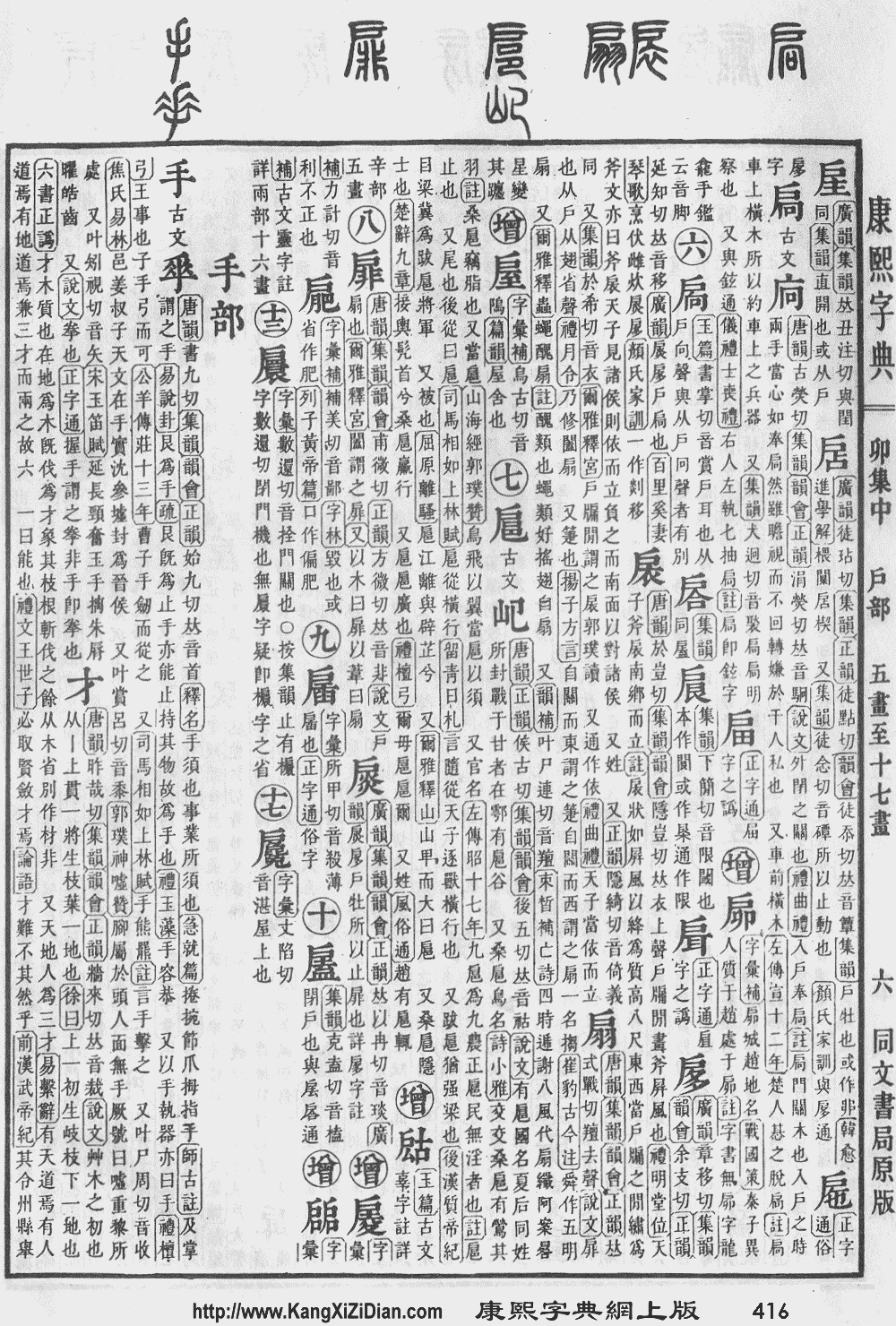
- Kangxi Dictionary: page 416, character 13
- Dai Kanwa Jiten: character 11742
- Dae Jaweon: page 761, character 15
- Hanyu Da Zidian (first edition): volume 3, page 2263, character 4
- Unihan data for U+6246
Chinese
| trad. | 扆 | |
|---|---|---|
| simp. # | 扆 | |
Glyph origin
Pronunciation
Definitions
扆
- This term needs a translation to English. Please help out and add a translation, then remove the text
{{rfdef}}.
Compounds
- 帷扆
- 扆座 (yǐzuò)
- 負扆/负扆
- 黼扆
Japanese
Pronunciation
- IPA(key): [i]
Noun
扆 • (i)
- in ancient China, a special windscreen placed behind the throne, made of red cloth embroidered with a pattern of axes and used during imperial audiences
- (by extension) the throne itself
This article is issued from Wiktionary. The text is licensed under Creative Commons - Attribution - Sharealike. Additional terms may apply for the media files.