扇

See also: 煽 and 搧
扇 U+6247, 扇
CJK UNIFIED IDEOGRAPH-6247
← 扆
[U+6246]
CJK Unified Ideographs 扈 →
[U+6248]

Translingual

Han character

扇 (Kangxi radical 63, 戶+6, 10 strokes, cangjie input 竹尸尸一一 (HSSMM) or 戈尸尸一一 (ISSMM), four-corner 30227, composition ⿸戶羽 or ⿸户羽 or ⿸戸羽)

Derived characters

References

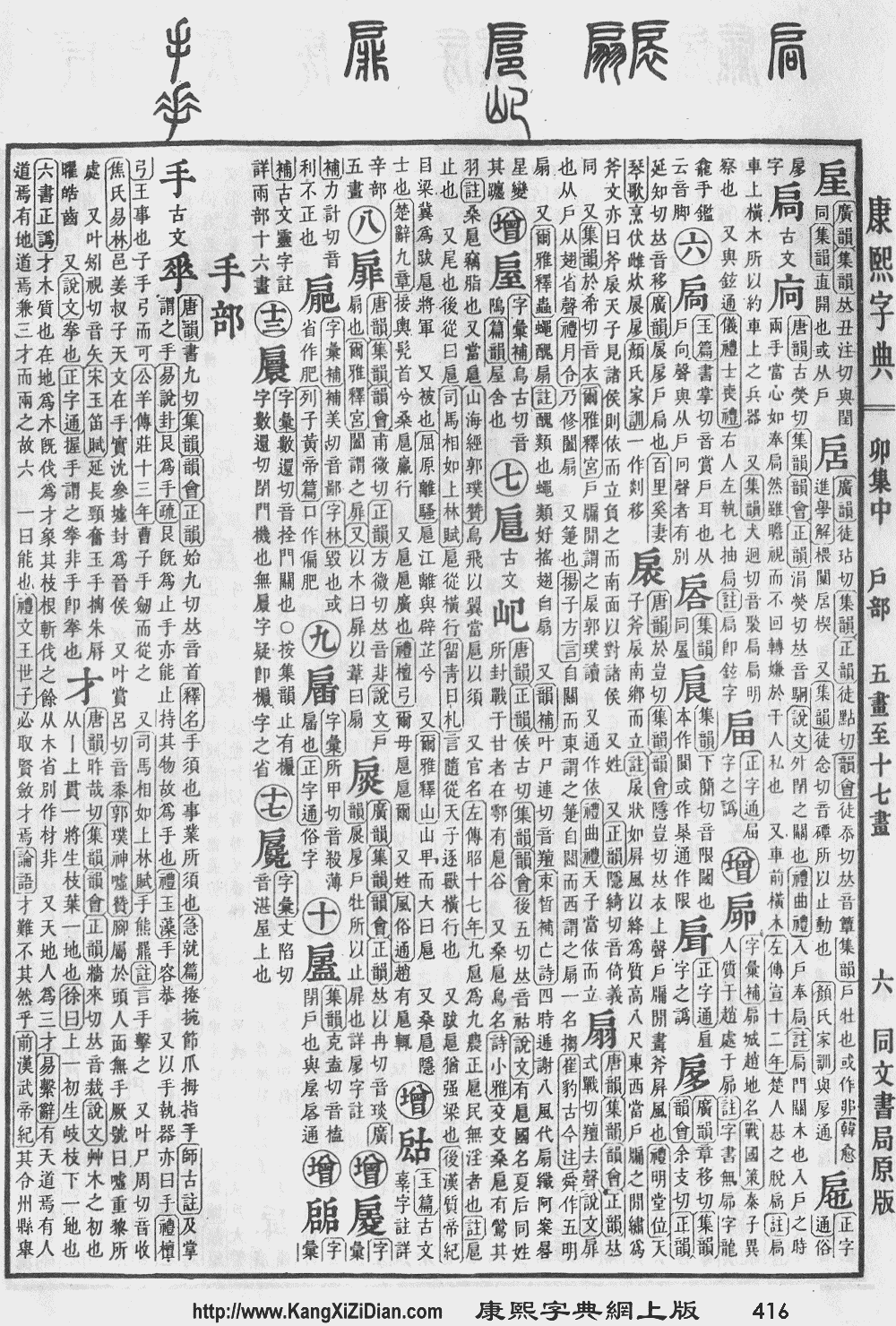
  • Kangxi Dictionary: page 416, character 14
  • Dai Kanwa Jiten: character 11743
  • Dae Jaweon: page 761, character 16
  • Hanyu Da Zidian (first edition): volume 3, page 2263, character 6
  • Unihan data for U+6247

Chinese

trad. 扇
simp. # 扇
alternative forms 搧
煽

Glyph origin

Ideogrammic compound (會意/会意) : 戶 (“door”) + 羽 (“feather”).

Pronunciation 1


Note:
  • sìⁿ - vernacular;
  • siàn - literary.

  • Dialectal data
Variety Location 扇 (扇子)
Mandarin Beijing /ʂan⁵¹/
Harbin /ʂan⁵³/
Tianjin /ʂan⁵³/
/san⁵³/
Jinan /ʂã²¹/
Qingdao /ʃã⁴²/
Zhengzhou /ʂan³¹²/
Xi'an /ʂã⁴⁴/
Xining /ʂã²¹³/
Yinchuan /ʂan¹³/
Lanzhou /ʂɛ̃n¹³/
Ürümqi /ʂan²¹³/
Wuhan /san³⁵/
Chengdu /san¹³/
Guiyang /san²¹³/
Kunming /ʂã̠³¹/
Nanjing /ʂaŋ⁴⁴/
Hefei /ʂæ̃⁵³/
/ʂən⁵³/
Jin Taiyuan /sæ̃⁴⁵/
Pingyao /ʂɑŋ³⁵/
Hohhot /sæ̃⁵⁵/
Wu Shanghai /sø³⁵/
Suzhou /sø⁵¹³/
Hangzhou /sz̩ʷõ⁴⁴⁵/
Wenzhou /ɕi⁴²/
Hui Shexian /ɕye³²⁴/
Tunxi /ɕiɛ⁴²/
Xiang Changsha /ʂə̃⁵⁵/
Xiangtan /ɕyẽ⁵⁵/
Gan Nanchang /sɛn⁴⁵/
Hakka Meixian /san⁵³/
Taoyuan /ʃɑn⁵⁵/
Cantonese Guangzhou /sin²²/
Nanning /sin³³/
Hong Kong /sin³³/
Min Xiamen (Hokkien) /sian²¹/
/sĩ²¹/
Fuzhou (Eastern Min) /siɛŋ²¹²/
Jian'ou (Northern Min) /siŋ³³/
Shantou (Teochew) /sĩ²¹³/
Haikou (Hainanese) /ti³⁵/

Rime
Character 扇
Reading # 2/2
Initial (聲) 書 (26)
Final (韻) 仙 (77)
Tone (調) Departing (H)
Openness (開合) Open
Division (等) III
Fanqie 式戰切
Baxter syenH
Reconstructions
Zhengzhang
Shangfang
/ɕiᴇnH/
Pan
Wuyun
/ɕiɛnH/
Shao
Rongfen
/ɕjænH/
Edwin
Pulleyblank
/ɕianH/
Li
Rong
/ɕiɛnH/
Wang
Li
/ɕĭɛnH/
Bernard
Karlgren
/ɕi̯ɛnH/
Expected
Mandarin
Reflex
shàn
Expected
Cantonese
Reflex
sin3
Baxter–Sagart system 1.1 (2014)
Character 扇
Reading # 1/1
Modern
Beijing
(Pinyin)
shàn
Middle
Chinese
‹ syenH ›
Old
Chinese
/*[l̥][a][r]-s/
English leaf of door (: fan?)

Notes for Old Chinese notations in the Baxter–Sagart system:

* Parentheses "()" indicate uncertain presence;
* Square brackets "[]" indicate uncertain identity, e.g. *[t] as coda may in fact be *-t or *-p;
* Angle brackets "<>" indicate infix;
* Hyphen "-" indicates morpheme boundary;

* Period "." indicates syllable boundary.
Zhengzhang system (2003)
Character 扇
Reading # 2/2
No. 11079
Phonetic
component
扇
Rime
group
元
Rime
subdivision
2
Corresponding
MC rime
扇
Old
Chinese
/*hljens/
Definitions

扇

  1. † leaf of door
  2. fan (Classifier: 把 c)
  3. Classifier for doors, windows and folding screens.
Synonyms
Compounds
  • 丟紙扇/丢纸扇
  • 兩扇皮/两扇皮
  • 六扇門/六扇门
  • 冬扇夏爐/冬扇夏炉
  • 卻扇/却扇
  • 吊扇 (diàoshàn)
  • 合歡扇/合欢扇
  • 團扇/团扇 (tuánshàn)
  • 團扇妾/团扇妾
  • 團香扇/团香扇
  • 夏鑪冬扇/夏𬬻冬扇
  • 宮扇/宫扇
  • 寶扇/宝扇
  • 扇墜兒/扇坠儿
  • 扇子 (shànzi)
  • 扇子生
  • 扇對/扇对
  • 扇形 (shànxíng)
  • 扇形理論/扇形理论
  • 扇形角
  • 扇牌
  • 扇舞
  • 扇葉蒲葵/扇叶蒲葵
  • 扇貝/扇贝 (shànbèi)
  • 扇車/扇车 (shànchē)
  • 扇面
  • 扇面對/扇面对
  • 扇馬/扇马
  • 扇骨子
  • 打扇 (dǎshàn)
  • 折扇 (zhéshàn)
  • 抽氣扇/抽气扇 (chōuqìshàn)
  • 掌扇
  • 排氣扇/排气扇 (páiqìshàn)
  • 搖鵝毛扇/摇鹅毛扇
  • 摺扇/折扇
  • 摺疊扇/折叠扇
  • 撒扇
  • 格扇
  • 桃花扇
  • 檀香扇
  • 歌扇
  • 沖積扇/冲积扇 (chōngjīshàn)
  • 波扇
  • 油搭扇
  • 油紙扇/油纸扇
  • 海扇
  • 班姬詠扇/班姬咏扇
  • 白團扇/白团扇
  • 磨扇墜手/磨扇坠手
  • 秋扇
  • 秋扇見捐/秋扇见捐
  • 秋風團扇/秋风团扇
  • 竹扇
  • 篋扇/箧扇
  • 紈扇/纨扇
  • 紙扇/纸扇
  • 羅扇/罗扇
  • 羽扇 (yǔshàn)
  • 羽扇綸巾/羽扇纶巾
  • 羽扇豆
  • 聚頭扇/聚头扇
  • 肋巴扇兒/肋巴扇儿
  • 舉扇一撝/举扇一㧑
  • 舞衫歌扇
  • 芭蕉扇 (bājiāoshàn)
  • 落地扇 (luòdìshàn)
  • 葵扇 (kuíshàn)
  • 蒲扇 (púshàn)
  • 蒲扇價增/蒲扇价增
  • 蒲葵扇
  • 蕉扇 (jiāoshàn)
  • 走扇
  • 鐵扇公主/铁扇公主
  • 門扇/门扇 (ménshàn)
  • 闔扇/阖扇
  • 隔扇
  • 雉尾扇
  • 電扇/电扇 (diànshàn)
  • 電風扇/电风扇 (diànfēngshàn)
  • 鞋扇
  • 風扇/风扇 (fēngshàn)
  • 香扇
  • 骨扇
  • 鵝毛扇/鹅毛扇
  • 鵝翎扇/鹅翎扇
  • 鵰翎扇/雕翎扇

Pronunciation 2


Note:
  • sìⁿ - vernacular;
  • siàn - literary.

Rime
Character 扇
Reading # 1/2
Initial (聲) 書 (26)
Final (韻) 仙 (77)
Tone (調) Level (Ø)
Openness (開合) Open
Division (等) III
Fanqie 式連切
Baxter syen
Reconstructions
Zhengzhang
Shangfang
/ɕiᴇn/
Pan
Wuyun
/ɕiɛn/
Shao
Rongfen
/ɕjæn/
Edwin
Pulleyblank
/ɕian/
Li
Rong
/ɕiɛn/
Wang
Li
/ɕĭɛn/
Bernard
Karlgren
/ɕi̯ɛn/
Expected
Mandarin
Reflex
shān
Expected
Cantonese
Reflex
sin1
Zhengzhang system (2003)
Character 扇
Reading # 1/2
No. 11077
Phonetic
component
扇
Rime
group
元
Rime
subdivision
2
Corresponding
MC rime
羶
Old
Chinese
/*hljen/
Definitions

扇

  1. to fan
    因為大廳裡很熱,她扇個不停。 [MSC, trad.]
    因为大厅里很热,她扇个不停。 [MSC, simp.]
    Yīnwèi dàtīng lǐ hěn rè, tā shān ge bùtíng. [Pinyin]
    As the hall was very hot, she kept fanning herself all the time.
    alt. forms: 煽 (for invigorating fire), 搧 (shān)
  2. to incite; to instigate; to provoke
    alt. forms: 煽 (shān)
  3. to slap (somebody on the face)
    我真想扇你一個耳光。 [MSC, trad.]
    我真想扇你一个耳光。 [MSC, simp.]
    Wǒ zhēn xiǎng shān nǐ yī ge ěrguāng. [Pinyin]
    I could give you a slap in the face.
    alt. forms: 搧 (shān)
Compounds
  • 來扇館/来扇馆
  • 扇動/扇动 (shāndòng)
  • 扇揚/扇扬
  • 扇枕溫席/扇枕温席
  • 扇枕溫衾/扇枕温衾
  • 扇枕溫被/扇枕温被
  • 扇涼翅兒/扇凉翅儿
  • 扇火止沸
  • 扇誘/扇诱
  • 扇風耳朵/扇风耳朵
  • 溫席扇枕/温席扇枕

Etymology 2

For pronunciation and definitions of 扇 – see 煽 (“to fan; to invigorate fire; to incite; to instigate; to provoke”).
(This character is the second-round simplified form of 煽).
Notes:

Etymology 3

For pronunciation and definitions of 扇 – see 搧 (“to fan; to flap; etc.”).
(This character is the second-round simplified form of 搧).
Notes:

Japanese

Shinjitai 扇
Kyūjitai
[1][2]

扇󠄁
扇+&#xE0101;?
(Adobe-Japan1)
扇󠄃
扇+&#xE0103;?
(Hanyo-Denshi)
(Moji_Joho)
The displayed kanji may be different from the image due to your environment.
See here for details.

Kanji

扇

(common “Jōyō” kanji)

Readings

From Middle Chinese 扇 (MC syenH); compare Mandarin 扇 (shàn):

  • Go-on: せん (sen, Jōyō)
  • Kan-on: せん (sen, Jōyō)

From Middle Chinese 扇 (MC syen); compare Mandarin 扇 (shān):

From native Japanese roots:

Compounds

Etymology

Kanji in this term
扇
おうぎ
Grade: S
kun’yomi

/afuɡi/ → */awuɡi/ → /auɡi/ → /ɔːɡi/ → /oːɡi/

Originally the continuative or noun stem form of verb 扇ぐ (aogu, “to fan, to wave something to create a breeze”).[3][4][5] The change in vowels represents a regular historical sound shift. Ultimately from Proto-Japonic *aponki.

First cited to the late 900s.[3]

Pronunciation

  • (Tokyo) おーぎ​ [òógíꜜ] (Odaka – [3])[5]
  • IPA(key): [o̞ːɡʲi]

Noun

扇(おうぎ) • (ōgi) ←あふぎ (afugi)?

  1. [from late 900s] fan (folding fan)

Derived terms

References

  1. “扇”, in 漢字ぺディア (Kanjipedia)‎ (in Japanese), 日本漢字能力検定協会, 2015–2024
  2. Haga, Gōtarō (1914) 漢和大辞書 [The Great Kanji-Japanese Dictionary] (in Japanese), Fourth edition, Tōkyō: Kōbunsha, →DOI, page 922 (paper), page 511 (digital)
  3. “扇”, in 日本国語大辞典 (Nihon Kokugo Daijiten, “Nihon Kokugo Daijiten”)‎ (in Japanese), concise edition, Tōkyō: Shogakukan, 2000
  4. “扇”, in デジタル大辞泉 [Digital Daijisen]‎ (in Japanese), Tōkyō: Shogakukan, updated roughly every four months
  5. Matsumura, Akira, editor (2006), 大辞林 [Daijirin] (in Japanese), Third edition, Tōkyō: Sanseidō, →ISBN

Korean

Hanja

扇 (eumhun 부채 선 (buchae seon))

  1. Hanja form? of 선 (“fan”).

Compounds

Vietnamese

Han character

扇: Hán Nôm readings: phiến, thiên

  1. This term needs a translation to English. Please help out and add a translation, then remove the text {{rfdef}}.
This article is issued from Wiktionary. The text is licensed under Creative Commons - Attribution - Sharealike. Additional terms may apply for the media files.