暖

See also: 煖
暖 U+6696, 暖
CJK UNIFIED IDEOGRAPH-6696
← 暕
[U+6695]
CJK Unified Ideographs 暗 →
[U+6697]

Translingual

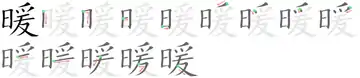
Stroke order
13 strokes

Han character

暖 (Kangxi radical 72, 日+9, 13 strokes, cangjie input 日月一水 (ABME), four-corner 62047, composition ⿰日爰)

Derived characters

  • 𧞈

References

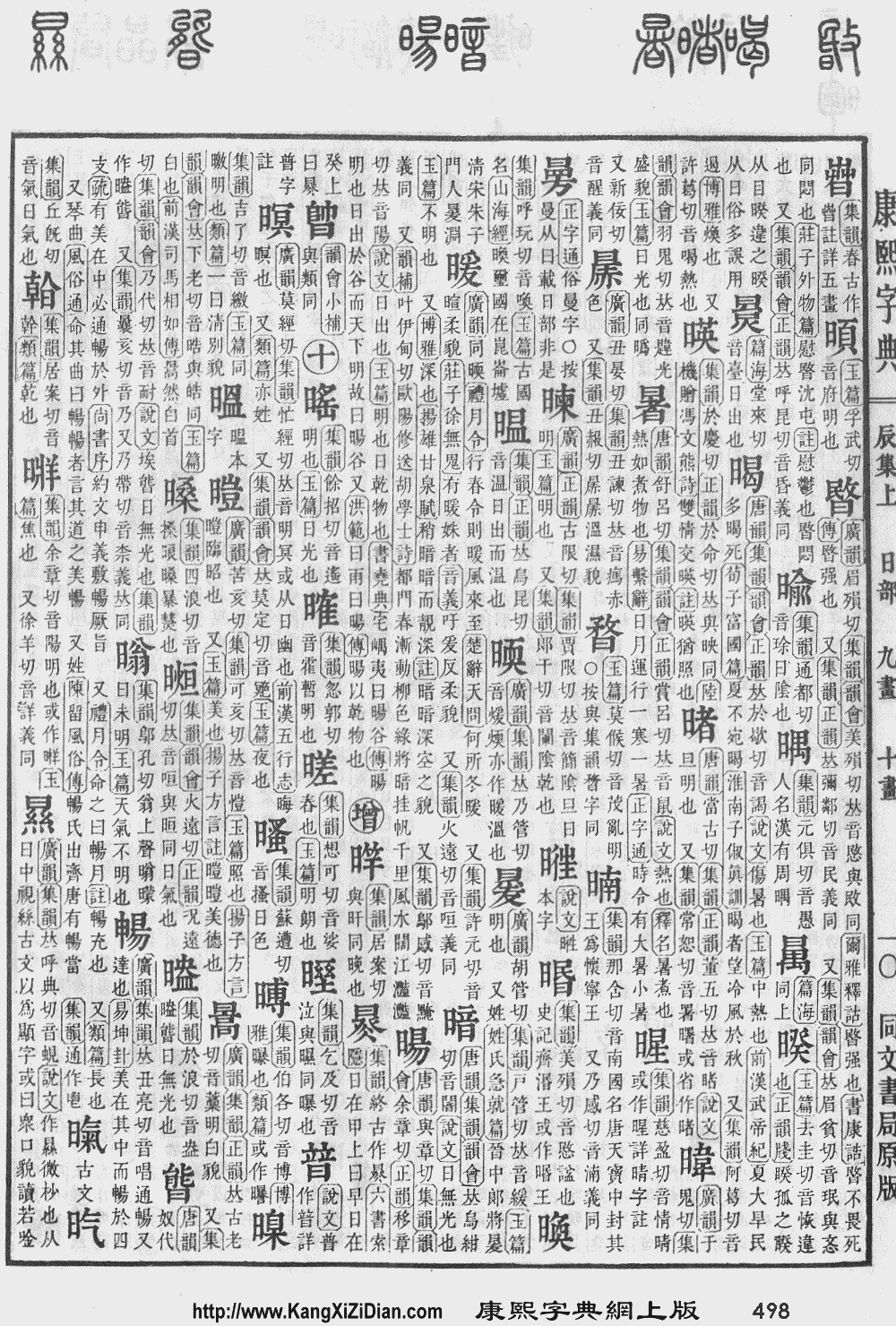
  • Kangxi Dictionary: page 498, character 26
  • Dai Kanwa Jiten: character 14064
  • Dae Jaweon: page 866, character 19
  • Hanyu Da Zidian (first edition): volume 2, page 1525, character 1
  • Unihan data for U+6696

Chinese

simp. and trad.
暖
alternative forms 煖
㬉
煗
𤆱

Glyph origin

Phono-semantic compound (形聲/形声, OC *noːnʔ) : semantic 日 (“sun”) + phonetic 爰 (OC *ɢʷan). Later also used as a variant of 煖/暖 which is used as another word with different pronunciation.

Pronunciation 1


Note:
  • loán - literary;
  • lún - vernacular.
      • (Teochew)
        • Peng'im: luêng2 / luang2 / nuang2 / ruang2 / ruêng2
        • Pe̍h-ōe-jī-like: luéng / luáng / nuáng / juáng / juéng
        • Sinological IPA (key): /lueŋ⁵²/, /luaŋ⁵²/, /nuaŋ⁵²/, /d͡zuaŋ⁵²/, /d͡zueŋ⁵²/
    Note:
    • luêng2 - Chaozhou;
    • luang2 - Shantou, Raoping;
    • nuang2 - Jieyang, Chenghai, Chaoyang, Puning, Huilai;
    • ruêng2 - Chaozhou (only in 暖爐 (“hotpot”));
    • ruang2 - Shantou, Jieyang, Chenghai, Chaoyang (only in 暖爐 (“hotpot”)).
      • Wu
        • (Shanghai):
          • Wugniu: 6noe
          • MiniDict: noe去
          • Wiktionary Romanisation (Shanghai): 3noe
          • Sinological IPA (Shanghai): /nø²³/

Rime
Character 暖
Reading # 1/1
Initial (聲) 泥 (8)
Final (韻) 桓 (62)
Tone (調) Rising (X)
Openness (開合) Closed
Division (等) I
Fanqie 乃管切
Baxter nwanX
Reconstructions
Zhengzhang
Shangfang
/nuɑnX/
Pan
Wuyun
/nʷɑnX/
Shao
Rongfen
/nuɑnX/
Edwin
Pulleyblank
/nwanX/
Li
Rong
/nuɑnX/
Wang
Li
/nuɑnX/
Bernard
Karlgren
/nuɑnX/
Expected
Mandarin
Reflex
nuǎn
Expected
Cantonese
Reflex
nyun5
Zhengzhang system (2003)
Character 暖
Reading # 1/1
No. 16157
Phonetic
component
爰
Rime
group
元
Rime
subdivision
3
Corresponding
MC rime
煗
Old
Chinese
/*noːnʔ/
Notes 煖分化字見墨子訓讀同煗

Definitions

暖

  1. warm; toasty
  2. (transitive) to warm; to warm up
Synonyms

Compounds

Pronunciation 2


Definitions

暖

  1. Used in 暖姝.
  2. Used in 暖暖 (xuānxuān).

Japanese

Shinjitai 暖
Kyūjitai
[1]

暖󠄁
暖+󠄁?
(Adobe-Japan1)
暖󠄃
暖+󠄃?
(Hanyo-Denshi)
(Moji_Joho)
The displayed kanji may be different from the image due to your environment.
See here for details.

Kanji

暖

(grade 6 “Kyōiku” kanji)

  1. warm

Readings

Compounds

Etymology 1

Kanji in this term
暖
だん
Grade: 6
on’yomi

From Middle Chinese 暖 (MC nwanX).

Pronunciation

Noun

暖(だん) • (dan) ←だん (dan)?

  1. (only in set phrases) warmth
    暖(だん)を取(と)る
    dan o toru
    to get warmth

Proper noun

暖(あたた) or 暖(いふ) or 暖(うらら) or 暖(だん) or 暖(のどか) or 暖(のん) or 暖(はる) or 暖(はるか) or 暖(はるな) or 暖(ひなた) • (Atata or Ifu or Urara or Dan or Nodoka or Non or Haru or Haruka or Haruna or Hinata) 

  1. a female given name

References

  1. “暖”, in 漢字ぺディア (Kanjipedia)‎ (in Japanese), 日本漢字能力検定協会, 2015–2024
  2. Matsumura, Akira, editor (2006), 大辞林 [Daijirin] (in Japanese), Third edition, Tōkyō: Sanseidō, →ISBN

Korean

Hanja

暖 (eumhun 따뜻할 난 (ttatteuthal nan))

  1. Hanja form? of 난 (“warm”).

Compounds

Hanja

暖 (eumhun 부드러울 훤 (budeureoul hwon))

  1. Hanja form? of 훤 (“genial”).

Vietnamese

Han character

暖: Hán Việt readings: huyên, noãn[1], nõng, nóng, nũn, nuỹn, nuyễn
暖: Nôm readings: hoãn[2], noãn[1], nõng, nóng, nũn, nuỹn, nuyễn

  1. chữ Hán form of noãn (“warm”).

References

  1. Trần (2004).
  2. Nguyễn et al. (2009).
This article is issued from Wiktionary. The text is licensed under Creative Commons - Attribution - Sharealike. Additional terms may apply for the media files.