讀
| ||||||||
| ||||||||
Translingual
| Traditional | 讀 |
|---|---|
| Shinjitai | 読 |
| Simplified | 读 |
Han character
讀 (Kangxi radical 149, 言+15, 22 strokes, cangjie input 卜口土田金 (YRGWC), four-corner 04686, composition ⿰訁賣 or ⿰訁𧶠)
Derived characters
- 𭍏, 讟
References
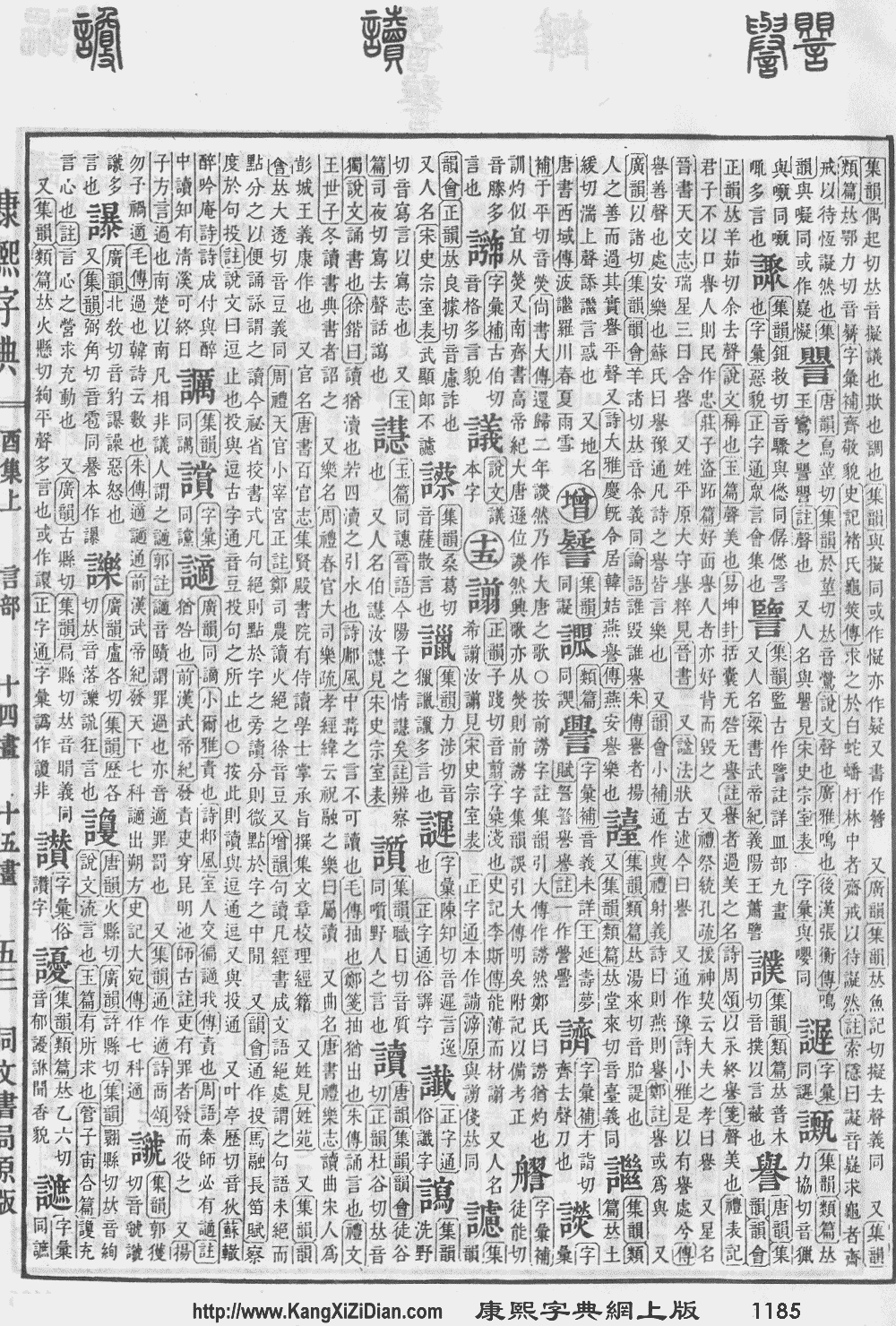
- Kangxi Dictionary: page 1185, character 27
- Dai Kanwa Jiten: character 36088
- Dae Jaweon: page 1649, character 9
- Hanyu Da Zidian (first edition): volume 6, page 4029, character 1
- Unihan data for U+8B80
- Unihan data for U+F95A
Chinese
Glyph origin
| Historical forms of the character 讀 | |
|---|---|
| Shuowen Jiezi (compiled in Han) | Liushutong (compiled in Ming) |
| Small seal script | Transcribed ancient scripts |
 |
 |
Phono-semantic compound (形聲/形声, OC *l'oːɡ) : semantic 言 (“to say”) + phonetic 𧶠 (OC *luɡ).
Etymology 1
| trad. | 讀 | |
|---|---|---|
| simp. | 读 | |
“To say aloud, to tell” (Shijing) > “to recite” > “to read”.
Cognate with Tibetan ཀློག (klog, “to read; to recite”). Starostin sets up Proto-Sino-Tibetan *k-lok (“to recite; to give notice”) for this, and also includes Burmese လျှောက် (hlyauk, “to tell; to ask; to petition; word-for-word translation; indiscriminately”) and Mizo thlûk (“accent, tone, intonation”). Related to 讟 (OC *l'oːɡ, “resentment, slander < to grumble; complaint”).
STEDT provisionally sets up Proto-Sino-Tibetan *s-g-(l/r)əwk (“to read”), relating it to 牘 (OC *l'oːɡ, “tablet”).
Sagart (1999) argues that “read” cannot be the primary meaning, since existence of the concept “to read” before the invention of writing is questionable. There is likely no writing at the time of the split between Chinese and other Sino-Tibetan languages, therefore the Tibetan word may represent a borrowing from Chinese.
Pronunciation
Definitions
讀
Compounds
- 一讀會/一读会
- 三讀/三读 (sāndú)
- 三讀會/三读会
- 伏讀/伏读
- 低幼讀物/低幼读物
- 伴讀/伴读 (bàndú)
- 侍讀/侍读 (shìdú)
- 俗讀/俗读
- 判讀/判读 (pàndú)
- 十年讀書/十年读书
- 半工半讀/半工半读 (bàngōngbàndú)
- 又讀/又读
- 可讀性/可读性 (kědúxìng)
- 吏讀/吏读 (lìdú)
- 唯讀/唯读
- 宣讀/宣读 (xuāndú)
- 審讀/审读 (shěndú)
- 導讀/导读 (dǎodú)
- 就讀/就读 (jiùdú)
- 展讀/展读
- 工讀/工读 (gōngdú)
- 工讀生/工读生 (gōngdúshēng)
- 復讀/复读 (fùdú)
- 恭讀/恭读 (gōngdú)
- 悔讀南華/悔读南华
- 披讀/披读
- 拜讀/拜读 (bàidú)
- 掛角讀書/挂角读书
- 捧讀/捧读
- 攻讀/攻读 (gōngdú)
- 教讀/教读
- 映月讀書/映月读书
- 映雪讀書/映雪读书
- 書讀五車/书读五车
- 有邊讀邊/有边读边 (yǒu biān dú biān)
- 朗讀/朗读 (lǎngdú)
- 熟讀/熟读
- 熟讀玩味/熟读玩味
- 熟讀精思/熟读精思
- 牧羊讀書/牧羊读书
- 異讀/异读 (yìdú)
- 白讀/白读 (báidú)
- 百讀不厭/百读不厌 (bǎidúbùyàn)
- 盲人讀物/盲人读物
- 研讀/研读 (yándú)
- 破讀/破读 (pòdú)
- 精讀/精读 (jīngdú)
- 耕讀/耕读
- 耕讀傳家/耕读传家
- 耽讀/耽读
- 脣讀/唇读 (chúndú)
- 解讀/解读 (jiědú)
- 訓讀/训读 (xùndú)
- 誦讀/诵读 (sòngdú)
- 誤讀/误读 (wùdú)
- 課外讀物/课外读物
- 諷讀/讽读
- 講讀/讲读
- 讀不捨手/读不舍手
- 讀冊/读册 (tha̍k-chheh) (Min Nan)
- 讀卡機/读卡机
- 讀友/读友
- 讀取/读取 (dúqǔ)
- 讀寫/读写 (dúxiě)
- 讀律/读律
- 讀後感/读后感 (dúhòugǎn)
- 讀數/读数 (dúshù)
- 讀書/读书 (dúshū)
- 讀書三到/读书三到
- 讀書三餘/读书三余
- 讀書人/读书人 (dúshūrén)
- 讀書明理/读书明理
- 讀書破萬卷/读书破万卷 (dúshū pò wànjuàn)
- 讀書種子/读书种子
- 讀書識字/读书识字 (dúshū shízì)
- 讀會/读会
- 讀本/读本 (dúběn)
- 讀死書/读死书 (dúsǐshū)
- 讀法/读法
- 讀為/读为
- 讀物/读物 (dúwù)
- 讀畫/读画
- 讀破/读破 (dúpò)
- 讀破句/读破句 (dúpòjù)
- 讀秒/读秒 (dúmiǎo)
- 讀經/读经 (dújīng)
- 讀者/读者 (dúzhě)
- 讀者投書/读者投书
- 讀者文摘/读者文摘
- 讀脣術/读唇术
- 讀若/读若 (dúruò)
- 讀音/读音 (dúyīn)
- 走讀生/走读生
- 輟讀/辍读
- 轉讀/转读
- 通俗讀物/通俗读物
- 通讀/通读 (tōngdú)
- 速讀/速读
- 選讀/选读 (xuǎndú)
- 選讀生/选读生
- 重讀/重读
- 閱讀/阅读 (yuèdú)
- 閱讀機/阅读机
- 附讀/附读
- 音讀/音读 (yīndú)
- 飽讀詩書/饱读诗书 (bǎodúshīshū)
- 默讀/默读 (mòdú)
Etymology 2
| trad. | 讀 | |
|---|---|---|
| simp. | 读 | |
| alternative forms | 逗 | |
A late attested reading. Starostin thinks it is from the *-s pronunciation of Etymology 1.
Pronunciation
Definitions
讀
Further reading
- “Entry #13262”, in 臺灣閩南語常用詞辭典 [Dictionary of Frequently-Used Taiwan Minnan] (overall work in Mandarin and Hokkien), Ministry of Education, R.O.C., 2023.
Korean
Etymology 1
From Middle Chinese 讀 (MC duwk).
| Historical readings |
|---|
|
Pronunciation
- (SK Standard/Seoul) IPA(key): [to̞k̚]
- Phonetic hangul: [독]
Compounds
- 낭독 (朗讀, nangdok)
- 독자 (讀者, dokja)
- 독송 (讀誦, doksong)
- 정독 (精讀, jeongdok)
- 속독 (速讀, sokdok)
- 다독 (多讀, dadok)
- 해독 (解讀, haedok)
- 열독 (熱讀, yeoldok)
- 묵독 (默讀, mukdok)
- 오독 (誤讀, odok)
- 통독 (通讀, tongdok)
- 구독 (購讀, gudok)
- 독음 (讀音, dogeum)
- 남독 (濫讀, namdok)
- 음독 (音讀, eumdok)
- 훈독 (訓讀, hundok)
- 독본 (讀本, dokbon)
- 독습 (讀習, dokseup)
- 필독 (必讀, pildok)
- 독서 (讀書, dokseo, “reading a book”)
- 독후감 (讀後感, dokhugam)
Etymology 2
From Middle Chinese 讀 (MC duwH).
| Historical readings |
|---|
|
Pronunciation
- (SK Standard/Seoul) IPA(key): [tu]
- Phonetic hangul: [두]