分
| ||||||||
Translingual
| Stroke order | |||
|---|---|---|---|
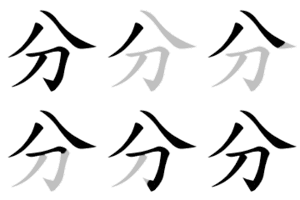 | |||
| Stroke order | |||
|---|---|---|---|
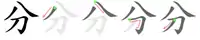 | |||
Han character
分 (Kangxi radical 18, 刀+2, 4 strokes, cangjie input 金尸竹 (CSH), four-corner 80227, composition ⿱八刀)
Derived characters
References
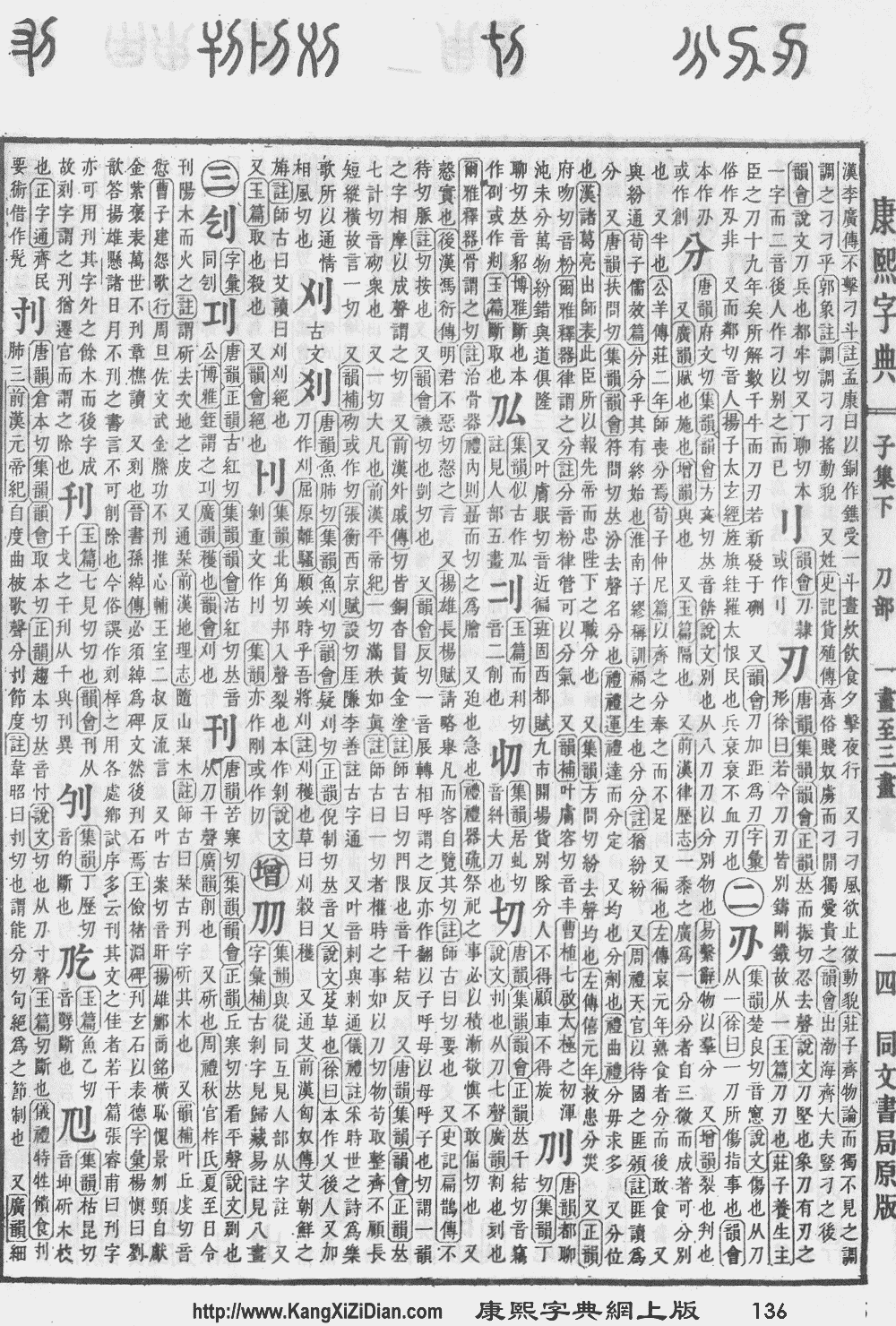
- Kangxi Dictionary: page 136, character 4
- Dai Kanwa Jiten: character 1853
- Dae Jaweon: page 304, character 12
- Hanyu Da Zidian (first edition): volume 1, page 321, character 3
- Unihan data for U+5206
Chinese
| trad. | 分 | |
|---|---|---|
| simp. # | 分 | |
Glyph origin
| Historical forms of the character 分 | ||||
|---|---|---|---|---|
| Shang | Western Zhou | Warring States | Shuowen Jiezi (compiled in Han) | Liushutong (compiled in Ming) |
| Oracle bone script | Bronze inscriptions | Chu slip and silk script | Small seal script | Transcribed ancient scripts |
 |
 |
 |
 |
 |
| Old Chinese | |
|---|---|
| 扮 | *prɯːns, *hmroːlʔ, *pɯn, *pɯnʔ |
| 盼 | *pʰrɯːns |
| 頒 | *praːn, *bɯn |
| 朌 | *praːn, *bɯn |
| 鳻 | *praːn, *bɯn |
| 份 | *prɯn, *bɯns |
| 汃 | *pʰreːd, *prɯn |
| 玢 | *prɯn |
| 邠 | *prɯn |
| 攽 | *prɯn |
| 砏 | *prɯn, *pʰrɯn, *pʰɯn |
| 貧 | *brɯn |
| 湓 | *pʰɯːns, *bɯːn, *pʰɯns |
| 盆 | *bɯːn |
| 葐 | *bɯːn, *bɯn, *bɯn |
| 坌 | *bɯːns, *bɯnʔ, *bɯns |
| 坋 | *bɯːns, *bɯnʔ, *bɯns |
| 分 | *pɯn, *bɯns |
| 吩 | *pɯn |
| 粉 | *pɯnʔ |
| 黺 | *pɯnʔ |
| 芬 | *pʰɯn |
| 紛 | *pʰɯn |
| 衯 | *pʰɯn |
| 棻 | *pʰɯn, *bɯn |
| 氛 | *pʰɯn, *bɯn |
| 雰 | *pʰɯn |
| 忿 | *pʰɯnʔ, *pʰɯns, *bɯnʔ |
| 魵 | *pʰɯnʔ, *pʰɯns, *bɯn, *bɯnʔ |
| 汾 | *bɯn |
| 羒 | *bɯn |
| 枌 | *bɯn |
| 棼 | *bɯn |
| 妢 | *bɯn |
| 梤 | *bɯn |
| 馚 | *bɯn |
| 鼢 | *bɯn, *bɯnʔ |
| 蚡 | *bɯn, *bɯnʔ |
| 弅 | *bɯnʔ |
| 秎 | *bɯns |
Ideogrammic compound (會意/会意) : 八 (“to separate”) + 刀 (“knife”) – to separate with a knife.
Pronunciation 1
Definitions
分
- to divide; to separate
- to distribute; to allocate; to assign; to allot
- to distinguish; to differentiate; to tell apart
- to break up; to end a relationship; to separate
- See also: 分手
- (Hakka, Teochew, Hainanese) to give
- (Hakka, Teochew) by
- 分人罵/分人骂 [Sixian Hakka] ― pûn ngìn ma [Pha̍k-fa-sṳ] ― to be scolded (by people)
- minute (unit of time)
- minute (unit of angle, 1/60 of a degree)
- fraction; proportion
- 分之 ― fēnzhī ― used to indicate a fraction
- (education, competition, etc.) point; mark
- one tenth
- [from 19th c., officially from 1981 (PRC), 1985 (ROC)] deci- (SI unit prefix)
- (numismatics) 0.01 yuan (or dollars, etc.); fen; cent
- (Shanghainese, slang) ten yuan (or dollars, etc.) (Classifier: 張/张 w)
- (Shanghainese, by extension) money
- 還分/还分 [Shanghainese] ― 6we 1fen [Wugniu] ― to return money
- one tenth of a 寸 (a unit of length)
- (Hong Kong) fan, legally defined as 0.00371475 metres
- (Mainland China) Short for 市分, equivalent to 0.33 cm
- one tenth of a 畝 (a unit of area)
- a candareen (a unit of weight), one tenth of a 錢/钱 (qián, “mace”), and equal to ten 釐 (lí, “cash”)
- (historical) an ancient small unit of time
- (Hokkien) to adopt (a child)
- (Taiwanese Hokkien) to beg (ask for food or money as charity)
Synonyms
- (to divide):
- (to distribute):
- (to distribute):
- 分別/分别 (fēnbié)
- 分化 (fēnhuà)
- 分揀/分拣 (fēnjiǎn) (literary)
- 分辨 (fēnbiàn)
- 判別/判别 (pànbié)
- 別白/别白 (biébái) (literary)
- 劃分/划分 (huàfēn)
- 區/区 (literary, or in compounds)
- 區分/区分 (qūfēn)
- 區別/区别 (qūbié)
- 區劃/区划 (qūhuà) (literary)
- 甄別/甄别 (zhēnbié)
- 科別/科别 (kēbié) (literary)
- 認/认 (rèn) (literary, or in compounds)
- 識別/识别 (shíbié)
- 辨別/辨别 (biànbié)
- 辨明 (biànmíng)
- 辨析 (biànxī) (to differentiate and analyze)
- 辨白 (biànbái) (literary)
- 辨認/辨认 (biànrèn)
- 辨識/辨识 (biànshí)
- 鑒別/鉴别 (jiànbié)
- 鑒識/鉴识 (jiànshí)
- (to break up): 分手 (fēnshǒu)
- (to give):
- (by):
- (to beg for food or money):
- (cent):
| Variety | Location | Words |
|---|---|---|
| Formal (Written Standard Chinese) | 分 | |
| Mandarin | Beijing | 分 |
| Taiwan | 分 | |
| Jinan | 分 | |
| Xi'an | 分 | |
| Wuhan | 分 | |
| Chengdu | 分 | |
| Yangzhou | 分 | |
| Hefei | 分 | |
| Malaysia | 仙 | |
| Singapore | 分 | |
| Cantonese | Guangzhou | 分 |
| Hong Kong | 仙, 仙士 dated | |
| Taishan | 分, 仙 | |
| Gan | Nanchang | 分 |
| Hakka | Meixian | 分 |
| Jin | Taiyuan | 分 |
| Northern Min | Jian'ou | 分 |
| Eastern Min | Fuzhou | 分 |
| Southern Min | Xiamen | 占, 分 |
| Quanzhou | 占 | |
| Zhangzhou | 占 | |
| Tainan | 仙 | |
| Penang (Hokkien) | 鐳, sen | |
| Singapore (Hokkien) | 占 | |
| Manila (Hokkien) | 仙 | |
| Chaozhou | 分 | |
| Singapore (Teochew) | 占 | |
| Wu | Suzhou | 分 |
| Wenzhou | 分 | |
| Xiang | Changsha | 分 |
| Shuangfeng | 分 | |
Compounds
- 一分 (yīfēn)
- 一百分
- 三分 (sānfēn)
- 不分曉/不分晓
- 不十分
- 中分 (zhōngfēn)
- 乖分
- 九分
- 二分 (èrfēn)
- 二分法 (èrfēnfǎ)
- 二等分
- 俵分
- 停分
- 假分數/假分数 (jiǎfēnshù)
- 克分子
- 內分泌/内分泌 (nèifēnmì)
- 八九分
- 八分 (bāfēn)
- 八分儀/八分仪 (bāfēnyí)
- 八分書/八分书 (bāfēnshū)
- 公分 (gōngfēn)
- 六分儀/六分仪 (liùfēnyí)
- 公分子
- 公分母
- 共分
- 分享 (fēnxiǎng)
- 分付 (fēnfù)
- 分例
- 分俵
- 分光儀/分光仪
- 分光鏡/分光镜
- 分公司 (fēngōngsī)
- 分兵 (fēnbīng)
- 分冊/分册 (fēncè)
- 切分法
- 切分音
- 分列 (fēnliè)
- 分列式 (fēnlièshì)
- 分別/分别 (fēnbié)
- 分利
- 分則/分则 (fēnzé)
- 分剖
- 分割 (fēngē)
- 分劈
- 分力
- 分務/分务
- 分包 (fēnbāo)
- 分化 (fēnhuà)
- 分北
- 分區/分区 (fēnqū)
- 分司
- 分另
- 分句 (fēnjù)
- 分合 (fēnhé)
- 分向島/分向岛
- 分命
- 分單/分单
- 分器
- 分土
- 分夥/分伙
- 分大小
- 分娩 (fēnmiǎn)
- 分子力
- 分子式 (fēnzǐshì)
- 分家 (fēnjiā)
- 分寸 (fēncùn)
- 分封 (fēnfēng)
- 分尼
- 分局 (fēnjú)
- 分居 (fēnjū)
- 分屍/分尸 (fēnshī)
- 分岔 (fēnchà)
- 分崩 (fēnbēng)
- 分工 (fēngōng)
- 分布 (fēnbù)
- 分店 (fēndiàn)
- 分度規/分度规
- 分張/分张
- 分形 (fēnxíng)
- 分得
- 分心 (fēnxīn)
- 分憂/分忧 (fēnyōu)
- 分手 (fēnshǒu)
- 分批 (fēnpī)
- 分投
- 分掌 (fēnzhǎng)
- 分撥/分拨 (fēnbō)
- 分擔/分担 (fēndān)
- 分擺/分摆
- 分攜/分携
- 分攤/分摊 (fēntān)
- 分支 (fēnzhī)
- 分教
- 分散 (fēnsàn)
- 分數/分数 (fēnshù)
- 分文 (fēnwén)
- 分明 (fēnmíng)
- 分時/分时
- 分曉/分晓 (fēnxiǎo)
- 分書/分书
- 分曹
- 分析 (fēnxī)
- 分析法
- 分杯羹
- 分析語/分析语 (fēnxīyǔ)
- 分校 (fēnxiào)
- 分桃 (fēntáo)
- 分機/分机 (fēnjī)
- 分櫱/分蘖
- 分權/分权 (fēnquán)
- 分歧 (fēnqí)
- 分歲/分岁
- 分段 (fēnduàn)
- 分母 (fēnmǔ)
- 分毫 (fēnháo)
- 分水 (Fēnshuǐ)
- 分水嶺/分水岭 (fēnshuǐlǐng)
- 分水隄
- 分泌 (fēnmì)
- 分洪 (fēnhóng)
- 分派 (fēnpài)
- 分流 (fēnliú)
- 分渾元/分浑元
- 分潤/分润 (fēnrùn)
- 分炊
- 分爨 (fēncuàn)
- 分爭/分争 (fēnzhēng)
- 分獻/分献
- 分班
- 分理
- 分甘
- 分界 (fēnjiè)
- 分界牌
- 分畦
- 分疏
- 分痛
- 分發/分发 (fēnfā)
- 分相
- 分破
- 分神 (fēnshén)
- 分神福
- 分科 (fēnkē)
- 分秒
- 分秧
- 分租
- 分筋術/分筋术
- 分紅/分红 (fēnhóng)
- 分級/分级 (fēnjí)
- 分細/分细
- 分組/分组 (fēnzǔ)
- 分職/分职
- 分肥
- 分背
- 分至 (fēnzhì)
- 分至點/分至点
- 分色
- 分色鏡/分色镜
- 分茅 (fēnmáo)
- 分茶
- 分荊/分荆
- 分落
- 分蔥/分葱
- 分藩
- 分號/分号 (fēnhào)
- 分行 (fēnháng)
- 分行 (fēnháng)
- 分袂 (fēnmèi)
- 分裂 (fēnliè)
- 分襟
- 分規/分规
- 分角線/分角线
- 分解 (fēnjiě)
- 分解力
- 分解者 (fēnjiězhě)
- 分訴/分诉
- 分說/分说 (fēnshuō)
- 分論/分论
- 分證/分证
- 分豁
- 分貝/分贝 (fēnbèi)
- 分贓/分赃 (fēnzāng)
- 分路
- 分路數/分路数
- 分身 (fēnshēn)
- 分身法
- 分身術/分身术 (fēnshēnshù)
- 分辨 (fēnbiàn)
- 分辯/分辩 (fēnbiàn)
- 分巡
- 分送
- 分途
- 分道島/分道岛
- 分部 (fēnbù)
- 分配 (fēnpèi)
- 分野 (fēnyě)
- 分釐卡
- 分金
- 分針/分针 (fēnzhēn)
- 分銷/分销 (fēnxiāo)
- 分錄/分录
- 分錢/分钱
- 分鏡頭/分镜头
- 分鐘/分钟 (fēnzhōng)
- 分門別類/分门别类 (fēnménbiélèi)
- 分門書/分门书
- 分開/分开 (fēnkāi)
- 分關/分关
- 分限
- 分陰/分阴
- 分隊/分队 (fēnduì)
- 分隔 (fēngé)
- 分隸/分隶
- 分離/分离 (fēnlí)
- 分音
- 分韻/分韵
- 分頭/分头 (fēntóu)
- 分頭兒/分头儿
- 分顏/分颜
- 分題/分题
- 分類/分类 (fēnlèi)
- 分類學/分类学 (fēnlèixué)
- 分類帳/分类帐
- 分餾/分馏 (fēnliú)
- 分駐所/分驻所
- 分高下 (fēn gāoxià)
- 分齡/分龄
- 分龍/分龙
- 剖分
- 劃分/划分 (huàfēn)
- 加分 (jiāfēn)
- 化分 (huàfēn)
- 區分/区分 (qūfēn)
- 十二分 (shí'èrfēn)
- 十分 (shífēn)
- 半分 (bànfēn)
- 口分
- 口分田
- 四分儀/四分仪
- 四分律
- 四分曆/四分历
- 四分衛/四分卫 (sìfēnwèi)
- 均分 (jūnfēn)
- 夜分 (yèfēn)
- 學分/学分 (xuéfēn)
- 學分費/学分费
- 對分/对分
- 差分 (chāfēn)
- 帶分數/带分数 (dàifēnshù)
- 平分 (píngfēn)
- 得分 (défēn)
- 微分 (wēifēn)
- 微分學/微分学
- 微積分/微积分 (wēijīfēn)
- 惜分陰/惜分阴
- 打分數/打分数
- 扣分 (kòufēn)
- 抽分
- 擴分/扩分
- 攤分/摊分
- 支分
- 春分 (Chūnfēn)
- 春分點/春分点
- 晝分/昼分
- 有分寸
- 核分裂 (héfēnliè)
- 沒分寸/没分寸
- 沒分曉/没分晓
- 沒分豁/没分豁
- 滿分/满分 (mǎnfēn)
- 烹分
- 狼分
- 瓜分 (guāfēn)
- 百分制 (bǎifēnzhì)
- 百分數/百分数 (bǎifēnshù)
- 百分比 (bǎifēnbǐ)
- 百分法
- 百分率 (bǎifēnlǜ)
- 百分號/百分号 (bǎifēnhào)
- 百分點/百分点 (bǎifēndiǎn)
- 真分數/真分数 (zhēnfēnshù)
- 萬分/万分 (wànfēn)
- 秋分 (Qiūfēn)
- 秋分點/秋分点 (qiūfēndiǎn)
- 積分/积分 (jīfēn)
- 積分學/积分学
- 等分 (děngfēn)
- 簡分數/简分数
- 約分/约分 (yuēfēn)
- 約分數/约分数
- 繁分數/繁分数
- 肯分的
- 背多分
- 自責分/自责分
- 行分
- 見分曉/见分晓
- 計分/计分 (jìfēn)
- 記分/记分 (jìfēn)
- 記分員/记分员
- 討分曉/讨分晓
- 評分/评分 (píngfēn)
- 說三分/说三分
- 賀分/贺分
- 送分題/送分题 (sòngfēntí)
- 通分
- 配分法
- 離分/离分 (lífēn)
Descendants
- → Thai: หุน (hǔn, “a unit of length and weight”)
- → Zhuang: faen
Pronunciation 2
Definitions
分
Usage notes
Many of the senses are now written with the specialised character 份 (fèn).
Synonyms
- (ingredient): 成分 (chéngfèn)
Compounds
- 一分子
- 一部分 (yībùfen)
- 不分 (bùfēn)
- 不安分
- 不安本分
- 不守本分
- 不知分限
- 不良分子
- 交分
- 保全處分/保全处分
- 保安處分/保安处分
- 便宜處分/便宜处分
- 做分上
- 假處分/假处分
- 充分 (chōngfèn)
- 充分就業/充分就业
- 全分
- 出分子
- 分上
- 分兒/分儿
- 分內/分内 (fènnèi)
- 分內事/分内事
- 分外 (fènwài)
- 分外夭夭
- 分外眼紅/分外眼红
- 分子
- 分定
- 分淺緣慳/分浅缘悭
- 分淺緣薄/分浅缘薄
- 分緣/分缘 (fènyuán)
- 分義/分义
- 分薄緣慳/分薄缘悭
- 分資/分资
- 分量
- 分際/分际 (fènjì)
- 半師之分/半师之分
- 危險分子/危险分子
- 去就之分
- 句子成分
- 右翼分子 (yòuyì fènzǐ)
- 名分 (míngfèn)
- 命分
- 地分
- 堂分姑娘
- 壞分子/坏分子 (huàifènzǐ)
- 多分 (duōfēn)
- 夠分量/够分量
- 大分 (dàfèn)
- 大部分 (dàbùfèn)
- 天分 (tiānfèn)
- 契分
- 嫌疑分子
- 守分 (shǒufèn)
- 安分 (ānfèn)
- 安分守己 (ānfènshǒujǐ)
- 安分守紀/安分守纪
- 安守本分
- 定分
- 宵分
- 年分
- 引分
- 強制處分/强制处分
- 後加成分/后加成分
- 待時守分/待时守分
- 循分
- 志分
- 性分
- 恰如其分 (qiàrúqífèn)
- 恐怖分子 (kǒngbùfènzǐ)
- 應分/应分
- 應繼分/应继分
- 懲戒處分/惩戒处分
- 成分 (chéngfèn)
- 房分
- 房分兄弟
- 才分 (cáifèn)
- 投分
- 投機分子/投机分子 (tóujī fènzǐ)
- 拿身分
- 掌燈時分/掌灯时分
- 搭分兒/搭分儿
- 摻分子/掺分子
- 撚分子
- 明分
- 易刑處分/易刑处分
- 時分/时分
- 月分
- 月分牌
- 有分
- 有分兒/有分儿
- 有分教
- 本分 (běnfèn)
- 本分事
- 本分錢/本分钱
- 本本分分
- 核心分子
- 極端分子/极端分子 (jíduān fènzǐ)
- 止足之分
- 水分 (shuǐfèn)
- 活分
- 活動分子/活动分子 (huódòng fènzǐ)
- 涯分
- 湊分子/凑分子
- 潛伏分子/潜伏分子
- 熟分
- 狂熱分子/狂热分子
- 甘分
- 甘分隨時/甘分随时
- 甘貧守分/甘贫守分
- 生分 (shēngfèn)
- 生死分定
- 界分 (jièfèn)
- 盡本分/尽本分
- 省分 (shěngfèn)
- 知識分子/知识分子
- 矯正處分/矫正处分
- 破分
- 科分
- 積極分子/积极分子 (jījí fènzǐ)
- 竭分
- 糖分 (tángfèn)
- 緊急處分/紧急处分
- 緣分/缘分 (yuánfèn)
- 緣慳分淺/缘悭分浅
- 義分/义分
- 職分/职分 (zhífèn)
- 肥分
- 腐化分子
- 自分 (zìfèn)
- 菁英分子
- 薄分
- 處分/处分 (chǔfèn)
- 行政處分/行政处分
- 討分上/讨分上
- 說分上/说分上
- 諳分/谙分
- 身分 (shēnfèn)
- 身分認證/身分认证
- 身分證/身分证 (shēnfènzhèng)
- 逾分 (yúfèn)
- 過分/过分 (guòfèn)
- 部分法
- 重要分子
- 附加成分
- 隨分/随分
- 雙重身分/双重身分
- 非分 (fēifèn)
- 面分
- 額分/额分
- 養分/养分 (yǎngfèn)
- 香分
- 鬥分子/斗分子
- 鹽分/盐分 (yánfèn)
- 鹽分地帶/盐分地带
- 黃昏時分/黄昏时分
- 鼎元之分
Further reading
- “Entry #593”, in 臺灣閩南語常用詞辭典 [Dictionary of Frequently-Used Taiwan Minnan] (overall work in Mandarin and Hokkien), Ministry of Education, R.O.C., 2023.
Japanese
| Shinjitai | 分 |  |
| Kyūjitai [1][2][3] |
分󠄁 分+ 󠄁?(Adobe-Japan1) |
 |
| 分󠄃 分+ 󠄃?(Hanyo-Denshi) (Moji_Joho) | ||
| The displayed kanji may be different from the image due to your environment. See here for details. | ||
Readings
From Middle Chinese 分 (MC pjun); compare Mandarin 分 (fēn):
From Middle Chinese 分 (MC bjunH); compare Mandarin 分 (fèn):
From native Japanese roots:
Compounds
- 分割 (bunkatsu)
- 分詞 (bunshi)
- 分数 (bunsū)
- 分析 (bunseki)
- 分布 (bunpu)
- 分別 (funbetsu)
- 分野 (bun'ya)
- 分離 (bunri)
- 分立 (bunritsu)
- 分類 (bunrui): classification
- 分類学 (bunruigaku): taxonomy
- 過分 (kabun)
- 区分 (kubun)
- 気分 (kibun)
- 十分 (jippun)
- 充分 (jūbun)
- 秋分 (shūbun)
- 春分 (shunbun)
- 成分 (seibun)
- 存分 (zonbun)
- 多分 (tabun)
- 半分 (hanbun)
- 不可分 (fukabun)
- 自分 (jibun)
- 養分 (yōbun)
- 区分 (kuwake)
Etymology 1
| Kanji in this term |
|---|
| 分 |
| ふん Grade: 2 |
| on’yomi |
/pun/ → /fun/
From Middle Chinese 分 (MC pjun, “a minute”).
Usage notes
When preceded by a number, the reading changes depending on the phonetic context.
| Japanese number-counter combinations for 分 (fun) | ||||||||||||
|---|---|---|---|---|---|---|---|---|---|---|---|---|
| 1 | 2 | 3 | 4 | 5 | 6 | 7 | 8 | 9 | 10 | What time? | ||
| 一分 (ippun) | 二分 (nifun) | 三分 (sanpun) 三分 (sanfun) |
四分 (yonpun) 四分 (yonfun) |
五分 (gofun) | 六分 (roppun) | 七分 (nanafun) 七分 (shichifun) |
八分 (happun) 八分 (hachifun) |
九分 (kyūfun) | 十分 (juppun) 十分 (jippun) |
何分 (nanpun) 何分 (nanfun) | ||
Noun
分 • (bun)
Etymology 3
| Kanji in this term |
|---|
| 分 |
| ぶ Grade: 2 |
| on’yomi |
/bun/ → /bu/
Shift from bun above, with influence on the meaning from the Middle Chinese sense tied to original Middle Chinese reading /pɨun/.
References
- Haga, Gōtarō (1914) 漢和大辞書 [The Great Kanji-Japanese Dictionary] (in Japanese), Fourth edition, Tōkyō: Kōbunsha, , page 282 (paper), page 191 (digital)
- Shōundō Henshūjo, editor (1927), 新漢和辞典 [The New Kanji-Japanese Dictionary] (in Japanese), Ōsaka: Shōundō, , page 208 (paper), page 116 (digital)
- 白川静 (Shirakawa Shizuka) (2014) “分”, in 字通 (Jitsū) (in Japanese), popular edition, Tōkyō: Heibonsha, →ISBN
- Matsumura, Akira, editor (2006), 大辞林 [Daijirin] (in Japanese), Third edition, Tōkyō: Sanseidō, →ISBN
Korean
Etymology 1
From Middle Chinese 分 (MC pjun).
| Historical Readings | ||
|---|---|---|
| Dongguk Jeongun Reading | ||
| Dongguk Jeongun, 1448 | 분 (Yale: pwùn) | |
| Middle Korean | ||
| Text | Eumhun | |
| Gloss (hun) | Reading | |
| Hunmong Jahoe, 1527 | ᄂᆞᆫ홀〮 (Yale: nònhwól) | 분 (Yale: pwùn) |
Pronunciation
- (SK Standard/Seoul) IPA(key): [pun]
- Phonetic hangul: [분]
Compounds
- 분석 (分析, bunseok)
- 분야 (分野, bunya)
- 분명 (分明, bunmyeong)
- 춘분 (春分, chunbun)
- 분양 (分讓, bunyang)
- 추분 (秋分, chubun)
- 분리 (分離, bulli)
- 분열 (分裂, bunyeol)
- 분배 (分配, bunbae)
- 구분 (區分, gubun)
- 분담 (分擔, bundam)
- 분류 (分類, bullyu)
- 분산 (分散, bunsan)
- 분비 (分泌, bunbi)
- 배분 (配分, baebun)
- 분별 (分別, bunbyeol)
- 분기 (分期, bun'gi)
- 기분 (氣分, gibun)
- 분간 (分揀, bun'gan)
- 분해 (分解, bunhae)
- 분열 (分列, bunyeol)
- 분포 (分布, bunpo)
- 분단 (分斷, bundan)
- 분할 (分割, bunhal)
- 분변 (分辨, bunbyeon)
- 차분 (差分, chabun)
- 분화 (分化, bunhwa)
- 분과 (分科, bun'gwa)
- 분업 (分業, buneop)
- 분자 (分子, bunja)
- 분만 (分娩, bunman)
- 분단 (分段, bundan)
- 다분 (多分, dabun)
- 십분 (十分, sipbun)
- 분권 (分權, bun'gwon)
- 분파 (分派, bunpa)
- 분초 (分秒, buncho)
- 적분 (積分, jeokbun)
- 등분 (等分, deungbun)
- 분신 (分身, bunsin)
- 분쟁 (分爭, bunjaeng)
- 분과 (分課, bun'gwa)
- 분교 (分校, bun'gyo)
- 각분 (各分, gakbun)
- 세분 (細分, sebun)
- 분합 (分合, bunhap)
- 양분 (兩分, yangbun)
- 분원 (分院, bunwon)
- 분침 (分針, bunchim)
- 일분 (一分, ilbun)
- 균분 (均分, gyunbun)
- 분구 (分區, bun'gu)
- 분대 (分隊, bundae)
- 분사 (分詞, bunsa)
- 매분 (每分, maebun)
- 분가 (分家, bun'ga)
- 분계 (分界, bun'gye)
- 분광 (分光, bun'gwang)
- 분등 (分等, bundeung)
- 분설 (分設, bunseol)
- 분속 (分速, bunsok)
- 분점 (分店, bunjeom)
- 분심 (分心, bunsim)
- 미분 (微分, mibun)
- 분수 (分數, bunsu)
- 분모 (分母, bunmo)
Etymology 2
From Middle Chinese 分 (MC bjunH).
| Historical Readings | ||
|---|---|---|
| Dongguk Jeongun Reading | ||
| Dongguk Jeongun, 1448 | 뿐〮 (Yale: ppwún) | |
| Early Modern Korean | ||
| Text | Eumhun | |
| Gloss (hun) | Reading | |
| Juhae Cheonjamun, 1804 | 분수 (bunsu) | 분 (bun) |
Pronunciation
- (SK Standard/Seoul) IPA(key): [pu(ː)n]
- Phonetic hangul: [분(ː)]
- Though still prescribed in Standard Korean, most speakers in both Koreas no longer distinguish vowel length.
Hanja
Compounds
- 충분 (充分, chungbun)
- 부분 (部分, bubun)
- 처분 (處分, cheobun)
- 명분 (名分, myeongbun)
- 신분 (身分, sinbun)
- 덕분 (德分, deokbun)
- 성분 (成分, seongbun)
- 분량 (分量, bullyang)
- 수분 (水分, subun)
- 본분 (本分, bonbun)
- 양분 (養分, yangbun)
- 당분 (糖分, dangbun)
- 직분 (職分, jikbun)
- 응분 (應分, eungbun)
- 염분 (鹽分, yeombun)
- 정분 (情分, jeongbun)
- 여분 (餘分, yeobun)
- 철분 (鐵分, cheolbun)
- 친분 (親分, chinbun)
- 과분 (過分, gwabun)
- 선분 (線分, seonbun)
- 천분 (天分, cheonbun)
- 황분 (黃分, hwangbun)
- 복분 (福分, bokbun)
- 순분 (純分, sunbun)
- 분의 (分義, bunui)
- 분내 (分內, bunnae)
- 분외 (分外, bunoe)
- 성분 (性分, seongbun)
- 연분 (年分, yeonbun)
- 교분 (交分, gyobun)
- 면분 (面分, myeonbun)
- 명분 (命分, myeongbun)
- 분한 (分限, bunhan)
- 분수 (分數, bunsu)