暱
See also: 昵
| ||||||||
Translingual
Han character
暱 (Kangxi radical 72, 日+11, 15 strokes, cangjie input 日尸廿口 (ASTR), four-corner 61016, composition ⿰日匿)
References
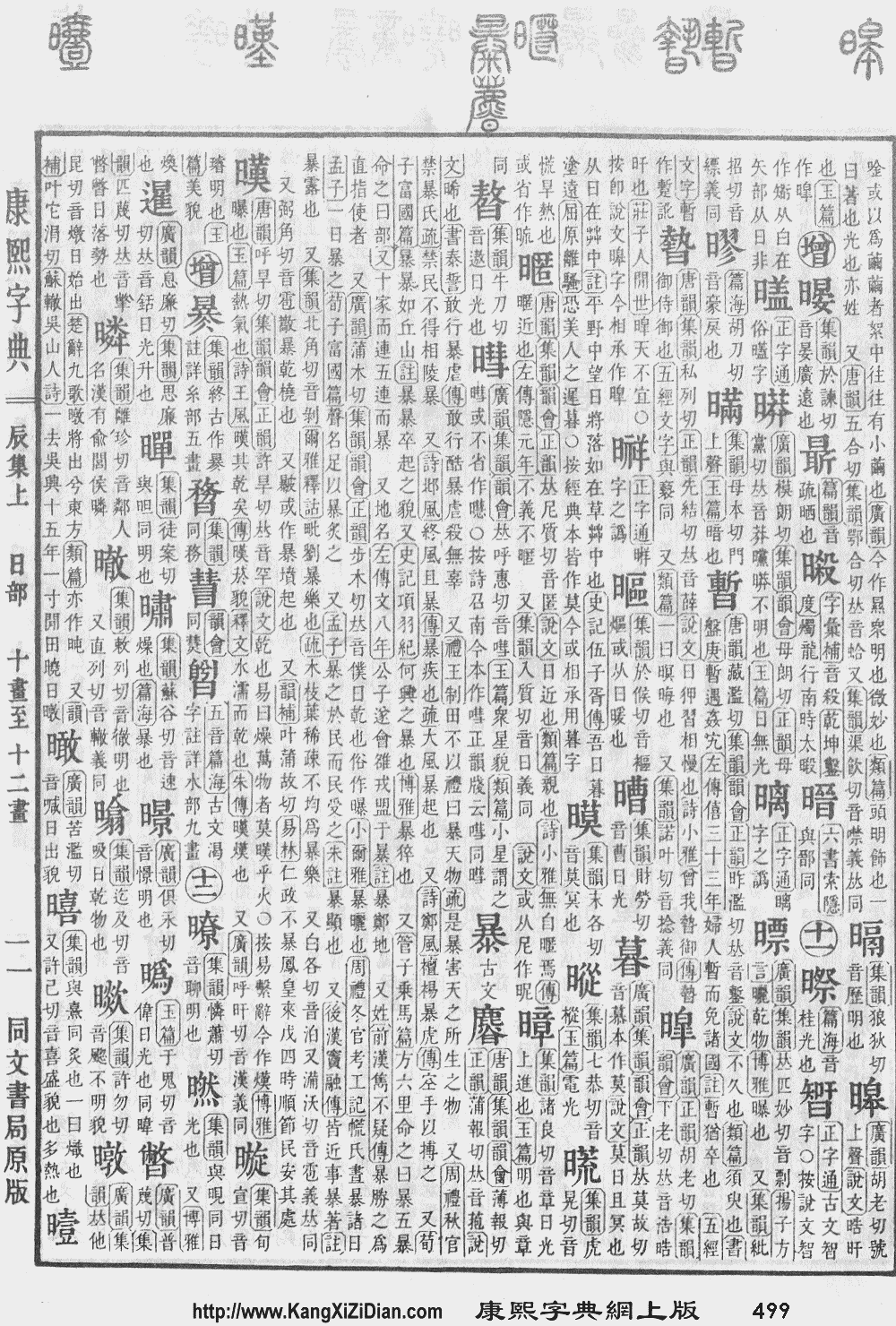
- Kangxi Dictionary: page 499, character 25
- Dai Kanwa Jiten: character 14132
- Dae Jaweon: page 868, character 31
- Hanyu Da Zidian (first edition): volume 2, page 1528, character 4
- Unihan data for U+66B1
Chinese
| trad. | 暱 | |
|---|---|---|
| simp. | 昵* | |
| alternative forms | 嫟 ancient 昵 | |

Etymology
From Proto-Sino-Tibetan *s-naːj ~ s-nej (“to be near, close”). Cognate with Burmese နီး (ni:, “near”) and Tibetan ཉེ་བ (nye ba, “near”).
Pronunciation
Definitions
暱
- intimate, close, familiar
- 公曰:“不義不暱,厚將崩。” [Classical Chinese, trad.]
- From: Commentary of Zuo, c. 4th century BCE
- Gōng yuē: “Bù yì bù nì, hòu jiāng bēng.” [Pinyin]
- The lord said: "Not righteous (towards his lord) and not close (to his elder brother), when he expands his territory, he will fall."
公曰:“不义不昵,厚将崩。” [Classical Chinese, simp.]
- to approach
Japanese
Kanji
暱
- This term needs a translation to English. Please help out and add a translation, then remove the text
{{rfdef}}.
Korean
Vietnamese
References
- Trần (2004).
This article is issued from Wiktionary. The text is licensed under Creative Commons - Attribution - Sharealike. Additional terms may apply for the media files.