義
| ||||||||
Translingual
| Stroke order (Japan) | |||
|---|---|---|---|
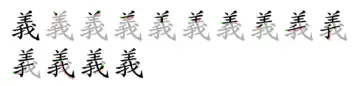 | |||
Han character
義 (Kangxi radical 123, 羊+7, 13 strokes, cangjie input 廿土竹手戈 (TGHQI), four-corner 80553, composition ⿱𦍌我)
References
- Kangxi Dictionary: page 952, character 32
- Dai Kanwa Jiten: character 28504
- Dae Jaweon: page 1397, character 1
- Hanyu Da Zidian (first edition): volume 5, page 3133, character 2
- Unihan data for U+7FA9

Chinese
| trad. | 義 | |
|---|---|---|
| simp. | 义* | |
| alternative forms | 羛 | |
Glyph origin
| Historical forms of the character 義 | |||
|---|---|---|---|
| Shang | Western Zhou | Shuowen Jiezi (compiled in Han) | Liushutong (compiled in Ming) |
| Oracle bone script | Bronze inscriptions | Small seal script | Transcribed ancient scripts |
 |
 |
 |
 |
Characters in the same phonetic series (我) (Zhengzhang, 2003)
Phono-semantic compound (形聲/形声, OC *ŋrals) : phonetic 我 (OC *ŋaːlʔ) + semantic 羊. The component 羊 here signifies "good; beautiful; auspicious" and not "sheep". See 祥, 善 and 幸.
Etymology
Cognate with 儀 (OC *ŋral, “ceremony; appearance”). See there for more.
Pronunciation
Definitions
義
- right conduct; righteousness; justice; morality
- 子曰:「君子義以為上。君子有勇而無義為亂,小人有勇而無義為盜。」 [Classical Chinese, trad.]
- From: The Analects of Confucius, c. 475 – 221 BCE, translated based on James Legge's version
- Zǐyuē: “Jūnzǐ yì yǐwéi shàng. Jūnzǐ yǒu yǒng ér wú yì wéi luàn, xiǎorén yǒu yǒng ér wú yì wéi dào.” [Pinyin]
- The superior man holds righteousness to be of highest importance. A man in a superior situation, having valor without righteousness, will be guilty of insubordination; one of the lower people having valor without righteousness, will commit robbery.
子曰:「君子义以为上。君子有勇而无义为乱,小人有勇而无义为盗。」 [Classical Chinese, simp.]
- ties between people; relationship
- meaning; implication
- righteous or for the public good
- (in compounds) adoptive or formally acknowledged as a relative but not related by blood
- (in compounds) artificial
- (Taiwan) Short for 義大利/义大利 (Yìdàlì, “Italy”).
- a surname
Compounds
- 七俠五義/七侠五义
- 三俠五義/三侠五义
- 三國演義/三国演义 (Sānguó Yǎnyì)
- 三義廟/三义庙
- 不仁不義/不仁不义
- 不知恩義/不知恩义
- 不義/不义 (bùyì)
- 不義之財/不义之财 (bùyìzhīcái)
- 主義/主义 (zhǔyì)
- 交朋結義/交朋结义
- 人義水甜/人义水甜
- 仁義/仁义
- 仁義之師/仁义之师
- 仁義道德/仁义道德 (rényì dàodé)
- 仁至義盡/仁至义尽 (rénzhìyìjìn)
- 仗義/仗义 (zhàngyì)
- 以義割恩/以义割恩
- 仗義執言/仗义执言 (zhàngyìzhíyán)
- 仗義疏財/仗义疏财
- 仗義直言/仗义直言
- 仗義輕財/仗义轻财
- 伸張正義/伸张正义
- 來義/来义 (Láiyì)
- 俠義/侠义 (xiáyì)
- 信義/信义 (xìnyì)
- 保義/保义
- 倡義/倡义
- 假仁假義/假仁假义 (jiǎrénjiǎyì)
- 假借義/假借义
- 公義/公义 (gōngyì)
- 六義/六义
- 公義務/公义务
- 分義/分义
- 別義/别义
- 制義/制义
- 割恩斷義/割恩断义
- 劉義慶/刘义庆
- 反共義士/反共义士 (fǎngòng yìshì)
- 反經合義/反经合义
- 反義詞/反义词 (fǎnyìcí)
- 口義/口义
- 同義/同义 (tóngyì)
- 名義/名义 (míngyì)
- 名義所得/名义所得
- 合義複詞/合义复词
- 同義詞/同义词 (tóngyìcí)
- 告知義務/告知义务
- 含義/含义 (hányì)
- 嘉義/嘉义 (Jiāyì)
- 嘉義市/嘉义市
- 嘉義縣/嘉义县
- 多義/多义 (duōyì)
- 多義詞/多义词
- 夠義氣/够义气
- 大仁大義/大仁大义
- 大義/大义 (dàyì)
- 大義凜然/大义凛然 (dàyìlǐnrán)
- 大義滅親/大义灭亲 (dàyìmièqīn)
- 天經地義/天经地义 (tiānjīngdìyì)
- 失義/失义
- 奉義/奉义
- 奧義/奥义 (àoyì)
- 好利忘義/好利忘义 (hàolì wàng yì)
- 好義/好义
- 孑義/孑义
- 字義/字义 (zìyì)
- 孝義/孝义 (xiàoyì)
- 定義/定义 (dìngyì)
- 寡恩少義/寡恩少义
- 寡情少義/寡情少义
- 封神演義/封神演义 (Fēngshén Yǎnyì)
- 小五義/小五义
- 就義/就义 (jiùyì)
- 居仁由義/居仁由义
- 履仁蹈義/履仁蹈义
- 干名犯義
- 廣州起義/广州起义 (Guǎngzhōu Qǐyì)
- 廣義/广义 (guǎngyì)
- 引喻失義/引喻失义 (yǐnyùshīyì)
- 引申義/引申义 (yǐnshēnyì)
- 律呂正義/律吕正义
- 徇義/徇义
- 從容就義/从容就义
- 微言大義/微言大义 (wēiyándàyì)
- 微言精義/微言精义
- 忘恩失義/忘恩失义
- 忘恩背義/忘恩背义
- 忘恩負義/忘恩负义 (wàng'ēnfùyì)
- 忠孝節義/忠孝节义
- 忠義/忠义 (zhōngyì)
- 忠義雙全/忠义双全
- 忠肝義膽/忠肝义胆 (zhōnggānyìdǎn)
- 忠臣義士/忠臣义士
- 急公好義/急公好义
- 恩山義海/恩山义海
- 恩斷義絕/恩断义绝 (ēnduànyìjué)
- 恩深義重/恩深义重
- 恩義/恩义 (ēnyì)
- 情深義重/情深义重
- 情義/情义 (qíngyì)
- 感恩戴義/感恩戴义
- 愆義/愆义
- 意義/意义 (yìyì)
- 意義深長/意义深长 (yìyìshēncháng)
- 慷慨仗義/慷慨仗义
- 慷慨赴義/慷慨赴义
- 慕義/慕义
- 成仁取義/成仁取义
- 扶義/扶义
- 拜義/拜义
- 挾義/挟义
- 捨生取義/舍生取义 (shěshēngqǔyì)
- 操作定義/操作定义
- 據義履方/据义履方
- 教權主義/教权主义 (jiàoquánzhǔyì)
- 教義/教义 (jiàoyì)
- 文義/文义
- 新義/新义 (Xīnyì)
- 斷章取義/断章取义 (duànzhāngqǔyì)
- 明公正義/明公正义
- 明義士/明义士
- 時義/时义
- 曉以大義/晓以大义
- 服義/服义
- 望文生義/望文生义 (wàngwénshēngyì)
- 本義/本义 (běnyì)
- 李義山/李义山
- 桃園結義/桃园结义 (táoyuán-jiéyì)
- 格義/格义 (géyì)
- 棄義背理/弃义背理
- 樂善好義/乐善好义
- 正義/正义 (zhèngyì)
- 正義感/正义感 (zhèngyìgǎn)
- 武昌起義/武昌起义 (Wǔchāng Qǐyì)
- 歧義/歧义 (qíyì)
- 歸義/归义
- 死義/死义
- 殉義/殉义
- 殉義忘生/殉义忘生
- 殉義忘身/殉义忘身
- 殺身成義/杀身成义
- 比喻義/比喻义 (bǐyùyì)
- 毛義捧檄/毛义捧檄
- 毫無異義/毫无异义
- 毫無疑義/毫无疑义 (háowúyíyì)
- 氣義相投/气义相投
- 求生害義/求生害义
- 江湖義氣/江湖义气
- 江湖道義/江湖道义
- 法華玄義/法华玄义
- 浪漫主義/浪漫主义 (làngmàn zhǔyì)
- 深明大義/深明大义 (shēnmíngdàyì)
- 涵義/涵义 (hányì)
- 演義/演义
- 灌瓜之義/灌瓜之义
- 無情無義/无情无义 (wúqíngwúyì)
- 無意義/无意义
- 煦仁孑義/煦仁孑义
- 狹義/狭义 (xiáyì)
- 王義貞/王义贞 (Wángyìzhēn)
- 疏財仗義/疏财仗义 (shūcái zhàngyì)
- 疏財重義/疏财重义
- 疑義/疑义 (yíyì)
- 白虎通義/白虎通义
- 盡義務/尽义务 (jìnyìwù)
- 真義/真义
- 禁慾主義/禁欲主义 (jìnyùzhǔyì)
- 禮義/礼义 (lǐyì)
- 禮義之邦/礼义之邦
- 禮義廉恥/礼义廉耻 (lǐyìliánchǐ)
- 禮門義路/礼门义路
- 種植義齒/种植义齿
- 窮不失義/穷不失义
- 第一義/第一义
- 節義/节义 (jiéyì)
- 節義廉明/节义廉明
- 精義/精义 (jīngyì)
- 精義入神/精义入神
- 絕仁棄義/绝仁弃义
- 結大義/结大义
- 結義/结义 (jiéyì)
- 經義/经义
- 經義考/经义考
- 經義述聞/经义述闻
- 經義雜記/经义杂记
- 綠林起義/绿林起义
- 緣文生義/缘文生义
- 義不反顧/义不反顾
- 義不取容/义不取容
- 義不容辭/义不容辞 (yìbùróngcí)
- 義不辭難/义不辞难
- 義乳記/义乳记
- 義人/义人 (yìrén)
- 義例/义例
- 義俠/义侠 (yìxiá)
- 義俠記/义侠记
- 義倉/义仓 (yìcāng)
- 義兄/义兄 (yìxiōng)
- 義兒/义儿 (yì'ér)
- 義兵/义兵 (yìbīng)
- 義分/义分
- 義切中抱/义切中抱
- 義刑義殺/义刑义杀
- 義勇/义勇 (yìyǒng)
- 義勇艦隊/义勇舰队
- 義勇警察/义勇警察
- 義勇軍/义勇军 (yìyǒngjūn)
- 義務/义务 (yìwù)
- 義務兵/义务兵 (yìwùbīng)
- 義務教育/义务教育 (yìwù jiàoyù)
- 義同生死/义同生死 (yìtóngshēngsǐ)
- 義和/义和 (Yìhé)
- 義和團/义和团 (Yìhétuán)
- 義和拳/义和拳 (Yìhéquán)
- 義地/义地
- 義堂/义堂 (Yìtáng)
- 義塚/义冢 (yìzhǒng)
- 義塾/义塾
- 義士/义士 (yìshì)
- 義大利/义大利 (Yìdàlì)
- 義大利獎/义大利奖
- 義大利菜/义大利菜
- 義夫/义夫 (yìfū)
- 義夫節婦/义夫节妇
- 義女/义女 (yìnǚ)
- 義妖傳/义妖传
- 義子/义子 (yìzǐ)
- 義學/义学
- 義守大學/义守大学
- 義山/义山 (yìshān)
- 義山恩海/义山恩海
- 義工/义工 (yìgōng)
- 義帝/义帝 (Yì Dì)
- 義師/义师 (yìshī)
- 義府/义府
- 義弟/义弟 (yìdì)
- 義形於色/义形于色
- 義役/义役
- 義律/义律
- 義徒/义徒
- 義從/义从
- 義憤/义愤 (yìfèn)
- 義憤填胸/义愤填胸
- 義憤填膺/义愤填膺 (yìfèntiányīng)
- 義戰/义战 (yìzhàn)
- 義手/义手
- 義故/义故
- 義斷恩絕/义断恩绝
- 義方/义方
- 義方之訓/义方之训
- 義方是訓/义方是训
- 義旗/义旗 (yìqí)
- 義正詞嚴/义正词严 (yìzhèngcíyán)
- 義正辭嚴/义正辞严 (yìzhèngcíyán)
- 義母/义母 (yìmǔ)
- 義民/义民
- 義氣/义气 (yìqì)
- 義氣干霄/义气干霄
- 義氣深重/义气深重
- 義氣相投/义气相投
- 義津/义津 (Yìjīn)
- 義消/义消
- 義海恩山/义海恩山
- 義淨/义净
- 義渠/义渠
- 義漿/义浆
- 義演/义演
- 義烏/义乌 (Yìwū)
- 義無反顧/义无反顾 (yìwúfǎngù)
- 義父/义父 (yìfù)
- 義犬/义犬
- 義玄/义玄
- 義理/义理 (yìlǐ)
- 義甲/义甲 (yìjiǎ)
- 義田/义田
- 義男兒/义男儿
- 義界/义界
- 義疏/义疏
- 義竹/义竹 (Yìzhú)
- 義粟仁漿/义粟仁浆
- 義絕/义绝
- 義結金蘭/义结金兰 (yìjiéjīnlán)
- 義義合合/义义合合
- 義肢/义肢 (yìzhī)
- 義舉/义举 (yìjǔ)
- 義莊/义庄 (yìzhuāng)
- 義薄雲天/义薄云天 (yìbóyúntiān)
- 義行/义行
- 義行可風/义行可风
- 義訓/义训 (yìxùn)
- 義診/义诊 (yìzhěn)
- 義試/义试
- 義警/义警
- 義貞/义贞
- 義賣/义卖 (yìmài)
- 義賽/义赛
- 義趣/义趣
- 義足/义足 (yìzú)
- 義軍/义军
- 義重如山/义重如山
- 義重恩深/义重恩深
- 義重情深/义重情深
- 義鋪/义铺
- 義門/义门
- 義項/义项 (yìxiàng)
- 義類/义类
- 義風/义风
- 義髻/义髻
- 義齒/义齿 (yìchǐ)
- 背信忘義/背信忘义
- 背信棄義/背信弃义 (bèixìnqìyì)
- 背恩忘義/背恩忘义
- 背義/背义 (bèiyì)
- 舉義/举义 (jǔyì)
- 舍生存義/舍生存义
- 英風義氣/英风义气
- 薄情無義/薄情无义
- 衍義/衍义
- 褒義/褒义 (bāoyì)
- 褒義詞/褒义词 (bāoyìcí)
- 要義/要义 (yàoyì)
- 見利忘義/见利忘义 (jiànlìwàngyì)
- 見利思義/见利思义
- 見義勇為/见义勇为 (jiànyì-yǒngwéi)
- 言不及義/言不及义 (yánbùjíyì)
- 計行慮義/计行虑义
- 詞嚴義密/词严义密
- 詞嚴義正/词严义正
- 詞義/词义 (cíyì)
- 詞義學/词义学
- 詩六義/诗六义
- 認義/认义
- 講義/讲义 (jiǎngyì)
- 豪俠好義/豪侠好义
- 貝義淵/贝义渊
- 負氣仗義/负气仗义
- 負義/负义 (fùyì)
- 負義忘恩/负义忘恩
- 貪生害義/贪生害义
- 貪生舍義/贪生舍义
- 貶義/贬义 (biǎnyì)
- 貶義詞/贬义词 (biǎnyìcí)
- 赴義/赴义
- 起義/起义 (qǐyì)
- 蹈義/蹈义
- 輕生重義/轻生重义 (qīngshēngzhòngyì)
- 輕財仗義/轻财仗义
- 輕財好義/轻财好义
- 輕財貴義/轻财贵义
- 輕財重義/轻财重义
- 輕身重義/轻身重义
- 辜恩背義/辜恩背义
- 辜恩負義/辜恩负义
- 辭嚴義正/辞严义正
- 辭義/辞义 (cíyì)
- 通義/通义
- 違恩負義/违恩负义
- 道義/道义 (dàoyì)
- 道義交/道义交
- 道義責任/道义责任
- 鄉風慕義/乡风慕义
- 釋義/释义 (shìyì)
- 重義輕生/重义轻生
- 重義輕財/重义轻财
- 開宗明義/开宗明义 (kāizōngmíngyì)
- 陳義過高/陈义过高
- 陳與義/陈与义
- 雲南起義/云南起义
- 音義/音义 (yīnyì)
- 顧名思義/顾名思义 (gùmíngsīyì)
- 風俗通義/风俗通义
- 風義/风义
- 首倡義舉/首倡义举
- 首唱義兵/首唱义兵
- 首唱義舉/首唱义举
- 首義/首义 (shǒuyì)
- 首義路/首义路 (Shǒuyìlù)
- 高義/高义 (gāoyì)
- 高義薄雲/高义薄云
- 魯義姑/鲁义姑
- 墨義/墨义
Japanese
Readings
Korean
Hanja
This article is issued from Wiktionary. The text is licensed under Creative Commons - Attribution - Sharealike. Additional terms may apply for the media files.