暹
| ||||||||
Translingual
Han character
暹 (Kangxi radical 72, 日+12, 16 strokes, cangjie input 卜日人土 (YAOG), four-corner 36301, composition ⿺辶⿱日隹)
Derived characters
- 𭀌, 𭶤, 𧔷, 𲌣
References
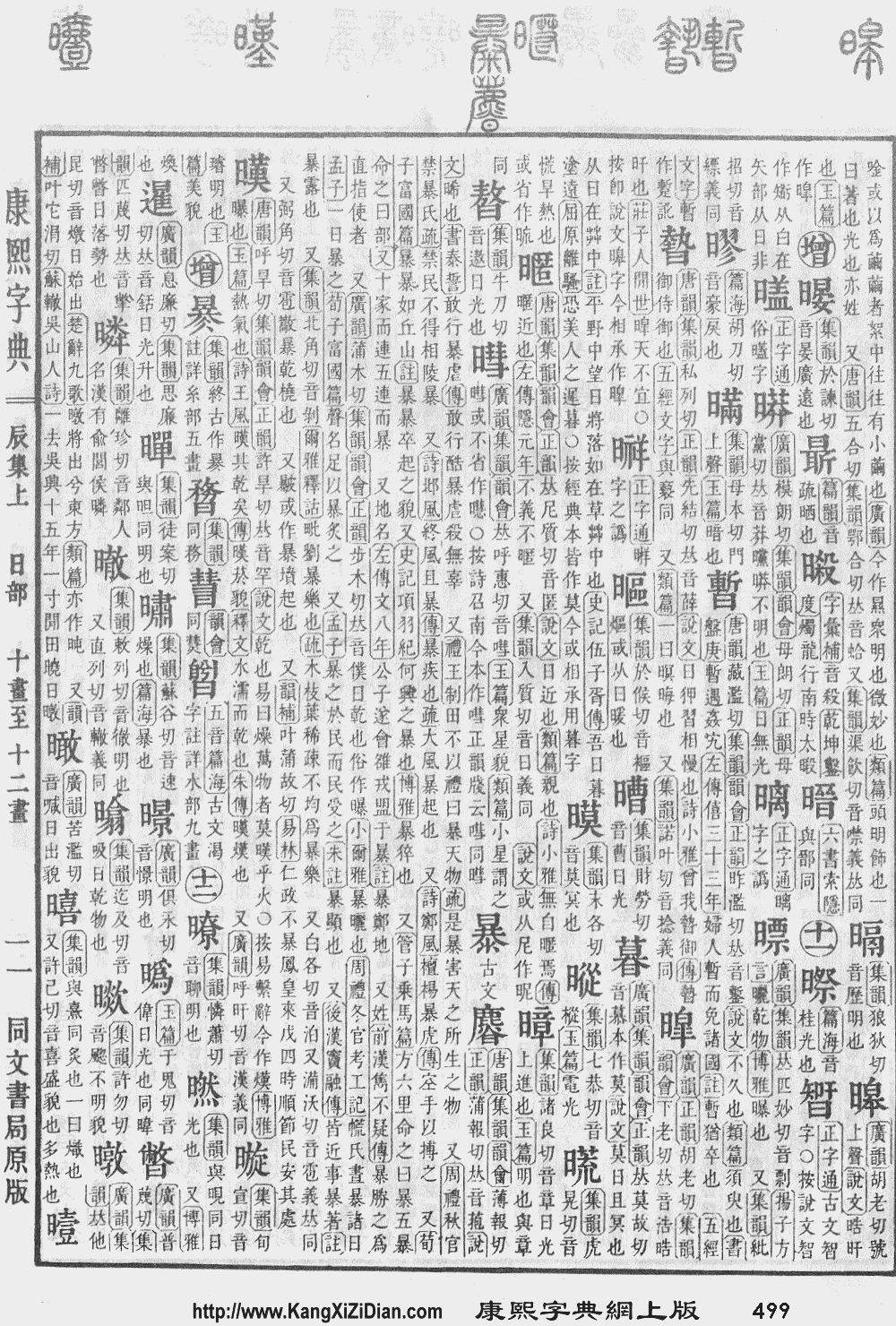
- Kangxi Dictionary: page 499, character 39
- Dai Kanwa Jiten: character 14150
- Dae Jaweon: page 869, character 10
- Hanyu Da Zidian (first edition): volume 6, page 3882, character 6
- Unihan data for U+66B9
Chinese
| trad. | 暹 | |
|---|---|---|
| simp. # | 暹 | |
Pronunciation
Definitions
暹
- † (of the sun) to rise
- (historical) the Thai kingdom of Ayutthaya; later short for 暹羅/暹罗 (Xiānluó, “Siam”).
- 國中語言,自成音聲,雖近而占城、暹人,皆不通話説。 [Classical Chinese, trad.]
- From: c. 1300, 周達觀 / 周达观 (Zhou Daguan), 《真臘風土記 / 真腊风土记》 (The Customs of Cambodia), translation by Peter Harris
- Guózhōng yǔyán, zì chéng yīnshēng, suī jìn ér Zhànchéng, Xiān rén, jiē bùtōng huàshuō. [Pinyin]
- The country's language consists of sounds that are its own, and despite being nearby, neither the Chams nor the Siamese can make themselves understood.
国中语言,自成音声,虽近而占城、暹人,皆不通话说。 [Classical Chinese, simp.]
Japanese
Kanji
暹
- This term needs a translation to English. Please help out and add a translation, then remove the text
{{rfdef}}.
Korean
Hanja
暹 • (seom) (hangeul 섬, revised seom, McCune–Reischauer sŏm, Yale sem)
- This term needs a translation to English. Please help out and add a translation, then remove the text
{{rfdef}}.
Vietnamese
This article is issued from Wiktionary. The text is licensed under Creative Commons - Attribution - Sharealike. Additional terms may apply for the media files.