近
| ||||||||
Translingual
| Stroke order | |||
|---|---|---|---|
 | |||
Han character
近 (Kangxi radical 162, 辵+4, 7 strokes, cangjie input 卜竹一中 (YHML), four-corner 32302, composition ⿺辶斤)
Derived characters
- 菦 𠶌 𣷯 𥇐 𨓢
References
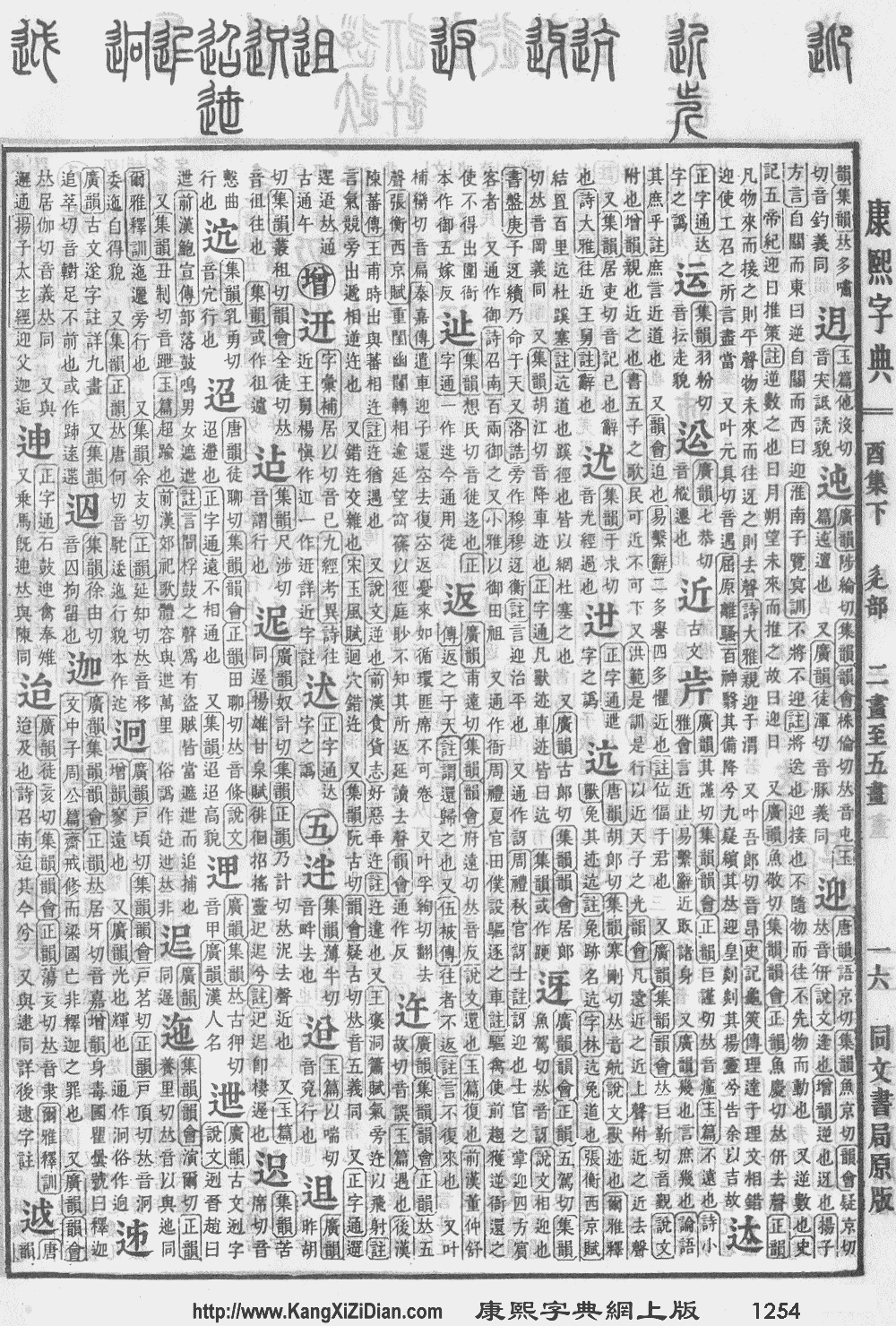
- Kangxi Dictionary: page 1254, character 7
- Dai Kanwa Jiten: character 38752
- Dae Jaweon: page 1736, character 18
- Hanyu Da Zidian (first edition): volume 6, page 3819, character 12
- Unihan data for U+8FD1
Chinese
| trad. | 近 | |
|---|---|---|
| simp. # | 近 | |
| alternative forms | 𣥍 | |
Glyph origin
| Historical forms of the character 近 | |
|---|---|
| Shuowen Jiezi (compiled in Han) | Liushutong (compiled in Ming) |
| Small seal script | Transcribed ancient scripts |
 |
 |
Characters in the same phonetic series (斤) (Zhengzhang, 2003)
| Old Chinese | |
|---|---|
| 蘄 | *ɡɯ, *kɯl, *ɡɯn |
| 祈 | *ɡɯl |
| 頎 | *ɡɯl |
| 旂 | *ɡɯl |
| 圻 | *ɡɯl, *ŋɡɯːn, *ŋɡɯn |
| 蚚 | *ɡɯl, *ɡɯːls |
| 岓 | *ɡɯl |
| 玂 | *ɡɯl |
| 沂 | *ŋɡɯl |
| 掀 | *qʰan |
| 釿 | *ŋɡrɯnʔ, *ŋkɯn |
| 齗 | *ŋɡrɯnʔ, *ŋɡɯn |
| 听 | *ŋɡrɯnʔ, *ŋɡɯnʔ |
| 垽 | *ŋrɯns, *qɯns |
| 斤 | *kɯn, *kɯns |
| 菦 | *kɯnʔ |
| 靳 | *kɯns |
| 劤 | *kɯns |
| 勁 | *kɯns, *keŋs |
| 赾 | *kʰɯnʔ |
| 芹 | *ɡɯn |
| 近 | *ɡɯnʔ, *ɡɯns |
| 斦 | *ŋɡɯn |
| 欣 | *qʰɯn |
| 忻 | *qʰɯn |
| 昕 | *qʰɯn |
| 訢 | *qʰɯn |
| 炘 | *qʰɯn, *qʰɯns |
| 邤 | *qʰɯn |
| 庍 | *qʰɯns, *mpreːɡs |
| 焮 | *qʰɯns |
Phono-semantic compound (形聲/形声, OC *ɡɯnʔ, *ɡɯns) : semantic 辶 (“walk”) + phonetic 斤 (OC *kɯn, *kɯns) – to be near something.
Etymology
Karlgren (1933) relates 近 (OC *ɡɯnʔ, *ɡɯns) to 幾 (OC *kɯl, “imminent”).
近 (OC *ɡɯns, “to come near to; to approach”) is the exoactive/causative derivation of 近 (OC *ɡɯnʔ, “to be near”) (Schuessler, 2007).
Compare Proto-Vietic *t-kəɲ, whence Vietnamese gần (“near”).
Pronunciation
Definitions
近
Synonyms
- (near; close):
Dialectal synonyms of 近 (“near; close”) [map]
| Variety | Location | Words |
|---|---|---|
| Classical Chinese | 近, 邇 | |
| Formal (Written Standard Chinese) | 近 | |
| Mandarin | Beijing | 近 |
| Taiwan | 近 | |
| Jinan | 近 | |
| Xi'an | 近 | |
| Wuhan | 近 | |
| Chengdu | 近 | |
| Yangzhou | 近 | |
| Hefei | 近 | |
| Singapore | 近 | |
| Cantonese | Guangzhou | 近 |
| Hong Kong | 近 | |
| Yangjiang | 近 | |
| Singapore (Guangfu) | 近 | |
| Gan | Nanchang | 近 |
| Hakka | Meixian | 近 |
| Jin | Taiyuan | 近 |
| Northern Min | Jian'ou | 近 |
| Eastern Min | Fuzhou | 近 |
| Southern Min | Xiamen | 近 |
| Singapore (Hokkien) | 近 | |
| Chaozhou | 近 | |
| Singapore (Teochew) | 近 | |
| Wu | Suzhou | 近 |
| Wenzhou | 近 | |
| Xiang | Changsha | 近 |
| Shuangfeng | 近 | |
- (intimate):
- 同衾 (tóngqīn) (literary, figuratively)
- 周密 (zhōumì) (literary, of dealings)
- 密切 (mìqiè)
- 接近 (jiējìn)
- 火熱/火热 (huǒrè)
- 熱和/热和 (rèhuo) (colloquial)
- 熱火/热火 (rèhuǒ) (colloquial)
- 知心 (zhīxīn)
- 緊密/紧密 (jǐnmì)
- 親切/亲切 (qīnqiè)
- 親善/亲善 (qīnshàn) (of relations between countries)
- 親密/亲密 (qīnmì)
- 親熱/亲热 (qīnrè)
- 親近/亲近 (qīnjìn)
- 貼己/贴己 (tiējǐ)
- 貼身/贴身 (tiēshēn)
- 近乎 (jìnhu) (colloquial)
- 過心/过心 (guòxīn) (regional)
- 體己/体己
Compounds
- 不近人情 (bùjìn-rénqíng)
- 不近情理
- 不遠不近/不远不近
- 中近景
- 假性近視/假性近视
- 傅近 (fùjìn)
- 最近 (zuìjìn)
- 凡近
- 切近 (qièjìn)
- 四近
- 大近視眼/大近视眼
- 套近乎 (tàojìnhū)
- 將近/将近 (jiāngjìn)
- 就近 (jiùjìn)
- 左近 (zuǒjìn)
- 平易近人 (píngyìjìnrén)
- 平易近民
- 年近古稀
- 年近花甲
- 急功近利 (jígōngjìnlì)
- 急功近名
- 性情相近
- 思深語近/思深语近
- 恤近忽遠/恤近忽远
- 悅近來遠/悦近来远
- 愛遠惡近/爱远恶近
- 抄近路 (chāo jìnlù)
- 拉近
- 拉近乎
- 挨近 (āijìn)
- 接近 (jiējìn)
- 捨近務遠/舍近务远
- 捨近即遠/舍近即远
- 捨近求遠/舍近求远 (shějìnqiúyuǎn)
- 料遠若近/料远若近
- 新近 (xīnjìn)
- 方近
- 晚近
- 淺近/浅近 (qiǎnjìn)
- 湊近/凑近 (còujìn)
- 漸近/渐近 (jiànjìn)
- 相近 (xiāngjìn)
- 短視近利/短视近利
- 能近取譬
- 臨近/临近 (línjìn)
- 舍近謀遠/舍近谋远
- 要近
- 親疏遠近/亲疏远近
- 親近/亲近 (qīnjìn)
- 言近指遠/言近指远
- 言近旨遠/言近旨远
- 貴近/贵近
- 貼近/贴近 (tiējìn)
- 貴遠賤近/贵远贱近
- 貴遠鄙近/贵远鄙近
- 走近 (zǒujìn)
- 身遠心近/身远心近
- 近上
- 近世 (jìnshì)
- 近世史
- 近乎
- 近人 (jìnrén)
- 近代 (jìndài)
- 近似 (jìnsì)
- 近作 (jìnzuò)
- 近似值 (jìnsìzhí)
- 近侍 (jìnshì)
- 近來/近来 (jìnlái)
- 近便 (jìnbiàn)
- 近傍
- 近前 (jìnqián)
- 近古 (jìngǔ)
- 近名
- 近因 (jìnyīn)
- 近在咫尺 (jìnzàizhǐchǐ)
- 近在眉睫
- 近在眼前
- 近年 (jìnnián)
- 近思錄/近思录
- 近悅遠來/近悦远来
- 近情
- 近情近理
- 近憂/近忧 (jìnyōu)
- 近房
- 近攝鏡頭/近摄镜头
- 近支
- 近新來/近新来
- 近旁 (jìnpáng)
- 近日 (jìnrì)
- 近日點/近日点 (jìnrìdiǎn)
- 近景
- 近期 (jìnqī)
- 近朱近墨
- 近東/近东 (Jìndōng)
- 近歲/近岁
- 近水樓臺/近水楼台 (jìnshuǐlóutái)
- 近況/近况 (jìnkuàng)
- 近海 (jìnhǎi)
- 近海漁業/近海渔业
- 近火先燋
- 近焦攝影/近焦摄影
- 近理 (jìnlǐ)
- 近甸
- 近畿 (jìnjī)
- 近視/近视 (jìnshì)
- 近視眼/近视眼 (jìnshìyǎn)
- 近程目標/近程目标
- 近習/近习
- 近臣 (jìnchén)
- 近處/近处 (jìnchù)
- 近親/近亲 (jìnqīn)
- 近觀/近观
- 近郊 (jìnjiāo)
- 近郊農業/近郊农业
- 近鄉情怯/近乡情怯
- 近鄰/近邻 (jìnlín)
- 近體詩/近体诗 (jìntǐshī)
- 迫近 (pòjìn)
- 週近/周近
- 逼近 (bījìn)
- 道近易從/道近易从
- 遠交近攻/远交近攻 (yuǎnjiāojìngōng)
- 遠愁近慮/远愁近虑
- 遠近/远近 (yuǎnjìn)
- 遠近知名/远近知名
- 遠近聞名/远近闻名
- 遠近馳名/远近驰名 (yuǎnjìnchímíng)
- 鄙近
- 鄰近/邻近 (línjìn)
- 鄰近色/邻近色
- 附近 (fùjìn)
- 靠近 (kàojìn)
- 鞭辟近裡
- 馳名遠近/驰名远近
Further reading
- “Entry #4504”, in 臺灣閩南語常用詞辭典 [Dictionary of Frequently-Used Taiwan Minnan] (overall work in Mandarin and Hokkien), Ministry of Education, R.O.C., 2023.
Japanese
| Shinjitai | 近 | |
| Kyūjitai [1] |
近󠄁 近+ 󠄁?(Adobe-Japan1) |
 |
| 近󠄃 近+ 󠄃?(Hanyo-Denshi) (Moji_Joho) | ||
| The displayed kanji may be different from the image due to your environment. See here for details. | ||
References
- “近”, in 漢字ぺディア (Kanjipedia) (in Japanese), 日本漢字能力検定協会, 2015–2024
Vietnamese
This article is issued from Wiktionary. The text is licensed under Creative Commons - Attribution - Sharealike. Additional terms may apply for the media files.