桿
See also: 杆
| ||||||||
Translingual
Han character
桿 (Kangxi radical 75, 木+7, 11 strokes, cangjie input 木日一十 (DAMJ), four-corner 46941, composition ⿰木旱)
References
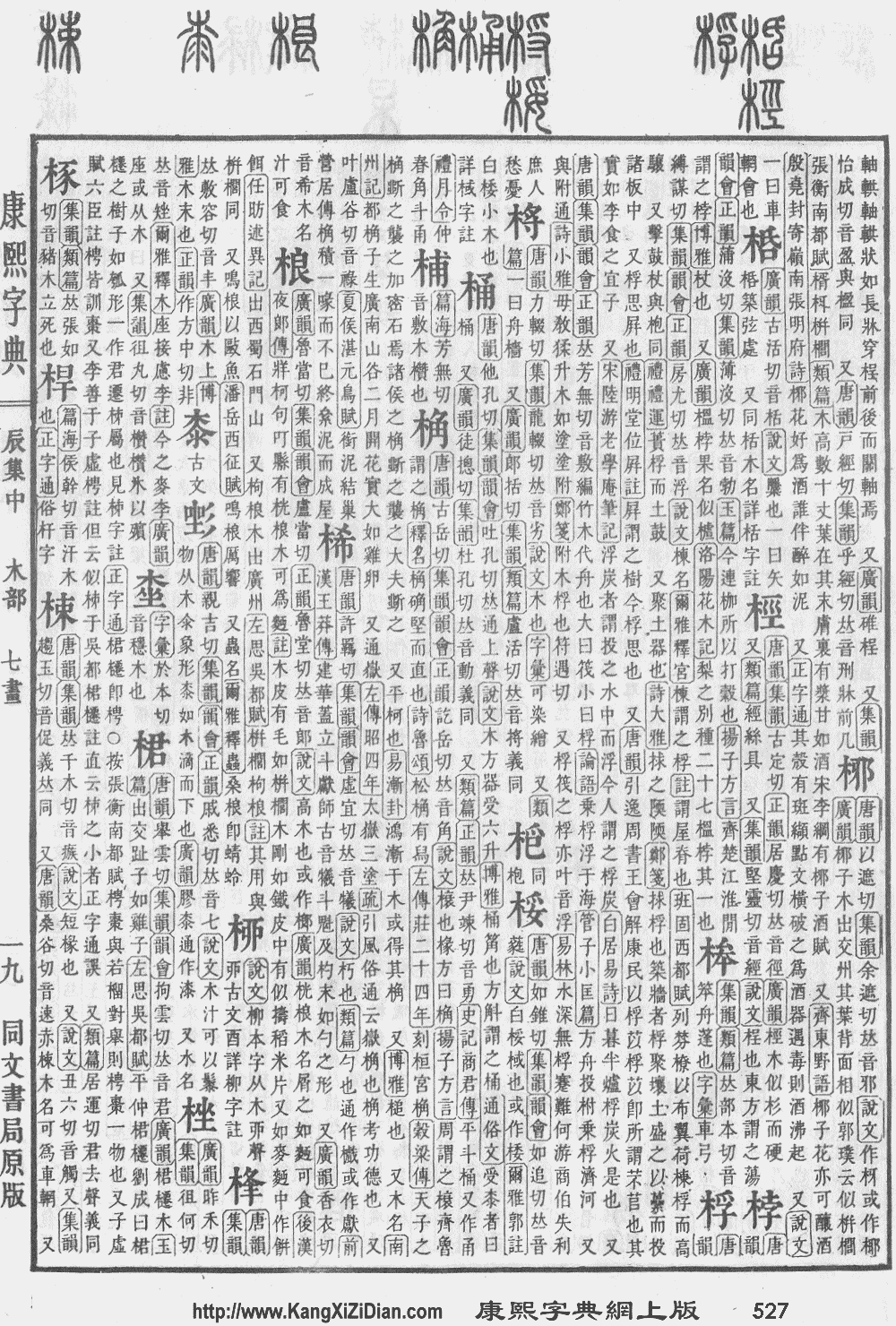
- Kangxi Dictionary: page 527, character 23
- Dai Kanwa Jiten: character 14823
- Dae Jaweon: page 916, character 16
- Hanyu Da Zidian (first edition): volume 2, page 1213, character 2
- Unihan data for U+687F
Chinese
| trad. | 桿 | |
|---|---|---|
| simp. | 杆* | |
Glyph origin
Characters in the same phonetic series (干) (Zhengzhang, 2003)
| Old Chinese | |
|---|---|
| 訐 | *krads, *krads, *ked, *kad |
| 肝 | *kaːn |
| 竿 | *kaːn |
| 干 | *kaːn |
| 奸 | *kaːn |
| 玕 | *kaːn |
| 汗 | *kaːn, *ɡaːn, *ɡaːns |
| 迀 | *kaːn |
| 忓 | *kaːn, *ɡaːns |
| 鳱 | *kaːn |
| 邗 | *kaːn, *ɡaːn |
| 秆 | *kaːnʔ |
| 矸 | *kaːnʔ, *kaːns, *ɡaːns |
| 仠 | *kaːnʔ |
| 皯 | *kaːnʔ |
| 衦 | *kaːnʔ |
| 簳 | *kaːnʔ |
| 擀 | *kaːnʔ |
| 旰 | *kaːns |
| 盰 | *kaːns |
| 幹 | *kaːns |
| 杆 | *kaːns |
| 骭 | *kaːns, *ɡraːns |
| 桿 | *kaːnʔ |
| 趕 | *kaːnʔ |
| 稈 | *kaːnʔ |
| 刊 | *kʰaːn |
| 靬 | *kʰaːn, *kʰaːns, *kreːn, *kan |
| 衎 | *kʰaːnʔ, *kʰaːns |
| 犴 | *ŋaːn, *ŋaːns |
| 豻 | *ŋaːn, *ŋaːns, *ɦŋaːns, *ŋ̊ʰraːn |
| 頇 | *ŋaːns, *hŋaːn, *ŋaːd |
| 岸 | *ŋɡaːns |
| 鼾 | *qʰaːn, *ɢaːns |
| 罕 | *qʰaːnʔ, *qʰaːns |
| 焊 | *qʰaːnʔ, *ɡaːns |
| 蔊 | *qʰaːnʔ |
| 虷 | *ɡaːn |
| 旱 | *ɡaːnʔ |
| 皔 | *ɡaːnʔ |
| 釬 | *ɡaːns |
| 扞 | *ɡaːns |
| 閈 | *ɡaːns |
| 馯 | *ɡaːns, *kʰraːn |
| 捍 | *ɡaːns, *ɡraːnʔ |
| 悍 | *ɡaːns |
| 銲 | *ɡaːns |
| 垾 | *ɡaːns |
| 駻 | *ɡaːns |
| 睅 | *ɡʷranʔ |
| 娨 | *ɡraːns |
| 飦 | *kan |
| 赶 | *ɡan, *ɡʷad |
| 軒 | *qʰan |
| 蓒 | *qʰan |
| 酐 | *qʰaːŋʔ |
| 澣 | *ɡʷaːnʔ |
Phono-semantic compound (形聲/形声, OC *kaːnʔ) : semantic 木 + phonetic 旱 (OC *ɡaːnʔ).
Pronunciation
Definitions
桿
Compounds
- 二桿子/二杆子
- 保險桿/保险杆
- 光桿兒/光杆儿
- 光桿司令/光杆司令
- 大腸桿菌/大肠杆菌 (dàcháng gǎnjūn)
- 巴氏桿菌/巴氏杆菌
- 布氏桿菌/布氏杆菌
- 打槳桿/打桨杆
- 抱大足桿/抱大足杆
- 拉桿子/拉杆子
- 拿槍桿/拿枪杆
- 拿筆桿/拿笔杆
- 控制桿/控制杆 (kòngzhìgǎn)
- 推桿/推杆
- 旗桿/旗杆 (qígān)
- 杈桿兒/杈杆儿
- 桿兒/杆儿
- 桿兒上的/杆儿上的
- 桿弟/杆弟
- 桿撥/杆拨
- 桿棒/杆棒
- 桿秤/杆秤 (gǎnchèng)
- 桿菌/杆菌 (gǎnjūn)
- 桿錐/杆锥
- 棒狀桿菌/棒状杆菌 (bàngzhuàng gǎnjūn)
- 槓桿/杠杆 (gànggǎn)
- 槍桿/枪杆 (qiānggǎn)
- 槍桿子/枪杆子 (qiānggǎnzi)
- 槓桿定律/杠杆定律
- 標準桿/标准杆
- 清桿運動/清杆运动
- 測桿/测杆
- 煙袋桿兒/烟袋杆儿
- 痢疾桿菌/痢疾杆菌
- 白桿兵/白杆兵
- 秤桿/秤杆 (chènggǎn)
- 筆桿/笔杆 (bǐgǎn)
- 耍筆桿/耍笔杆 (shuǎ bǐgǎn)
- 肉毒桿菌/肉毒杆菌 (ròudúgǎnjūn)
- 腰桿子/腰杆子
- 電桿/电杆 (diàngǎn)
- 電線桿/电线杆 (diànxiàngǎn)
Japanese
Korean
Hanja
桿 • (han) (hangeul 한, revised han, McCune–Reischauer han, Yale han)
- This term needs a translation to English. Please help out and add a translation, then remove the text
{{rfdef}}.
Vietnamese
This article is issued from Wiktionary. The text is licensed under Creative Commons - Attribution - Sharealike. Additional terms may apply for the media files.