幹
| ||||||||
Translingual
Han character
幹 (Kangxi radical 51, 干+10, 13 strokes, cangjie input 十十人一十 (JJOMJ), four-corner 48441, composition ⿰𠦝𫢉)
Related characters
- 榦 (Variant traditional form of 幹 in mainland China)
- 干 (Simplified form of 幹 in mainland China)
References
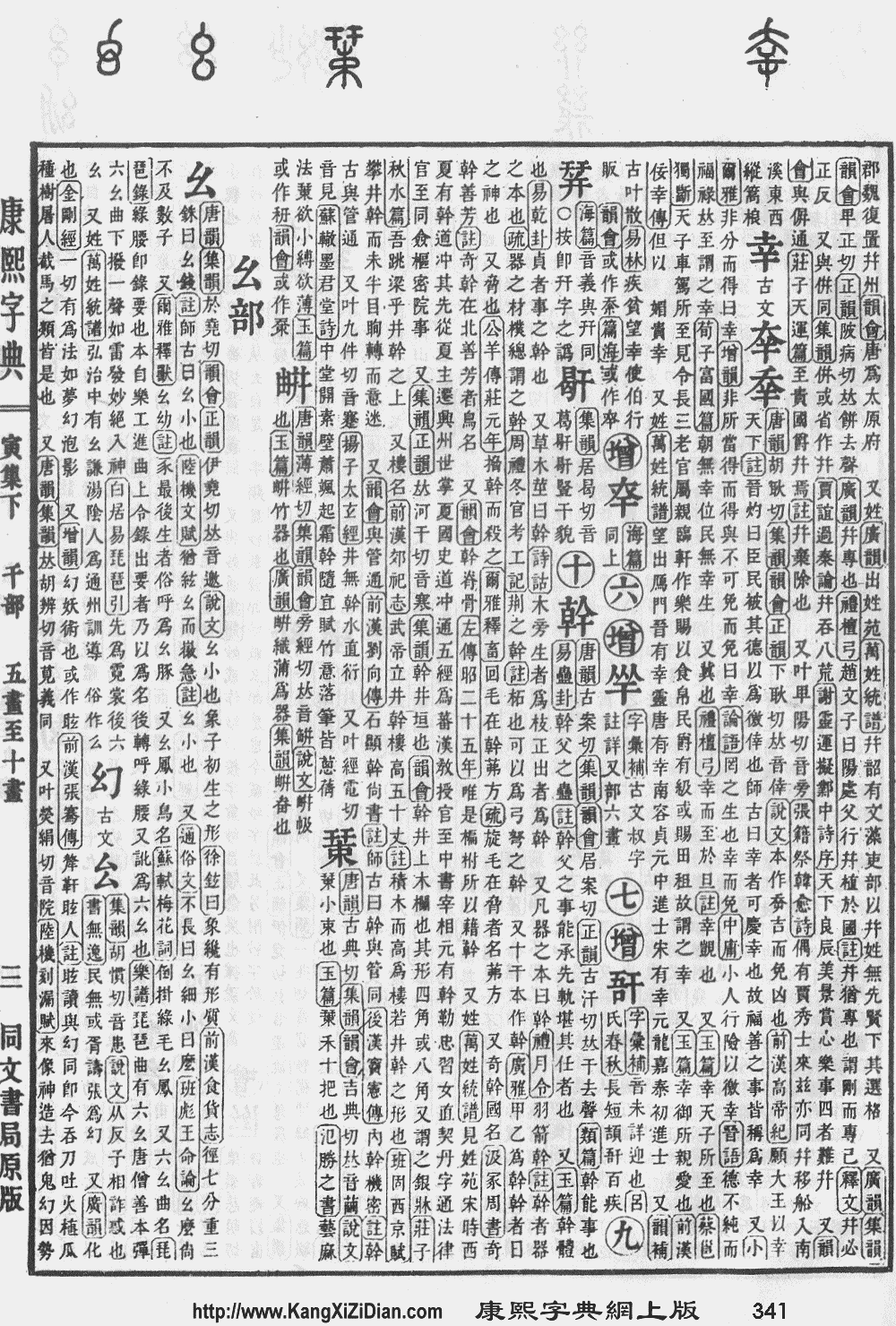
- Kangxi Dictionary: page 341, character 9
- Dai Kanwa Jiten: character 9183
- Dae Jaweon: page 650, character 1
- Hanyu Da Zidian (first edition): volume 1, page 409, character 9
- Unihan data for U+5E79
Chinese
| trad. | 幹 | |
|---|---|---|
| simp. | 干* | |
| alternative forms | 榦/干 𫢉 | |
Glyph origin
Characters in the same phonetic series (干) (Zhengzhang, 2003)
| Old Chinese | |
|---|---|
| 訐 | *krads, *krads, *ked, *kad |
| 肝 | *kaːn |
| 竿 | *kaːn |
| 干 | *kaːn |
| 奸 | *kaːn |
| 玕 | *kaːn |
| 汗 | *kaːn, *ɡaːn, *ɡaːns |
| 迀 | *kaːn |
| 忓 | *kaːn, *ɡaːns |
| 鳱 | *kaːn |
| 邗 | *kaːn, *ɡaːn |
| 秆 | *kaːnʔ |
| 矸 | *kaːnʔ, *kaːns, *ɡaːns |
| 仠 | *kaːnʔ |
| 皯 | *kaːnʔ |
| 衦 | *kaːnʔ |
| 簳 | *kaːnʔ |
| 擀 | *kaːnʔ |
| 旰 | *kaːns |
| 盰 | *kaːns |
| 幹 | *kaːns |
| 杆 | *kaːns |
| 骭 | *kaːns, *ɡraːns |
| 桿 | *kaːnʔ |
| 趕 | *kaːnʔ |
| 稈 | *kaːnʔ |
| 刊 | *kʰaːn |
| 靬 | *kʰaːn, *kʰaːns, *kreːn, *kan |
| 衎 | *kʰaːnʔ, *kʰaːns |
| 犴 | *ŋaːn, *ŋaːns |
| 豻 | *ŋaːn, *ŋaːns, *ɦŋaːns, *ŋ̊ʰraːn |
| 頇 | *ŋaːns, *hŋaːn, *ŋaːd |
| 岸 | *ŋɡaːns |
| 鼾 | *qʰaːn, *ɢaːns |
| 罕 | *qʰaːnʔ, *qʰaːns |
| 焊 | *qʰaːnʔ, *ɡaːns |
| 蔊 | *qʰaːnʔ |
| 虷 | *ɡaːn |
| 旱 | *ɡaːnʔ |
| 皔 | *ɡaːnʔ |
| 釬 | *ɡaːns |
| 扞 | *ɡaːns |
| 閈 | *ɡaːns |
| 馯 | *ɡaːns, *kʰraːn |
| 捍 | *ɡaːns, *ɡraːnʔ |
| 悍 | *ɡaːns |
| 銲 | *ɡaːns |
| 垾 | *ɡaːns |
| 駻 | *ɡaːns |
| 睅 | *ɡʷranʔ |
| 娨 | *ɡraːns |
| 飦 | *kan |
| 赶 | *ɡan, *ɡʷad |
| 軒 | *qʰan |
| 蓒 | *qʰan |
| 酐 | *qʰaːŋʔ |
| 澣 | *ɡʷaːnʔ |
Phono-semantic compound (形聲/形声, OC *kaːns) : semantic 倝 + phonetic 干 (OC *kaːn).
Etymology 1
The vulgar sense entered Mandarin from Hokkien 姦/奸 (kàn), as 姦 shares the same pronunciation with 幹 in Hokkien.
This etymology is incomplete. You can help Wiktionary by elaborating on the origins of this term.
Pronunciation
Definitions
幹
- main part of something; body; trunk
- (colloquial) to do
- to work
- (vulgar) to fuck; to engage in sexual intercourse
- 幹恁娘!/干恁娘! [Hokkien] ― Kàn-lín-niâ! [Pe̍h-ōe-jī] ― Fuck your mother!
- 幹你媽!/干你妈! ― Gàn nǐ mā! ― Fuck your mother!
- 金榮只一口咬定說:「方才明明的撞見他兩個在後院子里親嘴摸屁股,一對一肏,撅草根兒抽長短,誰長誰先幹。」 [Written Vernacular Chinese, trad.]
- From: Cao Xueqin, Dream of the Red Chamber, mid-18th century CE
- Jīn Róng zhǐ yīkǒu yǎodìng shuō: “Fāngcái míngmíng de zhuàngjiàn tā liǎng ge zài hòuyuànzi lǐ qīnzuǐ mō pìgǔ, yīduìyī cào, juē cǎogēnr chōu chángduǎn, shéi cháng shéi xiān gàn.” [Pinyin]
- (please add an English translation of this usage example)
金荣只一口咬定说:「方才明明的撞见他两个在后院子里亲嘴摸屁股,一对一肏,撅草根儿抽长短,谁长谁先干。」 [Written Vernacular Chinese, simp.]
- (vulgar) to kill
- (vulgar, chiefly Taiwan) to steal
- (vulgar, chiefly Taiwan) to blame; to condemn
- (Taiwan, vulgar, colloquial) Expressing dismay or discontent.
- (dialectal Mandarin) to sort someone out
Synonyms
- (to do):
- (to fuck):
Dialectal synonyms of 肏 (“to fuck; to have sex with”) [map]
Compounds
- 三門幹部/三门干部
- 不幹/不干 (bùgàn)
- 主幹/主干 (zhǔgàn)
- 主幹家庭/主干家庭 (zhǔgàn jiātíng)
- 井幹/井干
- 交感幹/交感干 (jiāogǎngàn)
- 交感神經幹/交感神经干 (jiāogǎnshénjīnggàn)
- 儲備幹部/储备干部
- 充能幹/充能干
- 公幹/公干 (gōnggàn)
- 勾幹/勾干
- 單幹/单干
- 單幹戶/单干户
- 埋頭苦幹/埋头苦干 (máitóukǔgàn)
- 埋頭苦幹/埋头苦干 (máitóukǔgàn)
- 夯幹/夯干
- 央浼營幹/央浼营干
- 實幹/实干 (shígàn)
- 對著幹/对著干 (duìzhegàn)
- 幹上了/干上了
- 幹不了/干不了 (“cannot do it”)
- 幹不來/干不来 (“cannot do it”)
- 幹了/干了
- 幹事/干事 (“secretary in charge”)
- 幹人/干人
- 幹什麼/干什么 (gàn shénme, “do what? why?”)
- 幹仗/干仗 (“to quarrel”)
- 幹勁/干劲 (gànjìn, “vigor”)
- 幹吏/干吏
- 幹員/干员 (gànyuán)
- 幹嗎/干吗 (“why on earth”)
- 幹嘛/干嘛 (“why on earth”)
- 幹家/干家 (“household manager”)
- 幹家做活/干家做活
- 幹家緣/干家缘
- 幹將/干将 (gànjiàng, “go-getter”)
- 幹得了/干得了
- 幹得來/干得来
- 幹得過兒/干得过儿 (“can be done”)
- 幹才/干才 (“ability”)
- 幹掉/干掉 (gàndiào, “to finish, to kill”)
- 幹架/干架 (gànjià, “to quarrel”)
- 幹校/干校 (“cadre school”)
- 幹活/干活 (gànhuó, “to work”)
- 幹流/干流 (gànliú, “trunk stream”)
- 幹渠/干渠 (“trunk canal”)
- 幹濟/干济
- 幹營生/干营生
- 幹父之蠱/干父之蛊
- 幹略/干略
- 幹當/干当
- 幹的停當/干的停当
- 幹細胞/干细胞 (gànxìbāo, “stem cell”)
- 幹線/干线 (gànxiàn, “main line”)
- 幹練/干练 (gànliàn, “competent”)
- 幹線公車/干线公车
- 幹缺/干缺
- 幹蠱/干蛊
- 幹警/干警 (gànjǐng, “cadre and police”)
- 幹路/干路 (gànlù, “main road”)
- 幹辦/干办
- 幹道/干道 (gàndào, “main road”)
- 幹部/干部 (gànbù, “cadre”)
- 幹部學校/干部学校 (“cadre school”)
- 幹頭/干头
- 幹頭兒/干头儿 (“worth”)
- 幹麼/干么 (gànmá)
- 府幹/府干
- 強幹/强干
- 強幹弱枝/强干弱枝
- 彊幹弱枝/强干弱枝
- 徐幹/徐干
- 才幹/才干 (cáigàn)
- 才能幹濟/才能干济
- 打幹/打干
- 材幹/材干 (cáigān)
- 枝幹/枝干 (zhīgàn)
- 楨幹/桢干
- 樹幹/树干 (shùgàn, “tree trunk”)
- 沒幹/没干
- 沒幹頭/没干头
- 沒梢幹/没梢干
- 洗手不幹/洗手不干
- 營幹/营干
- 盲幹/盲干 (mánggàn)
- 硬幹/硬干
- 管幹/管干
- 精幹/精干 (jīnggàn)
- 精明幹練/精明干练
- 精明強幹/精明强干
- 精明能幹/精明能干
- 總幹事/总干事 (zǒnggànshì)
- 能幹/能干 (nénggàn)
- 腦幹/脑干 (nǎogàn)
- 苦幹/苦干 (kǔgàn)
- 薄幹/薄干
- 蠻幹/蛮干 (mángàn)
- 詞幹/词干 (cígàn)
- 謀幹/谋干
- 貴幹/贵干 (guìgàn)
- 趲幹/趱干
- 軀幹/躯干 (qūgàn)
- 軀幹骨/躯干骨
- 配水幹管/配水干管
- 里幹事
- 韓幹/韩干
- 韓幹畫馬/韩干画马
- 領導幹部/领导干部
- 頭臂動脈幹/头臂动脉干 (tóubìdòngmàigàn)
- 頭臂幹/头臂干 (tóubìgàn)
- 骨幹/骨干 (gǔgàn)
- 高幹/高干 (gāogàn)
Pronunciation
Pronunciation
References
- “幹”, in 漢語多功能字庫 (Multi-function Chinese Character Database), 香港中文大學 (the Chinese University of Hong Kong), 2014–
Japanese
Etymology 1
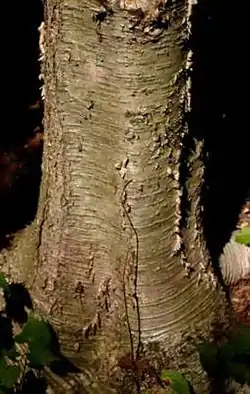
幹 (miki): a tree trunk.
| Kanji in this term |
|---|
| 幹 |
| みき Grade: 5 |
| kun’yomi |
Originally a compound of 身 (mi, “body”) + 木 (ki, “tree”).[1][2][3]
First cited to a text from 1726.[1]
Pronunciation
Etymology 2
| Kanji in this term |
|---|
| 幹 |
| から Grade: 5 |
| kun’yomi |
| For pronunciation and definitions of 幹 – see the following entry. | ||
| ||
| (This term, 幹, is an alternative spelling of the above term.) |
Pronunciation
- IPA(key): [kã̠ɴ]
Derived terms
Derived terms
- 幹細胞 (kansaibō): stem cell
- 新幹線 (shinkansen): bullet train
- 脳幹 (nōkan): brain stem
References
- Shōgaku Tosho (1988) 国語大辞典(新装版) [Unabridged Dictionary of Japanese (Revised Edition)] (in Japanese), Tōkyō: Shogakukan, →ISBN
- Matsumura, Akira, editor (2006), 大辞林 [Daijirin] (in Japanese), Third edition, Tōkyō: Sanseidō, →ISBN
- Matsumura, Akira (1995) 大辞泉 [Daijisen] (in Japanese), First edition, Tōkyō: Shogakukan, →ISBN
- NHK Broadcasting Culture Research Institute, editor (1998), NHK日本語発音アクセント辞典 [NHK Japanese Pronunciation Accent Dictionary] (in Japanese), Tōkyō: NHK Publishing, →ISBN
Korean
Hanja
幹 • (gan) (hangeul 간, revised gan, McCune–Reischauer kan)
- This term needs a translation to English. Please help out and add a translation, then remove the text
{{rfdef}}.
Vietnamese
This article is issued from Wiktionary. The text is licensed under Creative Commons - Attribution - Sharealike. Additional terms may apply for the media files.