犢
See also: 犊
| ||||||||
Translingual
| Traditional | 犢 |
|---|---|
| Shinjitai (extended) |
㸿 |
| Simplified | 犊 |
Han character
犢 (Kangxi radical 93, 牛+15, 19 strokes, cangjie input 竹手土田金 (HQGWC), four-corner 24586, composition ⿰牜賣 or ⿰牜𧶠)
- calf
- victim of sacrifice
References
- Kangxi Dictionary: page 704, character 38
- Dai Kanwa Jiten: character 20196
- Dae Jaweon: page 1117, character 23
- Hanyu Da Zidian (first edition): volume 3, page 1821, character 2
- Unihan data for U+72A2
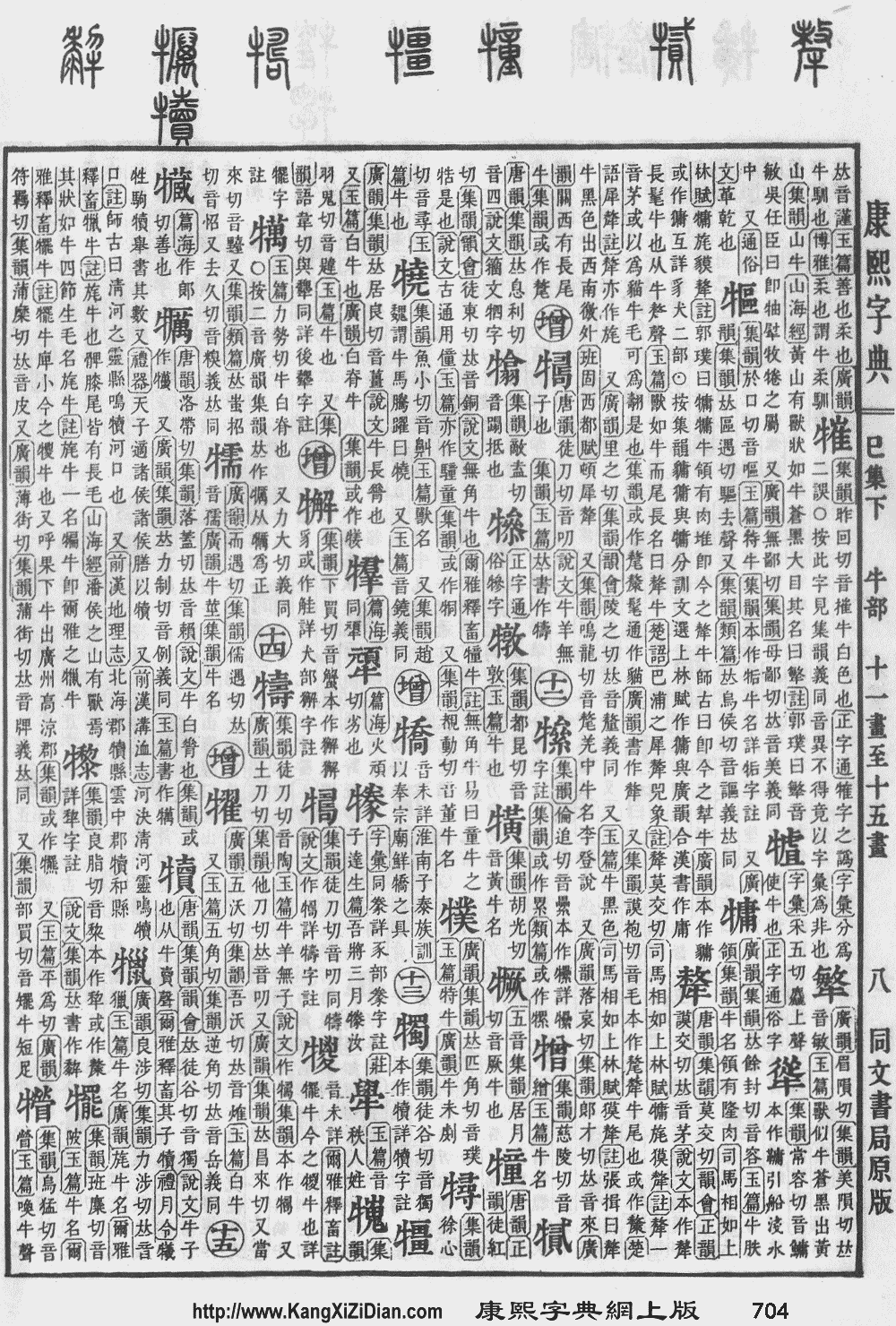
Chinese
| trad. | 犢 | |
|---|---|---|
| simp. | 犊 | |
Glyph origin
| Historical forms of the character 犢 | |
|---|---|
| Shuowen Jiezi (compiled in Han) | Liushutong (compiled in Ming) |
| Small seal script | Transcribed ancient scripts |
 |
 |
Characters in the same phonetic series (𧶠) (Zhengzhang, 2003)
Phono-semantic compound (形聲/形声, OC *l'oːɡ) : semantic 牛 (“ox”) + phonetic 𧶠 (OC *luɡ).
Etymology
Possibly from Proto-Sino-Tibetan *luk (“sheep”) (Schuessler, 2007; STEDT). Cognate with 羭 (OC *lo, “sheep”), Tibetan ལུག (lug, “sheep”).
Other etymologies have been proposed:
- Boodberg (1937) relates it to Tibetan ཕྲུག (phrug, “calf”), which Schuessler (2007) deems unlikely.
- Norman (1988) suggests that it may be a loan from Mongolic or Tungusic; compare Mongolian ᠲᠤᠭᠤᠯ (tuɣul, “calf”), Manchu ᡨᡠᡴᡧᠠᠨ (tukšan, “calf”). This is an unlikely etymology due to recent developments in the reconstruction of Old Chinese, where *l- (rather than older reconstructions with *d-) would be a poor match for Mongolic/Tungusic t-, as well as new archaeological evidence suggesting that the word is likely older than previously assumed (Miyake, 2017; Cao, 2021).
- It could also be related to 畜 (OC *l̥ʰuɡs, *l̥ʰuɡ, *hluɡ, “to nourish; domestic animal”) (Schuessler, 2007).
Pronunciation
Definitions
犢
Synonyms
Dialectal synonyms of 小牛 (“calf”) [map]
Compounds
- 乳犢/乳犊
- 佩犢/佩犊
- 健犢/健犊
- 初生之犢/初生之犊 (chūshēngzhīdú)
- 初生犢兒/初生犊儿
- 叱犢/叱犊
- 孤犢/孤犊
- 孤犢觸乳/孤犊触乳
- 帶牛佩犢/带牛佩犊
- 帶犢/带犊
- 快犢破車/快犊破车
- 抱犢/抱犊
- 抱犢山/抱犊山
- 揜麛取犢/揜麛取犊
- 斑犢/斑犊
- 曬犢鼻/晒犊鼻
- 栗犢/栗犊
- 毛犢/毛犊
- 牛犢/牛犊 (niúdú)
- 牛犢子/牛犊子 (niúdúzi)
- 牧犢/牧犊
- 牧犢子/牧犊子
- 牲犢/牲犊
- 犢兒/犊儿
- 犢子/犊子 (dúzi)
- 犢廬/犊庐
- 犢木子/犊木子
- 犢沐子/犊沐子
- 犢牛/犊牛
- 犢牧採薪/犊牧采薪
- 犢衣/犊衣
- 犢褌/犊裈
- 犢角繭/犊角茧
- 犢車/犊车
- 犢車麈尾/犊车麈尾
- 犢鼻/犊鼻
- 犢鼻褌/犊鼻裈
- 犢鼻騧/犊鼻䯄
- 留犢/留犊
- 白犢/白犊
- 短犢/短犊
- 禽犢/禽犊
- 禽犢之愛/禽犊之爱
- 繭栗犢/茧栗犊
- 繭犢/茧犊
- 羔犢/羔犊
- 老牛舐犢/老牛舐犊
- 耕犢/耕犊
- 聊曬犢褌/聊晒犊裈
- 舐犢/舐犊
- 舐犢之愛/舐犊之爱
- 舐犢情深/舐犊情深 (shìdúqíngshēn)
- 護犢子/护犊子
- 豚犢/豚犊
- 買犢賣刀/买犊卖刀
- 賣刀買犢/卖刀买犊
- 賣劍買犢/卖剑买犊
- 賣犢買刀/卖犊买刀
- 踦犢/踦犊
- 金犢/金犊
- 青犢/青犊
- 飲犢上流/饮犊上流
- 駒犢/驹犊
- 騂犢/骍犊
- 鳴犢/鸣犊
- 黃犢/黄犊
- 黃犢舍/黄犊舍
- 黑犢/黑犊
- 黝犢/黝犊
Japanese
| 㸿 | |
| 犢 |
Kanji
犢
(uncommon “Hyōgai” kanji, kyūjitai kanji, shinjitai form 㸿)
- This term needs a translation to English. Please help out and add a translation, then remove the text
{{rfdef}}.
Korean
Hanja
犢 • (dok) (hangeul 독, revised dok, McCune–Reischauer tok, Yale tok)
- This term needs a translation to English. Please help out and add a translation, then remove the text
{{rfdef}}.
This article is issued from Wiktionary. The text is licensed under Creative Commons - Attribution - Sharealike. Additional terms may apply for the media files.