琀
| ||||||||
Translingual
Han character
琀 (Kangxi radical 96, 玉+7, 11 strokes, cangjie input 一土人戈口 (MGOIR) or 難一土人戈 (XMGOI), four-corner 18162, composition ⿰𤣩含)
References
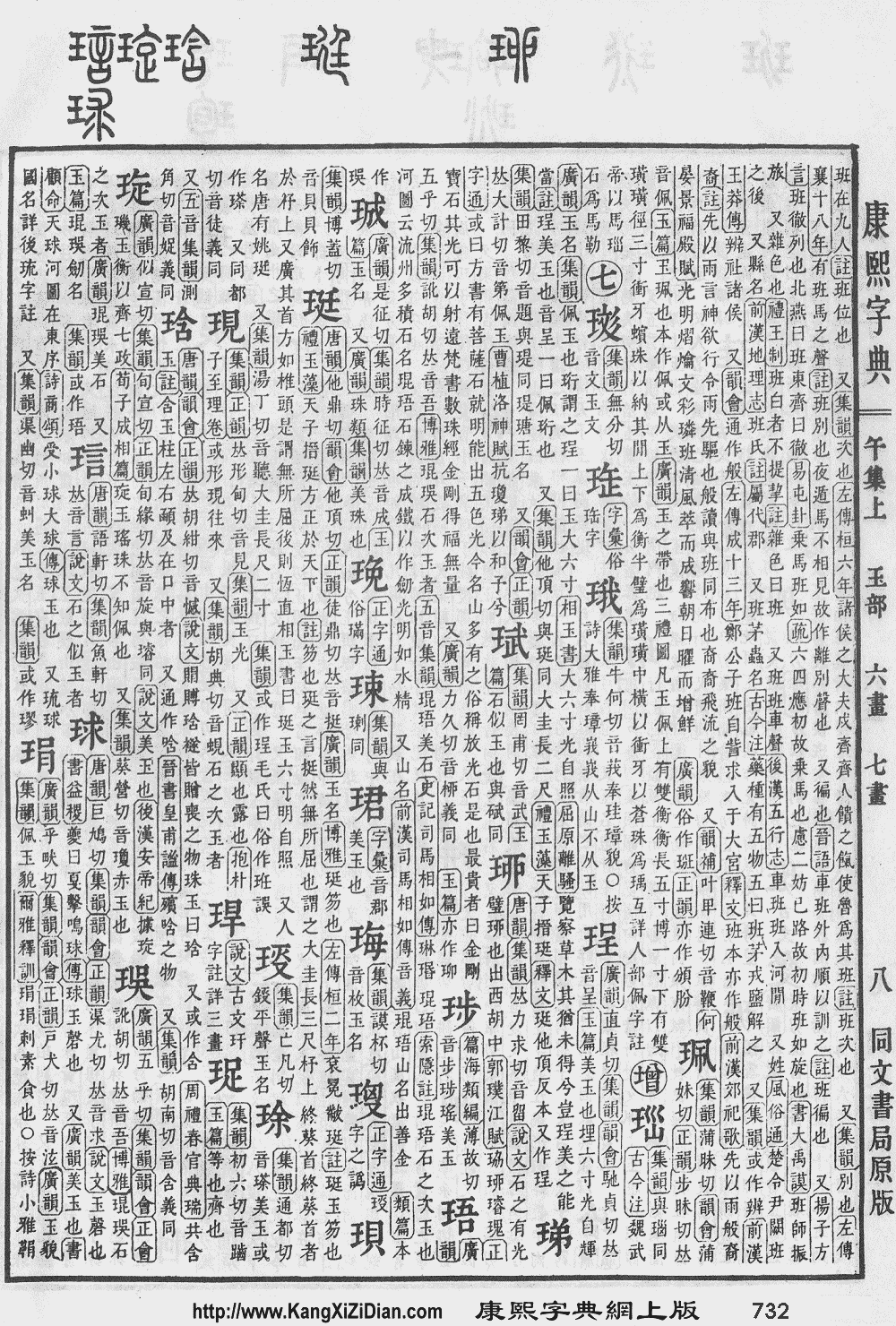
- Kangxi Dictionary: page 732, character 25
- Dai Kanwa Jiten: character 21007
- Dae Jaweon: page 1144, character 2
- Hanyu Da Zidian (first edition): volume 2, page 1118, character 3
- Unihan data for U+7400
Chinese
| trad. | 琀 | |
|---|---|---|
| simp. # | 琀 | |
Glyph origin
Characters in the same phonetic series (今) (Zhengzhang, 2003)
| Old Chinese | |
|---|---|
| 貪 | *kʰl'uːm |
| 嗿 | *l̥ʰuːmʔ |
| 僋 | *l̥ʰuːms, *luːms |
| 酓 | *qʰɯːm, *qlamʔ, *qlɯːms |
| 馠 | *qʰɯːm |
| 谽 | *qʰɯːm |
| 唅 | *qʰɯːm, *ɡɯːms |
| 含 | *ɡɯːm |
| 肣 | *ɡɯːm, *ɡɯːmʔ |
| 頷 | *ɡɯːm, *ɡɯːmʔ |
| 筨 | *ɡɯːm |
| 梒 | *ɡɯːm |
| 鋡 | *ɡɯːm |
| 莟 | *ɡɯːmʔ, *ɡɯːms |
| 琀 | *ɡɯːms |
| 浛 | *ɡɯːms |
| 盦 | *qɯːm, *qaːb |
| 韽 | *qɯːm, *qrɯːms |
| 玪 | *krɯːm |
| 妗 | *qʰrɯːm, *kʰjam, *qʰlɯːm, *ɡrɯms |
| 欦 | *qʰrɯːmʔ, *qʰram, *kʰlam, *kʰlamʔ, *qʰlɯːm |
| 黔 | *ɡram, *ɡrɯm |
| 鈐 | *ɡram |
| 鳹 | *ɡram |
| 雂 | *ɡram, *ɡrɯm |
| 念 | *nɯːms |
| 梣 | *sɡɯm, *sɡrɯm |
| 枔 | *sɢrɯm |
| 岑 | *sɡrɯm |
| 笒 | *sɡrɯm, *ɡrɯms |
| 涔 | *sɡrɯm |
| 侺 | *ɡjɯms |
| 今 | *krɯm |
| 黅 | *krɯm |
| 衿 | *krɯm |
| 衾 | *kʰrɯm |
| 坅 | *kʰrɯmʔ |
| 搇 | *kʰrɯms |
| 琴 | *ɡrɯm |
| 禽 | *ɡrɯm |
| 芩 | *ɡrɯm |
| 庈 | *ɡrɯm |
| 耹 | *ɡrɯm |
| 靲 | *ɡrɯm |
| 擒 | *ɡrɯm |
| 檎 | *ɡrɯm |
| 紟 | *ɡrɯms |
| 吟 | *ŋɡrɯm, *ŋɡrɯms |
| 訡 | *ŋɡrɯm |
| 廞 | *qʰrɯm, *qʰrɯmʔ |
| 陰 | *qrɯm |
| 霠 | |
| 飲 | *qrɯmʔ, *qrɯms |
| 蔭 | *qrɯms |
| 廕 | *qrɯms |
| 矜 | *ɡrɯn, *ɡɯn, *kɯŋ |
Pronunciation
Compounds
- 琀玉 (hànyù)
Japanese
Kanji
琀
- This term needs a translation to English. Please help out and add a translation, then remove the text
{{rfdef}}.
This article is issued from Wiktionary. The text is licensed under Creative Commons - Attribution - Sharealike. Additional terms may apply for the media files.