飲
| ||||||||
Translingual
Han character
飲 (Kangxi radical 184, 食+4, 13 strokes, cangjie input 人戈弓人 (OINO), four-corner 87782, composition ⿰飠欠)
Derived characters
- 𠿮 𡑨 𤀔 𥽁 𡼽 𫨜
References
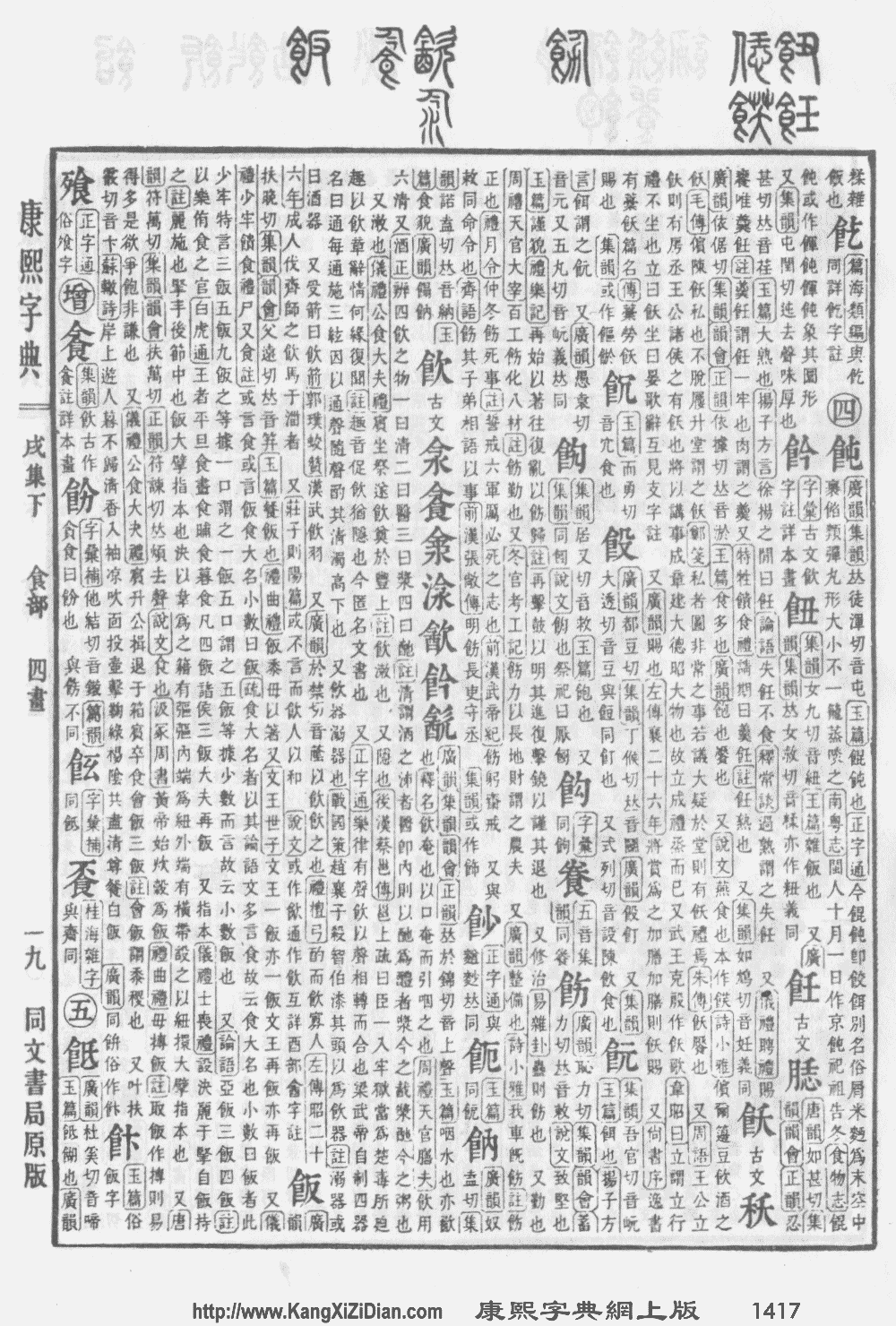
- Kangxi Dictionary: page 1417, character 19
- Dai Kanwa Jiten: character 44063
- Dae Jaweon: page 1941, character 20
- Hanyu Da Zidian (first edition): volume 7, page 4445, character 7
- Unihan data for U+98F2
Chinese
Glyph origin
| Historical forms of the character 飲 | ||
|---|---|---|
| Shang | Western Zhou | Liushutong (compiled in Ming) |
| Oracle bone script | Bronze inscriptions | Transcribed ancient scripts |
 |
 |
 |
| Old Chinese | |
|---|---|
| 貪 | *kʰl'uːm |
| 嗿 | *l̥ʰuːmʔ |
| 僋 | *l̥ʰuːms, *luːms |
| 酓 | *qʰɯːm, *qlamʔ, *qlɯːms |
| 馠 | *qʰɯːm |
| 谽 | *qʰɯːm |
| 唅 | *qʰɯːm, *ɡɯːms |
| 含 | *ɡɯːm |
| 肣 | *ɡɯːm, *ɡɯːmʔ |
| 頷 | *ɡɯːm, *ɡɯːmʔ |
| 筨 | *ɡɯːm |
| 梒 | *ɡɯːm |
| 鋡 | *ɡɯːm |
| 莟 | *ɡɯːmʔ, *ɡɯːms |
| 琀 | *ɡɯːms |
| 浛 | *ɡɯːms |
| 盦 | *qɯːm, *qaːb |
| 韽 | *qɯːm, *qrɯːms |
| 玪 | *krɯːm |
| 妗 | *qʰrɯːm, *kʰjam, *qʰlɯːm, *ɡrɯms |
| 欦 | *qʰrɯːmʔ, *qʰram, *kʰlam, *kʰlamʔ, *qʰlɯːm |
| 黔 | *ɡram, *ɡrɯm |
| 鈐 | *ɡram |
| 鳹 | *ɡram |
| 雂 | *ɡram, *ɡrɯm |
| 念 | *nɯːms |
| 梣 | *sɡɯm, *sɡrɯm |
| 枔 | *sɢrɯm |
| 岑 | *sɡrɯm |
| 笒 | *sɡrɯm, *ɡrɯms |
| 涔 | *sɡrɯm |
| 侺 | *ɡjɯms |
| 今 | *krɯm |
| 黅 | *krɯm |
| 衿 | *krɯm |
| 衾 | *kʰrɯm |
| 坅 | *kʰrɯmʔ |
| 搇 | *kʰrɯms |
| 琴 | *ɡrɯm |
| 禽 | *ɡrɯm |
| 芩 | *ɡrɯm |
| 庈 | *ɡrɯm |
| 耹 | *ɡrɯm |
| 靲 | *ɡrɯm |
| 擒 | *ɡrɯm |
| 檎 | *ɡrɯm |
| 紟 | *ɡrɯms |
| 吟 | *ŋɡrɯm, *ŋɡrɯms |
| 訡 | *ŋɡrɯm |
| 廞 | *qʰrɯm, *qʰrɯmʔ |
| 陰 | *qrɯm |
| 霠 | |
| 飲 | *qrɯmʔ, *qrɯms |
| 蔭 | *qrɯms |
| 廕 | *qrɯms |
| 矜 | *ɡrɯn, *ɡɯn, *kɯŋ |
In the oracle bone script, it was an ideogrammic compound (會意/会意) : 酉 (“bottle (of alcoholic beverages)”) + 人 (“person”) + 口 (“mouth (occasionally with the tongue protruding)”) – a person bending over a bottle to drink the alcoholic beverage. The droplets represented drops of the drink or saliva.
In the bronze script, the mouth separated from the body and corrupted into 今 (OC *krɯm), while the rest of the body became 欠 (OC *kʰoms). These two components also acted as phonetic components. These changes were inherited in the seal script, leading Shuowen to interpret this character (㱃) as a phono-semantic compound (形聲/形声, OC *qrɯmʔ, *qrɯms) : phonetic 酓 (OC *qʰɯːm, *qlamʔ, *qlɯːms) + semantic 欠 (“yawn”).
In the clerical script, 酓 has been modified to 食 (“to eat”), which is inherited in the current form.
Etymology 1
From Proto-Sino-Tibetan *ʔam (“to eat; to drink”).
Definitions
飲
- (literary or Cantonese, Hakka) to drink
- (Cantonese) to attend a banquet
- to swallow (tears); to nurse (grievance); to keep in the heart
- Alternative form of 隱/隐 (“to hide; to conceal”)
- beverage; drink
- diet; food
- (dialectal Cantonese, including Taishanese, Yangjiang; dialectal Gan; dialectal Hakka; Min) rice water
- (Xiamen, Zhangping and Taiwanese Hokkien) sticky and watery
Synonyms
Compounds
- 一飲一啄/一饮一啄
- 一飲一啄,莫非前定/一饮一啄,莫非前定 (yīyǐnyīzhuó, mòfēiqiándìng)
- 一飲而盡/一饮而尽 (yìyǐn'érjìn)
- 不飲盜泉/不饮盗泉
- 低鹽飲食/低盐饮食
- 偃鼠飲河/偃鼠饮河
- 冷飲/冷饮 (lěngyǐn)
- 劇飲/剧饮
- 卯飲/卯饮
- 可飲水/可饮水
- 吞聲飲氣/吞声饮气
- 吞聲飲泣/吞声饮泣
- 吸風飲露/吸风饮露 (xīfēngyǐnlù)
- 啜菽飲水/啜菽饮水
- 啐飲/啐饮
- 啜飲/啜饮 (chuòyǐn)
- 圖書餐飲店/图书餐饮店
- 圖書餐飲複合式餐廳/图书餐饮复合式餐厅
- 如人飲水,冷暖自知/如人饮水,冷暖自知 (rú rén yǐnshuǐ, lěngnuǎn zìzhī)
- 如飲醍醐/如饮醍醐
- 宴飲/宴饮
- 寒天飲冷水/寒天饮冷水
- 寒門飲恨/寒门饮恨
- 射石飲羽/射石饮羽
- 對飲/对饮
- 山棲谷飲/山栖谷饮
- 崇飲/崇饮
- 巖居谷飲/岩居谷饮
- 帳飲/帐饮
- 平原十日飲/平原十日饮
- 弱水三千,只取一瓢飲/弱水三千,只取一瓢饮 (ruòshuǐsānqiān, zhǐ qǔ yīpiáo yǐn)
- 張飲/张饮
- 應弦飲羽/应弦饮羽
- 抔飲/抔饮 (póuyǐn)
- 掬飲/掬饮
- 文字飲/文字饮
- 日飲亡何/日饮亡何
- 暢飲/畅饮 (chàngyǐn)
- 暴飲暴食/暴饮暴食 (bàoyǐnbàoshí)
- 會飲/会饮
- 有氧飲料/有氧饮料
- 枕戈飲膽/枕戈饮胆
- 歠菽飲水/歠菽饮水
- 止渴飲鴆/止渴饮鸩
- 水飲/水饮
- 沒金飲羽/没金饮羽
- 泥飲/泥饮
- 沽飲/沽饮
- 洪飲/洪饮
- 浩飲/浩饮
- 渴飲飢餐/渴饮饥餐
- 溫和飲食/温和饮食
- 滴酒不飲/滴酒不饮
- 熱飲/热饮 (rèyǐn)
- 燕飲/燕饮
- 牛飲/牛饮
- 狂飲/狂饮 (kuángyǐn)
- 猛飲/猛饮
- 生飲/生饮
- 疏食飲水/疏食饮水
- 痛飲/痛饮 (tòngyǐn)
- 痛飲黃龍/痛饮黄龙
- 痰飲/痰饮
- 禊飲/禊饮
- 簞食瓢飲/箪食瓢饮
- 自斟自飲/自斟自饮
- 茹毛飲血/茹毛饮血 (rúmáoyǐnxuè)
- 谷飲/谷饮
- 豪飲/豪饮
- 貪泉酌飲/贪泉酌饮
- 軟飲料/软饮料 (ruǎnyǐnliào)
- 轟飲/轰饮
- 運動飲料/运动饮料
- 鄉飲酒禮/乡饮酒礼
- 酌飲/酌饮
- 酣飲/酣饮 (hānyǐn)
- 鑿飲耕食/凿饮耕食
- 長夜飲/长夜饮
- 開飲機/开饮机
- 陪飲/陪饮
- 顛飲/颠饮
- 飢餐渴飲/饥餐渴饮
- 飲冰/饮冰
- 飲冰室文集/饮冰室文集
- 飲冰茹蘗/饮冰茹蘗
- 飲冰食蘗/饮冰食蘗
- 飲器/饮器
- 飲子/饮子 (yǐnzǐ)
- 飲宴/饮宴 (yǐnyàn)
- 飲彈/饮弹 (yǐndàn)
- 飲恨/饮恨 (yǐnhèn)
- 飲恨吞聲/饮恨吞声
- 飲恨而終/饮恨而终 (yǐnhèn'érzhōng)
- 飲料/饮料 (yǐnliào)
- 飲歌/饮歌
- 飲氣吞聲/饮气吞声
- 飲水/饮水 (yǐnshuǐ)
- 飲水啜菽/饮水啜菽
- 飲水器/饮水器
- 飲水思源/饮水思源 (yǐnshuǐsīyuán)
- 飲水曲肱/饮水曲肱
- 飲水機/饮水机 (yǐnshuǐjī)
- 飲水知源/饮水知源
- 飲水食菽/饮水食菽
- 飲泣/饮泣 (yǐnqì)
- 飲泣吞聲/饮泣吞声
- 飲河滿腹/饮河满腹
- 飲流懷源/饮流怀源
- 飲流霞/饮流霞
- 飲灰洗胃/饮灰洗胃
- 飲片/饮片
- 飲用/饮用 (yǐnyòng)
- 飲福/饮福
- 飲羽/饮羽
- 飲至/饮至
- 飲茶/饮茶 (yǐnchá)
- 飯蔬飲水/饭蔬饮水
- 飲血/饮血
- 飲血茹毛/饮血茹毛
- 飲酒/饮酒 (yǐnjiǔ)
- 飲酒作樂/饮酒作乐
- 飲醇自醉/饮醇自醉
- 飲露餐風/饮露餐风
- 飲章/饮章
- 飲風餐露/饮风餐露
- 飲食/饮食 (yǐnshí)
- 飲食不進/饮食不进
- 飲食之人/饮食之人
- 飲食男女/饮食男女 (yǐnshínánnǚ)
- 飲食療法/饮食疗法
- 飲食起居/饮食起居 (yǐnshíqǐjū)
- 飲餞/饮饯
- 飲饌/饮馔
- 飲鴆止渴/饮鸩止渴 (yǐnzhènzhǐkě)
- 餐松飲澗/餐松饮涧
- 餐風飲露/餐风饮露
- 餐飲/餐饮 (cānyǐn)
- 香薷飲/香薷饮
Definitions
飲
- to give (animals) water to drink; to water (animals)
- (Southwestern Mandarin) to water (plants)
- (literary) to wine and dine (someone); to entertain with alcohol and food
Synonyms
Pronunciation
Japanese
| 飲 | |
| 飮 |
Readings
Etymology
| Kanji in this term |
|---|
| 飲 |
| いん Grade: 3 |
| kan’on |
| Alternative spelling |
|---|
| 飮 (kyūjitai) |
From Middle Chinese 飲 (MC 'imX|'imH).
The kan'on pronunciation, so likely a later borrowing.
Noun
飲 • (in)
References
- Matsumura, Akira, editor (2006), 大辞林 [Daijirin] (in Japanese), Third edition, Tōkyō: Sanseidō, →ISBN