綿
See also: 绵
| ||||||||
Translingual
Han character
綿 (Kangxi radical 120, 糸+8, 14 strokes, cangjie input 女火竹日月 (VFHAB), four-corner 26927, composition ⿰糹帛)
References
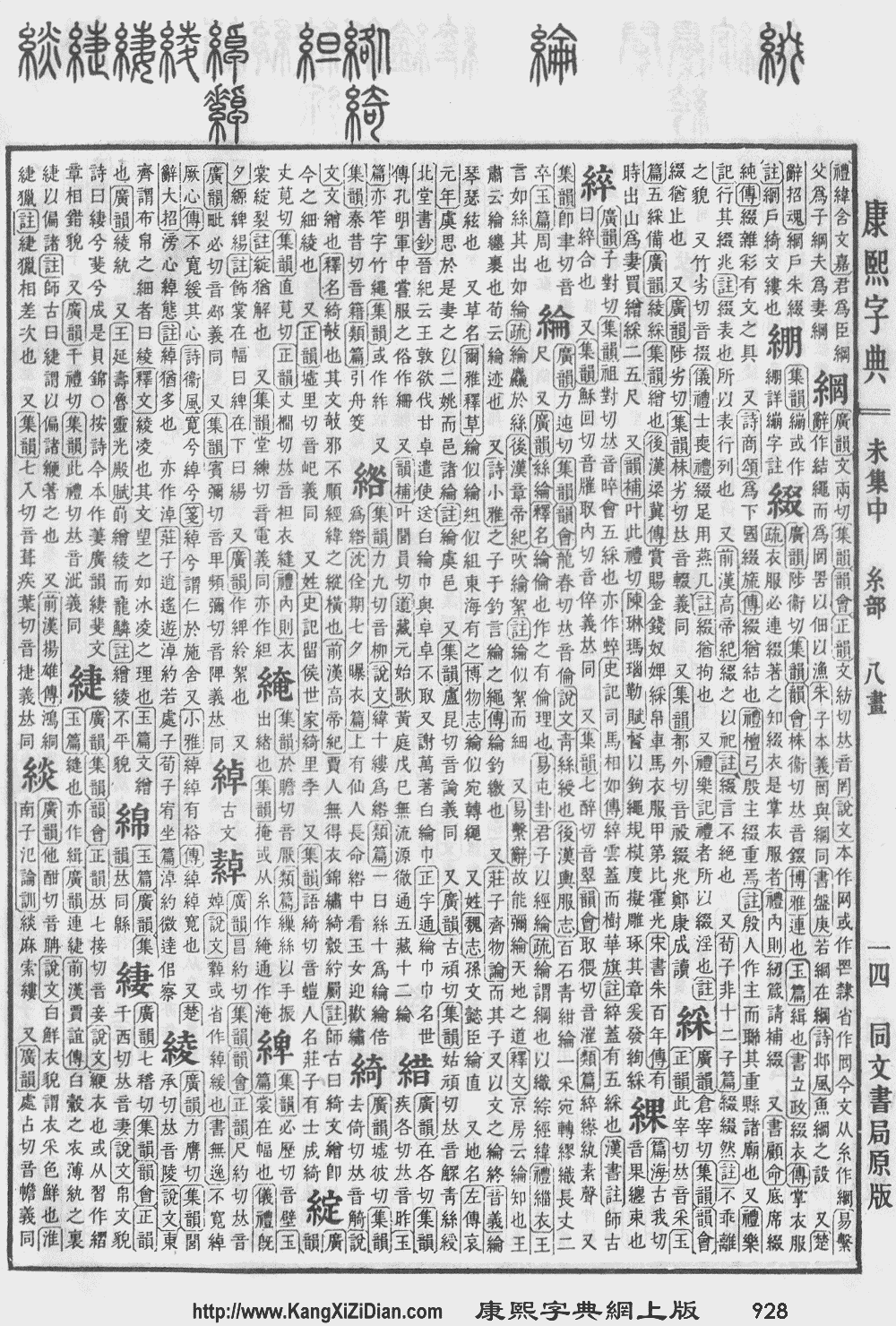
- Kangxi Dictionary: page 928, character 17
- Dai Kanwa Jiten: character 27592
- Dae Jaweon: page 1366, character 6
- Hanyu Da Zidian (first edition): volume 5, page 3416, character 2
- Unihan data for U+7DBF
Chinese
| trad. | 綿 | |
|---|---|---|
| simp. | 绵 | |
| alternative forms | 緜 | |
Pronunciation
Definitions
綿
- silk floss
- to continue; to be continuous
- soft; weak
- (dialectal, obsolete) to apply; to cover
- 緡、緜,施也。秦曰緡,趙曰緜,吴、越之間脱衣相被謂之緡緜。 [Classical Chinese, trad.]
- From: Yang Xiong, Fangyan, c. 1st century BCE
- Mín, mián, shī yě. Qín yuē mín, zhào yuē mián, wú, yuè zhījiān tuōyī xiàng bèi wèi zhī mínmián. [Pinyin]
- Both mín and mián signify to apply—mín is used in the Qin region, and mián in Zhao. In Wu and Yue, mínmián refers to the act of taking off one's clothes and covering something with it.
缗、绵,施也。秦曰缗,赵曰绵,吴、越之间脱衣相被谓之缗绵。 [Classical Chinese, simp.]
- (obsolete) Alternative form of 棉 (mián, “cotton”)
Compounds
- 情意綿綿/情意绵绵
- 摘綿術/摘绵术
- 撏綿扯絮/挦绵扯絮
- 柳綿/柳绵 (liǔmián)
- 水綿/水绵
- 沉綿/沉绵 (chénmián)
- 河綿/河绵
- 海綿/海绵 (hǎimián)
- 海綿刷/海绵刷
- 海綿動物/海绵动物
- 海綿田/海绵田
- 海綿蛋糕/海绵蛋糕 (hǎimián dàngāo)
- 海綿鐵/海绵铁
- 海綿體/海绵体 (hǎimiántǐ)
- 瓜瓞綿綿/瓜瓞绵绵
- 病榻纏綿/病榻缠绵 (bìngtàchánmián)
- 石綿/石绵 (shímián)
- 礦綿/矿绵
- 福壽綿綿/福寿绵绵
- 福壽綿長/福寿绵长
- 綿上/绵上
- 綿亙/绵亘 (miángèn)
- 綿力/绵力 (miánlì)
- 綿力薄材/绵力薄材
- 綿子/绵子
- 綿密/绵密 (miánmì)
- 綿密小巧/绵密小巧
- 綿山/绵山
- 綿延/绵延 (miányán)
- 綿延不絕/绵延不绝
- 綿延起伏/绵延起伏
- 綿弓/绵弓
- 綿惙/绵惙
- 綿歷/绵历
- 綿毛/绵毛
- 網水綿/网水绵
- 綿爛/绵烂 (mî-nōa) (Min Nan)
- 綿篤/绵笃
- 綿紙/绵纸
- 綿紬/绵绸
- 綿絮/绵絮
- 綿綢/绵绸
- 綿綴/绵缀
- 綿綿/绵绵 (miánmián)
- 綿綿不息/绵绵不息
- 綿綿不斷/绵绵不断
- 綿綿瓜瓞/绵绵瓜瓞
- 綿纏/绵缠
- 綿羊/绵羊 (miányáng)
- 綿聯/绵联 (miánlián)
- 綿花嘴/绵花嘴
- 綿薄/绵薄 (miánbó)
- 綿蠻/绵蛮 (miánmán)
- 綿衣/绵衣
- 綿裡針/绵里针
- 綿裹秤鎚/绵裹秤锤
- 綿軟/绵软 (miánruǎn)
- 綿邈/绵邈
- 綿長/绵长 (miáncháng)
- 綿陽/绵阳 (Miányáng)
- 綿頓/绵顿
- 纏綿/缠绵 (chánmián)
- 纏綿悱惻/缠绵悱恻 (chánmiánfěicè)
- 聯綿字/联绵字 (liánmiánzì)
- 聯綿字典/联绵字典
- 聯綿對/联绵对
- 芊綿/芊绵 (qiānmián)
- 裡牽綿/里牵绵
- 軟綿綿/软绵绵 (ruǎnmiánmián)
- 連綿/连绵 (liánmián)
- 連綿不斷/连绵不断 (liánmiánbùduàn)
- 連綿不絕/连绵不绝
- 連綿字/连绵字 (liánmiánzì)
- 連綿起伏/连绵起伏
References
- “Entry #10784”, in 臺灣閩南語常用詞辭典 [Dictionary of Frequently-Used Taiwan Minnan] (overall work in Mandarin and Hokkien), Ministry of Education, R.O.C., 2023.
Japanese
Etymology 1
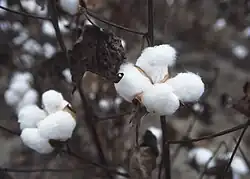
綿 (men, wata): raw cotton on the bush.
| Kanji in this term |
|---|
| 綿 |
| めん Grade: 5 |
| on’yomi |
From Middle Chinese 綿/绵 (miɛn, “wool; cotton; soft, downy”).
Usage notes
As a standalone noun, the term 木綿 (momen, “cotton”, literally “tree or bush + woolly batting”) is used more often. This is especially true in speech, to avoid ambiguity with the various homophones, such as 面 (men, “face”) or 麺 (men, “noodle”).
Etymology 2
| Kanji in this term |
|---|
| 綿 |
| わた Grade: 5 |
| kun’yomi |
From Old Japanese, from Proto-Japonic *wata. Cognate with Okinawan 綿 (wata).
Originally referred to any batting or stuffing, which was generally unspun silk. The meaning shifted after the spread of cotton in the Muromachi period.
Alternative forms
- (both rare) 棉, 草綿
Noun
綿 • (wata)
Derived terms
Derived terms
- 真綿 (mawata): silk batting; silk floss
- 綿菓子 (watagashi): cotton candy, candy floss
References
- Matsumura, Akira, editor (2006), 大辞林 [Daijirin] (in Japanese), Third edition, Tōkyō: Sanseidō, →ISBN
Korean
Vietnamese
This article is issued from Wiktionary. The text is licensed under Creative Commons - Attribution - Sharealike. Additional terms may apply for the media files.