腿
| ||||||||
Translingual
Han character
腿 (Kangxi radical 130, 肉+10, 14 strokes, cangjie input 月卜日女 (BYAV), four-corner 77233, composition ⿰⺼退)
References
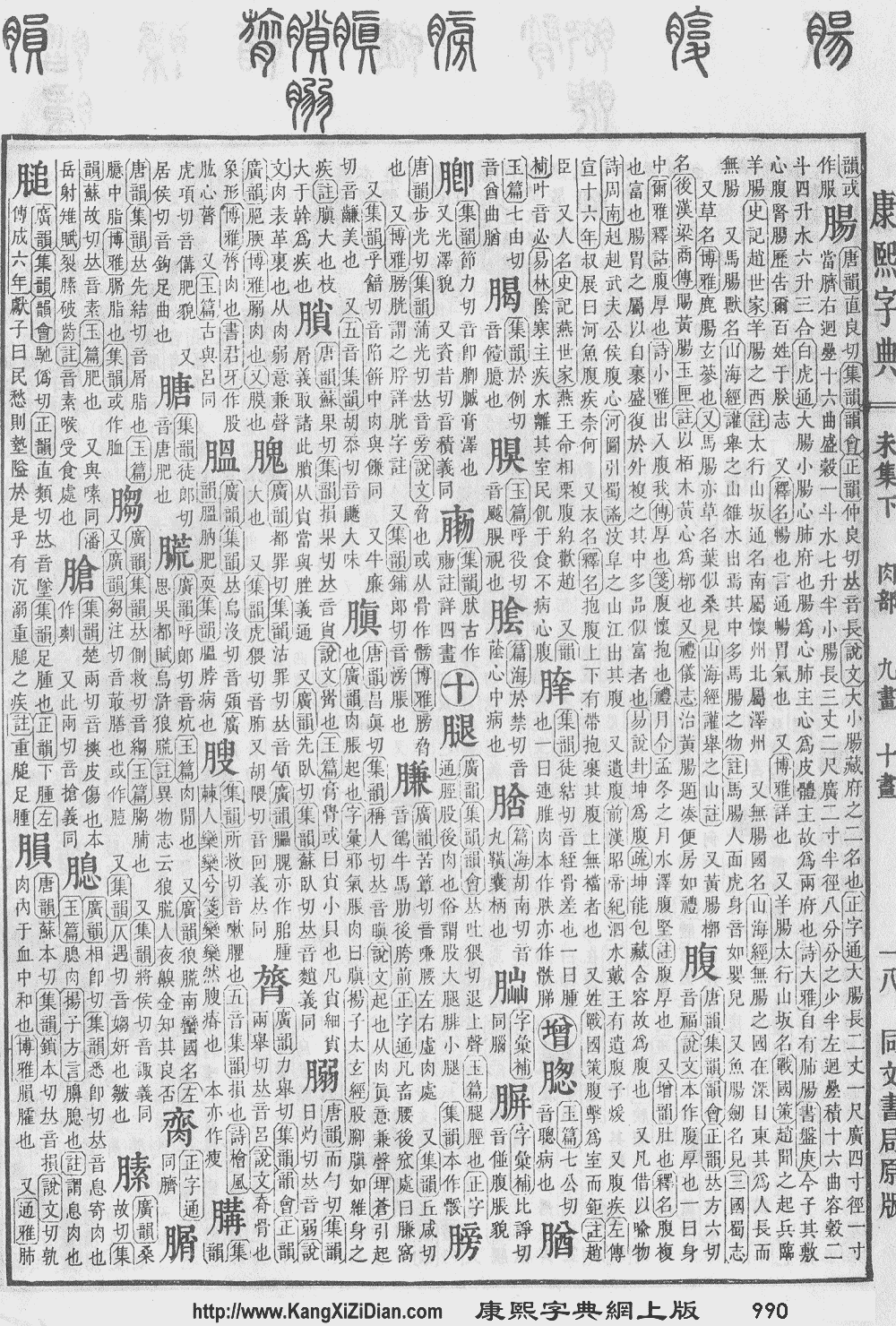
- Kangxi Dictionary: page 990, character 14
- Dai Kanwa Jiten: character 29747
- Dae Jaweon: page 1443, character 1
- Hanyu Da Zidian (first edition): volume 3, page 2099, character 12
- Unihan data for U+817F
Chinese
| trad. | 腿 | |
|---|---|---|
| simp. # | 腿 | |
| alternative forms | 𦚣 | |
Glyph origin
Characters in the same phonetic series (退) (Zhengzhang, 2003)
Phono-semantic compound (形聲/形声, OC *n̥ʰuːlʔ) : semantic 肉 (“flesh”) + phonetic 退 (OC *n̥ʰuːbs).
Etymology
Originally 骽 (OC *n̥ʰuːlʔ).
Pronunciation
Definitions
腿
Compounds
- 一條腿兒/一条腿儿
- 二郎腿 (èrlángtuǐ)
- 伸腿 (shēntuǐ)
- 伸腿瞪眼
- 兩腿發軟/两腿发软
- 劈腿 (pǐtuǐ)
- 南腿
- 吃床腿
- 大腿 (dàtuǐ)
- 大腿舞
- 宣腿 (xuāntuǐ)
- 寒腿 (hántuǐ)
- 小腿 (xiǎotuǐ)
- 小腿骨
- 就棍打腿
- 彈腿/弹腿
- 後腿/后腿 (hòutuǐ)
- 慌腿
- 打軟腿兒/打软腿儿
- 扯後腿/扯后腿 (chě hòutuǐ)
- 扯腿 (chětuǐ)
- 抖腿 (dǒutuǐ)
- 拖後腿/拖后腿 (tuō hòutuǐ)
- 抽後腿/抽后腿
- 拉後腿/拉后腿 (lā hòutuǐ)
- 抱粗腿 (bào cūtuǐ)
- 拔腿 (bátuǐ)
- 拍腿
- 抱腿兒/抱腿儿
- 拔腿就跑
- 拿腿
- 掃堂腿/扫堂腿
- 掣後腿/掣后腿
- 捲腿褲/卷腿裤
- 撒腿
- 旁腿
- 旁腿躺身
- 有一腿 (yǒu yītuǐ)
- 歇腿
- 泥腿
- 泥腿光棍
- 洋火腿
- 潭腿
- 火燎腿
- 火腿 (huǒtuǐ)
- 火腿族
- 狗腿 (gǒutuǐ)
- 狗腿子 (gǒutuǐzi)
- 獨腳腿/独脚腿
- 瘸腿 (quétuǐ)
- 盤腿/盘腿 (pántuǐ)
- 盤腿而坐/盘腿而坐
- 綁腿/绑腿 (bǎngtuǐ)
- 羅圈腿/罗圈腿 (luóquāntuǐ)
- 腰腿 (yāotuǐ)
- 腿套
- 腿子
- 腿帶/腿带
- 腿庫/腿库 (thúi-khò͘) (Min Nan)
- 腿彎子/腿弯子
- 腿懃/腿勤
- 腿法
- 腿肚子 (tuǐdùzi)
- 腿脡
- 腿腕子 (tuǐwànzi)
- 腿腳/腿脚
- 腿花
- 腿酸
- 腿骨
- 花拳繡腿/花拳绣腿 (huāquánxiùtuǐ)
- 花牛腿
- 花腿
- 螞蚍叮腿/蚂蚍叮腿
- 裹腿 (guǒtuǐ)
- 褲腿/裤腿 (kùtuǐ)
- 護腿/护腿 (hùtuǐ)
- 跑腿 (pǎotuǐ)
- 跑腿子 (pǎotuǐzi)
- 踢腿 (tītuǐ)
- 蹩馬腿/蹩马腿
- 金腿 (jīntuǐ)
- 金腿 (jīntuǐ)
- 雲腿/云腿 (yúntuǐ)
- 飛毛腿/飞毛腿 (fēimáotuǐ)
- 飛腿/飞腿
- 騙腿/骗腿 (piàntuǐ)
- 鬼扯腿
- 鴨子腿/鸭子腿
- 麻蚍叮腿
References
- “腿”, in 漢語多功能字庫 (Multi-function Chinese Character Database), 香港中文大學 (the Chinese University of Hong Kong), 2014–
Japanese
Korean
Etymology
From Middle Chinese 腿 (MC thwojX). Recorded as Middle Korean 퇴〯 (thwǒy) (Yale: thwoy) in Hunmong Jahoe (訓蒙字會 / 훈몽자회), 1527.
Okinawan
Pronunciation
- IPA(key): /mumu/
Derived terms
- 腿枕 (mumu makkwa, “resting one's head on someone's lap”)
Vietnamese
This article is issued from Wiktionary. The text is licensed under Creative Commons - Attribution - Sharealike. Additional terms may apply for the media files.