桌
| ||||||||
Translingual
| Stroke order | |||
|---|---|---|---|
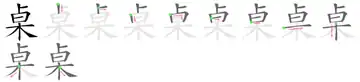 | |||
| Traditional | 桌 |
|---|---|
| Simplified | 桌 |
| Japanese | 卓 |
| Korean | 卓 |
Han character
桌 (Kangxi radical 75, 木+6, 10 strokes, cangjie input 卜日木 (YAD), four-corner 21904, composition ⿱⺊杲)
Derived characters
- 槕, 𮄡
References
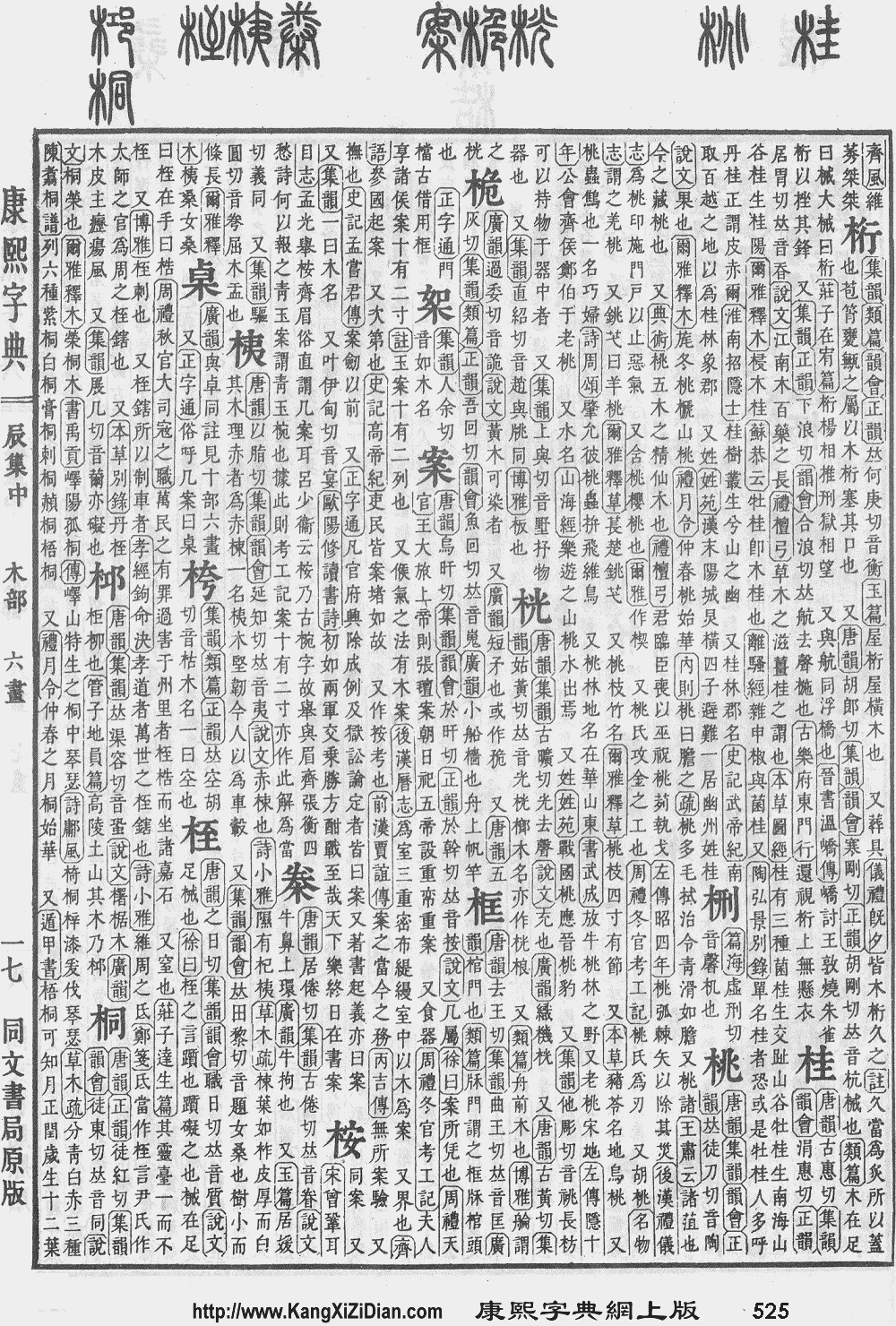
- Kangxi Dictionary: page 525, character 13
- Dai Kanwa Jiten: character 14766
- Dae Jaweon: page 914, character 8
- Hanyu Da Zidian (first edition): volume 2, page 1198, character 1
- Unihan data for U+684C
Chinese
| trad. | 桌 | |
|---|---|---|
| simp. # | 桌 | |
| alternative forms | 棹 槕 卓 | |
Glyph origin
Characters in the same phonetic series (卓) (Zhengzhang, 2003)
Ideogrammic compound (會意/会意) and phono-semantic compound (形聲/形声, OC *rteːwɢ) : phonetic 卓 (OC *rteːwɢ, “high”) + semantic 木 (“tree; wood”) – table. The bottom 十 of 卓 has merged with or been replaced by 木.
Etymology
From 卓 (OC *rteːwɢ, “high”), as tables are relatively tall (compared to other pieces of furniture like 几).
Similar descriptive derivations for pieces of furniture include: 登 (“to climb”) > 凳 (“stool”); 倚 (“to lean”) > 椅 (“chair”).
Pronunciation
Definitions
桌
Synonyms
Dialectal synonyms of 桌子 (“table; desk”) [map]
Compounds
- 上桌 (shàngzhuō)
- 供桌 (gòngzhuō)
- 八仙桌 (bāxiānzhuō)
- 六仙桌
- 四仙桌
- 圍桌/围桌 (wéizhuō)
- 圓桌/圆桌 (yuánzhuō)
- 圓桌會議/圆桌会议 (yuánzhuō huìyì)
- 圓桌武士/圆桌武士
- 壓桌/压桌
- 平頭桌席/平头桌席
- 憑桌/凭桌
- 拍桌
- 拍桌驚嘆/拍桌惊叹
- 搭桌
- 方桌 (fāngzhuō)
- 書桌/书桌 (shūzhuō)
- 果桌
- 桌上型 (zhuōshàngxíng)
- 桌上型電腦/桌上型电脑 (zhuōshàngxíng diànnǎo)
- 桌墊/桌垫
- 桌子 (zhuōzi)
- 桌布 (zhuōbù)
- 桌席
- 桌曆/桌历
- 案桌
- 桌椅板凳 (zhuōyǐbǎndèng)
- 桌燈/桌灯 (zhuōdēng)
- 桌球 (zhuōqiú)
- 桌罩
- 桌面 (zhuōmiàn)
- 桌面兒上/桌面儿上
- 桌面系統/桌面系统
- 炕桌兒/炕桌儿
- 炕琴桌兒/炕琴桌儿
- 祭桌
- 茶桌
- 製圖桌/制图桌
- 課桌/课桌 (kèzhuō)
- 講桌/讲桌 (jiǎngzhuō)
- 辦公桌/办公桌 (bàngōngzhuō)
- 辦桌/办桌 (bànzhuō)
- 靈桌/灵桌
- 面桌
- 飯桌/饭桌 (fànzhuō)
- 餐桌 (cānzhuō)
Descendants
Others:
References
- “桌”, in 漢語多功能字庫 (Multi-function Chinese Character Database), 香港中文大學 (the Chinese University of Hong Kong), 2014–
- “Entry #6113”, in 臺灣閩南語常用詞辭典 [Dictionary of Frequently-Used Taiwan Minnan] (overall work in Mandarin and Hokkien), Ministry of Education, R.O.C., 2023.
Japanese
Kanji
桌
- This term needs a translation to English. Please help out and add a translation, then remove the text
{{rfdef}}.
Vietnamese
References
- Trần (1999).
- Bonet (1899).
- Nguyễn et al. (2009).
This article is issued from Wiktionary. The text is licensed under Creative Commons - Attribution - Sharealike. Additional terms may apply for the media files.