芽
| ||||||||
 | ||||||||
Translingual
Han character
芽 (Kangxi radical 140, 艸+4 in Chinese, 艸+5 in Japanese, 7 strokes in Chinese, 8 strokes in Japanese, cangjie input 廿一女竹 (TMVH), four-corner 44241, composition ⿱艹牙)
Derived characters
- 𫢯, 𠵝, 𡝿
References
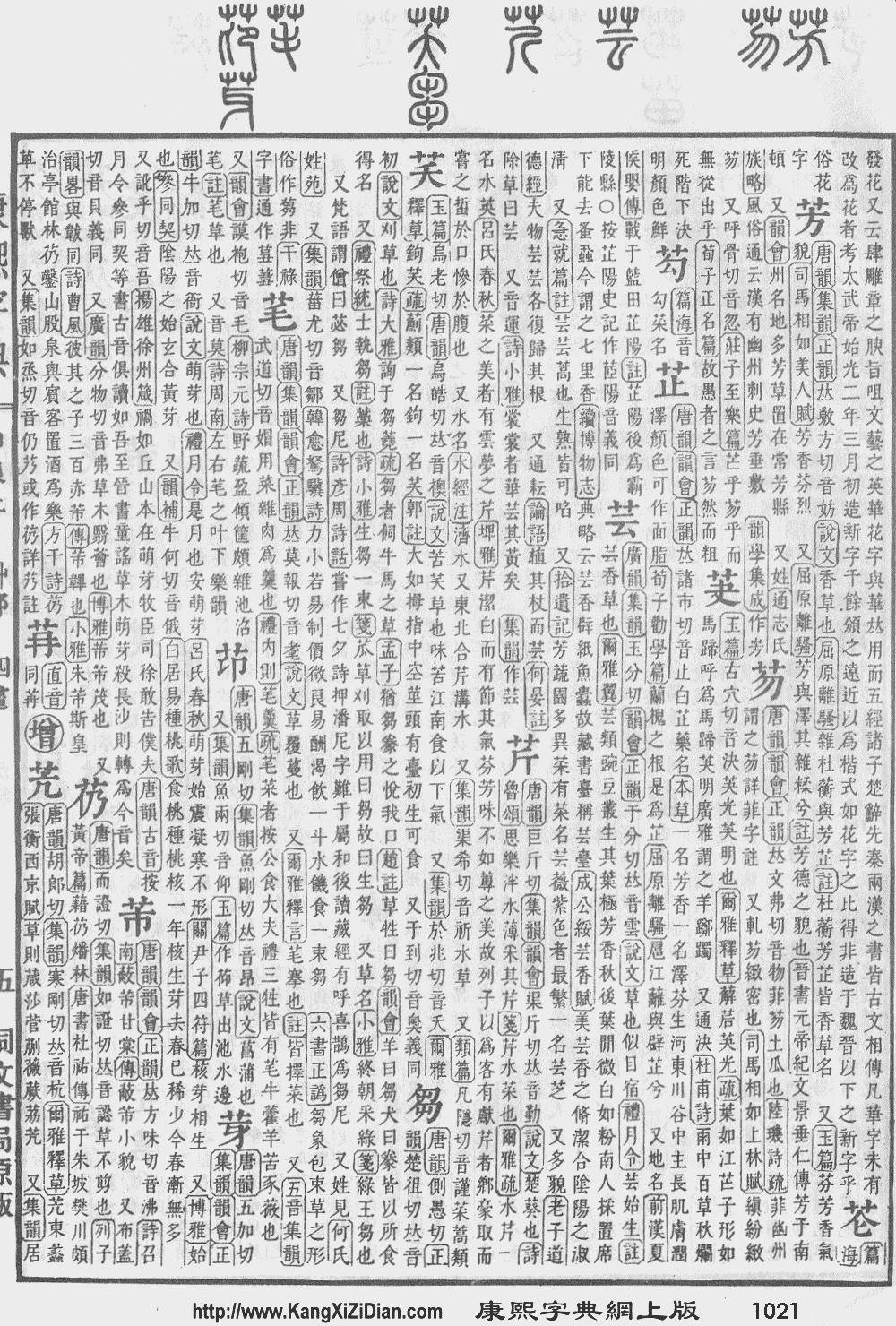
- Kangxi Dictionary: page 1021, character 13
- Dai Kanwa Jiten: character 30860
- Dae Jaweon: page 1480, character 12
- Hanyu Da Zidian (first edition): volume 5, page 3179, character 13
- Unihan data for U+82BD
- Unihan data for U+2F995
Chinese
| trad. | 芽 | |
|---|---|---|
| simp. # | 芽 | |
Glyph origin
Characters in the same phonetic series (牙) (Zhengzhang, 2003)
Phono-semantic compound (形聲/形声, OC *ŋraː) : semantic 艹 (“grass”) + phonetic 牙 (OC *ŋraː).
Etymology
Cognate with 牙 (OC *ŋraː, “tooth”) (Schuessler, 2007).
Pronunciation
Compounds
- 側芽/侧芽
- 催芽
- 冠芽
- 出芽 (chūyá)
- 出芽生殖
- 吸芽
- 嫩芽 (nènyá)
- 幼芽 (yòuyá)
- 抽芽 (chōuyá)
- 接芽
- 摘芽
- 新芽 (xīnyá)
- 根芽
- 海帶芽/海带芽 (hǎidàiyá)
- 滋芽
- 珠芽
- 發芽/发芽 (fāyá)
- 白雪黃芽/白雪黄芽
- 肉芽 (ròuyá)
- 胚芽 (pēiyá)
- 胞芽
- 胞芽杯
- 胚芽米
- 胚芽鞘
- 腋芽
- 芽兒/芽儿
- 芽孢 (yábāo)
- 芽接法
- 芽眼
- 芽茶 (yáchá)
- 芽菜 (yácài, “bean sprout”)
- 芽豆 (yádòu)
- 芽韭
- 芽體/芽体
- 茶芽
- 萌芽 (méngyá)
- 葉芽/叶芽 (yèyá)
- 裸芽
- 豆芽 (dòuyá)
- 豆芽菜 (dòuyácài)
- 防芽遏萌
- 雷芽
- 麥芽/麦芽 (màiyá)
- 麥芽糖/麦芽糖 (màiyátáng)
- 黃芽/黄芽
- 黃豆芽/黄豆芽
References
- “芽”, in 漢語多功能字庫 (Multi-function Chinese Character Database), 香港中文大學 (the Chinese University of Hong Kong), 2014–
Japanese
| Shinjitai | 芽 | |
| Kyūjitai [1] |
芽 芽or 芽+ ︀? |
|
| 芽󠄀 芽+ 󠄀?(Adobe-Japan1) | ||
| 芽󠄄 芽+ 󠄄?(Hanyo-Denshi) (Moji_Joho) |
 | |
| The displayed kanji may be different from the image due to your environment. See here for details. | ||
Readings
Compounds
Etymology 1
| Kanji in this term |
|---|
| 芽 |
| め Grade: 4 |
| kun’yomi |
| For pronunciation and definitions of 芽 – see the following entry. | ||
| ||
| (This term, 芽, is an alternative spelling of the above term.) |
Pronunciation
- IPA(key): [ɡa̠]
Korean
Etymology
(This etymology is missing or incomplete. Please add to it, or discuss it at the Etymology scriptorium. Particularly: “Middle Korean readings, if any”)
Pronunciation
- (SK Standard/Seoul) IPA(key): [a̠]
- Phonetic hangul: [아]
Hanja
Wikisource 芽 • (a) (hangeul 아, revised a, McCune–Reischauer a, Yale a)
- This term needs a translation to English. Please help out and add a translation, then remove the text
{{rfdef}}.
Tày
Vietnamese
This article is issued from Wiktionary. The text is licensed under Creative Commons - Attribution - Sharealike. Additional terms may apply for the media files.