薑
See also: 姜
| ||||||||
Translingual
Han character
薑 (Kangxi radical 140, 艸+13, 19 strokes, cangjie input 廿一田一 (TMWM), four-corner 44106, composition ⿱艹畺)
Derived characters
- 𱤳, 𤒬, 𥗪
References
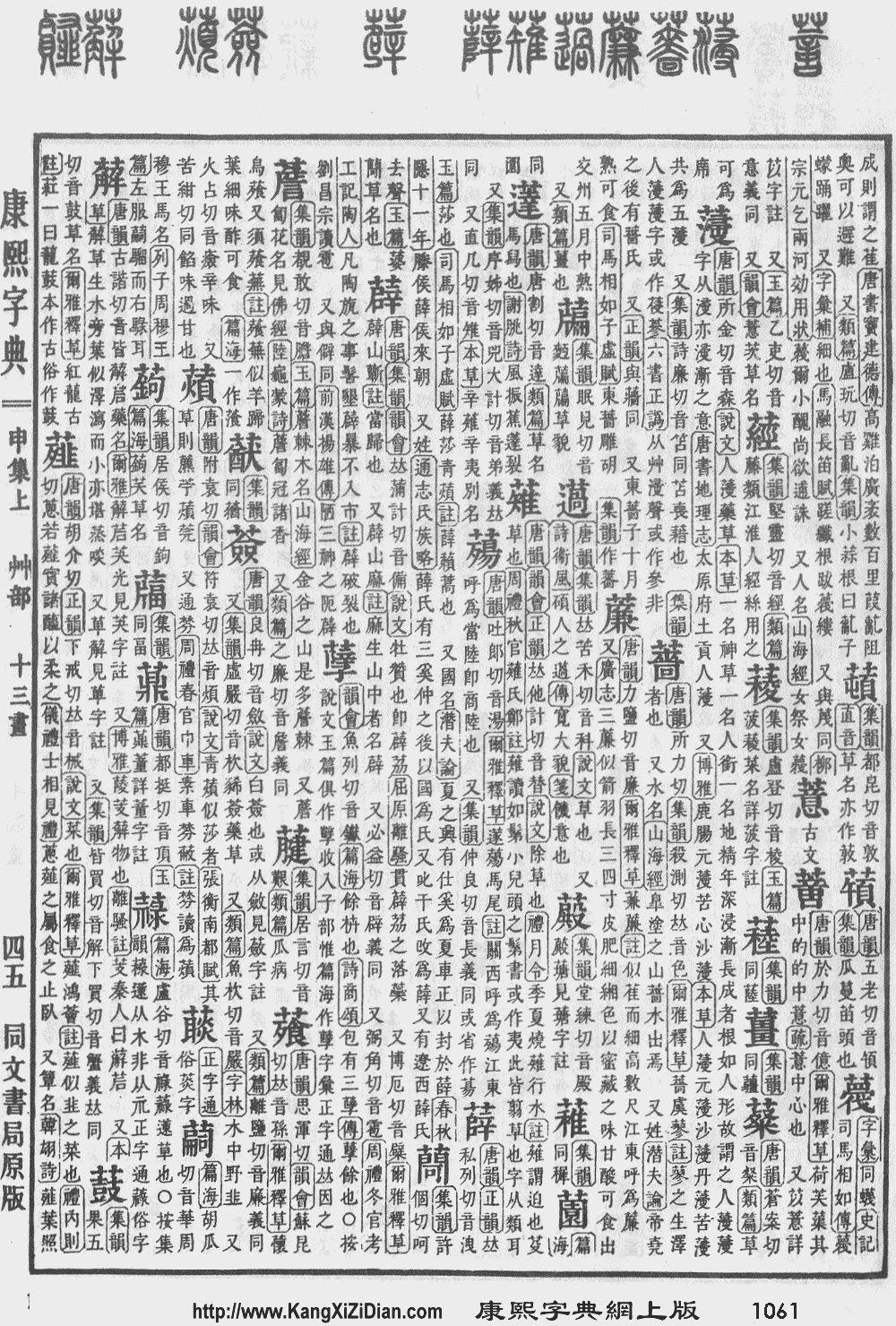
- Kangxi Dictionary: page 1061, character 9
- Dai Kanwa Jiten: character 32110
- Dae Jaweon: page 1525, character 7
- Hanyu Da Zidian (first edition): volume 5, page 3300, character 9
- Unihan data for U+8591
Chinese
| trad. | 薑 | |
|---|---|---|
| simp. | 姜* | |
| alternative forms | 䕬 𧅁 𦷗 葁 姜 | |
Glyph origin
| Historical forms of the character 薑 |
|---|
| Shuowen Jiezi (compiled in Han) |
| Small seal script |
 |
Characters in the same phonetic series (畺) (Zhengzhang, 2003)
Originally 䕬, a phono-semantic compound (形聲/形声, OC *kaŋ) : semantic 艸 (“grass; plant”) + phonetic 彊 (OC *kaŋs, *ɡaŋ, *ɡaŋʔ).
Note that the simplified form 姜 (OC *klaŋ) is also a traditional character on its own.
Etymology
From Proto-Sino-Tibetan *kjaŋ (“ginger”). Compare Burmese ချင်း (hkyang:).
Pronunciation
Definitions
薑
Synonyms
Dialectal synonyms of 薑 (“ginger”) [map]
Compounds
- 乾薑/干姜 (gānjiāng)
- 人老精,薑老辣/人老精,姜老辣
- 吃蔥吃蒜不吃薑/吃葱吃蒜不吃姜
- 咬薑呷醋/咬姜呷醋 (yǎojiāngxiácù)
- 咬薑啜醋/咬姜啜醋
- 夠薑/够姜
- 嫩薑/嫩姜
- 子薑/子姜 (zǐjiāng)
- 山薑/山姜
- 廉薑/廉姜
- 本地薑唔辣/本地姜唔辣
- 枸薑/枸姜
- 桂薑/桂姜
- 毛薑/毛姜
- 洋薑/洋姜 (yángjiāng)
- 熬薑呷醋/熬姜呷醋
- 猴薑/猴姜
- 生薑/生姜 (shēngjiāng)
- 癡鼠拖薑/痴鼠拖姜
- 砂薑/砂姜
- 砸薑磨蒜/砸姜磨蒜
- 粉薑/粉姜
- 紅球薑/红球姜
- 胡椒細細辣過薑/胡椒细细辣过姜
- 般薑鼠/般姜鼠
- 苗薑/苗姜
- 茈薑/茈姜
- 薑啤/姜啤
- 薑嫲/姜嫲
- 薑是老的辣/姜是老的辣 (jiāng shì lǎo de là)
- 薑桂/姜桂
- 薑桂老辣/姜桂老辣 (jiāngguìlǎolà)
- 薑母/姜母 (jiāngmǔ)
- 薑母鴨/姜母鸭 (jiāngmǔyā)
- 薑汁撞奶/姜汁撞奶 (jiāngzhī zhuàng nǎi)
- 薑湯/姜汤
- 薑絲/姜丝 (jiāngsī)
- 薑絲大腸/姜丝大肠
- 薑越老越辣/姜越老越辣 (jiāngyuèlǎoyuèlà)
- 薑還是老的辣/姜还是老的辣 (jiāng háishì lǎo de là)
- 薑醋/姜醋 (jiāngcù)
- 薑餅/姜饼 (jiāngbǐng)
- 薑黃/姜黄 (jiānghuáng)
- 蜀薑/蜀姜
- 豬腳薑/猪脚姜 (zhūjiǎojiāng)
- 豬腳薑醋/猪脚姜醋 (zhūjiǎo jiāngcù)
- 野薑花/野姜花
- 高良薑/高良姜 (gāoliángjiāng)
- 鬼子薑/鬼子姜
- 麥句薑/麦句姜
- 黃薑/黄姜 (huángjiāng)
- 黃薑薑/黄姜姜
- 鼠銜薑/鼠衔姜
References
- “薑”, in 漢語多功能字庫 (Multi-function Chinese Character Database), 香港中文大學 (the Chinese University of Hong Kong), 2014–
Japanese
Compounds
- 薑黄 (kyōō): wild turmeric
Korean
Etymology
(This etymology is missing or incomplete. Please add to it, or discuss it at the Etymology scriptorium. Particularly: “Middle Korean readings, if any”)
Pronunciation
- (SK Standard/Seoul) IPA(key): [ka̠ŋ]
- Phonetic hangul: [강]
Hanja
Wikisource 薑 • (gang) (hangeul 강, revised gang, McCune–Reischauer kang, Yale kang)
- This term needs a translation to English. Please help out and add a translation, then remove the text
{{rfdef}}.
Vietnamese
| chữ Hán Nôm in this term |
|---|
| 薑 |
Han character
薑: Hán Nôm readings: gừng; khương; cưng
References
This article is issued from Wiktionary. The text is licensed under Creative Commons - Attribution - Sharealike. Additional terms may apply for the media files.