和
| ||||||||
Translingual
| Stroke order | |||
|---|---|---|---|
 | |||
| Stroke order | |||
|---|---|---|---|
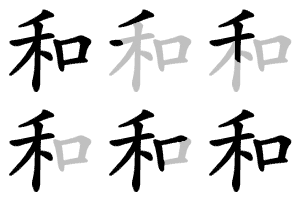 | |||
Han character
和 (Kangxi radical 30, 口+5, 8 strokes, cangjie input 竹木口 (HDR), four-corner 26900, composition ⿰禾口)
Descendants
- わ (Hiragana character derived from Man'yōgana)
- ワ (Katakana character derived from Man'yōgana)
References
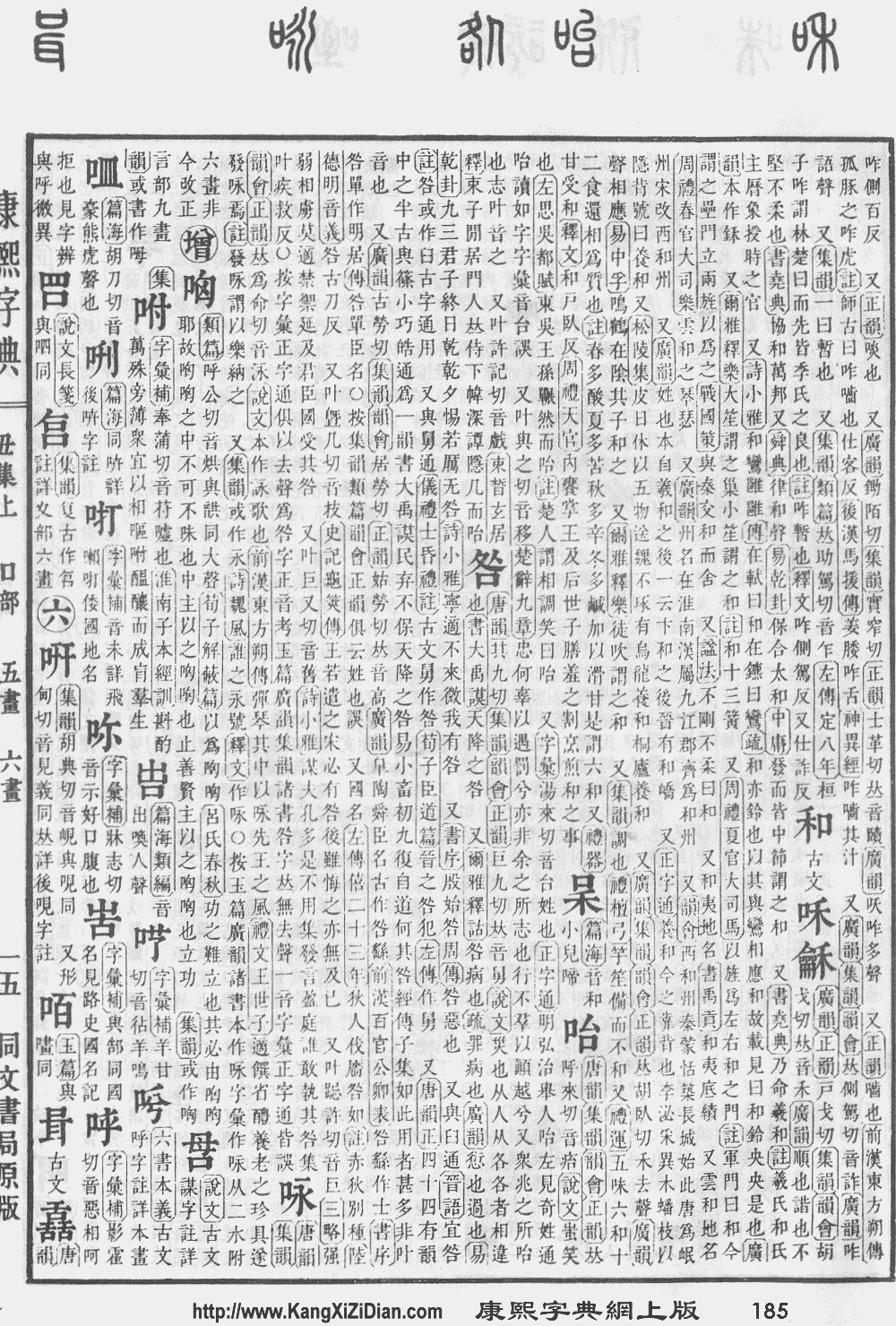
- Kangxi Dictionary: page 185, character 1
- Dai Kanwa Jiten: character 3490
- Dae Jaweon: page 404, character 3
- Hanyu Da Zidian (first edition): volume 1, page 602, character 1
- Unihan data for U+548C
Chinese
| simp. and trad. |
和 | |
|---|---|---|
| alternative forms | 咊 龢 訸/𰵝 | |
Glyph origin
| Historical forms of the character 和 | |||
|---|---|---|---|
| Western Zhou | Warring States | Shuowen Jiezi (compiled in Han) | |
| Bronze inscriptions | Chu slip and silk script | Qin slip script | Small seal script |
 |
 |
 |
 |
Phono-semantic compound (形聲/形声, OC *ɡoːl, *ɡoːls) : phonetic 禾 (OC *ɡoːl) + semantic 口 (“mouth”) – harmony.
Etymology
(This etymology is missing or incomplete. Please add to it, or discuss it at the Etymology scriptorium. Particularly: “see talk”)
Pronunciation 1
Definitions
和
- peaceful; harmonious
- 和平 ― hépíng ― peace, peaceful
- gentle; kind
- warm; temperate
- sum; total
- to make peace; to become reconciled
- 子曰:君子和而不同,小人同而不和 [Classical Chinese, trad. and simp.]
- From: The Analects of Confucius, c. 475 – 221 BCE, translated based on James Legge's version
- zǐ yuē: jūnzǐ hé ér bù tóng, xiǎorén tóng ér bù hé [Pinyin]
- The Master said, "The superior man is affable, but not adulatory; the mean man is adulatory, but not affable."
- to tie
- (music) An ancient mouth organ similar to the sheng, but smaller; no longer used.
- Japanese
- 和服 ― héfú ― kimono, Japanese traditional clothing
- a surname. He
Compounds
- 一和
- 一團和氣/一团和气 (yītuánhéqì)
- 一答一和兒/一答一和儿
- 上和下睦
- 三和弦 (sānhéxián)
- 三杯和萬事/三杯和万事
- 不和 (bùhé)
- 世界和平紀念日/世界和平纪念日
- 中和 (zhōnghé)
- 中和反應/中和反应
- 中和殿
- 中和節/中和节
- 中華人民共和國/中华人民共和国 (Zhōnghuá Rénmín Gònghéguó)
- 主和弦
- 乾和/干和
- 二二八和平公園/二二八和平公园
- 五族共和 (wǔzú gònghé)
- 人和
- 保和殿
- 修和
- 倉老鼠和老鴰去借糧/仓老鼠和老鸹去借粮
- 做一天和尚撞一天鐘/做一天和尚撞一天钟 (zuò yītiān héshang zhuàng yītiān zhōng)
- 傷和氣/伤和气 (shāng héqi)
- 元和
- 元和腳/元和脚
- 元和體/元和体
- 八千里路雲和月 (bāqiān lǐ lù yún hé yuè)
- 六脈調和/六脉调和
- 共和 (gònghé)
- 共和國/共和国 (gònghéguó)
- 共和時代/共和时代
- 凡爾賽和約/凡尔赛和约
- 前和
- 前門不進師姑,後門不進和尚/前门不进师姑,后门不进和尚
- 劉彥和/刘彦和
- 勸和/劝和 (quànhé)
- 協和/协和 (xiéhé)
- 南北和議/南北和议
- 取和
- 和一
- 和事佬 (héshìlǎo)
- 和事天子
- 和事老
- 和光同塵/和光同尘
- 和勝/和胜
- 和勸/和劝
- 和協/和协 (héxié)
- 和南 (hénán)
- 和厚
- 周召共和
- 和合 (héhé)
- 和同
- 和合二仙
- 和合僧
- 和合日
- 和合湯/和合汤
- 和味
- 和和氣氣/和和气气
- 和哄
- 和善 (héshàn)
- 和囉/和啰
- 和囉槌/和啰槌
- 和好 (héhǎo)
- 和好如初
- 和姦/和奸
- 和婉
- 和容悅色/和容悦色
- 和尚 (héshàng)
- 和尚吃八方
- 和尚在,缽盂在/和尚在,钵盂在
- 和尚打傘/和尚打伞
- 和尚拖木頭/和尚拖木头
- 和尚無兒孝子多/和尚无儿孝子多
- 和尚跟著月亮走
- 和局 (héjú)
- 和平 (hépíng)
- 和平主義/和平主义 (hépíngzhǔyì)
- 和平使者 (hépíng shǐzhě)
- 和平共存 (hépíng gòngcún)
- 和平共處/和平共处 (hépíng gòngchǔ)
- 和平工作團/和平工作团
- 和平改革
- 和平日 (hépíngrì)
- 和平條約/和平条约 (hépíng tiáoyuē)
- 和平紀念公園/和平纪念公园
- 和平談判/和平谈判 (hépíng tánpàn)
- 和平鴿/和平鸽 (hépínggē)
- 和弦 (héxián)
- 和息 (héxī)
- 和悅/和悦 (héyuè)
- 和戎
- 和數/和数
- 和文 (Héwén)
- 和旨
- 和易
- 和景
- 和暖 (hénuǎn)
- 和暢/和畅 (héchàng)
- 和會/和会
- 和服 (héfú)
- 和林 (Hélín)
- 和樂/和乐 (hélè)
- 和歌 (hégē)
- 和氏
- 和氏璧 (Héshìbì)
- 和氣/和气
- 和氣生財/和气生财
- 和氣習習/和气习习
- 和氣致祥/和气致祥
- 和氣融融/和气融融
- 和洽 (héqià)
- 和煦 (héxù)
- 和熊
- 和珅
- 和璧 (Hébì)
- 和璧隋珠
- 和田 (Hétián)
- 和番
- 和盤托出/和盘托出 (hépántuōchū)
- 和睦 (hémù)
- 和約/和约 (héyuē)
- 和緩/和缓 (héhuǎn)
- 和羹
- 和而不同 (hé'érbùtóng)
- 和聲/和声 (héshēng)
- 和聲學/和声学
- 和聲樂器/和声乐器
- 和菜
- 和藹/和蔼 (hé'ǎi)
- 和藹可親/和蔼可亲 (hé'ǎikěqīn)
- 和衣
- 和衷共濟/和衷共济 (hézhōnggòngjì)
- 和袖
- 和親/和亲 (héqīn)
- 和解 (héjiě)
- 和解政策
- 和解書/和解书
- 和誘/和诱
- 和誘罪/和诱罪
- 和談/和谈 (hétán)
- 和調/和调
- 和諧/和谐 (héxié)
- 和謙/和谦 (Héqiān)
- 和議/和议 (héyì)
- 和買/和买
- 和闐/和阗 (Hétián)
- 和闐玉/和阗玉
- 和闐縣/和阗县
- 和闐語/和阗语
- 和隋之珍
- 和音 (héyīn)
- 和韻/和韵
- 和順/和顺 (héshùn)
- 和頭/和头
- 和顏/和颜
- 和顏下氣/和颜下气
- 和顏悅色/和颜悦色 (héyányuèsè)
- 和風/和风 (héfēng)
- 和風細雨/和风细雨 (héfēngxìyǔ)
- 和風麗日/和风丽日
- 和鬧/和闹
- 和鳴/和鸣
- 和鸞/和鸾
- 咸和
- 回和
- 國和民順/国和民顺
- 國際和平軍/国际和平军
- 圓和/圆和
- 地利人和
- 堂頭和尚/堂头和尚
- 多元不飽和脂肪酸/多元不饱和脂肪酸
- 大和尚
- 大和民族
- 大和繪/大和绘
- 大宋宣和遺事/大宋宣和遗事
- 太和 (Tàihé)
- 天和 (tiānhú)
- 太和正音譜/太和正音谱
- 太和殿 (Tàihédiàn)
- 夫婦和/夫妇和
- 天心和合
- 天時不如地利,地利不如人和/天时不如地利,地利不如人和
- 天時地利人和/天时地利人和 (tiānshí dìlì rénhé)
- 失和 (shīhé)
- 姑子死和尚
- 媾和 (gòuhé)
- 安和
- 安和樂利/安和乐利
- 宜和 (Yíhé)
- 宣和
- 宣和書譜/宣和书谱
- 宣和畫譜/宣和画谱
- 家和萬事興/家和万事兴 (jiā hé wànshì xīng)
- 寬和/宽和 (kuānhé)
- 將相和/将相和
- 對著和尚罵賊禿/对著和尚骂贼秃
- 小和尚念經/小和尚念经
- 山和尚 (shānhéshàng)
- 巴駱和/巴骆和
- 巴黎和會/巴黎和会
- 巴黎和約/巴黎和约
- 布袋和尚
- 平和
- 平和恬淡
- 庭外和解
- 廣州和約/广州和约
- 心和氣平/心和气平
- 心平氣和/心平气和 (xīnpíngqìhé)
- 恬和
- 恭謹謙和/恭谨谦和
- 愛爾蘭共和軍/爱尔兰共和军
- 慈和
- 戰爭與和平/战争与和平
- 握手言和
- 搆和/构和
- 政通人和 (zhèngtōngrénhé)
- 文星和合
- 日暖風和/日暖风和
- 日麗風和/日丽风和
- 昭君和番
- 昭和 (Zhāohé)
- 春和景明 (chūnhéjǐngmíng)
- 昭和草
- 春風和氣/春风和气
- 時和年豐/时和年丰
- 時和歲稔/时和岁稔
- 時和歲豐/时和岁丰
- 晴和 (qínghé)
- 暄和
- 暖和和
- 林和靖
- 柔和 (róuhé)
- 樂和/乐和
- 民和
- 民和年稔
- 民和年豐/民和年丰
- 永和 (Yǒnghé)
- 求和 (qiúhé)
- 沖和/冲和
- 法海和尚
- 油花和尚
- 流和心性
- 海牙和平會議/海牙和平会议
- 混俗和光
- 淳和
- 清和 (Qīnghé)
- 混和
- 渾俗和光/浑俗和光
- 溫和/温和
- 溫和飲食/温和饮食
- 漢和帝/汉和帝
- 漏春和尚
- 無添和/无添和
- 熟讀王叔和,不如臨症多/熟读王叔和,不如临症多
- 燮和
- 燮和之任
- 王叔和
- 玉體違和/玉体违和
- 琴瑟和好
- 琴瑟和諧/琴瑟和谐
- 琴瑟和鳴/琴瑟和鸣 (qínsèhémíng)
- 琴瑟調和/琴瑟调和
- 當一天和尚撞一天鐘/当一天和尚撞一天钟
- 當家和尚/当家和尚
- 瘸和尚說法/瘸和尚说法
- 百事和合
- 神清氣和/神清气和
- 祥和 (xiánghé)
- 禪和子/禅和子
- 禮之用,和為貴/礼之用,和为贵 (lǐ zhī yòng, hé wéi guì)
- 算𣍐和/算𫧃和 (sǹg-bē-hô)
- 算術和/算术和
- 綠色和平/绿色和平
- 緩和/缓和 (huǎnhé)
- 緩和劑/缓和剂
- 總和/总和 (zǒnghé)
- 義和/义和 (Yìhé)
- 義和團/义和团 (Yìhétuán)
- 義和拳/义和拳 (Yìhéquán)
- 群居和一
- 羲和
- 羲和馭日/羲和驭日
- 老和尚撞鐘/老和尚撞钟
- 老和尚看嫁妝/老和尚看嫁妆
- 耶和華/耶和华 (yēhéhuá)
- 脾和
- 至和
- 臺北捷運中和線/台北捷运中和线
- 興和/兴和
- 花和尚 (huāhéshàng)
- 藍采和
- 融和 (rónghé)
- 見了和尚罵賊禿/见了和尚骂贼秃
- 親和力/亲和力 (qīnhélì)
- 解和 (jiěhé)
- 言和 (yánhé)
- 言和意順/言和意顺
- 言歸和好/言归和好
- 請和/请和
- 談和/谈和
- 調和/调和 (tiáohé)
- 調和鼎鼐/调和鼎鼐
- 諧和/谐和 (xiéhé)
- 謙和/谦和 (qiānhé)
- 講和/讲和 (jiǎnghé)
- 議和/议和 (yìhé)
- 貴體違和/贵体违和
- 走了和尚走不了廟/走了和尚走不了庙
- 跑了和尚跑不了廟/跑了和尚跑不了庙
- 跳牆和尚/跳墙和尚
- 躲得和尚躲不得寺
- 辛丑和約/辛丑和约
- 連和/连和
- 逼和 (bīhé)
- 違和/违和 (wéihé)
- 過飽和/过饱和 (guòbǎohé)
- 遠來的和尚好看經/远来的和尚好看经
- 遠來的和尚會念經/远来的和尚会念经
- 鄭元和/郑元和
- 鄭和/郑和
- 醇和
- 金和
- 陰陽和/阴阳和
- 陽和/阳和
- 隨和/随和
- 雍和
- 雍和宮 (Yōnghé Gōng)
- 零和 (línghé)
- 音和
- 順和/顺和
- 頤和園/颐和园 (Yíhéyuán)
- 風和日暖/风和日暖 (fēnghérìnuǎn)
- 風和日美/风和日美
- 風和日麗/风和日丽 (fēnghérìlì)
- 風日晴和/风日晴和
- 飲和/饮和
- 飽和/饱和 (bǎohé)
- 飽和化合物/饱和化合物
- 飽和單位重/饱和单位重
- 飽和帶/饱和带
- 飽和度/饱和度
- 飽和水蒸汽/饱和水蒸汽
- 飽和溼度/饱和湿度
- 飽和溶液/饱和溶液
- 飽和蒸汽/饱和蒸汽
- 飽和蒸汽壓/饱和蒸汽压
- 飽和狀態/饱和状态
- 飽和空氣/饱和空气
- 飽和脂肪/饱和脂肪 (bǎohé zhīfáng)
- 飽和脂肪酸/饱和脂肪酸 (bǎohé zhīfángsuān)
- 飽和轟炸/饱和轰炸
- 飽和點/饱和点
- 養和/养和
- 馴和/驯和
- 魚水和諧/鱼水和谐
- 鸞和/鸾和
- 鸞鳳和鳴/鸾凤和鸣
- 鼎鼐調和/鼎鼐调和
Pronunciation 2
Synonyms
Pronunciation 3
Definitions
和
Compounds
Pronunciation 4
Definitions
和
Pronunciation 5
Definitions
和
Usage notes
- When playing mahjong, a player may say this word as a call when winning from another player's discard.
Pronunciation 7
References
- “和”, in 漢語多功能字庫 (Multi-function Chinese Character Database), 香港中文大學 (the Chinese University of Hong Kong), 2014–
Japanese
Readings
- Go-on: わ (wa, Jōyō)
- Kan-on: か (ka)←くわ (kwa, historical)
- Tō-on: お (o, Jōyō †)←を (wo, historical)
- Kun: あえる (aeru, 和える); なごむ (nagomu, 和む, Jōyō); なごやか (nagoyaka, 和やか, Jōyō); やわらぐ (yawaragu, 和らぐ, Jōyō)←やはらぐ (yafaragu, 和らぐ, historical); やわらげる (yawarageru, 和らげる, Jōyō)←やはらげる (yafarageru, 和らげる, historical); やまと (yamato)
- Nanori: あい (ai); いず (izu); かつ (katsu); かづ (kazu); かつり (katsuri); かず (kazu); たけ (take); ち (chi); とも (tomo); な (na); にぎ (nigi); のどか (nodoka); まさ (masa); やす (yasu); よし (yoshi); より (yori); わだこ (wadako); わっ (wa')
Compounds
- 和尚 (oshō)
- 和韻 (wain)
- 和英 (waei)
- 和歌 (waka)
- 和解 (wakai)
- 和学 (wagaku)
- 和菓子 (wagashi)
- 和漢 (wakan)
- 和姦 (wakan)
- 和漢混交文 (wakan konkō bun)
- 和気 (waki)
- 和気藹 (wakiai)
- 和気藹藹 (wakiaiai)
- 和議 (wagi)
- 和協 (wakyō)
- 和訓 (wakun)
- 和敬 (wakei)
- 和敬静寂 (wakei seijaku)
- 和語 (wago)
- 和寇 (wakō)
- 和合 (wagō)
- 和光同塵 (wakō dōjin)
- 和琴 (wakin)
- 和魂漢才 (wakon kansai)
- 和裁 (wasai)
- 和算 (wasan)
- 和紙 (washi)
- 和字 (waji)
- 和室 (washitsu)
- 和習 (washū)
- 和順 (wajun)
- 和書 (washo)
- 和上 (wajō)
- 和食 (washoku)
- 和製 (wasei)
- 和戦 (wasen)
- 和同 (wadō)
- 和銅 (Wadō)
- 和風 (wafū)
- 和服 (wafuku)
- 和文 (wabun)
- 和平 (wahei)
- 和睦 (waboku)
- 和本 (wahon)
- 和名 (wamei)
- 和訳 (wayaku)
- 和洋 (wayō)
- 和洋折衷 (wayō sechū)
- 和様 (wayō)
- 和学 (wagaku)
- 漢和辞典 (kanwa jiten)
- 緩和 (kanwa)
- 講和 (kōwa)
- 昭和 (Shōwa)
- 唱和 (shōwa)
- 総和 (sōwa)
- 調和 (chōwa)
- 柔和 (nyūwa): gentleness, meekness, mildness
- 飽和 (hōwa)
- 令和 (Reiwa): a new era name, effective on the 1st of May, 2019
- 大和 (Yamato)
Etymology 1
| Kanji in this term |
|---|
| 和 |
| わ Grade: 3 |
| goon |
From Middle Chinese 和 (MC hwa, “harmonious”).
The “Japan” sense appears during the reign of Empress Genmei (707–715 CE), as this character 和 (Wa) was chosen as a homophone with a more favorable meaning to replace the previous character 倭 (Wa) then in use as the kanji name for Japan[1] (see the etymology at 大和 (Yamato) for more details). The “Japan” sense was usually read with a kun'yomi of yamato, until some time in the Muromachi period, when the go'on reading of Wa became more common.[2]
Affix
和 • (wa)
Etymology 2
| Kanji in this term |
|---|
| 和 |
| やまと Grade: 3 |
| kun’yomi |
See Etymology 1.
In modern Japanese, the Yamato reading is more commonly spelled 大和.
Definitions
| For pronunciation and definitions of 和 – see the following entry. | ||
| ||
| (This term, 和, is an alternative spelling of the above term.) |
Etymology 3
| Kanji in this term |
|---|
| 和 |
| のど Grade: 3 |
| kun’yomi |
| For pronunciation and definitions of 和 – see the following entry. | ||
| ||
| (This term, 和, is an alternative spelling of the above term.) |
References
- Matsumura, Akira, editor (2006), 大辞林 [Daijirin] (in Japanese), Third edition, Tōkyō: Sanseidō, →ISBN
- Shōgaku Tosho (1988) 国語大辞典(新装版) [Unabridged Dictionary of Japanese (Revised Edition)] (in Japanese), Tōkyō: Shogakukan, →ISBN
- NHK Broadcasting Culture Research Institute, editor (1998), NHK日本語発音アクセント辞典 [NHK Japanese Pronunciation Accent Dictionary] (in Japanese), Tōkyō: NHK Publishing, →ISBN
Korean
Etymology
From Middle Chinese 和 (MC hwa).
Compounds
- 화평 (和平, hwapyeong)
- 평화 (平和, pyeonghwa, “peace”)
- 조화 (調和, johwa, “harmony; balance”)
- 화해 (和解, hwahae, “reconciliation”)
- 화목 (和睦, hwamok, “harmoniousness”)
- 화합 (和合, hwahap, “harmony; cohesion”)
- 유화 (柔和, yuhwa, “gentle”)
- 친화 (親和, chinhwa, “friendliness”)
- 화음 (和音, hwa'eum, “chord”)
- 포화 (飽和, pohwa, “saturation”)
- 불화 (不和, bulhwa, “disharmony”)
- 공화국 (共和國, gonghwaguk, “republic”)
- 공화당 (共和黨, gonghwadang, “republican party”)
- 공화주의 (共和主義, gonghwajuui, “republicanism”)
- 중화인민공화국 (中華人民共和國, junghwainmin'gonghwaguk)
Vietnamese
References
- Nguyễn et al. (2009).
- Trần (1999).
- Trần (2004).
- Hồ (1976).