虻
| ||||||||
Translingual
Han character
虻 (Kangxi radical 142, 虫+3, 9 strokes, cangjie input 中戈卜女 (LIYV), four-corner 50110, composition ⿰虫亡)
References
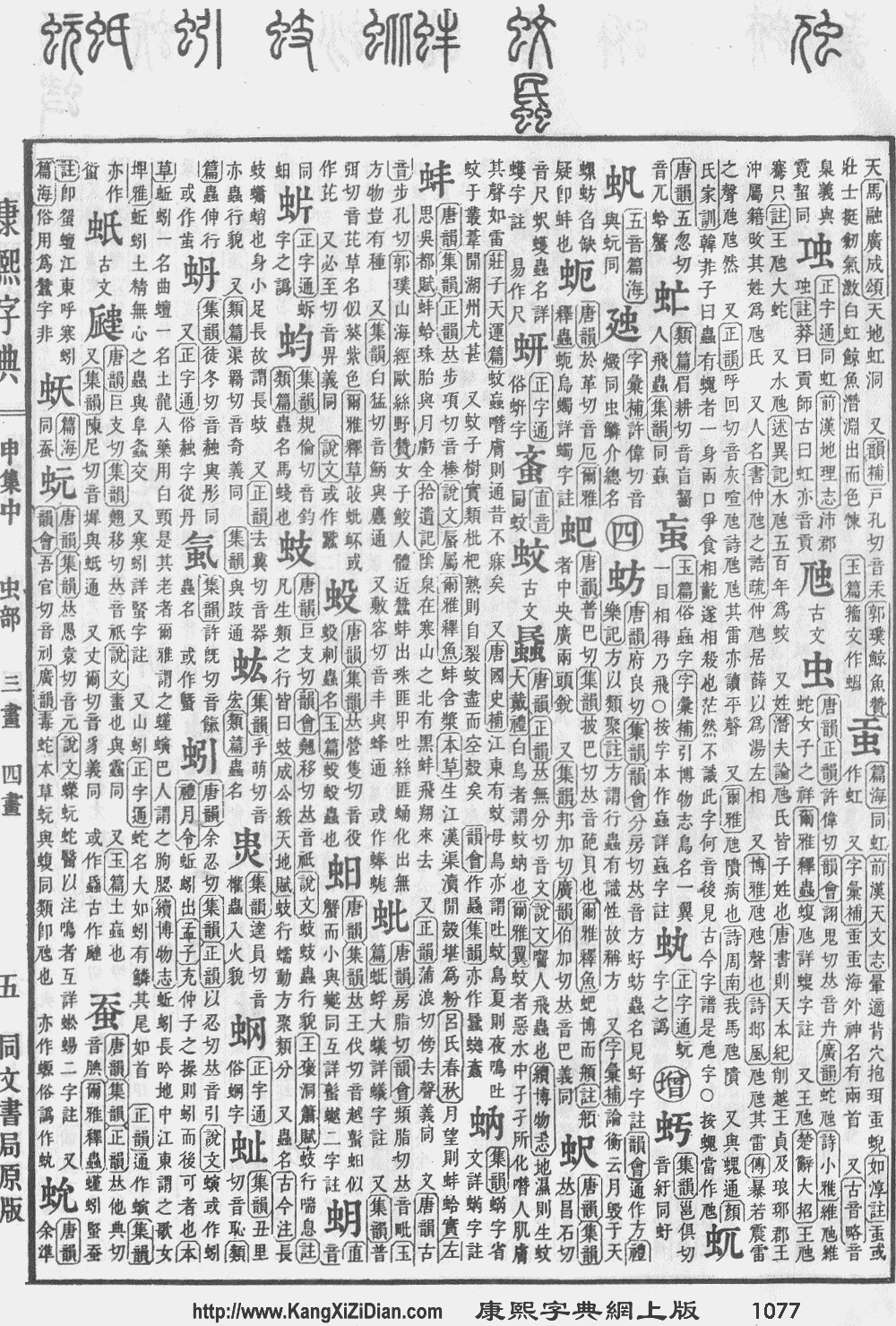
- Kangxi Dictionary: page 1077, character 6
- Dai Kanwa Jiten: character 32835
- Dae Jaweon: page 1546, character 1
- Hanyu Da Zidian (first edition): volume 4, page 2835, character 12
- Unihan data for U+867B
Chinese
| trad. | 虻 | |
|---|---|---|
| simp. # | 虻 | |
| alternative forms | 蝱/虻 | |
Glyph origin
Characters in the same phonetic series (亡) (Zhengzhang, 2003)
| Old Chinese | |
|---|---|
| 忙 | *maːŋ |
| 芒 | *maːŋ, *maŋ |
| 茫 | *maːŋ |
| 恾 | *maːŋ |
| 吂 | *maːŋ, *maːŋs |
| 汒 | *maːŋ, *maŋs |
| 朚 | *maːŋ, *hmaːŋ, *maŋ, *mraːŋ, *mraːŋs |
| 邙 | *maːŋ, *maŋ |
| 杗 | *maːŋ, *maŋ |
| 荒 | *hmaːŋ, *hmaːŋs |
| 肓 | *hmaːŋ |
| 衁 | *hmaːŋ |
| 巟 | *hmaːŋ |
| 詤 | *hmaːŋ, *hmaːŋʔ, *hmaŋʔ |
| 慌 | *hmaːŋ, *hmaːŋʔ |
| 謊 | *hmaːŋʔ |
| 喪 | *smaːŋs, *smaːŋ |
| 亡 | *maŋ |
| 望 | *maŋ, *maŋs |
| 莣 | *maŋ |
| 朢 | *maŋ, *maŋs |
| 鋩 | *maŋ |
| 硭 | *maŋ |
| 忘 | *maŋ, *maŋs |
| 网 | *mlaŋʔ |
| 罔 | *mlaŋʔ |
| 蛧 | *maŋʔ |
| 網 | *mlaŋʔ |
| 輞 | *maŋʔ |
| 棢 | *maŋʔ |
| 惘 | *maŋʔ |
| 菵 | *maŋʔ |
| 誷 | *maŋʔ |
| 魍 | *maŋʔ |
| 妄 | *maŋs |
| 盲 | *mraːŋ |
| 蝱 | *mraːŋ |
| 虻 | *mraːŋ |
| 氓 | *mraːŋ |
| 甿 | *mraːŋ |
Etymology
From Proto-Sino-Tibetan *s-b-(r/j)aŋ (“fly, bee”). Cognate with 蠅 (OC *m-rəŋ > *m-ləŋ, “fly”), Tibetan སྦྲང་བུ (sbrang bu, “bee”), Burmese ယင် (yang, “fly”), Chepang याङ् (“insect; fly”), Japhug ɣʑo (“bee”) (STEDT; Coblin, 1986; Benedict, 1972; Schuessler, 2007; Baxter & Sagart, 2014; Zhang, Jacques, and Lai, 2019).
Pronunciation
References
- “虻”, in 漢語多功能字庫 (Multi-function Chinese Character Database), 香港中文大學 (the Chinese University of Hong Kong), 2014–
Japanese
Readings
Idioms
Idioms
- 虻蜂取らず (abu hachi torazu)
References
- Yoshida, Masatoshi et.al. Kodansha's Romanized Japanese-English Dictionary. Tokyo: Kodansha International (JPN), 1993. →ISBN.
Korean
Hanja
虻 • (meong) (hangeul 멍, revised meong, McCune–Reischauer mŏng, Yale meng)
- This term needs a translation to English. Please help out and add a translation, then remove the text
{{rfdef}}.
This article is issued from Wiktionary. The text is licensed under Creative Commons - Attribution - Sharealike. Additional terms may apply for the media files.