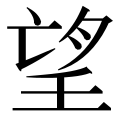
望
| ||||||||
 | ||||||||
| ||||||||
Translingual
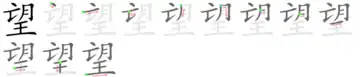
| Stroke order | |||
|---|---|---|---|
 | |||
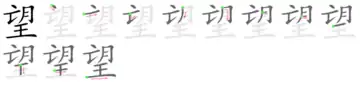
| Stroke order (Japan) | |||
|---|---|---|---|
 | |||
| Japanese | 望 |
|---|---|
| Simplified | 望 |
| Traditional | 望 |
Alternative forms
Note that in simplified Chinese and Vietnamese scripts, 亡 is written with an upward hook. In Hong Kong and Taiwan (traditional Chinese script), 月 is written like 夕 with an extra slash below while 王 is written as 𡈼. In Mainland China, Japan, Korea, Vietnam, the bottom component is written 王. Note that the standard Kangxi form is written ⿱⿰亡月𡈼.
Han character
望 (Kangxi radical 74, 月+7, 11 strokes, cangjie input 卜月竹土 (YBHG) or 卜月一土 (YBMG), four-corner 07104, composition ⿱⿰亡月王(GJKV) or ⿱⿰亡𱼀𡈼(HT))
Derived characters
- 𥊛, 𠻾, 𧫢, 𦹑, 𥲠, 𭩌
References
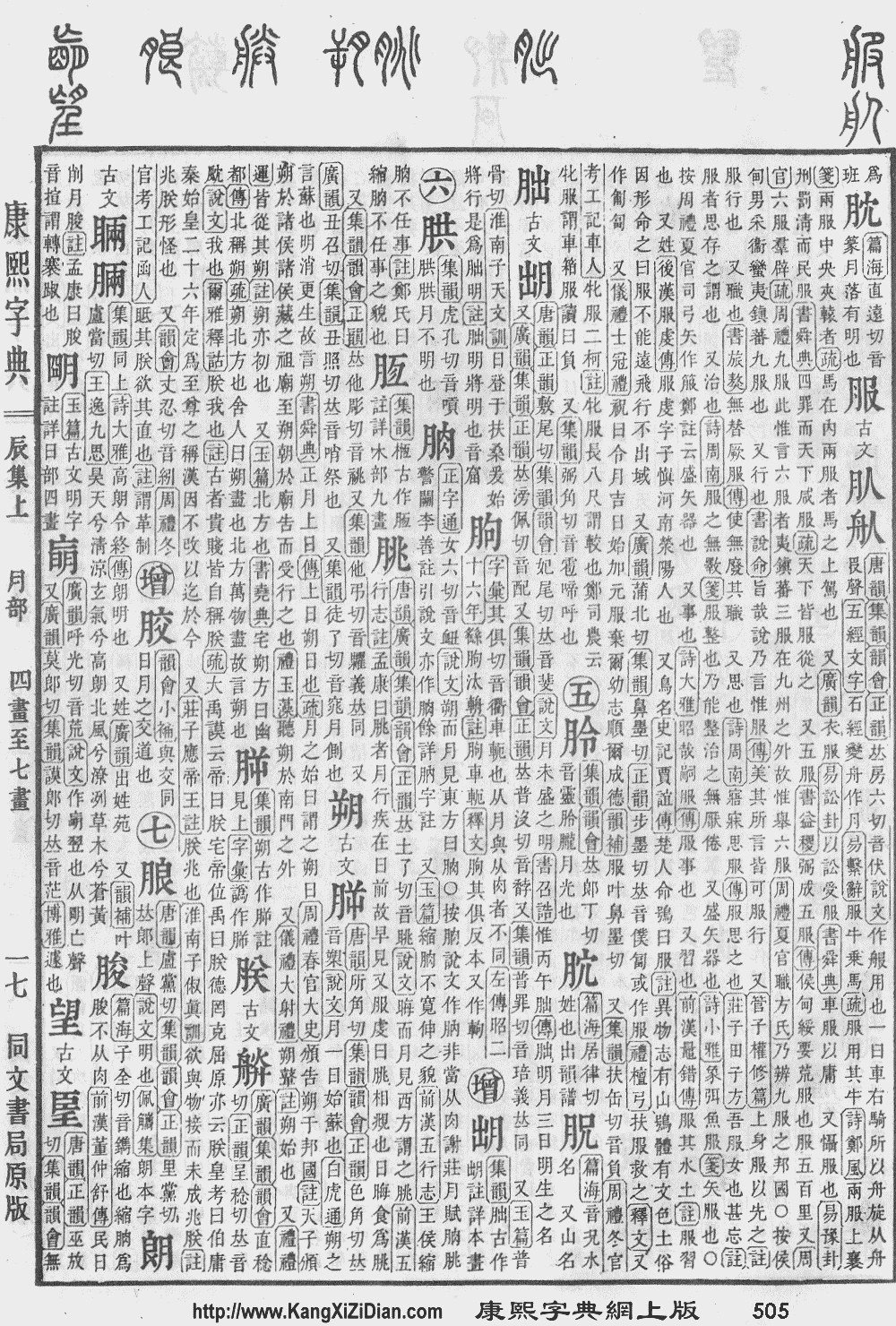
- Kangxi Dictionary: page 505, character 29
- Dai Kanwa Jiten: character 14368
- Dae Jaweon: page 884, character 23
- Hanyu Da Zidian (first edition): volume 3, page 2080, character 2
- Unihan data for U+671B
- Unihan data for U+FA93
- Unihan data for U+2F8D9
Chinese
| trad. | 望 | |
|---|---|---|
| simp. # | 望 | |
| alternative forms | ||
Glyph origin
| Historical forms of the character 望 | |
|---|---|
| Shang | Western Zhou |
| Oracle bone script | Bronze inscriptions |
 |
 |
| Old Chinese | |
|---|---|
| 忙 | *maːŋ |
| 芒 | *maːŋ, *maŋ |
| 茫 | *maːŋ |
| 恾 | *maːŋ |
| 吂 | *maːŋ, *maːŋs |
| 汒 | *maːŋ, *maŋs |
| 朚 | *maːŋ, *hmaːŋ, *maŋ, *mraːŋ, *mraːŋs |
| 邙 | *maːŋ, *maŋ |
| 杗 | *maːŋ, *maŋ |
| 荒 | *hmaːŋ, *hmaːŋs |
| 肓 | *hmaːŋ |
| 衁 | *hmaːŋ |
| 巟 | *hmaːŋ |
| 詤 | *hmaːŋ, *hmaːŋʔ, *hmaŋʔ |
| 慌 | *hmaːŋ, *hmaːŋʔ |
| 謊 | *hmaːŋʔ |
| 喪 | *smaːŋs, *smaːŋ |
| 亡 | *maŋ |
| 望 | *maŋ, *maŋs |
| 莣 | *maŋ |
| 朢 | *maŋ, *maŋs |
| 鋩 | *maŋ |
| 硭 | *maŋ |
| 忘 | *maŋ, *maŋs |
| 网 | *mlaŋʔ |
| 罔 | *mlaŋʔ |
| 蛧 | *maŋʔ |
| 網 | *mlaŋʔ |
| 輞 | *maŋʔ |
| 棢 | *maŋʔ |
| 惘 | *maŋʔ |
| 菵 | *maŋʔ |
| 誷 | *maŋʔ |
| 魍 | *maŋʔ |
| 妄 | *maŋs |
| 盲 | *mraːŋ |
| 蝱 | *mraːŋ |
| 虻 | *mraːŋ |
| 氓 | *mraːŋ |
| 甿 | *mraːŋ |
Originally written 𦣠, an ideogrammic compound (會意/会意) : 臣 (“eye”) + 𡈼 (“person standing on the ground”) – a person standing up and looking off into the distance. Later 月 (“moon”) was added to produce 朢.
The 臣 component is now written 亡, making the current form a phono-semantic compound (形聲/形声, OC *maŋ, *maŋs) : phonetic 亡 (OC *maŋ) + semantic 月 + semantic 𡈼.
Etymology
From Proto-Sino-Tibetan *mraŋ (“to see”). Cognate with Burmese မြင် (mrang).
Pronunciation
Definitions
望
- to see; to watch (especially from a distance)
- 眺望 ― tiàowàng ― to watch from a vantage point
- (chiefly dialectal) to look; to look at
- to gaze at; to stare at
- (figurative) to observe; to watch
- to hope; to expect
- fame; reputation
- location; locality
- (Chinese astronomy) the day or night of the full moon
- 朔望月 ― shuòwàngyuè ― synodic month
- 壬戌之秋,七月既望,蘇子與客泛舟遊於赤壁之下。 [Classical Chinese, trad.]
- From: 1082, Su Shi (蘇軾), The Red Wall: Summer (《前赤壁賦》). English translation by Herbert Allen Giles.
- Rénxū zhī qiū, qīyuè jìwàng, Sūzǐ yǔ kè fànzhōu yóu yú Chìbì zhī xià. [Pinyin]
- In the year 1081, the seventh moon just on the wane, I went with a friend on a boat excursion to the Red Wall.
壬戌之秋,七月既望,苏子与客泛舟游于赤壁之下。 [Classical Chinese, simp.]
Synonyms
Compounds
- 一望 (yīwàng)
- 一望無垠/一望无垠 (yīwàngwúyín)
- 一望無邊/一望无边
- 一望無際/一望无际 (yīwàngwújì)
- 一望而知 (yīwàng'érzhī)
- 一線希望/一线希望
- 不承望
- 不指望
- 不負眾望/不负众望 (bùfù-zhòngwàng)
- 人望 (rénwàng)
- 令望
- 仰望 (yǎngwàng)
- 伏望
- 企望 (qǐwàng)
- 倚扉而望
- 倚門佇望/倚门伫望
- 倚閭之望/倚闾之望
- 偵望/侦望
- 偷目竊望/偷目窃望 (tōumùqièwàng)
- 僉望/佥望
- 公才公望
- 冀望 (jìwàng)
- 冠蓋相望/冠盖相望
- 凝望 (níngwàng)
- 功高望重
- 北望
- 卓望
- 南望 (Nánwàng)
- 博望侯
- 博望坡
- 厚望 (hòuwàng)
- 可望 (kěwàng)
- 向望 (ǹg-bāng) (Min Nan)
- 名望 (míngwàng)
- 名望體面/名望体面
- 品望
- 喜出望外 (xǐchūwàngwài)
- 四望
- 地望 (dìwàng)
- 在望 (zàiwàng)
- 地望高華/地望高华
- 大喜過望/大喜过望 (dàxǐguòwàng)
- 大失人望
- 大失所望 (dàshīsuǒwàng)
- 大為失望/大为失望
- 太公望
- 失望 (shīwàng)
- 奢望 (shēwàng)
- 好望角 (Hǎowàngjiǎo)
- 威望 (wēiwàng)
- 孔章望斗
- 孚眾望/孚众望
- 守望 (shǒuwàng)
- 守望相助 (shǒuwàngxiāngzhù)
- 宮牆外望/宫墙外望
- 宿望
- 寄望 (jìwàng)
- 展望 (zhǎnwàng)
- 屬望/属望
- 巴南牆望/巴南墙望
- 巴望 (bāwàng)
- 巴高望上
- 布望
- 希望 (xīwàng)
- 希望小學/希望小学 (xīwàng xiǎoxué)
- 平隴望蜀/平陇望蜀
- 引領而望/引领而望
- 引頸翹望/引颈翘望
- 張望/张望 (zhāngwàng)
- 彌望/弥望 (míwàng)
- 得一望十
- 得隴望蜀/得陇望蜀 (délǒngwàngshǔ)
- 德尊望重
- 德望
- 德深望重
- 德隆望尊
- 德隆望重
- 德高望重 (dégāowàngzhòng)
- 怨望 (yuànwàng)
- 恚望
- 悵望/怅望
- 意出望外
- 想望 (xiǎngwàng)
- 慾望/欲望 (yùwàng)
- 憑高望遠/凭高望远
- 懸懸而望/悬悬而望
- 懸望/悬望
- 戴盆望天
- 才望 (cáiwàng)
- 承望
- 拜望 (bàiwàng)
- 指望 (zhǐwàng)
- 探望 (tànwàng)
- 放眼望去
- 施不望報/施不望报
- 族望
- 旗鼓相望
- 既望 (jìwàng)
- 旦望
- 昂首望天
- 春望
- 映望
- 時望/时望
- 時望所歸/时望所归
- 月望
- 有望 (yǒuwàng)
- 朔望 (shuòwàng)
- 朔望月 (shuòwàngyuè)
- 望候
- 望八
- 望其肩背
- 望其肩項/望其肩项
- 望其項背/望其项背 (wàngqíxiàngbèi)
- 望古遙集/望古遥集
- 望塵不及/望尘不及
- 望塵而拜/望尘而拜
- 望塵莫及/望尘莫及 (wàngchénmòjí)
- 望外
- 望夫石 (wàngfūshí)
- 望子 (wàngzi)
- 望子成龍/望子成龙 (wàngzǐchénglóng)
- 望安 (Wàng'ān)
- 望山
- 望巴巴
- 望帝
- 望帝啼鵑/望帝啼鹃
- 望幸
- 望府座 (Wàngfǔzuò)
- 望彌撒/望弥撒
- 望文生義/望文生义 (wàngwénshēngyì)
- 望斷/望断
- 望族 (wàngzú)
- 望日 (wàngrì)
- 望月 (wàngyuè)
- 望朔 (wàngshuò)
- 望望
- 望杏瞻榆
- 望杏瞻蒲
- 望梅止渴 (wàngméizhǐkě)
- 望梅消渴
- 望樓/望楼 (wànglóu)
- 望樓車/望楼车
- 望歲/望岁
- 望氣/望气
- 望洋 (wàngyáng)
- 望洋興歎/望洋兴叹 (wàngyángxīngtàn)
- 望洋驚嘆/望洋惊叹
- 望田 (Wàngtián)
- 望眼將穿/望眼将穿
- 望眼欲穿 (wàngyǎnyùchuān)
- 望祭
- 望秋先零
- 望穿秋水 (wàngchuānqiūshuǐ)
- 望竿
- 望而卻步/望而却步 (wàng'érquèbù)
- 望而生畏 (wàng'érshēngwèi)
- 望聞問切/望闻问切 (wàngwénwènqiè)
- 望舒
- 望衡對宇/望衡对宇
- 望見/望见 (wàngjiàn)
- 望診/望诊
- 望諸君/望诸君
- 望遠鏡/望远镜 (wàngyuǎnjìng)
- 望遠鏡頭/望远镜头 (wàngyuǎn jìngtóu)
- 望鄉臺/望乡台
- 望門大嚼/望门大嚼
- 望門妨/望门妨
- 望門寡/望门寡
- 望門投止/望门投止
- 望雲/望云
- 望雲之情/望云之情
- 望風/望风 (wàngfēng)
- 望風希指/望风希指
- 望風承旨/望风承旨
- 望風披靡/望风披靡
- 望風捕影/望风捕影
- 望風撲影/望风扑影
- 望風瓦解/望风瓦解
- 望風而潰/望风而溃
- 望風而走/望风而走
- 望風而逃/望风而逃
- 望風而遁/望风而遁
- 望風而降/望风而降
- 望風而靡/望风而靡 (wàngfēng'érmǐ)
- 望風響應/望风响应
- 朝望
- 期望 (qīwàng)
- 期望值 (qīwàngzhí)
- 東張西望/东张西望 (dōngzhāngxīwàng)
- 東望/东望
- 東觀西望/东观西望 (dōngguānxīwàng)
- 柴望
- 槥車相望/槥车相望
- 欲望 (yùwàng)
- 殷望
- 毋望之福
- 毋望之禍/毋望之祸
- 民望 (mínwàng)
- 沒了指望/没了指望
- 沒指望/没指望
- 清望
- 渴望 (kěwàng)
- 滿望/满望
- 潛望鏡/潜望镜 (qiánwàngjìng)
- 無指望/无指望
- 無望/无望 (wúwàng)
- 照望
- 熱望/热望 (rèwàng)
- 犀牛望月
- 登樓望闕/登楼望阙
- 登高望遠/登高望远
- 白望
- 看望 (kànwàng)
- 相望 (xiāngwàng)
- 盼望 (pànwàng)
- 眾所瞻望/众所瞻望
- 眺望 (tiàowàng)
- 眾望/众望 (zhòngwàng)
- 眾望所依/众望所依
- 眾望所歸/众望所归 (zhòngwàngsuǒguī)
- 眾望所積/众望所积
- 眾望攸歸/众望攸归
- 眾望有歸/众望有归
- 眺望臺/眺望台
- 瞭望/了望 (liàowàng)
- 瞭望山/了望山
- 瞭望臺/了望台 (liàowàngtái)
- 瞻望 (zhānwàng)
- 矚望/瞩望
- 碩望/硕望
- 祈望 (qíwàng)
- 萬望/万望
- 萬里之望
- 策望
- 素望
- 絕望/绝望 (juéwàng)
- 羅望子/罗望子 (luówàngzǐ)
- 翹首盼望/翘首盼望
- 耆儒碩望/耆儒硕望
- 聞望/闻望
- 聲望/声望 (shēngwàng)
- 肩背相望
- 脈望/脉望
- 觀望/观望 (guānwàng)
- 觀望成敗/观望成败
- 觖望
- 誰承望/谁承望
- 譽望/誉望
- 資望/资望 (zīwàng)
- 資淺望輕/资浅望轻
- 跂望
- 車書相望/车书相望
- 過望/过望 (guòwàng)
- 道殣相望
- 遙望/遥望 (yáowàng)
- 遠望/远望 (yuǎnwàng)
- 遷喬之望/迁乔之望
- 遲回觀望/迟回观望
- 郡望
- 鄉望/乡望
- 酒望子 (jiǔwàngzi)
- 門望/门望
- 陟岵瞻望
- 隃望
- 雅望
- 難望項背/难望项背
- 雲霓之望/云霓之望
- 非望
- 項背相望/项背相望
- 顒望/颙望
- 願望/愿望 (yuànwàng)
- 風望/风望
- 養望/养望
- 餒殍相望/馁殍相望
- 首丘之望
- 騁望/骋望
- 騖望/骛望
- 鵠望/鹄望 (húwàng)
- 鶴望/鹤望
- 鷹覷鶻望/鹰觑鹘望
Descendants
- → Thai: มอง (mɔɔng, “watch, look”)
References
- “望”, in 漢語多功能字庫 (Multi-function Chinese Character Database), 香港中文大學 (the Chinese University of Hong Kong), 2014–
Japanese
| Shinjitai | 望 |  |
| Kyūjitai [1][2] |
望󠄁 望+ 󠄁?(Adobe-Japan1) |
 |
| 望󠄅 望+ 󠄅?(Hanyo-Denshi) (Moji_Joho) |
 | |
| The displayed kanji may be different from the image due to your environment. See here for details. | ||
Readings
Compounds
References
Korean
Etymology
From Middle Chinese 望 (MC mjangH). Recorded as Middle Korean 마ᇰ〯 (mǎng) (Yale: mǎng) in Hunmong Jahoe (訓蒙字會 / 훈몽자회), 1527.
Pronunciation
- (SK Standard/Seoul) IPA(key): [ma̠(ː)ŋ]
- Phonetic hangul: [망(ː)]
- Though still prescribed in Standard Korean, most speakers in both Koreas no longer distinguish vowel length.
Compounds
- 가망(可望) (gamang)
- 갈망(渴望) (galmang)
- 결망(觖望) (gyeolmang)
- 관망(觀望) (gwanmang)
- 규망(闚望) (gyumang)
- 기망(企望) (gimang)
- 기망(冀望) (gimang)
- 기망(器望) (gimang)
- 기망(幾望) (gimang)
- 기망(期望) (gimang)
- 기망(跂望) (gimang)
- 낙망(落望) (nangmang)
- 누망(縷望) (numang)
- 다망(多望) (damang)
- 단망(旦望) (danmang)
- 대망(大望) (daemang)
- 대망(待望) (daemang)
- 덕망(德望) (deongmang)
- 망간(望間) (manggan)
- 망견(望見) (manggyeon)
- 망곡(望哭) (manggok)
- 망구(望九) (manggu)
- 망군(望軍) (manggun)
- 망단(望斷) (mangdan)
- 망대(望臺) (mangdae)
- 망루(望樓) (mangnu, “watchtower”)
- 망륙(望六) (mangnyuk)
- 망배(望拜) (mangbae)
- 망백(望百) (mangbaek)
- 망상(望床) (mangsang)
- 망색(望色) (mangsaek)
- 망양(望洋) (mang'yang)
- 망외(望外) (mang'oe)
- 망원경(望遠鏡) (mang'won'gyeong, “telescope”)
- 망월(望月) (mang'wol)
- 망제(望祭) (mangje, “ancestor worship”)
- 망족(望族) (mangjok)
- 망촉(望蜀) (mangchok)
- 망칠(望七) (mangchil)
- 망팔(望八) (mangpal)
- 망풍(望風) (mangpung)
- 망향(望鄕) (manghyang)
- 망후(望後) (manghu)
- 명망(名望) (myeongmang)
- 문망(聞望) (munmang)
- 문망(門望) (munmang)
- 물망(物望) (mulmang)
- 본망(本望) (bonmang)
- 빙망(騁望) (bingmang)
- 사망(伺望) (samang)
- 사속지망(嗣續之望) (sasokjimang)
- 삭망(朔望) (sangmang)
- 상망(相望) (sangmang)
- 석망(碩望) (seongmang)
- 선망(羨望) (seonmang, “to envy”)
- 소망(所望) (somang)
- 소망(素望) (somang)
- 숙망(宿望) (sungmang)
- 순망간(旬望間) (sunmanggan)
- 신망(信望) (sinmang)
- 실망(失望) (silmang, “disappointment”)
- 앙망(仰望) (angmang)
- 야망(野望) (yamang)
- 여망(輿望) (yeomang)
- 여망(餘望) (yeomang)
- 열망(熱望) (yeolmang)
- 예망(譽望) (yemang)
- 옹망(顒望) (ongmang)
- 요망(要望) (yomang)
- 요망(遙望) (yomang)
- 욕망(慾望) (yongmang)
- 욕망(欲望) (yongmang)
- 원망(怨望) (wonmang, “to deplore; to reproach”)
- 원망(遠望) (wonmang)
- 원망(願望) (wonmang)
- 유망(有望) (yumang)
- 의려지망(倚閭之望) (uiryeojimang)
- 의문지망(倚門之望) (uimunjimang)
- 인망(人望) (inmang)
- 일망(一望) (ilmang)
- 잠망경(潛望鏡) (jammanggyeong)
- 장진지망(長進之望) (jangjinjimang)
- 전망(展望) (jeonmang, “view; outlook”)
- 절망(切望) (jeolmang)
- 절망(絶望) (jeolmang, “despair”)
- 절망적(絶望的) (jeolmangjeok)
- 점망(覘望) (jeommang)
- 조망(眺望) (jomang)
- 중망(衆望) (jungmang)
- 지망(志望) (jimang)
- 창망(悵望) (changmang)
- 책망(責望) (chaengmang)
- 천망(薦望) (cheonmang)
- 천하지망(天下之望) (cheonhajimang)
- 촉망(囑望) (chongmang)
- 효망(驍望) (hyomang)
- 후망(後望) (humang)
- 희망(希望) (huimang, “hope”)