慌
| ||||||||
| ||||||||
| ||||||||
Translingual
Han character
慌 (Kangxi radical 61, 心+10 in Chinese, 心+9 in Japanese, 13 strokes in Chinese, 12 strokes in Japanese, cangjie input 心廿卜山 (PTYU), four-corner 94011, composition ⿰忄荒)
References
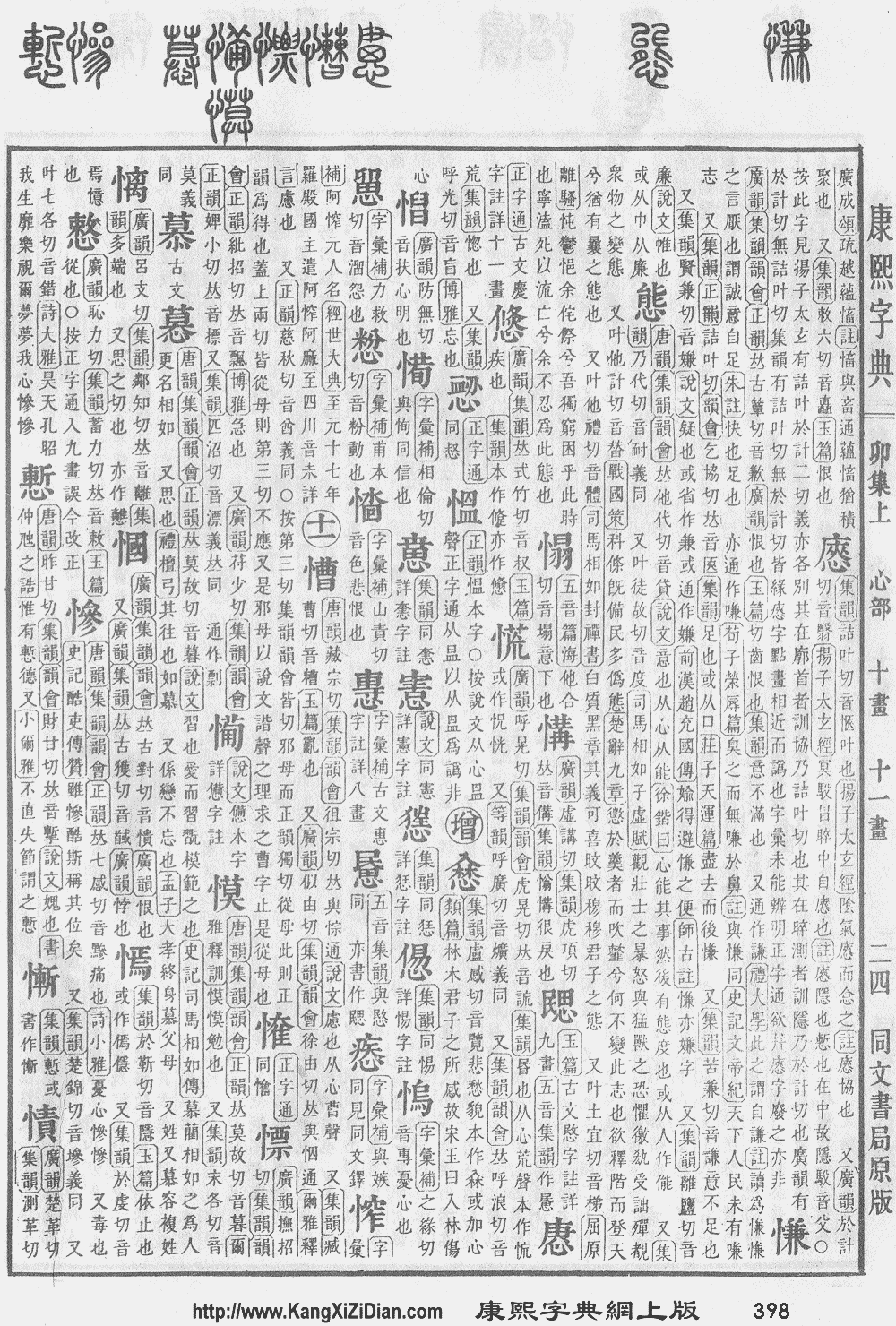
- Kangxi Dictionary: page 398, character 9
- Dai Kanwa Jiten: character 11057
- Dae Jaweon: page 737, character 9
- Hanyu Da Zidian (first edition): volume 4, page 2326, character 7
- Unihan data for U+614C
- Unihan data for U+2F8A7
- Unihan data for U+2F8A9
Chinese
| trad. | 慌 | |
|---|---|---|
| simp. # | 慌 | |
Glyph origin
Characters in the same phonetic series (亡) (Zhengzhang, 2003)
| Old Chinese | |
|---|---|
| 忙 | *maːŋ |
| 芒 | *maːŋ, *maŋ |
| 茫 | *maːŋ |
| 恾 | *maːŋ |
| 吂 | *maːŋ, *maːŋs |
| 汒 | *maːŋ, *maŋs |
| 朚 | *maːŋ, *hmaːŋ, *maŋ, *mraːŋ, *mraːŋs |
| 邙 | *maːŋ, *maŋ |
| 杗 | *maːŋ, *maŋ |
| 荒 | *hmaːŋ, *hmaːŋs |
| 肓 | *hmaːŋ |
| 衁 | *hmaːŋ |
| 巟 | *hmaːŋ |
| 詤 | *hmaːŋ, *hmaːŋʔ, *hmaŋʔ |
| 慌 | *hmaːŋ, *hmaːŋʔ |
| 謊 | *hmaːŋʔ |
| 喪 | *smaːŋs, *smaːŋ |
| 亡 | *maŋ |
| 望 | *maŋ, *maŋs |
| 莣 | *maŋ |
| 朢 | *maŋ, *maŋs |
| 鋩 | *maŋ |
| 硭 | *maŋ |
| 忘 | *maŋ, *maŋs |
| 网 | *mlaŋʔ |
| 罔 | *mlaŋʔ |
| 蛧 | *maŋʔ |
| 網 | *mlaŋʔ |
| 輞 | *maŋʔ |
| 棢 | *maŋʔ |
| 惘 | *maŋʔ |
| 菵 | *maŋʔ |
| 誷 | *maŋʔ |
| 魍 | *maŋʔ |
| 妄 | *maŋs |
| 盲 | *mraːŋ |
| 蝱 | *mraːŋ |
| 虻 | *mraːŋ |
| 氓 | *mraːŋ |
| 甿 | *mraːŋ |
Phono-semantic compound (形聲/形声, OC *hmaːŋ, *hmaːŋʔ) : semantic 忄 (“heart”) + phonetic 荒 (OC *hmaːŋ, *hmaːŋs).
Pronunciation 1
Definitions
慌
Synonyms
- (to fear):
Dialectal synonyms of 害怕 (“to fear; to be afraid of”) [map]
Compounds
- 不慌不忙
- 亂得慌/乱得慌
- 口隔心慌
- 害慌
- 心慌 (xīnhuāng)
- 心慌意亂/心慌意乱 (xīnhuāngyìluàn)
- 心慌膽戰/心慌胆战
- 急慌 (jíhuāng)
- 恐慌 (kǒnghuāng)
- 恐慌症 (kǒnghuāngzhèng)
- 悶得慌/闷得慌
- 意亂心慌/意乱心慌
- 慌不擇路/慌不择路
- 慌亂/慌乱 (huāngluàn)
- 慌了手腳/慌了手脚
- 慌了神兒/慌了神儿
- 慌張/慌张 (huāngzhāng)
- 慌張勢煞/慌张势煞
- 慌張慌智/慌张慌智
- 慌忙 (huāngmáng)
- 慌忙無措/慌忙无措 (huāngmáng wúcuò)
- 慌急 (huāngjí)
- 慌悚
- 愴慌/怆慌
- 慌慌張張/慌慌张张
- 慌慌忙忙
- 慌成一團/慌成一团
- 慌手忙腳/慌手忙脚
- 慌手慌腳/慌手慌脚
- 慌神
- 慌腳雞/慌脚鸡
- 慌腿
- 慌裡慌張/慌里慌张
- 慌速
- 戃慌/𰑿慌
- 手慌腳忙/手慌脚忙
- 撐的慌/撑的慌
- 發慌/发慌 (fāhuāng)
- 磣的慌/碜的慌
- 累得慌
- 經濟恐慌/经济恐慌 (jīngjì kǒnghuāng)
- 腸慌腹熱/肠慌腹热
- 膩的慌/腻的慌
- 著慌/着慌 (zháohuāng)
- 貪慌/贪慌
- 驚慌/惊慌 (jīnghuāng)
- 驚慌失措/惊慌失措 (jīnghuāngshīcuò)
- 驚慌失色/惊慌失色
- 鬧的慌/闹的慌
- 鬼慌
Pronunciation 2
Japanese
Korean
Hanja
慌 (eum 황 (hwang))
- This term needs a translation to English. Please help out and add a translation, then remove the text
{{rfdef}}.
Vietnamese
This article is issued from Wiktionary. The text is licensed under Creative Commons - Attribution - Sharealike. Additional terms may apply for the media files.