裸
| ||||||||
| ||||||||
Translingual
Han character
裸 (Kangxi radical 145, 衣+8, 13 strokes, cangjie input 中田木 (LWD), four-corner 36294, composition ⿰衤果)
Derived characters
- 𤁖
References
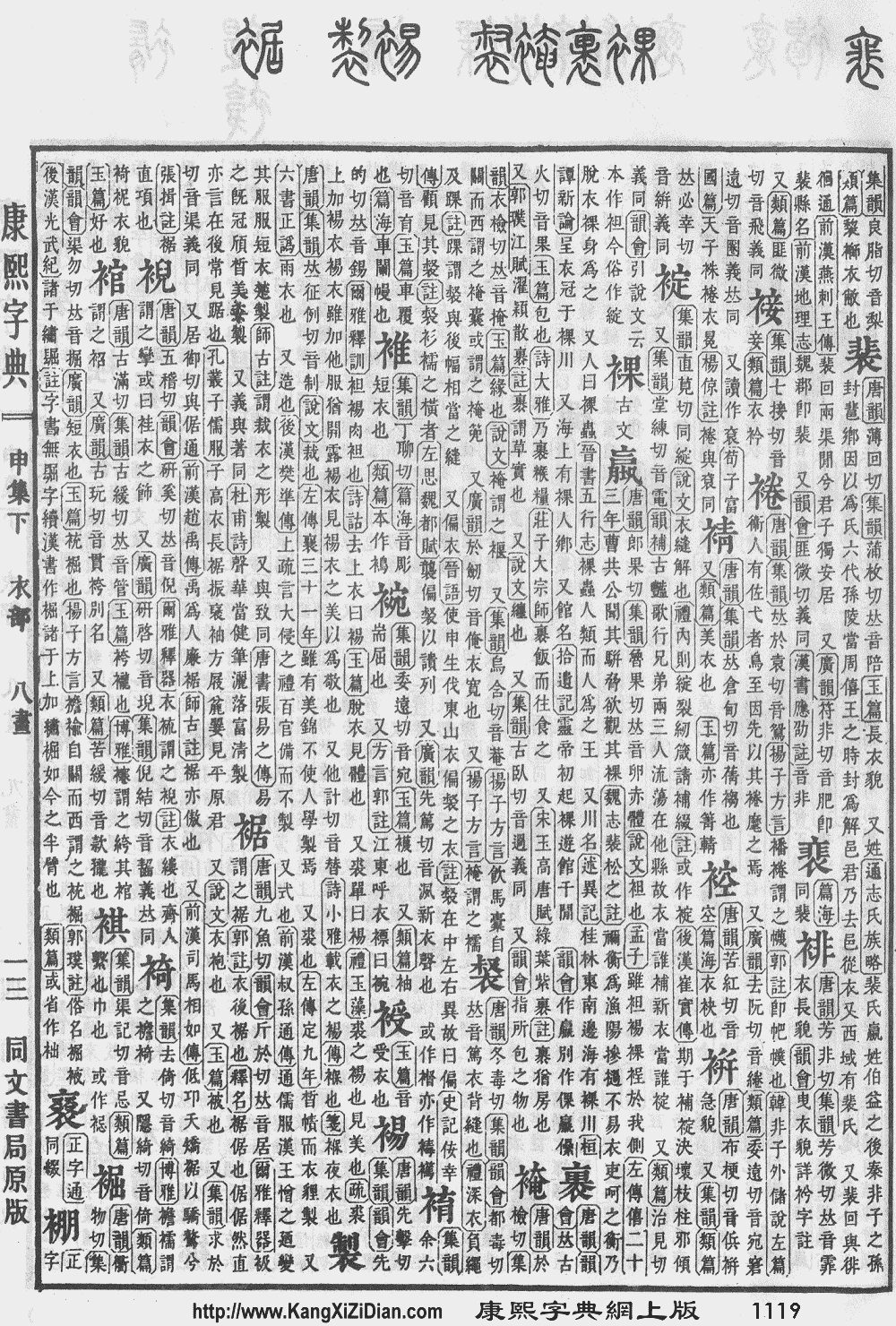
- Kangxi Dictionary: page 1119, character 10
- Dai Kanwa Jiten: character 34371
- Dae Jaweon: page 1585, character 28
- Hanyu Da Zidian (first edition): volume 5, page 3098, character 7
- Unihan data for U+88F8
- Unihan data for U+F912
Chinese
| simp. and trad. |
裸 | |
|---|---|---|
| alternative forms | ||
Glyph origin
Characters in the same phonetic series (果) (Zhengzhang, 2003)
| Old Chinese | |
|---|---|
| 裸 | *ɡ·roːlʔ |
| 躶 | *ɡ·roːlʔ |
| 果 | *kloːlʔ |
| 菓 | *kloːlʔ |
| 猓 | *kloːlʔ |
| 輠 | *kloːlʔ, *ɡloːlʔ, *ɡroːlʔ, *kʰluːls |
| 裹 | *kloːlʔ, *kloːls |
| 蜾 | *kloːlʔ |
| 惈 | *kloːlʔ |
| 粿 | *kloːlʔ |
| 窠 | *kʰloːl |
| 稞 | *kʰloːl, *ɡroːlʔ |
| 課 | *kʰloːl, *kʰloːls |
| 髁 | *kʰloːl, *kʰloːls, *kʰroːlʔ |
| 棵 | *kʰloːl, *kʰloːnʔ, *ɡloːnʔ |
| 顆 | *kʰloːlʔ |
| 堁 | *kʰloːlʔ, *kʰloːls, *kloːns |
| 敤 | *kʰloːlʔ, *kʰloːls |
| 夥 | *qʰloːlʔ, *ɡloːlʔ, *ɡroːlʔ |
| 婐 | *qloːlʔ, *kroːl |
| 踝 | *ɡroːlʔ |
| 祼 | *ɡluːlʔ |
Phono-semantic compound (形聲/形声, OC *ɡ·roːlʔ) : semantic 衣 (“clothing”) + phonetic 果 (OC *kloːlʔ) – lacking clothes, naked.
Etymology
From Proto-Sino-Tibetan [Term?]. Cognate with Tibetan སྒྲེ (sgre), Proto-Kuki-Chin *ruak.
Pronunciation
Compounds
References
- “裸”, in 漢語多功能字庫 (Multi-function Chinese Character Database), 香港中文大學 (the Chinese University of Hong Kong), 2014–
Japanese
Compounds
Compounds
- 赤裸 (akahadaka)
- 内裸でも外錦 (uchi hadaka demo soto nishiki)
- 帯代裸 (obishirohadaka)
- 帯広裸 (obihirohadaka)
- 素っ裸 (suppadaka)
- 素裸 (suhadaka)
- 赤裸 (sekira)
- 全裸 (zenra)
- 裸一貫 (hadakaikkan)
- 裸鰯 (hadakaiwashi)
- 裸馬 (hadakauma)
- 裸売り (hadakauri)
- 裸踊り (hadakaodori)
- 裸金 (hadakagane)
- 裸木 (hadakagi)
- 裸鞍 (hadakagura)
- 裸城 (hadakajiro)
- 裸線 (hadakasen)
- 裸相場 (hadakasōba)
- 裸鶴脛 (hadakatsuruhagi)
- 裸で道中なるものか (hadaka de dōchū naru monoka)
- 裸で物を落とす例なし (hadaka de mono o otosu tameshi nashi)
- 裸電球 (hadakadenkyū)
- 裸値段 (hadakanedan)
- 裸の王様 (hadaka no ōsama)
- 裸火 (hadakabi)
- 裸百貫 (hadakahyakkan)
- 裸文 (hadakabumi)
- 裸蛇 (hadakahebi)
- 裸参り (hadakamairi): visiting a shrine or temple naked in winter
- 裸祭 (hadakamatsuri)
- 裸身 (hadakami)
- 裸麦 (hadakamugi)
- 裸土竜鼠 (hadakamoguranezumi)
- 裸山 (hadakayama)
- 裸利回り (hadakarimawari)
- 裸蝋燭 (hadakarōsoku)
- 裸ん坊 (hadakanbō)
- 裸足 (hadashi): bare foot
- 半裸 (hanra)
- 真っ裸 (mappadaka)
- 真裸 (mahadaka)
- 丸裸 (maruhadaka)
- 裸花 (raka)
- 裸眼 (ragan)
- 裸形 (ragyō)
- 裸子植物 (rashishokubutsu)
- 裸出 (rashutsu)
- 裸女 (rajo)
- 裸身 (rashin)
- 裸像 (razō)
- 裸体 (ratai)
- 裸足 (hadashi)
- 裸裎 (ratei): naked; extreme rudeness
- 裸婦 (rafu)
- 裸葉 (rayō)
- 裸裸 (rara), 裸々 (rara)
Derived terms
- 真っ裸 (mappadaka, “stark naked”)
References
- Matsumura, Akira, editor (2006), 大辞林 [Daijirin] (in Japanese), Third edition, Tōkyō: Sanseidō, →ISBN
- NHK Broadcasting Culture Research Institute, editor (1998), NHK日本語発音アクセント辞典 [NHK Japanese Pronunciation Accent Dictionary] (in Japanese), Tōkyō: NHK Publishing, →ISBN
Korean
Vietnamese
This article is issued from Wiktionary. The text is licensed under Creative Commons - Attribution - Sharealike. Additional terms may apply for the media files.