詈

詈 U+8A48, 詈
CJK UNIFIED IDEOGRAPH-8A48
← 詇
[U+8A47]
CJK Unified Ideographs 詉 →
[U+8A49]

Translingual

Han character

詈 (Kangxi radical 149, 言+5, 12 strokes, cangjie input 田中卜一口 (WLYMR), four-corner 60601, composition ⿱罒言)

Derived characters

References

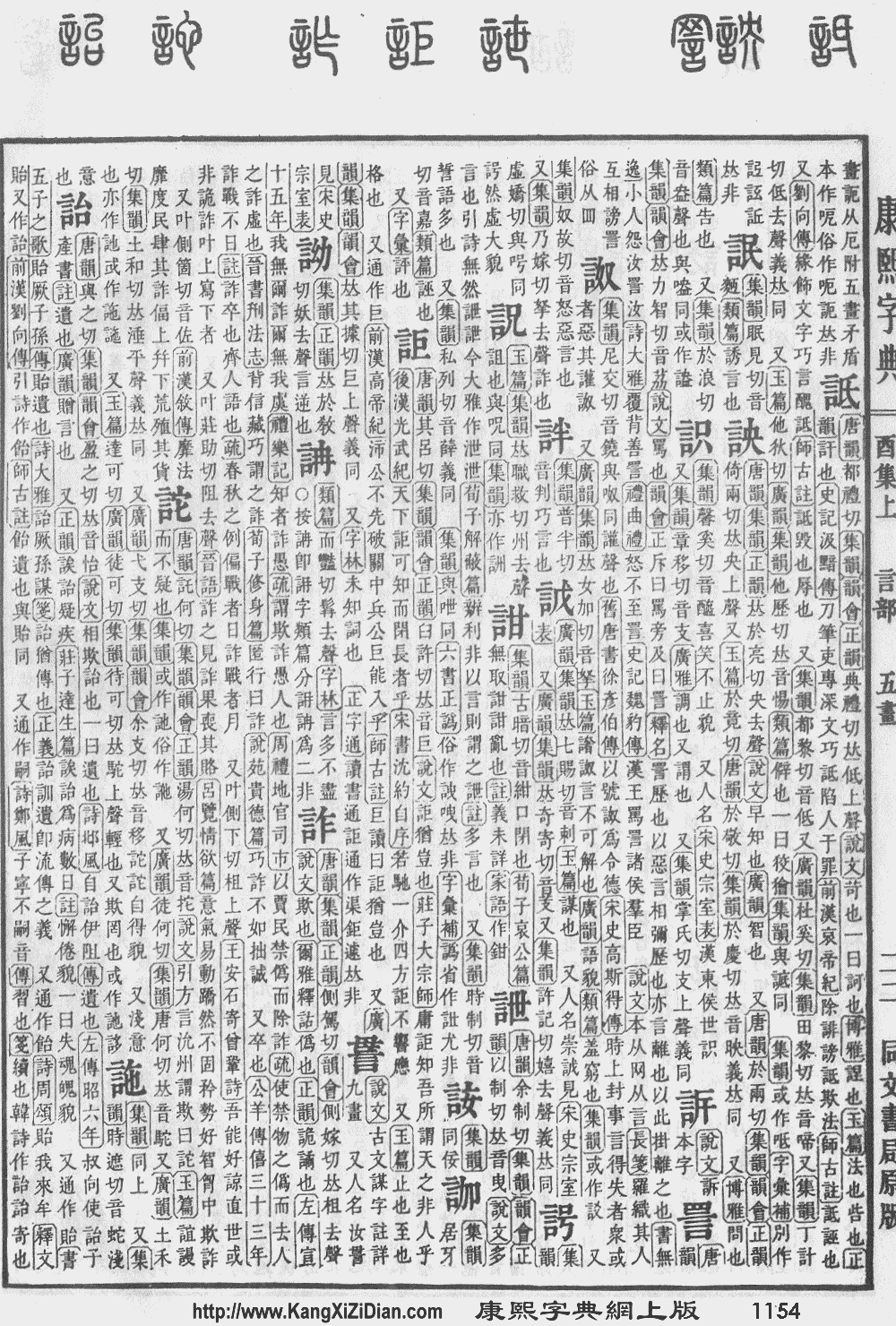
  • Kangxi Dictionary: page 1154, character 6
  • Dai Kanwa Jiten: character 35360
  • Dae Jaweon: page 1620, character 9
  • Hanyu Da Zidian (first edition): volume 6, page 3954, character 5
  • Unihan data for U+8A48

Chinese

simp. and trad.
詈

Glyph origin

Ideogrammic compound (會意/会意) : 网 (“net”) + 言 (“speech; word”).

Etymology

(This etymology is missing or incomplete. Please add to it, or discuss it at the Etymology scriptorium.)

Pronunciation


Note:
  • Xiamen, Quanzhou, Zhangzhou:
    • lóe/lé - vernacular;
    • lī - literary.
      Note:
      • loi3 - vernacular;
      • li3 - literary.
        • Wu
          • (Shanghai):
            • Wugniu: 6li
            • MiniDict: li去
            • Wiktionary Romanisation (Shanghai): 3li
            • Sinological IPA (Shanghai): /li²³/

Rime
Character 詈
Reading # 1/1
Initial (聲) 來 (37)
Final (韻) 支 (11)
Tone (調) Departing (H)
Openness (開合) Open
Division (等) III
Fanqie 力智切
Baxter ljeH
Reconstructions
Zhengzhang
Shangfang
/liᴇH/
Pan
Wuyun
/liɛH/
Shao
Rongfen
/ljɛH/
Edwin
Pulleyblank
/liə̆H/
Li
Rong
/lieH/
Wang
Li
/lǐeH/
Bernard
Karlgren
/lie̯H/
Expected
Mandarin
Reflex
lì
Expected
Cantonese
Reflex
lei6
Baxter–Sagart system 1.1 (2014)
Character 詈
Reading # 1/1
Modern
Beijing
(Pinyin)
lì
Middle
Chinese
‹ ljeH ›
Old
Chinese
/*C.raj-s/
English revile

Notes for Old Chinese notations in the Baxter–Sagart system:

* Parentheses "()" indicate uncertain presence;
* Square brackets "[]" indicate uncertain identity, e.g. *[t] as coda may in fact be *-t or *-p;
* Angle brackets "<>" indicate infix;
* Hyphen "-" indicates morpheme boundary;

* Period "." indicates syllable boundary.
Zhengzhang system (2003)
Character 詈
Reading # 1/1
No. 7990
Phonetic
component
詈
Rime
group
歌
Rime
subdivision
1
Corresponding
MC rime
詈
Old
Chinese
/*rals/

Definitions

詈

  1. (literary or Northern Min, Hokkien) to curse; to scold; to abuse verbally

Synonyms

Compounds

  • 交詈聚唾
  • 刺詈
  • 叱詈
  • 咒詈
  • 嘲詈
  • 忿詈
  • 怨詈
  • 惡言詈辭/恶言詈辞
  • 斥詈
  • 歐詈/欧詈
  • 毆詈/殴詈
  • 毒詈
  • 眾口交詈/众口交詈
  • 瞋詈
  • 穢詈/秽詈
  • 罵詈/骂詈
  • 肆言詈辱
  • 肆詈
  • 訕詈/讪詈
  • 詈侮
  • 詈夷為跖/詈夷为跖
  • 詈罵/詈骂 (lìmà)
  • 詈言
  • 詈訾
  • 詈詞/詈词 (lìcí)
  • 詆詈/诋詈
  • 詛詈/诅詈
  • 訶詈/诃詈
  • 訽詈/𰵛詈
  • 詈詛/詈诅
  • 詈詰/詈诘
  • 詈詬/詈诟
  • 詈語/詈语 (lìyǔ)
  • 詈責/詈责
  • 詈辭/詈辞
  • 詈辱
  • 詬詈/诟詈
  • 謗詈/谤詈
  • 責詈/责詈
  • 辱詈
  • 鄰女詈人/邻女詈人
  • 醜詈/丑詈
  • 顛詈/颠詈
  • 鬥詈/斗詈

Japanese

Kanji

詈

(uncommon “Hyōgai” kanji)

  1. to ridicule, to insult, to abuse

Readings

  • Kan-on: り (ri)
  • On: り (ri)
  • Kun: ののしる (nonoshiru, 詈る)

Vietnamese

Han character

詈: Hán Nôm readings: lị, lìa

  1. This term needs a translation to English. Please help out and add a translation, then remove the text {{rfdef}}.
This article is issued from Wiktionary. The text is licensed under Creative Commons - Attribution - Sharealike. Additional terms may apply for the media files.