辴
| ||||||||
Translingual
Han character
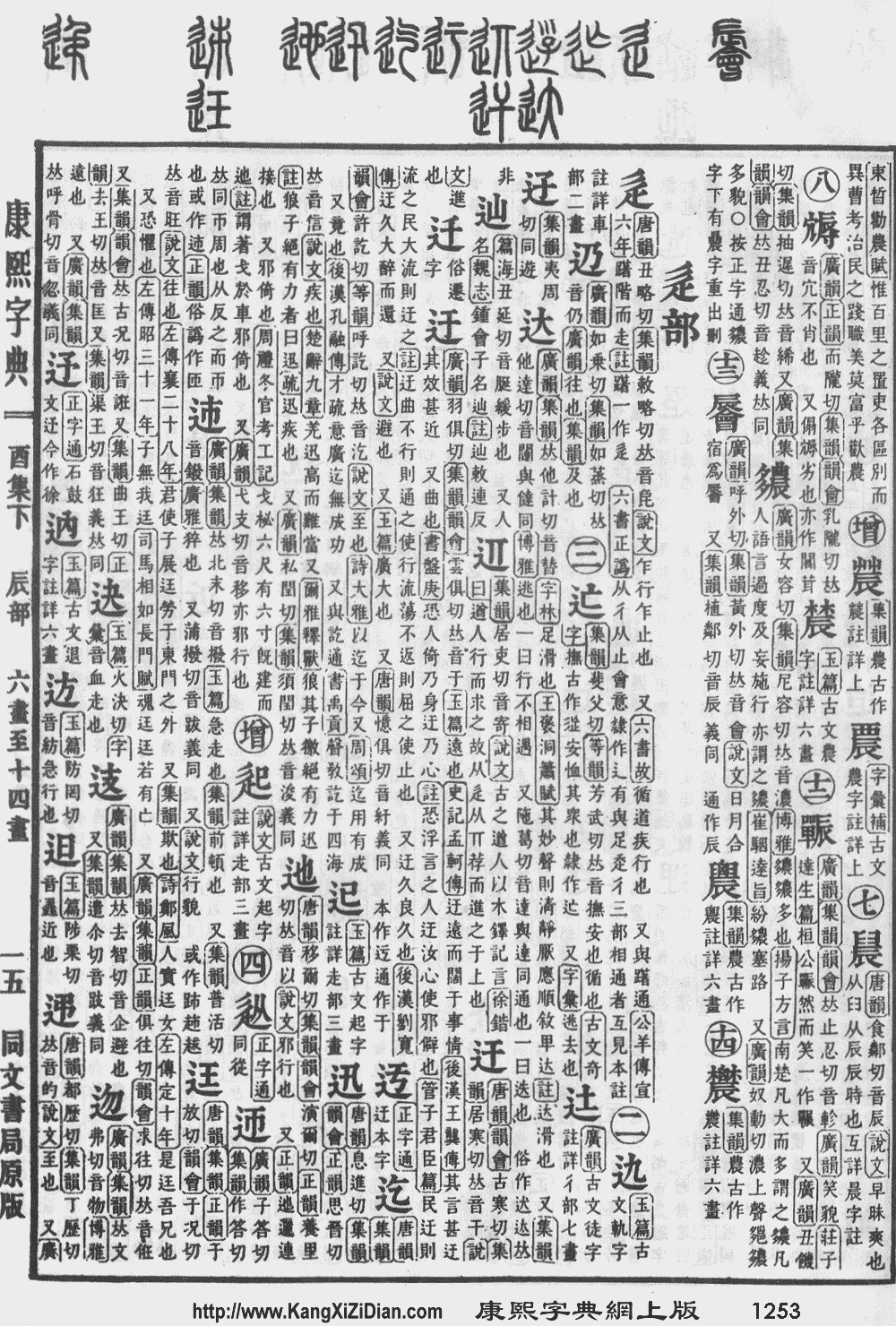
辴 (Kangxi radical 161, 辰+12, 19 strokes, cangjie input 口十一一女 (RJMMV), four-corner 61532, composition ⿰單辰)
References
- Kangxi Dictionary: page 1253, character 6
- Dai Kanwa Jiten: character 38694
- Dae Jaweon: page 1734, character 6
- Hanyu Da Zidian (first edition): volume 6, page 3608, character 7
- Unihan data for U+8FB4
Chinese
| simp. and trad. |
辴 | |
|---|---|---|
Glyph origin
Characters in the same phonetic series (辰) (Zhengzhang, 2003)
| Old Chinese | |
|---|---|
| 辴 | *tʰɯl, *tʰɯnʔ, *tʰɯn |
| 屒 | *tɯnʔ, *djɯn |
| 振 | *tjɯn, *tjɯns |
| 侲 | *tjɯn, *tjɯn |
| 桭 | *tjɯn, *djɯn |
| 唇 | *tjɯn, *ɦljun |
| 帪 | *tjɯn |
| 賑 | *tjɯnʔ, *tjɯns |
| 裖 | *tjɯnʔ |
| 敐 | *tjɯnʔ, *djɯn |
| 震 | *tjɯn |
| 娠 | *tjɯns, *hljɯn |
| 蜃 | *djɯns, *djɯnʔ, *djins |
| 辰 | *djɯn |
| 晨 | *djɯn, *ɦljɯn |
| 宸 | *djɯn |
| 鷐 | *djɯn |
| 麎 | *djɯn |
| 祳 | *djɯnʔ |
| 脤 | *djɯnʔ |
| 鋠 | *djɯnʔ |
| 磭 | *ŋrɯnʔ, *ŋ̊ʰjaɡ, *ŋaɡ |
| 陙 | *djun |
| 脣 | *ɦljun |
| 漘 | *ɦljun |
Etymology
Pronunciation
This article is issued from Wiktionary. The text is licensed under Creative Commons - Attribution - Sharealike. Additional terms may apply for the media files.