鉈
See also: 铊
| ||||||||
Translingual
Han character
鉈 (Kangxi radical 167, 金+5, 13 strokes, cangjie input 金十心 (CJP), four-corner 83111, composition ⿰釒它)
References
- Kangxi Dictionary: page 1300, character 18
- Dai Kanwa Jiten: character 40289
- Dae Jaweon: page 1802, character 30
- Hanyu Da Zidian (first edition): volume 6, page 4191, character 3
- Unihan data for U+9248
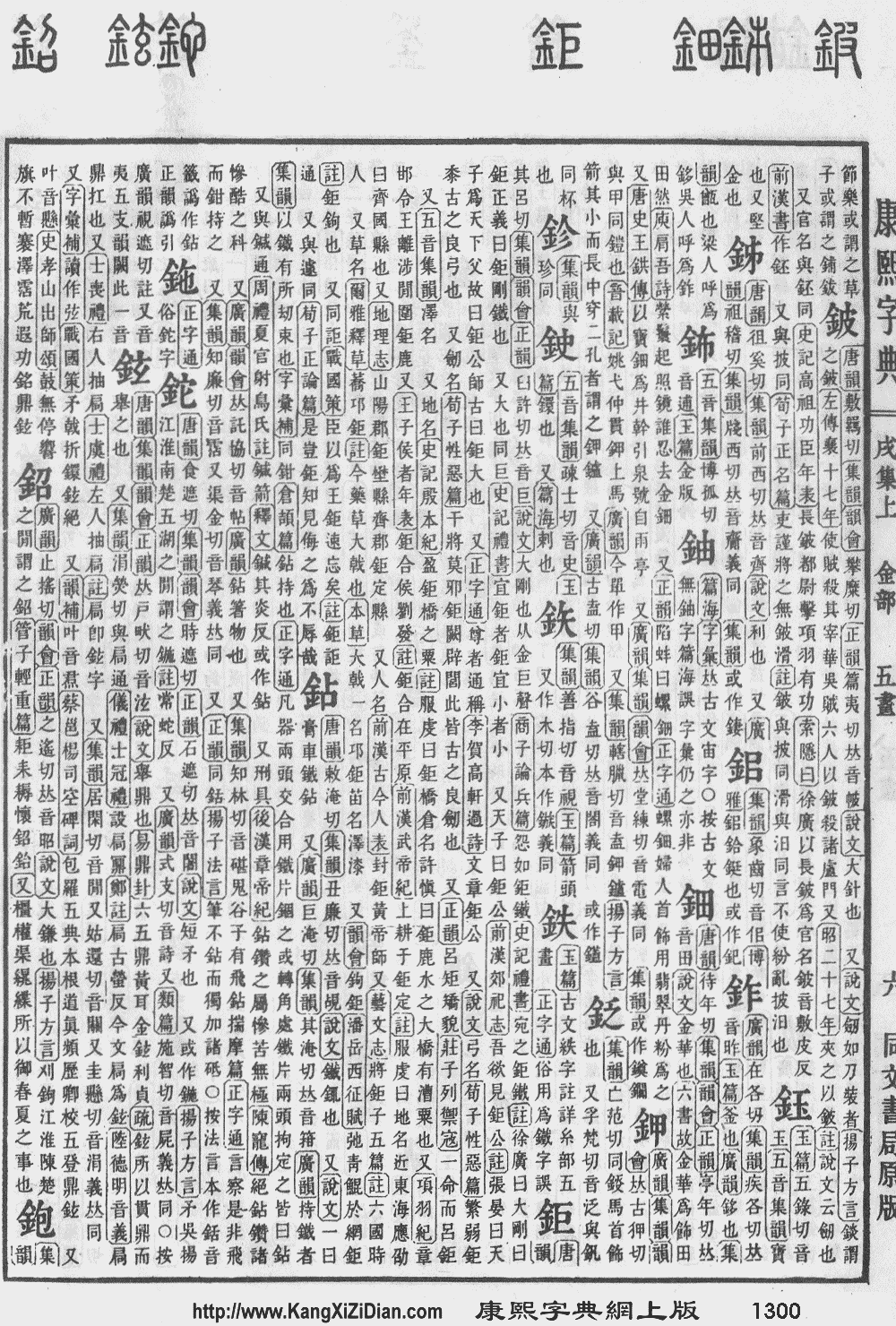
Chinese
Glyph origin
| Historical forms of the character 鉈 | |||
|---|---|---|---|
| Western Zhou | Warring States | Shuowen Jiezi (compiled in Han) | Liushutong (compiled in Ming) |
| Bronze inscriptions | Chu slip and silk script | Small seal script | Transcribed ancient scripts |
 |
 |
 |
 |
Characters in the same phonetic series (它) (Zhengzhang, 2003)
Pronunciation
Etymology 2
| For pronunciation and definitions of 鉈 – see 匜 (“yi”). (This character is a variant form of 匜). |
Pronunciation
Compounds
- 躧匾稱鉈/𰸐匾称铊
Pronunciation
References
- Dictionary of Chinese Character Variants (教育部異體字字典), B05298
- “鉈”, in 漢語多功能字庫 (Multi-function Chinese Character Database), 香港中文大學 (the Chinese University of Hong Kong), 2014–
Japanese
Etymology
| Kanji in this term |
|---|
| 鉈 |
| なた Hyōgaiji |
| kun’yomi |
| Alternative spelling |
|---|
| 𨦈 (rare) |
From Old Japanese 鉈 (nata). Appears in the Nihon Shoki of 720 CE.[1]
Possibly related to Old Japanese な (na, “blade, edge”).
Possibly cognate with Korean 낫 (nat), Korean 나대 (nadae) of similar meanings as Japanese 鉈 (nata).
Noun
鉈 • (nata)
- a hatchet, a billhook, a machete, a froe: a broad term for a one-handed thick-bladed cutting tool, generally used for cutting through wood or vegetation; the blade may be in various shapes depending on intended use, either straight or curved, long or short
- (sumo) a technique of bending one's elbow and attacking an opponent's throat or chest with one's forearm (so called for the way the bent-elbow arm shape resembles certain varieties of nata woodworking tools)
Derived terms
Derived terms
- 鉈彫 (natabori)
- 鉈豆 (natamame, “sword bean or Canavalia gladiata”)
- 鉈鎌 (natagama)
- 剣鉈 (kennata)
- 薙刀 (naginata)
References
- Shōgaku Tosho (1988) 国語大辞典(新装版) [Unabridged Dictionary of Japanese (Revised Edition)] (in Japanese), Tōkyō: Shogakukan, →ISBN
- Matsumura, Akira, editor (2006), 大辞林 [Daijirin] (in Japanese), Third edition, Tōkyō: Sanseidō, →ISBN
- NHK Broadcasting Culture Research Institute, editor (1998), NHK日本語発音アクセント辞典 [NHK Japanese Pronunciation Accent Dictionary] (in Japanese), Tōkyō: NHK Publishing, →ISBN
- Kindaichi, Kyōsuke et al., editors (1997), 新明解国語辞典 [Shin Meikai Kokugo Jiten] (in Japanese), Fifth edition, Tōkyō: Sanseidō, →ISBN
- Matsumura, Akira (1995) 大辞泉 [Daijisen] (in Japanese), First edition, Tōkyō: Shogakukan, →ISBN
- “鉈”, in 世界大百科事典 第2版 (Sekai Dai-hyakka Jiten Dainihan, “Heibonsha World Encyclopedia Second Edition”) (in Japanese), Tōkyō: Heibonsha, 1998
This article is issued from Wiktionary. The text is licensed under Creative Commons - Attribution - Sharealike. Additional terms may apply for the media files.