鮏
| ||||||||
Translingual
Han character
鮏 (Kangxi radical 195, 魚+5, 16 strokes, cangjie input 弓火竹手一 (NFHQM), composition ⿰魚生)
References
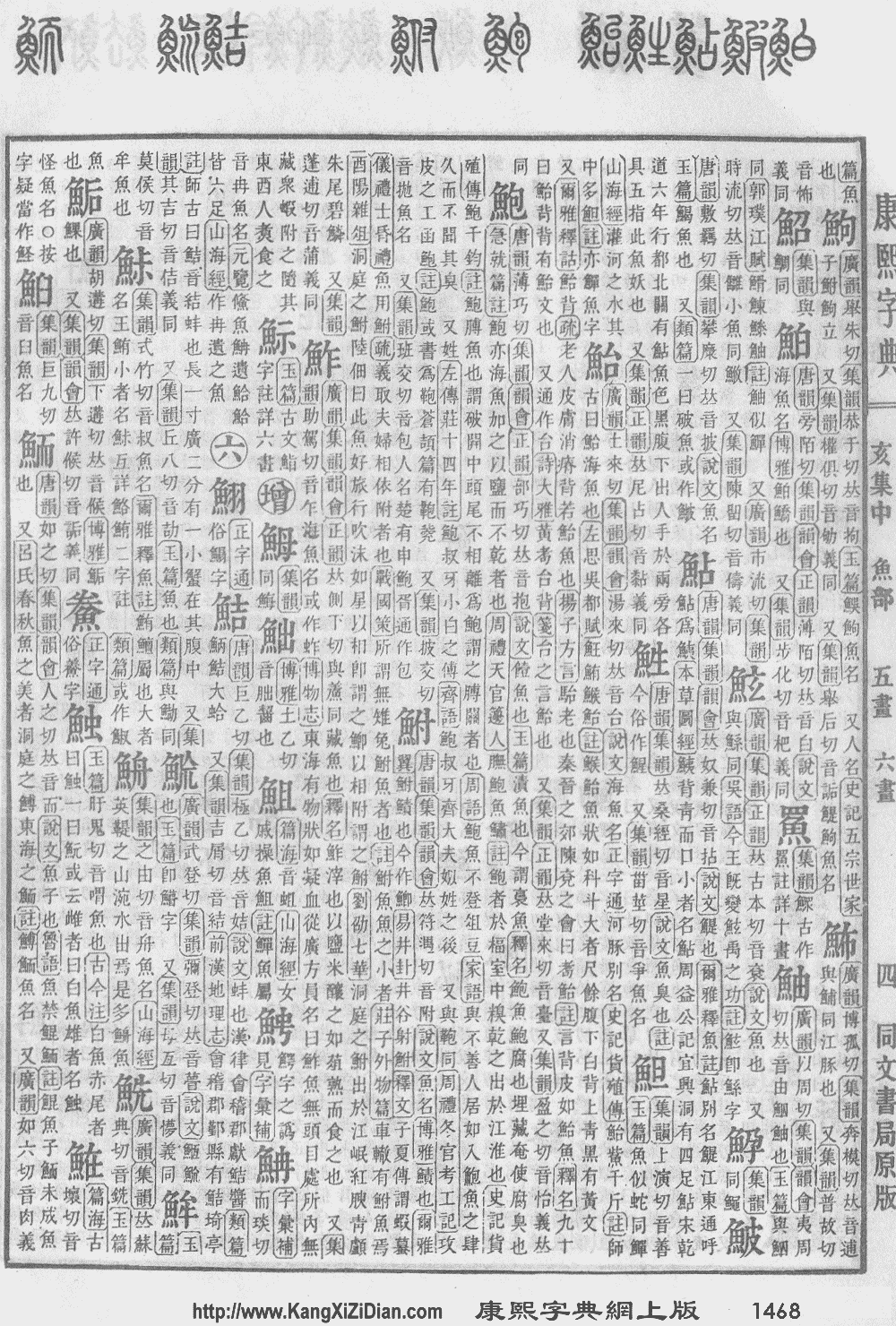
- Kangxi Dictionary: page 1468, character 11
- Dai Kanwa Jiten: character 46071
- Dae Jaweon: page 2001, character 17
- Hanyu Da Zidian (first edition): volume 7, page 4681, character 12
- Unihan data for U+9B8F
Chinese
| trad. | 鮏 | |
|---|---|---|
| simp. | 𱇡 | |
| alternative forms | 鯹 | |
Glyph origin
| Old Chinese | |
|---|---|
| 猜 | *sʰlɯː |
| 輤 | *sʰleːns |
| 綪 | *sʰleːns, *ʔsreːŋ |
| 倩 | *sʰleːns, *sʰleŋs |
| 棈 | *sʰleːns |
| 蒨 | *sʰeːns |
| 篟 | *sʰeːns |
| 生 | *sʰleːŋ, *sreŋs |
| 牲 | *sreŋ |
| 笙 | *sreŋ |
| 甥 | *sreŋ |
| 鉎 | *sreŋ, *sleːŋ |
| 珄 | *sreŋ |
| 鼪 | *sreŋ, *sreŋs |
| 猩 | *sreŋ, *seːŋ |
| 狌 | *sreŋ |
| 眚 | *sreŋʔ |
| 貹 | *sreŋs |
| 崝 | *zreːŋ |
| 精 | *ʔsleŋ, *ʔsleŋs |
| 菁 | *ʔsleŋ |
| 鶄 | *ʔsleŋ, *sʰleːŋ |
| 蜻 | *ʔsleŋ, *sʰleːŋ |
| 鼱 | *ʔsleŋ |
| 婧 | *ʔsleŋ, *zleŋs, *zleŋʔ |
| 睛 | *ʔsleŋ, *sʰleŋʔ |
| 箐 | *ʔsleŋ |
| 聙 | *ʔsleŋ |
| 旌 | *ʔsleŋ |
| 清 | *sʰleŋ |
| 圊 | *sʰleŋ |
| 請 | *sʰleŋʔ, *zleŋs, *zleŋ |
| 凊 | *sʰleŋs |
| 䝼 | *zleŋs, *zleŋ |
| 靚 | *zleŋs |
| 情 | *zleŋ |
| 晴 | *zleŋ |
| 夝 | *zleŋ |
| 靜 | *zleŋʔ |
| 靖 | *zleŋʔ |
| 睲 | *seŋʔ, *seːŋs |
| 惺 | *seŋʔ, *seːŋ |
| 性 | *sleŋs |
| 姓 | *sleŋs |
| 靗 | *l̥ʰeŋs |
| 鯖 | *ʔljeŋ, *sʰleːŋ |
| 青 | *sʰleːŋ |
| 靘 | *sʰleːŋ, *sʰleːŋs |
| 掅 | *sʰleːŋs |
| 胜 | *sleːŋ |
| 曐 | *sleːŋ |
| 星 | *sleːŋ |
| 鮏 | *sleːŋ |
| 腥 | *seːŋ, *seːŋs |
| 鯹 | *seːŋ |
| 醒 | *seːŋ, *seːŋʔ, *seːŋs |
| 篂 | *seːŋ |
Pronunciation
Definitions
鮏
Japanese
Readings
Etymology 1
| Kanji in this term |
|---|
| 鮏 |
| さけ Hyōgaiji |
| kun’yomi |
Originally borrowed from Ainu サㇰイベ (sak ibe, “salmon”, literally “summer + eat”, in reference to how the fish would be caught and eaten in the summer), or possible alternative unattested compound サㇰエㇷ゚ (sak ep, literally “summer + food”).
Alternative forms
- 鮭 (most common)
Etymology 2
| Kanji in this term |
|---|
| 鮏 |
| しゃけ Hyōgaiji |
| kun’yomi |
Originally borrowed from Ainu シャケンベ (shakembe),[3] apparently as a dialectal variation or corruption of Ainu サㇰイベ (sak ibe, “salmon”, literally “summer + eat”), or of possible alternative unattested compound サㇰエㇷ゚ (sak ep, literally “summer + food”).
Alternative forms
- 鮭 (most common)
Etymology 3
| Kanji in this term |
|---|
| 鮏 |
| なまぐさ Hyōgaiji |
| kun’yomi |
Root stem of adjective 生臭い, 腥い (namagusai, “smelling of fish, meat, or blood; stinky, bad-smelling”),[3][1] itself a compound of 生 (nama, “raw, uncooked”) + 臭い (kusa, “stink, bad smell”, root stem of 臭い kusai, “stinky, bad-smelling”). The kusa changes to gusa as an instance of rendaku (連濁)..
Alternative forms
- 生臭 (most common), 腥 (rare)
References
- Matsumura, Akira, editor (2006), 大辞林 [Daijirin] (in Japanese), Third edition, Tōkyō: Sanseidō, →ISBN
- Kindaichi, Kyōsuke et al., editors (1997), 新明解国語辞典 [Shin Meikai Kokugo Jiten] (in Japanese), Fifth edition, Tōkyō: Sanseidō, →ISBN
- Shōgaku Tosho (1988) 国語大辞典(新装版) [Unabridged Dictionary of Japanese (Revised Edition)] (in Japanese), Tōkyō: Shogakukan, →ISBN