姓
| ||||||||
Translingual
| Stroke order | |||
|---|---|---|---|
 | |||
| Stroke order (Japan) | |||
|---|---|---|---|
 | |||
Han character
姓 (Kangxi radical 38, 女+5, 8 strokes, cangjie input 女竹手一 (VHQM), four-corner 45410, composition ⿰女生)
References
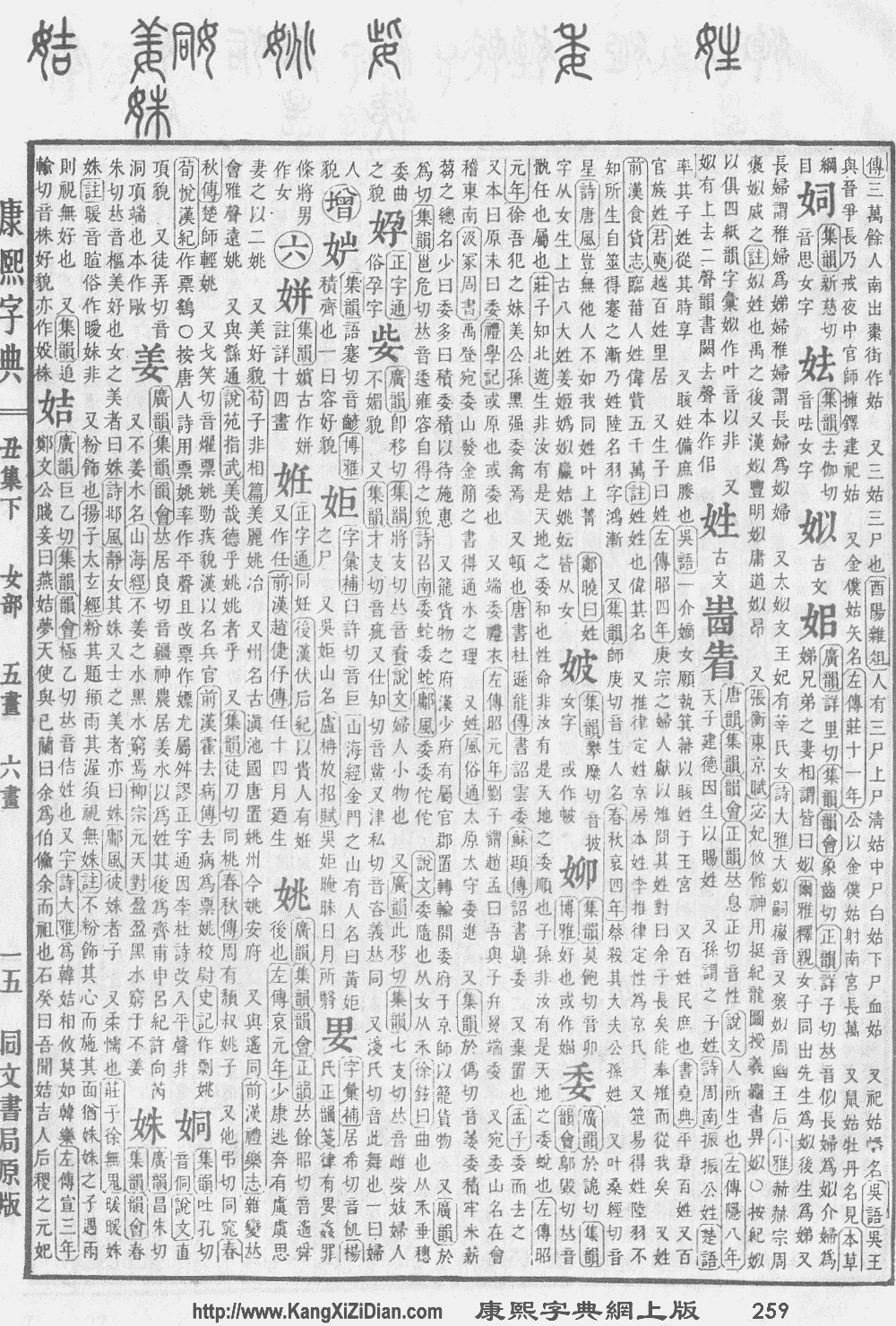
- Kangxi Dictionary: page 259, character 5
- Dai Kanwa Jiten: character 6178
- Dae Jaweon: page 524, character 9
- Hanyu Da Zidian (first edition): volume 2, page 1037, character 12
- Unihan data for U+59D3
Chinese
| trad. | 姓 | |
|---|---|---|
| simp. # | 姓 | |
| alternative forms | 𤯕 𤯣 𤯧 𤯬 | |
Glyph origin
| Old Chinese | |
|---|---|
| 猜 | *sʰlɯː |
| 輤 | *sʰleːns |
| 綪 | *sʰleːns, *ʔsreːŋ |
| 倩 | *sʰleːns, *sʰleŋs |
| 棈 | *sʰleːns |
| 蒨 | *sʰeːns |
| 篟 | *sʰeːns |
| 生 | *sʰleːŋ, *sreŋs |
| 牲 | *sreŋ |
| 笙 | *sreŋ |
| 甥 | *sreŋ |
| 鉎 | *sreŋ, *sleːŋ |
| 珄 | *sreŋ |
| 鼪 | *sreŋ, *sreŋs |
| 猩 | *sreŋ, *seːŋ |
| 狌 | *sreŋ |
| 眚 | *sreŋʔ |
| 貹 | *sreŋs |
| 崝 | *zreːŋ |
| 精 | *ʔsleŋ, *ʔsleŋs |
| 菁 | *ʔsleŋ |
| 鶄 | *ʔsleŋ, *sʰleːŋ |
| 蜻 | *ʔsleŋ, *sʰleːŋ |
| 鼱 | *ʔsleŋ |
| 婧 | *ʔsleŋ, *zleŋs, *zleŋʔ |
| 睛 | *ʔsleŋ, *sʰleŋʔ |
| 箐 | *ʔsleŋ |
| 聙 | *ʔsleŋ |
| 旌 | *ʔsleŋ |
| 清 | *sʰleŋ |
| 圊 | *sʰleŋ |
| 請 | *sʰleŋʔ, *zleŋs, *zleŋ |
| 凊 | *sʰleŋs |
| 䝼 | *zleŋs, *zleŋ |
| 靚 | *zleŋs |
| 情 | *zleŋ |
| 晴 | *zleŋ |
| 夝 | *zleŋ |
| 靜 | *zleŋʔ |
| 靖 | *zleŋʔ |
| 睲 | *seŋʔ, *seːŋs |
| 惺 | *seŋʔ, *seːŋ |
| 性 | *sleŋs |
| 姓 | *sleŋs |
| 靗 | *l̥ʰeŋs |
| 鯖 | *ʔljeŋ, *sʰleːŋ |
| 青 | *sʰleːŋ |
| 靘 | *sʰleːŋ, *sʰleːŋs |
| 掅 | *sʰleːŋs |
| 胜 | *sleːŋ |
| 曐 | *sleːŋ |
| 星 | *sleːŋ |
| 鮏 | *sleːŋ |
| 腥 | *seːŋ, *seːŋs |
| 鯹 | *seːŋ |
| 醒 | *seːŋ, *seːŋʔ, *seːŋs |
| 篂 | *seːŋ |
Phono-semantic compound (形聲/形声, OC *sleŋs) : semantic 女 (“woman; female”) + phonetic 生 (OC *sʰleːŋ, *sreŋs).
Etymology
Specialised form of 性 (xìng): “human nature; what is inborn” > “surname; clan name”.
Pronunciation
Definitions
姓
- surname; family name; clan name
- to have the surname of
- 黃帝者,少典之子,姓公孫,名曰軒轅。 [Classical Chinese, trad.]
- From: The Records of the Grand Historian, by Sima Qian, c. 91 BCE, translated based on Herbert J. Allen's version
- Huángdì zhě, Shàodiǎn zhī zǐ, xìng Gōngsūn, míng yuē Xuānyuán. [Pinyin]
- The Yellow Emperor (Huangti) was the son of Shaotien; he [was originally] surnamed Kungsun, and his prename (given name at birth) was Hsienyüan.
黄帝者,少典之子,姓公孙,名曰轩辕。 [Classical Chinese, simp.]
- (figurative, often officialese) to belong to; to be classified as
- 我們的研究並非要急著爭論它究竟姓「客」還是姓「粵」,我們更感興趣的是這種混合語究竟是如何形成的。 [MSC, trad.]
- From: 2014, 周佳凡 (Zhou Jiafan), 《深圳坪山占米话研究》 (thesis), Xiamen: Xiamen University, page I
- Wǒmen de yánjiū bìngfēi yào jízhe zhēnglùn tā jiūjìng xìng “kè” háishì xìng “yuè”, wǒmen gèng gǎn xìngqù de shì zhè zhǒng hùnhéyǔ jiūjìng shì rúhé xíngchéng de. [Pinyin]
- (please add an English translation of this usage example)
我们的研究并非要急着争论它究竟姓「客」还是姓「粤」,我们更感兴趣的是这种混合语究竟是如何形成的。 [MSC, simp.]- 還有一點值得說的是,黃河「姓黃」,黃河畢竟流經黃土高原,沒有必要追求絕對的清澈。 [MSC, trad.]
- From: 2020 November 28, 《以考古之光 照亮文明深处与细节——中国考古与历史主题新书访谈》, in 《光明日报》 [Guangming Daily], →ISSN, page 09
- Háiyǒu yī diǎn zhídé shuō de shì, Huáng Hé “xìng huáng”, Huáng Hé bìjìng liújīng Huángtǔ Gāoyuán, méiyǒu bìyào zhuīqiú juéduì de qīngchè. [Pinyin]
- (please add an English translation of this usage example)
还有一点值得说的是,黄河「姓黄」,黄河毕竟流经黄土高原,没有必要追求绝对的清澈。 [MSC, simp.]
- a surname
Compounds
- 一姓
- 上姓 (shàngxìng)
- 九姓
- 二姓
- 五姓
- 五姓蕃
- 他姓
- 仝姓
- 代姓
- 俗姓
- 假名托姓
- 備百姓/备百姓
- 億姓/亿姓
- 允姓
- 兆姓
- 內姓/内姓
- 兩姓/两姓
- 兩姓之好/两姓之好
- 八姓
- 公姓
- 共姓
- 冒姓 (màoxìng)
- 出姓
- 別姓/别姓
- 十姓百名
- 十姓部落
- 千家姓
- 受姓
- 右姓
- 同姓 (tóngxìng)
- 名姓 (míngxìng)
- 合姓
- 吹律定姓
- 命姓
- 單姓/单姓 (dānxìng)
- 四姓
- 四姓小侯
- 國姓/国姓 (guóxìng)
- 國姓爺/国姓爷 (Guóxìngyé)
- 圍姓/围姓
- 土姓
- 士姓
- 外姓 (wàixìng)
- 大姓 (dàxìng)
- 夫姓
- 姓名 (xìngmíng)
- 姓名條例/姓名条例
- 姓名權/姓名权
- 姓名牌 (xìngmíngpái)
- 姓字
- 姓族
- 姓望
- 姓氏 (xìngshì)
- 姓第
- 姓系
- 姓號/姓号
- 子姓
- 字姓
- 宗姓
- 客姓
- 寓姓
- 尊姓 (zūnxìng)
- 尊姓大名 (zūnxìngdàmíng)
- 小姓 (xiǎoxìng)
- 小百姓
- 屬姓/属姓
- 希姓
- 常姓
- 平等百姓
- 平章百姓
- 平頭百姓/平头百姓
- 庶姓
- 強姓/强姓
- 得姓
- 復姓/复姓 (fùxìng)
- 指名道姓 (zhǐmíngdàoxìng)
- 指樹為姓/指树为姓
- 提名道姓
- 揚名顯姓/扬名显姓
- 改名換姓/改名换姓 (gǎimínghuànxìng)
- 改名易姓
- 改姓易代
- 改姓更名
- 改朝換姓/改朝换姓
- 族姓
- 易姓
- 晐姓
- 更名改姓
- 更姓
- 更姓改物
- 有名有姓 (yǒumíngyǒuxìng)
- 望姓
- 本姓
- 東京六姓/东京六姓
- 柳車變姓/柳车变姓
- 正姓
- 氏姓
- 漢姓/汉姓 (hànxìng)
- 甲姓
- 異姓/异姓 (yìxìng)
- 百姓
- 百姓之心
- 百姓公
- 百家姓 (Bǎijiāxìng)
- 萬姓/万姓 (wànxìng)
- 萬姓統譜/万姓统谱
- 稱名道姓/称名道姓
- 種姓/种姓 (zhǒngxìng)
- 素姓
- 緣姓/缘姓
- 群姓
- 老百姓 (lǎobǎixìng)
- 臣姓
- 舊姓/旧姓 (jiùxìng)
- 著姓
- 裔姓
- 複姓/复姓 (fùxìng)
- 覆姓 (fùxìng)
- 記姓名/记姓名
- 詭姓/诡姓
- 諸姓/诸姓
- 變名易姓/变名易姓
- 豪姓
- 貴姓/贵姓 (guìxìng)
- 賤姓/贱姓
- 賜姓/赐姓 (cìxìng)
- 跟官咁耐唔知官姓乜
- 還姓/还姓
- 郡姓
- 都頭異姓/都头异姓
- 重姓
- 闈姓/闱姓
- 隱名埋姓/隐名埋姓
- 隱姓埋名/隐姓埋名 (yǐnxìngmáimíng)
- 雜姓/杂姓
- 革姓
- 頂名冒姓/顶名冒姓
- 題名道姓/题名道姓
- 顯姓/显姓
- 顯姓揚名/显姓扬名
- 風姓/风姓
- 高姓
- 黎民百姓
- 黑姓
- 鼎姓 (dǐngxìng)
Descendants
Others:
References
- “姓”, in 漢語多功能字庫 (Multi-function Chinese Character Database), 香港中文大學 (the Chinese University of Hong Kong), 2014–
- Dictionary of Chinese Character Variants (教育部異體字字典), A00909
- “Entry #3781”, in 臺灣閩南語常用詞辭典 [Dictionary of Frequently-Used Taiwan Minnan] (overall work in Mandarin and Hokkien), Ministry of Education, R.O.C., 2023.
Japanese
Compounds
- 姓氏 (shōji)
- 姓氏 (seishi)
- 姓階制度 (seikaiseido)
- 姓族 (seizoku)
- 姓名 (seimei)
- 五姓 (goshō)
- 四姓 (shishō)
- 素姓, 種姓 (sujō)
- 俗姓 (zokushō)
- 百姓 (hyakushō)
- 異姓 (isei)
- 易姓 (ekisei)
- 改姓 (kaisei)
- 外姓 (gaisei)
- 下姓 (kasei)
- 旧姓 (kyūsei)
- 現姓 (gensei)
- 国姓 (kokusei)
- 三姓 (sansei)
- 四種姓 (shishusei)
- 四姓 (shisei)
- 氏姓 (shisei)
- 賜姓 (shisei)
- 俗姓 (zokusei)
- 他姓 (tasei)
- 同姓 (dōsei)
- 万姓 (bansei)
- 百姓 (hyakusei)
- 複姓 (fukusei)
- 別姓 (bessei)
- 本姓 (honsei)
- 五姓田 (Goseda)
- 百姓 (ōmitakara)
Etymology 1
| Kanji in this term |
|---|
| 姓 |
| かばね Grade: S |
| kun’yomi |
From Old Japanese.[1][2]
Ultimate derivation unclear. Some theories derive this as a Japanese compound of 株 (kabu, “stock, root”) + 根 (ne, “root, origin”) or 名 (na, “name”). However, the required /u/ → /a/ sound shift would be unusual.
Another thought is that this might be a borrowing from, or somehow otherwise related to, Korean 골품 (golpum), a Sino-Korean term also spelled 骨品 (literally “bones + goods”), the name for a kind of kinship hierarchy that was prevalent in the Silla kingdom. This latter theory and its related “bone” sense might also account for the homophony with 屍 (kabane, “corpse, dead body”).
Noun
姓 • (kabane)
- a clan
- Synonym: 氏 (uji)
- (historical) a kind of hereditary title bestowed to clans in ancient Japan
Derived terms
- 姓書 (kabane-gaki): (historical) someone's full name, written out with the status of their clan appended
- 姓名 (kabane na, “clan name”)
- 八色の姓 (Yakusa no Kabane), 八色の姓 (Hasshiki no Kabane): a specific set of eight kabane titles promulgated by Emperor Tenmu in 675 CE
Etymology 2
| Kanji in this term |
|---|
| 姓 |
| せい Grade: S |
| on’yomi |
From Middle Chinese 姓 (MC sjengH). The kan'on, so likely a later borrowing. Compare modern Min Nan reading sèⁿ.
Derived terms
- 八姓 (hassei)
Etymology 3
| Kanji in this term |
|---|
| 姓 |
| しょう Grade: S |
| on’yomi |
/siau/ → /ɕjɔː/ → /ɕoː/
From Middle Chinese 姓 (MC sjengH). The goon, so likely the initial borrowing. Compare modern Hakka reading siang.
This reading is less common than sei above.
Etymology 4
| Kanji in this term |
|---|
| 姓 |
| しょう > そう Grade: S |
| irregular |
A shift from shō above to use the 直音 (chokuon, “"straight" pronunciation”, dropping out any /j/ or /w/ glides).[1]
This reading is not used in modern Japanese, and is only found in historical texts, such as the Utsubo Monogatari from the late 900s.
Pronunciation
- IPA(key): [so̞ː]
References
- Shōgaku Tosho (1988) 国語大辞典(新装版) [Unabridged Dictionary of Japanese (Revised Edition)] (in Japanese), Tōkyō: Shogakukan, →ISBN
- Matsumura, Akira, editor (2006), 大辞林 [Daijirin] (in Japanese), Third edition, Tōkyō: Sanseidō, →ISBN
Further reading
- Etymology at Gogen-Allguide (in Japanese)
Korean
Etymology
From Middle Chinese 姓 (MC sjengH). Recorded as Middle Korean 셔ᇰ (syeng) (Yale: syeng) in Hunmong Jahoe (訓蒙字會 / 훈몽자회), 1527.
Pronunciation
- (SK Standard/Seoul) IPA(key): [sʰɘ(ː)ŋ]
- Phonetic hangul: [성(ː)]
- Though still prescribed in Standard Korean, most speakers in both Koreas no longer distinguish vowel length.