鳴
| ||||||||
Translingual
Han character
鳴 (Kangxi radical 196, 鳥+3, 14 strokes, cangjie input 口竹日火 (RHAF), four-corner 67027, composition ⿰口鳥)
References
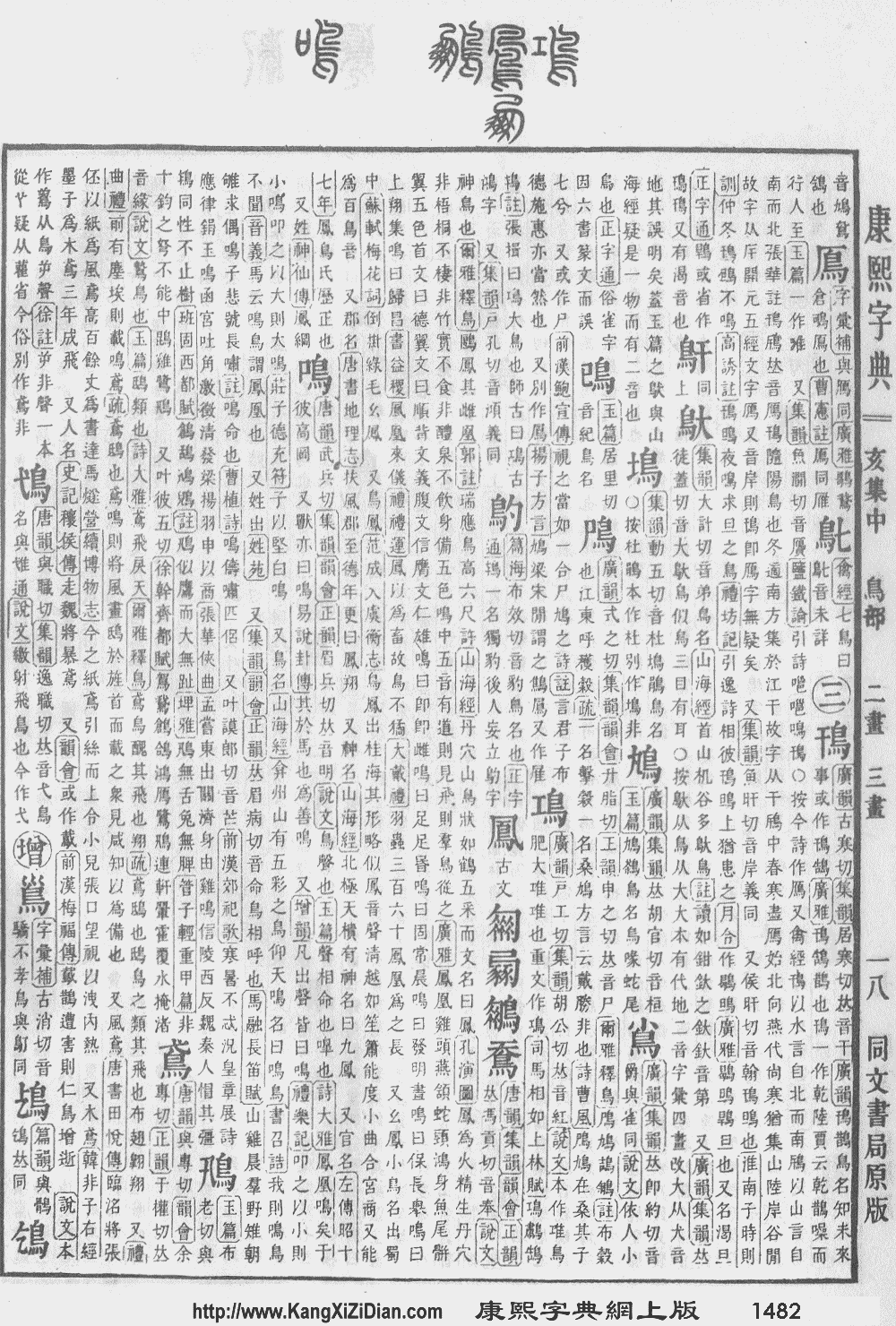
- Kangxi Dictionary: page 1482, character 18
- Dai Kanwa Jiten: character 46672
- Dae Jaweon: page 2014, character 5
- Hanyu Da Zidian (first edition): volume 7, page 4615, character 17
- Unihan data for U+9CF4
Chinese
| trad. | 鳴 | |
|---|---|---|
| simp. | 鸣 | |
Etymology
From Proto-Sino-Tibetan *mriŋ (“sound; noise; animal cry”); cognate with 鈴 (OC *reːŋ, “bell”), 笙 (OC *sreŋ), Burmese မြည် (mrany, “to make a sound”) (Schuessler, 2007; STEDT).
Pronunciation
Definitions
鳴
Synonyms
- (to express):
Compounds
- 一鳴驚人/一鸣惊人 (yīmíngjīngrén)
- 不平之鳴/不平之鸣 (bùpíngzhīmíng)
- 不平則鳴/不平则鸣 (bùpíngzémíng)
- 不平而鳴/不平而鸣
- 人頭畜鳴/人头畜鸣
- 共鳴/共鸣 (gòngmíng)
- 和鳴/和鸣
- 哀鳴/哀鸣 (āimíng)
- 喘鳴/喘鸣 (chuǎnmíng)
- 嘶鳴/嘶鸣
- 嚶鳴求友/嘤鸣求友
- 天籟自鳴/天籁自鸣
- 奏鳴曲/奏鸣曲 (zòumíngqǔ)
- 奏鳴曲式/奏鸣曲式 (zòumíngqǔshì)
- 女曰雞鳴/女曰鸡鸣
- 孤掌難鳴/孤掌难鸣
- 弄口鳴舌/弄口鸣舌
- 悲鳴/悲鸣 (bēimíng)
- 打鳴/打鸣 (dǎmíng)
- 擂鼓鳴金/擂鼓鸣金
- 朝陽鳴鳳/朝阳鸣凤
- 東鳴西應/东鸣西应
- 殿鐘自鳴/殿钟自鸣
- 氣鳴樂器/气鸣乐器
- 爭鳴/争鸣 (zhēngmíng)
- 牝雞晨鳴/牝鸡晨鸣
- 牝雞牡鳴/牝鸡牡鸣
- 狗盜雞鳴/狗盗鸡鸣
- 狐鳴狗盜/狐鸣狗盗
- 狐鳴魚書/狐鸣鱼书
- 琴瑟和鳴/琴瑟和鸣 (qínsèhémíng)
- 瓦釜之鳴/瓦釜之鸣
- 瓦釜雷鳴/瓦釜雷鸣
- 百家爭鳴/百家争鸣 (bǎijiāzhēngmíng)
- 百家齊鳴/百家齐鸣
- 篝火狐鳴/篝火狐鸣
- 耳鳴/耳鸣 (ěrmíng)
- 肚裡雷鳴/肚里雷鸣
- 肚轉腸鳴/肚转肠鸣
- 肥遯鳴高/肥遁鸣高
- 膜鳴樂器/膜鸣乐器
- 自鳴得意/自鸣得意 (zìmíngdéyì)
- 自鳴鐘/自鸣钟 (zìmíngzhōng)
- 蛙鳴/蛙鸣
- 蜂鳴器/蜂鸣器
- 蟲鳴水沸/虫鸣水沸
- 蟬鳴稻/蝉鸣稻
- 轟鳴/轰鸣 (hōngmíng)
- 重赴鹿鳴/重赴鹿鸣
- 金鼓雷鳴/金鼓雷鸣
- 金鼓齊鳴/金鼓齐鸣 (jīngǔ qí míng)
- 鏘鳴/锵鸣
- 鐘鳴漏盡/钟鸣漏尽
- 鐘鳴鼎食/钟鸣鼎食 (zhōngmíngdǐngshí)
- 長鳴/长鸣 (chángmíng)
- 雞鳴/鸡鸣 (jīmíng)
- 雞鳴問寢/鸡鸣问寝
- 雞鳴枕/鸡鸣枕
- 雞鳴犬吠/鸡鸣犬吠
- 雞鳴狗吠/鸡鸣狗吠
- 雞鳴狗盜/鸡鸣狗盗 (jīmínggǒudào)
- 雞鳴而起/鸡鸣而起
- 雷鳴/雷鸣 (léimíng)
- 雷鳴瓦釜/雷鸣瓦釜
- 風不鳴條/风不鸣条
- 驢鳴犬吠/驴鸣犬吠
- 鳴不平/鸣不平 (míngbùpíng)
- 鳴冤/鸣冤 (míngyuān)
- 鳴冤叫屈/鸣冤叫屈
- 鳴叫/鸣叫 (míngjiào)
- 鳴唱/鸣唱
- 鳴噪/鸣噪
- 鳴器/鸣器
- 鳴天鼓/鸣天鼓
- 鳴奏/鸣奏
- 鳴彈/鸣弹
- 鳴放/鸣放 (míngfàng)
- 鳴放運動/鸣放运动
- 鳴條/鸣条
- 鳴榔/鸣榔
- 鳴榔板/鸣榔板
- 鳴槍/鸣枪 (míngqiāng)
- 鳴沙/鸣沙
- 鳴沙山/鸣沙山 (Míngshāshān)
- 鳴炮/鸣炮 (míngpào)
- 鳴玉/鸣玉
- 鳴珂巷/鸣珂巷
- 鳴琴/鸣琴
- 鳴琴垂拱/鸣琴垂拱
- 鳴琴而治/鸣琴而治
- 鳴禽/鸣禽 (míngqín)
- 鳴笛/鸣笛 (míngdí)
- 鳴管/鸣管 (míngguǎn)
- 鳴蜩/鸣蜩
- 鳴謝/鸣谢 (míngxiè)
- 鳴謝啟事/鸣谢启事
- 鳴金/鸣金 (míngjīn)
- 鳴金擊鼓/鸣金击鼓
- 鳴金收兵/鸣金收兵
- 鳴鏑/鸣镝 (míngdí)
- 鳴鐘/鸣钟 (míngzhōng)
- 鳴鐘列鼎/鸣钟列鼎
- 鳴鑼/鸣锣 (míngluó)
- 鳴鑾/鸣銮
- 鳴鑼開道/鸣锣开道
- 鳴鞘/鸣鞘
- 鳴鞭/鸣鞭
- 鳴鞭電抹/鸣鞭电抹
- 鳴響/鸣响 (míngxiǎng)
- 鳴騶/鸣驺
- 鳴鳩/鸣鸠 (míngjiū)
- 鳴鳳/鸣凤 (Míngfèng)
- 鳴鳳朝陽/鸣凤朝阳
- 鳳鳴朝陽/凤鸣朝阳
- 鳴鼓大噪/鸣鼓大噪
- 鳴鼓而攻/鸣鼓而攻
- 鳴鼓而攻之/鸣鼓而攻之
- 鴻雁哀鳴/鸿雁哀鸣 (hóngyàn'āimíng)
- 鶴鳴/鹤鸣
- 鶴鳴之士/鹤鸣之士
- 鶴鳴九皋/鹤鸣九皋
- 鸞鳳和鳴/鸾凤和鸣
- 鹿鳴/鹿鸣
- 鹿鳴宴/鹿鸣宴 (lùmíngyàn)
- 黿鳴鱉應/鼋鸣鳖应
- 鼎食鳴鐘/鼎食鸣钟
- 鼓吹鳴蛙/鼓吹鸣蛙
- 鼙鼓雷鳴/鼙鼓雷鸣
- 龍躍鳳鳴/龙跃凤鸣 (lóngyuèfèngmíng)
References
- “鳴”, in 漢語多功能字庫 (Multi-function Chinese Character Database), 香港中文大學 (the Chinese University of Hong Kong), 2014–
Japanese
Readings
Compounds
Synonyms
Korean
Vietnamese
This article is issued from Wiktionary. The text is licensed under Creative Commons - Attribution - Sharealike. Additional terms may apply for the media files.