鵲
See also: 鹊
| ||||||||
Translingual
Han character
鵲 (Kangxi radical 196, 鳥+8, 19 strokes, cangjie input 廿日竹日火 (TAHAF), four-corner 47627, composition ⿰昔鳥)
References
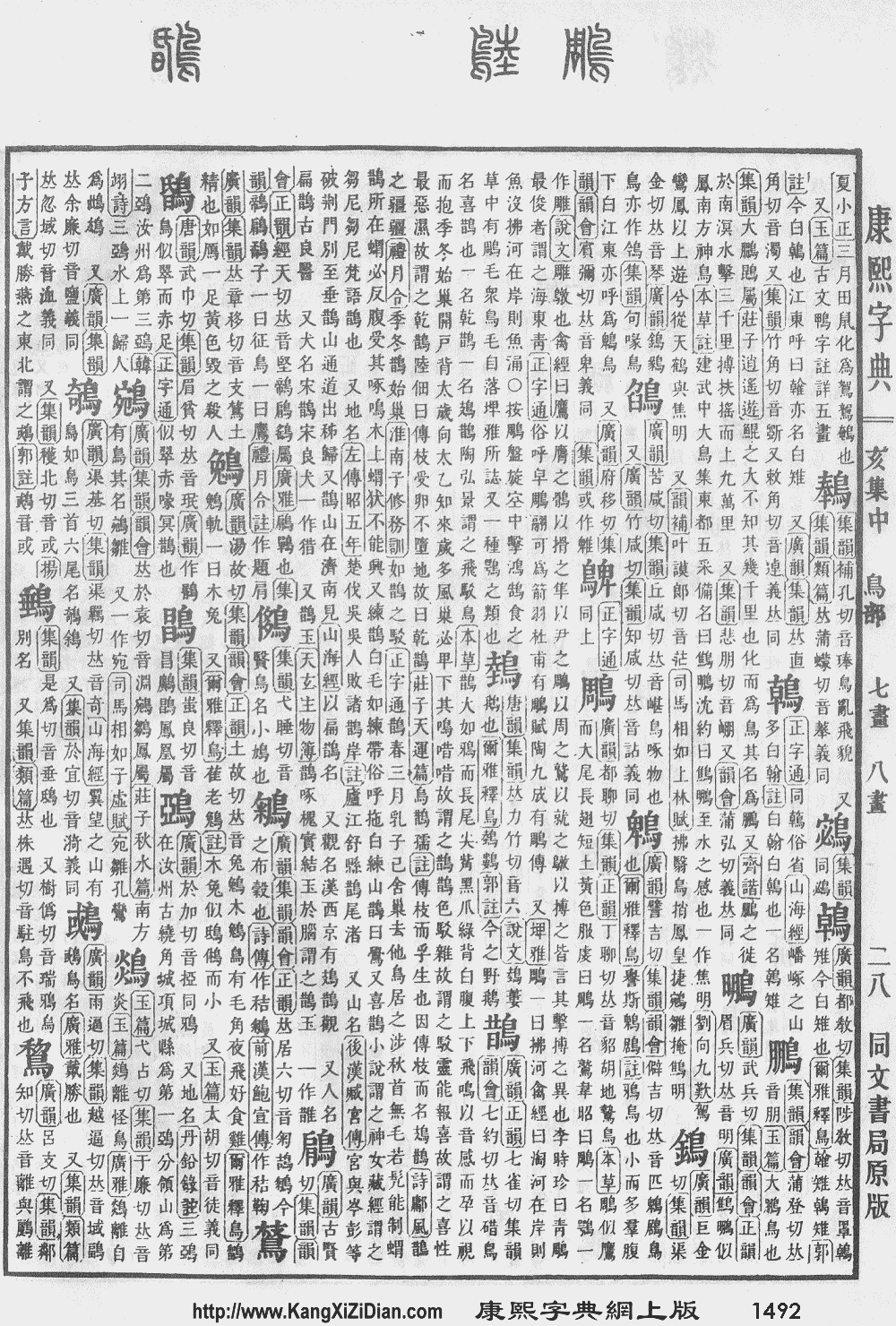
- Kangxi Dictionary: page 1492, character 13
- Dai Kanwa Jiten: character 47014
- Dae Jaweon: page 2022, character 22
- Hanyu Da Zidian (first edition): volume 7, page 4638, character 22
- Unihan data for U+9D72
Chinese
| trad. | 鵲 | |
|---|---|---|
| simp. | 鹊 | |
Glyph origin
Characters in the same phonetic series (昔) (Zhengzhang, 2003)
| Old Chinese | |
|---|---|
| 借 | *ʔsjaːɡs, *ʔsjaːɡ |
| 唶 | *ʔsjaːɡs |
| 藉 | *zjaːɡs, *zjaːɡ |
| 躤 | *zjaːɡs |
| 蜡 | *zraːɡs, *sʰaːɡs |
| 齰 | *zraːɡs, *zraːɡ |
| 醋 | *sʰaːɡs |
| 錯 | *sʰaːɡs, *sʰaːɡ |
| 措 | *sʰaːɡs |
| 厝 | *sʰaːɡs, *sʰaːɡ |
| 逪 | *sʰaːɡ |
| 剒 | *sʰaːɡ |
| 鵲 | *sʰaɡ |
| 碏 | *sʰaɡ |
| 踖 | *sʰaɡ, *ʔsjaːɡ, *zjaːɡ |
| 趞 | *sʰaɡ |
| 皵 | *sʰaɡ, *sʰjaːɡ |
| 舄 | *sʰjaːɡ, *sʰaɡ, *sjaːɡ, *sjaːɡ |
| 斮 | *ʔsraɡ, *ʔsraːɡ |
| 簎 | *zraːwɢ, *sʰraːɡ, *zjaːɡ |
| 諎 | *ʔsraːɡ |
| 矠 | *sʰreːɡ, *zreːɡ |
| 庴 | *ʔsjaːɡ, *zjaːɡ |
| 籍 | *zjaːɡ |
| 耤 | *zjaːɡ |
| 猎 | *zjaːɡ |
| 昔 | *sjaːɡ |
| 惜 | *sjaːɡ |
| 腊 | *sjaːɡ |
| 焟 | *sjaːɡ |
| 棤 | *sjaːɡ |
Etymology
(This etymology is missing or incomplete. Please add to it, or discuss it at the Etymology scriptorium. Particularly: “onomatopoeic (同源字典補)? 'Altaic' (Starostin 2007) ?”)
Pronunciation
Definitions
鵲
- magpie
- 鶉之奔奔,鵲之彊彊。人之無良,我以為兄。 [Pre-Classical Chinese, trad.]
- From: The Classic of Poetry, c. 11th – 7th centuries BCE, translated based on James Legge's version
- Chún zhī bēnbēn, què zhī jiāngjiāng. Rén zhī wú liáng, wǒ yǐ wéi xiōng. [Pinyin]
- The quails run [in pairs]. The magpies fly [in pairs]. That man is not nice. I call him brother.
鹑之奔奔,鹊之彊彊。人之无良,我以为兄。 [Pre-Classical Chinese, simp.]
Compounds
Descendants
- ⇒ Zhuang: roeggacak
References
- “鵲”, in 漢語多功能字庫 (Multi-function Chinese Character Database), 香港中文大學 (the Chinese University of Hong Kong), 2014–
Japanese
Etymology 1
| Kanji in this term |
|---|
| 鵲 |
| かささぎ Hyōgaiji |
| kun’yomi |
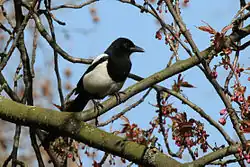
鵲 (kasasagi): a Eurasian magpie
From Old Japanese, first appears in the Nihon Shoki of 720 CE.[1]
Derivation unknown, theories include:
- The initial kasa- may be cognate with or a borrowing from an earlier form of Korean 까치 (kkachi, “magpie”).
- The final -sagi may be a reference to the white chest, alluding to the similar plumage of certain kinds of 鷺 (sagi, “heron, egret”).
- Alternatively, the final -sagi may derive from onomatopoeia, imitative of the bird's call.
- May be a corruption of 烏 (karasu, “crow”) + 鷺 (sagi, “heron, egret”):
- /karasu saɡi/ → */kasːaɡi/ → /kasasaɡi/
- May be a corruption of カラ (kara, onomatopoeia for cawing, seen in 烏 (karasu), “crow”) + 鷦鷯 (sasagi, “wren”, obsolete):
- /kara sasaɡi/ → /kasasaɡi/
- May be a corruption of カチカチ (kachikachi, onomatopoeia imitative of the bird's call) + 鷺 (sagi, “heron, egret”):
- /kat͡ɕikat͡ɕi saɡi/ → */kat̚t͡sasaɡi/ → /kasasaɡi/
Pronunciation
Usage notes
As with many terms that name organisms, this term is often spelled in katakana, especially in biological contexts (where katakana is customary), as カササギ.
Quotations
For quotations using this term, see Citations:鵲.
Derived terms
- 鵲の鏡 (kasasagi no kagami)
- 鵲の橋 (kasasagi no hashi)
- 鵲雁 (kasasagi gan)
Proper noun
鵲 • (Kasasagi)
- (historical) an 鴻 (Ōtori)-class torpedo boat of the Imperial Japanese Navy during World War II
- a surname
References
- Shōgaku Tosho (1988) 国語大辞典(新装版) [Unabridged Dictionary of Japanese (Revised Edition)] (in Japanese), Tōkyō: Shogakukan, →ISBN
- NHK Broadcasting Culture Research Institute, editor (1998), NHK日本語発音アクセント辞典 [NHK Japanese Pronunciation Accent Dictionary] (in Japanese), Tōkyō: NHK Publishing, →ISBN
- Matsumura, Akira, editor (2006), 大辞林 [Daijirin] (in Japanese), Third edition, Tōkyō: Sanseidō, →ISBN
- Kindaichi, Kyōsuke et al., editors (1997), 新明解国語辞典 [Shin Meikai Kokugo Jiten] (in Japanese), Fifth edition, Tōkyō: Sanseidō, →ISBN
Further reading
- Entry in Nihon Jiten (in Japanese)
Korean
Hanja
鵲 • (jak) (hangeul 작, revised jak, McCune–Reischauer chak, Yale cak)
- This term needs a translation to English. Please help out and add a translation, then remove the text
{{rfdef}}.
Vietnamese
This article is issued from Wiktionary. The text is licensed under Creative Commons - Attribution - Sharealike. Additional terms may apply for the media files.