伸
| ||||||||
Translingual
| Stroke order | |||
 | |||
Han character
伸 (Kangxi radical 9, 人+5, 7 strokes, cangjie input 人中田中 (OLWL), four-corner 25206, composition ⿰亻申)
Derived characters
- 𭈁, 𥆓, 𦕽, 𨁬, 敒, 𫣰, 𰁷
References
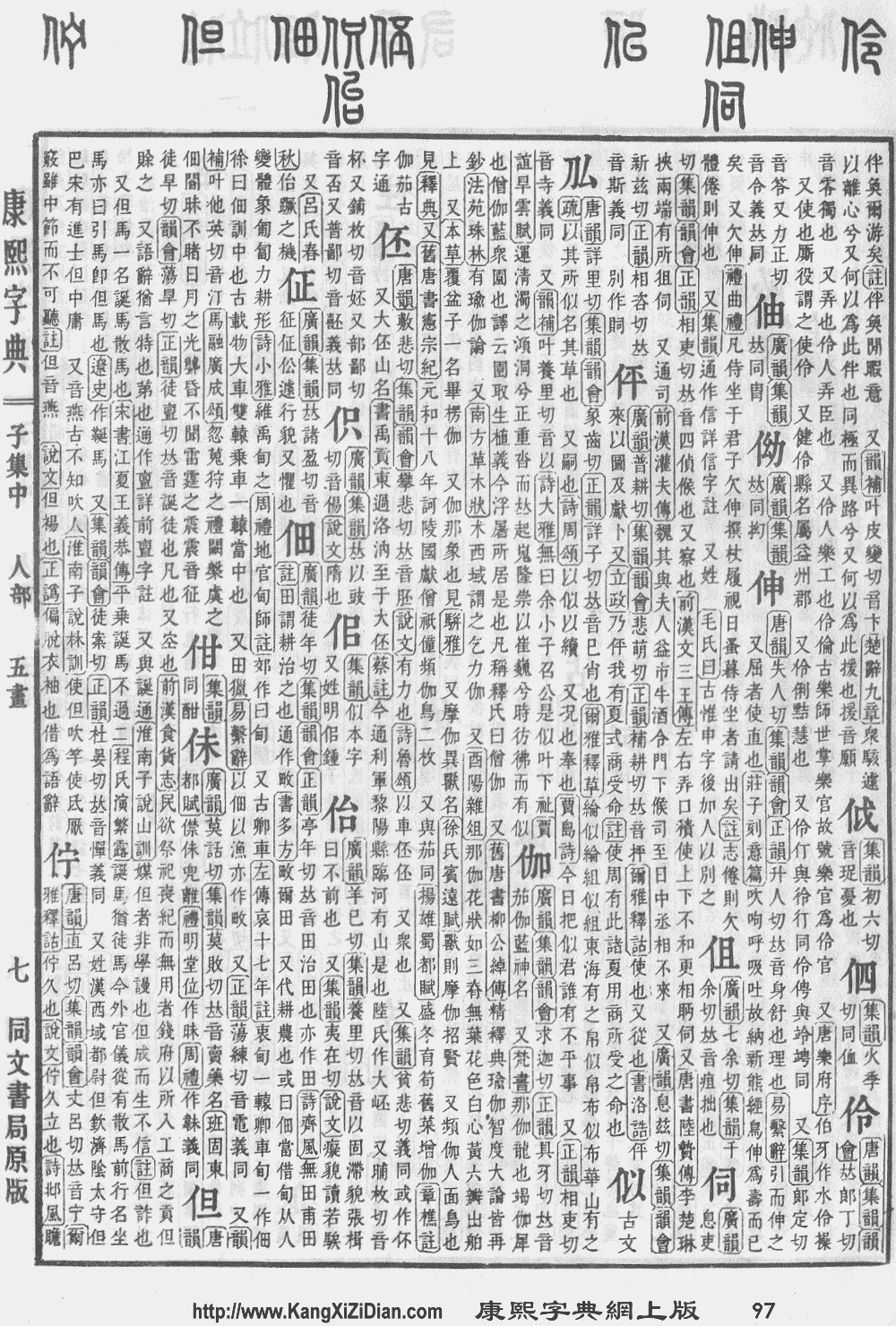
- Kangxi Dictionary: page 97, character 6
- Dai Kanwa Jiten: character 481
- Dae Jaweon: page 205, character 12
- Hanyu Da Zidian (first edition): volume 1, page 133, character 2
- Unihan data for U+4F38
Chinese
| simp. and trad. |
伸 | |
|---|---|---|
Glyph origin
| Historical forms of the character 伸 | |||
|---|---|---|---|
| |||
|
References: Mostly from Richard Sears' Chinese Etymology site (authorisation),
|


Characters in the same phonetic series (申) (Zhengzhang, 2003)
Phono-semantic compound (形聲/形声, OC *hlin) : semantic 亻 (“man”) + phonetic 申 (OC *hlin).
Pronunciation
Definitions
伸
Synonyms
Dialectal synonyms of 剩 (“to be left; to remain”) [map]
| Variety | Location | Words |
|---|---|---|
| Formal (Written Standard Chinese) | 剩, 剩餘 | |
| Mandarin | Taiwan | 剩 |
| Wanrong | 剩 | |
| Xi'an | 剩 | |
| Guilin | 剩 | |
| Nanjing | 剩 | |
| Cantonese | Guangzhou | 剩 |
| Hong Kong | 剩 | |
| Hakka | Miaoli (N. Sixian) | 伸 |
| Pingtung (Neipu; S. Sixian) | 伸 | |
| Hsinchu County (Zhudong; Hailu) | 伸 | |
| Taichung (Dongshi; Dabu) | 伸 | |
| Hsinchu County (Qionglin; Raoping) | 伸 | |
| Yunlin (Lunbei; Zhao'an) | 伸 | |
| Southern Min | Xiamen | 伸 |
| Quanzhou | 偆 | |
| Zhangzhou | 伸, 偆 | |
| Manila (Hokkien) | 伸 | |
| Wu | Shanghai | 剩, 挺, 挺剩 |
| Danyang | 剩 | |
| Ningbo | 剩 | |
Compounds
- 以屈求伸
- 仰首伸眉
- 伸冤 (shēnyuān)
- 伸出 (shēnchū)
- 伸出援手
- 伸剖
- 伸展 (shēnzhǎn)
- 伸張/伸张 (shēnzhāng)
- 伸張正義/伸张正义
- 伸志
- 伸懶腰/伸懒腰 (shēn lǎnyāo)
- 伸手 (shēnshǒu)
- 伸手牌
- 伸港 (Shēngǎng)
- 伸直 (shēnzhí)
- 伸眉
- 伸眉吐氣/伸眉吐气
- 伸縮/伸缩 (shēnsuō)
- 伸縮尺/伸缩尺
- 伸縮縫/伸缩缝
- 伸腰
- 伸腿 (shēntuǐ)
- 伸腿瞪眼
- 伸舌頭/伸舌头
- 伸鉤索鐵/伸钩索铁
- 伸長/伸长 (shēncháng)
- 伸開/伸开 (shēnkāi)
- 伸頭探腦/伸头探脑
- 伸頭縮頸/伸头缩颈
- 小屈大伸
- 屈一伸萬/屈一伸万
- 屈伸 (qūshēn)
- 平伸
- 延伸 (yánshēn)
- 握鉤伸鐵/握钩伸铁
- 有屈無伸/有屈无伸
- 欠伸 (qiànshēn)
- 眉頭不伸/眉头不伸
- 能屈能伸
- 蠖屈求伸
- 詘寸伸尺/诎寸伸尺
- 轉伸/转伸
- 顰伸/颦伸
References
- “伸”, in 漢語多功能字庫 (Multi-function Chinese Character Database), 香港中文大學 (the Chinese University of Hong Kong), 2014–
Japanese
Readings
Idioms
Related terms
- 伸す
- 伸べ広げる
Proper noun
| Kanji in this term |
|---|
| 伸 |
| しん Grade: S |
| on’yomi |
伸 • (Shin)
- a male given name
伸 • (Noburu)
- a male given name
Korean
Vietnamese
Han character
- This term needs a translation to English. Please help out and add a translation, then remove the text
{{rfdef}}.
References
This article is issued from Wiktionary. The text is licensed under Creative Commons - Attribution - Sharealike. Additional terms may apply for the media files.