伷
| ||||||||
Translingual
Han character
伷 (Kangxi radical 9, 人+5, 7 strokes, cangjie input 人中田 (OLW), composition ⿰亻由)
References
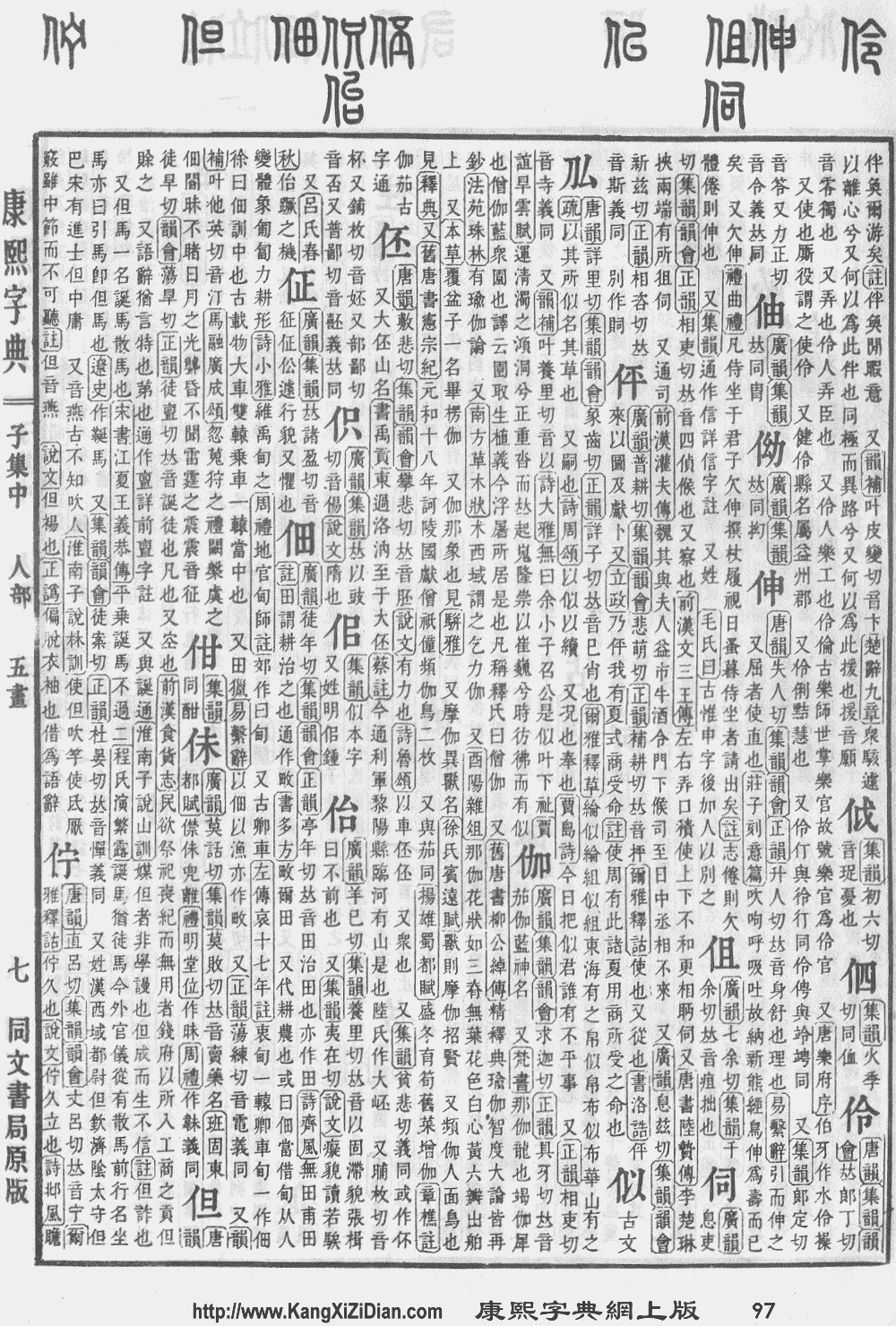
- Kangxi Dictionary: page 97, character 4
- Dai Kanwa Jiten: character 479
- Dae Jaweon: page 205, character 11
- Hanyu Da Zidian (first edition): volume 1, page 133, character 4
- Unihan data for U+4F37
Chinese
| simp. and trad. |
伷 | |
|---|---|---|
Glyph origin
Characters in the same phonetic series (由) (Zhengzhang, 2003)
| Old Chinese | |
|---|---|
| 袖 | *ljɯwɢs |
| 岫 | *ljɯwɢs |
| 牰 | *ljɯwɢs, *lɯwɢs |
| 抽 | *l̥ʰɯw |
| 妯 | *l̥ʰɯw, *l'ɯwɢ |
| 紬 | *l'ɯw |
| 怞 | *l'ɯw |
| 鮋 | *l'ɯw, *ɦljɯw, *lɯw |
| 菗 | *rlɯw |
| 宙 | *l'ɯwɢs |
| 胄 | *l'ɯwɢs |
| 冑 | *l'ɯwɢs |
| 伷 | *l'ɯwɢs |
| 駎 | *l'ɯwɢs |
| 油 | *lɯw, *lɯwɢs |
| 由 | *lɯw |
| 蚰 | *lɯw |
| 秞 | *lɯw |
| 邮 | *lɯw |
| 釉 | *lɯwɢs |
| 柚 | *lɯwɢs, *l'ɯwɢ |
| 鼬 | *lɯwɢs |
| 苖 | *l'ɯːwɢ, *l̥ʰɯwɢ |
| 笛 | *l'ɯːwɢ |
| 迪 | *l'ɯːwɢ |
| 頔 | *l'ɯːwɢ |
| 軸 | *l'ɯwɢ |
| 舳 | *l'ɯwɢ |
Pronunciation
Japanese
Kanji
伷
- This term needs a translation to English. Please help out and add a translation, then remove the text
{{rfdef}}.
This article is issued from Wiktionary. The text is licensed under Creative Commons - Attribution - Sharealike. Additional terms may apply for the media files.