停
| ||||||||
Translingual
Han character
停 (Kangxi radical 9, 人+9, 11 strokes, cangjie input 人卜口弓 (OYRN), four-corner 20221, composition ⿰亻亭 or ⿰亻𠅘)
Derived characters
- 𠼵
References
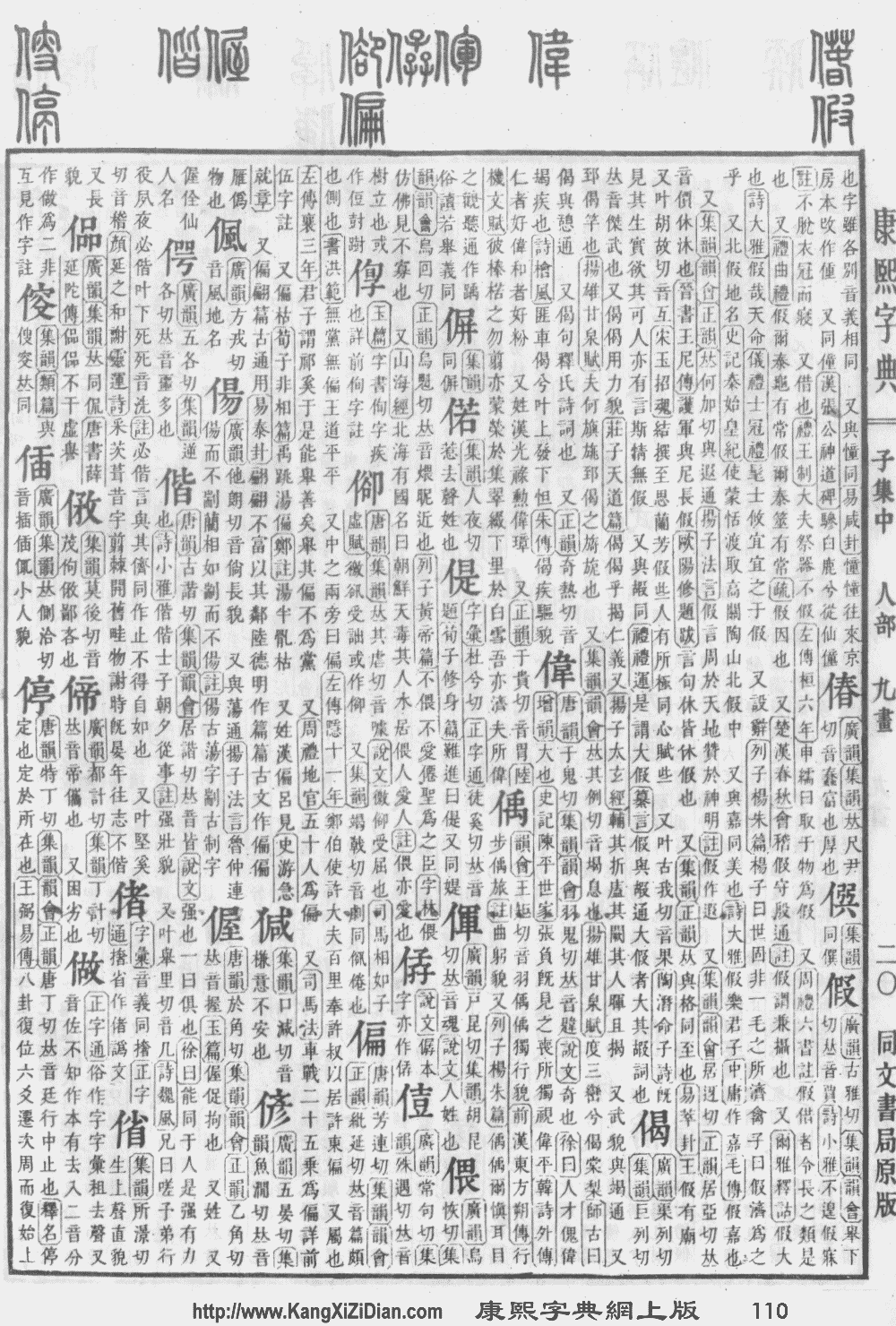
- Kangxi Dictionary: page 110, character 32
- Dai Kanwa Jiten: character 864
- Dae Jaweon: page 236, character 16
- Hanyu Da Zidian (first edition): volume 1, page 194, character 7
- Unihan data for U+505C
Chinese
| simp. and trad. |
停 | |
|---|---|---|
| 2nd round simp. | 仃 | |

Glyph origin
| Historical forms of the character 停 | ||||
|---|---|---|---|---|
| Shuowen Jiezi (compiled in Han) | Liushutong (compiled in Ming) | |||
| Small seal script | Transcribed ancient scripts | |||
 |
 | |||
| ||||
|
References: Mostly from Richard Sears' Chinese Etymology site (authorisation),
| ||||


Characters in the same phonetic series (丁) (Zhengzhang, 2003)
| Old Chinese | |
|---|---|
| 圢 | *tʰeːnʔ, *tʰeːŋʔ |
| 町 | *tʰeːnʔ, *tʰeːŋ, *tʰeːŋʔ, *deːŋʔ |
| 打 | *rteŋʔ, *teːŋʔ |
| 盯 | *rteŋʔ, *rdeŋ |
| 朾 | *rteːŋ, *rdeːŋ |
| 丁 | *rteːŋ, *teːŋ |
| 玎 | *rteːŋ, *teːŋ |
| 虰 | *rdeːŋ, *tʰeŋ, *teːŋ |
| 揨 | *rdeːŋ |
| 釘 | *teːŋ, *teːŋs |
| 靪 | *teːŋ, *teːŋʔ |
| 仃 | *teːŋ |
| 叮 | *teːŋ |
| 疔 | *teːŋ |
| 頂 | *teːŋʔ |
| 奵 | *teːŋʔ |
| 耵 | *teːŋʔ |
| 酊 | *teːŋʔ |
| 葶 | *teːŋʔ, *deːŋ |
| 矴 | *teːŋs |
| 訂 | *teːŋs, *tʰeːŋ, *deːŋʔ |
| 飣 | *teːŋs |
| 汀 | *tʰeːŋ, *tʰeːŋs |
| 艼 | *tʰeːŋ, *tʰeːŋʔ |
| 庁 | *tʰeːŋ |
| 婷 | *deːŋ |
| 停 | *deːŋ |
| 聤 | *deːŋ |
| 渟 | *deːŋ |
| 楟 | *deːŋ |
| 亭 | *deːŋ |
Phono-semantic compound (形聲/形声, OC *deːŋ) : semantic 亻 + phonetic 亭 (OC *deːŋ).
Etymology
From 亭 (tíng) (Schuessler, 2007). See there for more.
Pronunciation
Definitions
停
Synonyms
- (to stop):
- 中斷/中断 (zhōngduàn)
- 中止 (zhōngzhǐ)
- 休止 (xiūzhǐ)
- 停歇 (tíngxiē)
- 停止 (tíngzhǐ)
- 夭閼/夭阏 (yǎo'è)
- 干休 (gānxiū) (literary)
- 放煞 (Min Nan)
- 斷站/断站 (Xiamen Hokkien)
- 斷節/断节 (Xiamen Hokkien)
- 暫停/暂停 (zàntíng) (temporarily)
- 歇 (xiē)
- 止 (zhǐ) (literary, or in compounds)
- 止息 (zhǐxī)
- 止煞 (Xiamen Hokkien, Zhangzhou Hokkien)
- 瀦/潴 (Quanzhou Hokkien)
- 煞 (Hokkien)
- 煞手 (Hokkien)
- 甘休 (gānxiū) (to be willing to give up)
- 終止/终止 (zhōngzhǐ)
- 絕/绝 (jué) (literary, or in compounds)
- 罷/罢
- 罷休/罢休 (bàxiū) (chiefly in the negative)
- 罷手/罢手 (bàshǒu)
- 間斷/间断
- 須/须 (xū) (literary)
- 頓/顿
- (to stay):
- (to place): 停放 (tíngfàng)
- (reliable):
Compounds
- 一停兒/一停儿
- 下停
- 三停 (sāntíng)
- 三停刀
- 不停 (bùtíng)
- 不停住
- 不停當/不停当
- 久停久住
- 二停
- 五停心觀/五停心观
- 停一停
- 停住 (tíngzhù)
- 停俸
- 停停
- 停停當當/停停当当
- 停停脫脫/停停脱脱
- 停分
- 停刊 (tíngkān)
- 停勻/停匀
- 停喪/停丧
- 停妥
- 停妻再娶
- 停學/停学 (tíngxué)
- 停屍/停尸
- 停屍房/停尸房 (tíngshīfáng)
- 停屍間/停尸间 (tíngshījiān)
- 停工 (tínggōng)
- 停床
- 停役
- 停待
- 停徵/停征
- 停息 (tíngxī)
- 停戰/停战 (tíngzhàn)
- 停戰協定/停战协定
- 停擺/停摆 (tíngbǎi)
- 停放 (tíngfàng)
- 停杯
- 停柩
- 停格
- 停業/停业 (tíngyè)
- 停機坪/停机坪 (tíngjīpíng)
- 停歇 (tíngxiē)
- 停止 (tíngzhǐ)
- 停步 (tíngbù)
- 停水 (tíngshuǐ)
- 停泊 (tíngbó)
- 停滯/停滞 (tíngzhì)
- 停滯不前/停滞不前 (tíngzhìbùqián)
- 停潦
- 停火 (tínghuǒ)
- 停版
- 停產/停产 (tíngchǎn)
- 停用 (tíngyòng)
- 停留 (tíngliú)
- 停留長智/停留长智
- 停當/停当 (tíngdàng)
- 停眠整宿
- 停睇
- 停筆/停笔
- 停經/停经 (tíngjīng)
- 停罷/停罢
- 停職/停职 (tíngzhí)
- 停航 (tíngháng)
- 停表
- 停訊/停讯
- 停話/停话
- 停課/停课 (tíngkè)
- 停車/停车 (tíngchē)
- 停車位/停车位 (tíngchēwèi)
- 停車場/停车场 (tíngchēchǎng)
- 停車費/停车费 (tíngchēfèi)
- 停辛佇苦
- 停辦/停办 (tíngbàn)
- 停閉/停闭
- 停閑/停闲
- 停雲/停云
- 停雲慢步/停云慢步
- 停雲落月/停云落月
- 停電/停电 (tíngdiàn)
- 停靈/停灵 (tínglíng)
- 停靠 (tíngkào)
- 停頓/停顿 (tíngdùn)
- 停頭/停头
- 停食
- 停駛/停驶
- 停駐/停驻
- 停驂/停骖
- 勒停
- 勻停/匀停
- 叫停 (jiàotíng)
- 四停八當/四停八当
- 少停
- 居中調停/居中调停 (jūzhōngtiáotíng)
- 居停
- 居停主人
- 幹的停當/干的停当
- 悠停
- 手不停揮/手不停挥
- 放停
- 晝夜停勻/昼夜停匀
- 暫停/暂停 (zàntíng)
- 槃停
- 消停
- 漲停/涨停 (zhǎngtíng)
- 漲停板/涨停板
- 片刻不停
- 留職停薪/留职停薪
- 窩停主人/窝停主人
- 胸部停球
- 調停/调停 (tiáotíng)
- 調停人/调停人
- 跌停板
- 門不停賓/门不停宾
- 馬不停蹄/马不停蹄 (mǎbùtíngtí)
- 鸞停鵠峙/鸾停鹄峙
- 鸞鵠停峙/鸾鹄停峙
Descendants
- → Vietnamese: đừng (“do not”)
Further reading
- “停”, in 漢語多功能字庫 (Multi-function Chinese Character Database), 香港中文大學 (the Chinese University of Hong Kong), 2014–
- “Entry #6938”, in 臺灣閩南語常用詞辭典 [Dictionary of Frequently-Used Taiwan Minnan] (overall work in Mandarin and Hokkien), Ministry of Education, R.O.C., 2023.
Japanese
Readings
Korean
Etymology
(This etymology is missing or incomplete. Please add to it, or discuss it at the Etymology scriptorium. Particularly: “Middle Korean readings, if any”)
Pronunciation
- (SK Standard/Seoul) IPA(key): [t͡ɕʌ̹ŋ]
- Phonetic hangul: [정]
Vietnamese
This article is issued from Wiktionary. The text is licensed under Creative Commons - Attribution - Sharealike. Additional terms may apply for the media files.