特
| ||||||||
| ||||||||
Translingual
| Stroke order | |||
|---|---|---|---|
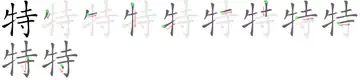 | |||
Han character
特 (Kangxi radical 93, 牛+6, 10 strokes, cangjie input 竹手土木戈 (HQGDI), four-corner 24541, composition ⿰牛寺)
References
- Kangxi Dictionary: page 700, character 20
- Dai Kanwa Jiten: character 20013
- Dae Jaweon: page 1113, character 3
- Hanyu Da Zidian (first edition): volume 3, page 1808, character 11
- Unihan data for U+7279

Chinese
| trad. | 特 | |
|---|---|---|
| simp. # | 特 | |
| alternative forms | 犆 | |
Glyph origin
Phono-semantic compound (形聲/形声, OC *dɯːɡ) : semantic 牛 (“ox”) + phonetic 寺 (OC *ljɯs) – large bull.
Etymology
There seem to be two main semantic fields: "bull" and "single; unique". It is unclear whether these two fields are related. Schuessler (2007) suggests a possible derivation of "bull" from "match", but "bull" seems to be the earlier sense. The "single; unique" sense could be an extension of "bull" due to its largeness (Li Xueqin, 2012).
In the "bull" sense, it is related to 犆 (OC *dɯɡ, “ox”) (Schuessler, 2007).
Wang (1982) relates the "three-year-animal" sense to 犢 (OC *l'oːɡ, “calf”); see there for more.
In the "single" sense, it is related to 直 (OC *dɯɡ, “simply; only”), 職 (OC *tjɯɡ, “simply; only”) (Schuessler, 2007). Wang (1982) relates it to 徒 (OC *l'aː) and 但 (OC *daːnʔ) in the "only" sense, as well as 獨 (OC *doːɡ, “single”) in the "single" sense, but see these entries for more.
Pronunciation
Definitions
特
- † bull; ox
- † cattle
- † (of animals, especially bull) male
- † one domestic animal
- † three-year-old animal
- 不狩不獵,胡瞻爾庭有縣特兮。 [Pre-Classical Chinese, trad.]
- From: The Classic of Poetry, c. 11th – 7th centuries BCE, translated based on James Legge's version
- Bù shòu bù liè, hú zhān ěr tíng yǒu xuán tè xī. [Pinyin]
- You do not follow the chase;
How do we see those three-year-olds hanging in your court-yards?
不狩不猎,胡瞻尔庭有县特兮。 [Pre-Classical Chinese, simp.]
- (literary) single; alone; by oneself
- † match; mate; spouse
- 髧彼兩髦,實維我特。 [Pre-Classical Chinese, trad.]
- From: The Classic of Poetry, c. 11th – 7th centuries BCE, translated based on James Legge's version
- Dàn bǐ liǎng máo, shí wéi wǒ tè. [Pinyin]
- With his two tufts of hair falling over his forehead,
He was my only one.
髧彼两髦,实维我特。 [Pre-Classical Chinese, simp.]
- † to stand tall
- special; unique; distinguished
- (literary) only; just
- specially; intentionally
- (colloquial) especially; outstandingly
- † in vain
- † unexpectedly; yet
- Short for 特務/特务 (tèwù, “special agent; spy”).
- (Mainland China) Short for 特克斯 (tèkèsī, “tex”).
- a surname
Synonyms
Compounds
- 丁等特考
- 不特 (bùtè)
- 丙等特考
- 乙等特考
- 亞特拉斯/亚特拉斯
- 亞特蘭大/亚特兰大 (yàtèlándà)
- 亨利福特
- 介特
- 伊斯特島/伊斯特岛
- 伏特 (fútè)
- 伏特加 (fútèjiā)
- 伏特計/伏特计 (fútèjì)
- 佛蒙特州
- 克勒特
- 加伏特
- 努瓦克肖特 (Nǔwǎkèxiàotè)
- 努納武特/努纳武特 (Nǔnàwǔtè)
- 勃朗特
- 匹特曼
- 卓特
- 厄魯特族/厄鲁特族
- 史特勞斯/史特劳斯
- 吐外特 (Tǔwàitè)
- 名特
- 名特優新/名特优新
- 吉特巴
- 哈姆雷特
- 土伯特
- 基爾特/基尔特 (jī'ěrtè)
- 外交特權/外交特权 (wàijiāo tèquán)
- 多來特巴格/多来特巴格 (Duōláitè Bāgé)
- 大書特書/大书特书 (dàshūtèshū)
- 大特寫/大特写
- 大錯特錯/大错特错 (dàcuòtècuò)
- 夸特 (kuātè)
- 奇特 (qítè)
- 奧特貝希/奥特贝希 (Àotèbèixī)
- 孤特
- 密斯特
- 寶特瓶/宝特瓶 (bǎotèpíng)
- 巴勒特
- 巴特那
- 布勒斯特
- 布特哈
- 布萊恩特/布莱恩特
- 布萊特/布莱特
- 希特勒 (Xītèlè)
- 席特拉灣/席特拉湾
- 幽特貝/幽特贝
- 底特律 (Dǐtèlǜ)
- 弗雷特 (Fúléitè)
- 強風特報/强风特报
- 彭特莫
- 怪特
- 惠特曼
- 拉巴特 (Lābātè)
- 文化特質/文化特质
- 斯普特尼克 (sīpǔtèníkè)
- 斯里賈亞瓦德納普拉科特/斯里贾亚瓦德纳普拉科特 (Sīlǐ Jiǎyàwǎdénàpǔlā Kētè)
- 曼徹斯特/曼彻斯特 (Mànchèsītè)
- 朱比特 (Zhūbǐtè)
- 李斯特 (Lǐsītè)
- 模特兒/模特儿
- 沙特 (Shātè)
- 沙達特/沙达特
- 波特 (Bōtè)
- 波特萊爾/波特莱尔
- 波特酒
- 特事特辦/特事特办 (tèshìtèbàn)
- 特令 (tèlìng)
- 特任
- 特使 (tèshǐ)
- 特例 (tèlì)
- 特來/特来 (tèlái)
- 特價/特价 (tèjià)
- 特價品/特价品
- 特優/特优
- 特兒/特儿
- 特准 (tèzhǔn)
- 特出 (tèchū)
- 特刊 (tèkān)
- 特別/特别 (tèbié)
- 特別來賓/特别来宾
- 特別刑法/特别刑法
- 特別助理/特别助理
- 特利可得
- 特別報導/特别报导
- 特別法/特别法
- 特別節目/特别节目
- 特別股/特别股
- 特別護士/特别护士
- 特別費/特别费
- 特別賣力/特别卖力
- 特別門診/特别门诊
- 特務/特务 (tèwù)
- 特勤 (tèqín)
- 特化 (tèhuà)
- 特區/特区 (tèqū)
- 特古
- 特命 (tèmìng)
- 特哥大
- 特地 (tèdì)
- 特型演員/特型演员
- 特報/特报
- 特多龍/特多龙 (tèduōlóng)
- 特大 (tèdà)
- 特定 (tèdìng)
- 特宥
- 特寫/特写 (tèxiě)
- 特寫鏡頭/特写镜头
- 特展
- 特工 (tègōng)
- 特強/特强
- 特徵/特征 (tèzhēng)
- 特性 (tèxìng)
- 特性美
- 特恩
- 特惠 (tèhuì)
- 特惠制度
- 特惠待遇
- 特惠關稅/特惠关税
- 特意 (tèyì)
- 特技 (tèjì)
- 特技鏡頭/特技镜头
- 特支
- 特攻隊/特攻队
- 特故
- 特效 (tèxiào)
- 特效藥/特效药 (tèxiàoyào)
- 特教 (tèjiào)
- 特有 (tèyǒu)
- 特權/特权 (tèquán)
- 特此 (tècǐ)
- 特殊 (tèshū)
- 特殊兒童/特殊儿童
- 特殊因素
- 特殊性 (tèshūxìng)
- 特殊性向
- 特殊才能
- 特殊效果 (tèshū xiàoguǒ)
- 特殊教育 (tèshū jiàoyù)
- 特殊營業/特殊营业
- 特派 (tèpài)
- 特洛伊城
- 特派員/特派员 (tèpàiyuán)
- 特為/特为
- 特煞
- 特特
- 特特意意
- 特特為為/特特为为
- 特獎/特奖
- 特甚 (tèshèn)
- 特產/特产 (tèchǎn)
- 特異/特异 (tèyì)
- 特異功能/特异功能 (tèyì gōngnéng)
- 特稱/特称 (tèchēng)
- 特種/特种 (tèzhǒng)
- 特種作戰/特种作战
- 特種兵/特种兵 (tèzhǒngbīng)
- 特種工藝/特种工艺 (tèzhǒng gōngyì)
- 特種文書/特种文书
- 特種考試/特种考试
- 特種部隊/特种部队 (tèzhǒng bùduì)
- 特種鋼/特种钢
- 特稿 (tègǎo)
- 特立
- 特立獨行/特立独行 (tèlìdúxíng)
- 特等 (tèděng)
- 特約/特约 (tèyuē)
- 特約商店/特约商店
- 特約演員/特约演员
- 特級/特级 (tèjí)
- 特考
- 特色 (tèsè)
- 特藏
- 特藝彩色/特艺彩色
- 特製/特制 (tèzhì)
- 特許/特许 (tèxǔ)
- 特許行業/特许行业
- 特許費/特许费
- 特警 (tèjǐng)
- 特貸/特贷
- 特質/特质 (tèzhì)
- 特賣/特卖 (tèmài)
- 特賣活動/特卖活动
- 特赦 (tèshè)
- 特赦令
- 特起
- 特輯/特辑 (tèjí)
- 特達/特达
- 特遣 (tèqiǎn)
- 特選/特选
- 特長/特长 (tècháng)
- 特餐
- 特骨
- 特體/特体
- 特高頻/特高频 (tè gāopín)
- 特高頻率/特高频率
- 特點/特点 (tèdiǎn)
- 獨特/独特 (dútè)
- 珪璋特達/珪璋特达
- 瑪特廖什卡/玛特廖什卡 (mǎtèliàoshíkǎ)
- 瓦特 (wǎtè)
- 瓦特表
- 用特
- 甲等特考
- 異特龍/异特龙
- 異軍特起/异军特起
- 白壁特
- 福斯特 (Fúsītè)
- 科威特 (Kēwēitè)
- 科威特市
- 經濟特區/经济特区 (jīngjì tèqū)
- 舒伯特 (Shūbótè)
- 艾略特
- 英特
- 英特邁往/英特迈往
- 莫札特 (Mòzhátè)
- 萊特兄弟/莱特兄弟
- 裴特
- 詭特/诡特
- 豪雨特報/豪雨特报
- 貝特/贝特
- 貝開特/贝开特
- 貝魯特/贝鲁特 (Bèilǔtè)
- 赫斯特 (Hèsītè)
- 邱比特 (Qiūbǐtè)
- 闊什薩特瑪/阔什萨特玛 (Kuòshísàtèmǎ)
- 阿爾考特/阿尔考特
- 阿特拉斯 (Ātèlāsī)
- 陪士特
- 霍普特曼
- 非特
- 魯特琴/鲁特琴 (lǔtèqín)
- 鹿特丹 (Lùtèdān)
Descendants
- → Bouyei: dag (“male (of animals); classifier for male animals”)
- → Proto-Southwestern Tai: *tʰɤkᴰ (“young male animal”)
- Thai: ถึก (tʉ̀k, “young ox; male water buffalo”)
- Lao: ເຖິກ (thœk, “male (of animals)”)
- → Proto-Vietic: *dək (“male”)
- Vietnamese: đực (“male (of animal); bull”)
- → Zhuang: daeg (“male (of animals); classifier for young males”)
References
- “特”, in 漢語多功能字庫 (Multi-function Chinese Character Database), 香港中文大學 (the Chinese University of Hong Kong), 2014–
Japanese
Readings
Korean
Etymology
From Middle Chinese 特 (MC dok, “special; male livestock”).
Compounds
- 특가 (特價, teukga)
- 특간 (特刊, teukgan)
- 특감 (特減, teukgam)
- 특강 (特講, teukgang)
- 특경 (特磬, teukgyeong)
- 특고 (特高, teukgo)
- 특공 (特功, teukgong)
- 특과 (特科, teukgwa)
- 특교 (特敎, teukgyo)
- 특구 (特區, teukgu)
- 특권 (特權, teukgwon)
- 특근 (特勤, teukgeun)
- 특급 (特急, teukgeup)
- 특급 (特級, teukgeup)
- 특급 (特給, teukgeup)
- 특기 (特技, teukgi)
- 특기 (特記, teukgi)
- 특념 (特念, teungnyeom)
- 특단 (特段, teukdan)
- 특달 (特達, teukdal)
- 특당 (特當, teukdang)
- 특대 (特大, teukdae)
- 특대 (特待, teukdae)
- 특등 (特等, teukdeung)
- 특례 (特例, teungnye)
- 특립 (特立, teungnip)
- 특매 (特賣, teungmae)
- 특면 (特免, teungmyeon)
- 특명 (特命, teungmyeong)
- 특묘 (特廟, teungmyo)
- 특무 (特務, teungmu)
- 특발 (特發, teukbal)
- 특배 (特配, teukbae)
- 특별 (特別, teukbyeol)
- 특보 (特報, teukbo)
- 특사 (特使, teuksa)
- 특사 (特賜, teuksa)
- 특사 (特赦, teuksa)
- 특산 (特産, teuksan)
- 특상 (特上, teuksang)
- 특상 (特賞, teuksang)
- 특색 (特色, teuksaek)
- 특생 (特牲, teuksaeng)
- 특서 (特書, teukseo)
- 특석 (特席, teukseok)
- 특선 (特選, teukseon)
- 특설 (特設, teukseol)
- 특성 (特性, teukseong)
- 특성 (特誠, teukseong)
- 특세 (特勢, teukse)
- 특소 (特小, teukso)
- 특수 (特殊, teuksu)
- 특수 (特秀, teuksu)
- 특수 (特需, teuksu)
- 특식 (特食, teuksik)
- 특실 (特室, teuksil)
- 특심 (特甚, teuksim)
- 특애 (特愛, teugae)
- 특약 (特約, teugyak)
- 특용 (特用, teugyong)
- 특우 (特遇, teugu)
- 특유 (特有, teugyu)
- 특융 (特融, teugyung)
- 특은 (特恩, teugeun)
- 특이 (特異, teugi)
- 특익 (特益, teugik)
- 특임 (特任, teugim)
- 특작 (特作, teukjak)
- 특장 (特長, teukjang)
- 특재 (特才, teukjae)
- 특재 (特載, teukjae)
- 특저 (特箸, teukjeo)
- 특전 (特典, teukjeon)
- 특전 (特電, teukjeon)
- 특점 (特點, teukjeom)
- 특정 (特定, teukjeong)
- 특제 (特製, teukje)
- 특제 (特除, teukje)
- 특종 (特種, teukjong)
- 특종 (特鐘, teukjong)
- 특주 (特酒, teukju)
- 특중 (特重, teukjung)
- 특지 (特志, teukji)
- 특지 (特旨, teukji)
- 특진 (特進, teukjin)
- 특질 (特質, teukjil)
- 특집 (特輯, teukjip)
- 특징 (特徵, teukjing)
- 특차 (特差, teukcha)
- 특채 (特採, teukchae)
- 특천 (特薦, teukcheon)
- 특청 (特請, teukcheong)
- 특출 (特出, teukchul)
- 특칭 (特稱, teukching)
- 특파 (特派, teukpa)
- 특품 (特品, teukpum)
- 특필 (特筆, teukpil)
- 특허 (特許, teukheo)
- 특현 (特懸, teukhyeon)
- 특혜 (特惠, teukhye)
- 특호 (特號, teukho)
- 특화 (特化, teukhwa)
- 특활 (特活, teukhwal)
- 특효 (特效, teukhyo)
- 기특 (奇特, giteuk)
- 독특 (獨特, dokteuk)
- 영특 (英特, yeongteuk)
- 하특 (何特, hateuk)
- 해특 (奚特, haeteuk)
- 특가법 (特加法, teukgabeop)
- 특경대 (特警隊, teukgyeongdae)
- 특공대 (特攻隊, teukgongdae)
- 특례법 (特例法, teungnyebeop)
- 특목고 (特目高, teungmokgo)
- 특소세 (特消稅, teuksose)
- 특시표 (特示標, teuksipyo)
- 특이질 (特異質, teugijil)
- 특정물 (特定物, teukjeongmul)
- 특파원 (特派員, teukpawon)
- 특허권 (特許權, teukheogwon)
- 특화점 (特火點, teukhwajeom)
- 특효약 (特效藥, teukhyoyak)