釘
| ||||||||
Translingual
Han character
釘 (Kangxi radical 167, 金+2, 10 strokes, cangjie input 金一弓 (CMN), four-corner 81120, composition ⿰釒丁)
References
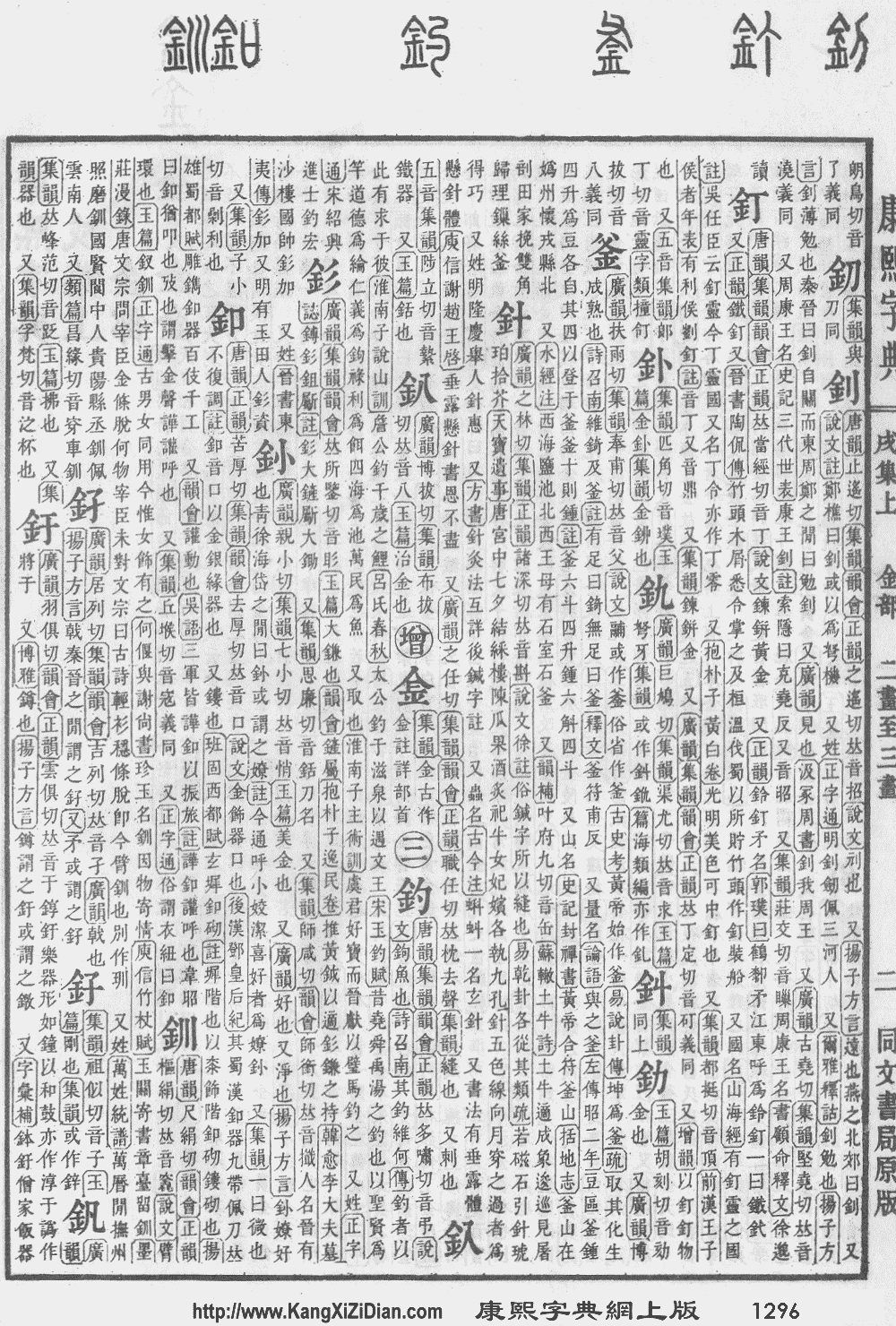
- Kangxi Dictionary: page 1296, character 3
- Dai Kanwa Jiten: character 40159
- Dae Jaweon: page 1799, character 6
- Hanyu Da Zidian (first edition): volume 6, page 4169, character 2
- Unihan data for U+91D8
Chinese
Glyph origin
| Historical forms of the character 釘 | |
|---|---|
| Shuowen Jiezi (compiled in Han) | Liushutong (compiled in Ming) |
| Small seal script | Transcribed ancient scripts |
 |
 |
| Old Chinese | |
|---|---|
| 圢 | *tʰeːnʔ, *tʰeːŋʔ |
| 町 | *tʰeːnʔ, *tʰeːŋ, *tʰeːŋʔ, *deːŋʔ |
| 打 | *rteŋʔ, *teːŋʔ |
| 盯 | *rteŋʔ, *rdeŋ |
| 朾 | *rteːŋ, *rdeːŋ |
| 丁 | *rteːŋ, *teːŋ |
| 玎 | *rteːŋ, *teːŋ |
| 虰 | *rdeːŋ, *tʰeŋ, *teːŋ |
| 揨 | *rdeːŋ |
| 釘 | *teːŋ, *teːŋs |
| 靪 | *teːŋ, *teːŋʔ |
| 仃 | *teːŋ |
| 叮 | *teːŋ |
| 疔 | *teːŋ |
| 頂 | *teːŋʔ |
| 奵 | *teːŋʔ |
| 耵 | *teːŋʔ |
| 酊 | *teːŋʔ |
| 葶 | *teːŋʔ, *deːŋ |
| 矴 | *teːŋs |
| 訂 | *teːŋs, *tʰeːŋ, *deːŋʔ |
| 飣 | *teːŋs |
| 汀 | *tʰeːŋ, *tʰeːŋs |
| 艼 | *tʰeːŋ, *tʰeːŋʔ |
| 庁 | *tʰeːŋ |
| 婷 | *deːŋ |
| 停 | *deːŋ |
| 聤 | *deːŋ |
| 渟 | *deːŋ |
| 楟 | *deːŋ |
| 亭 | *deːŋ |
Phono-semantic compound (形聲/形声, OC *teːŋ, *teːŋs) : semantic 金 (“metal”) + phonetic 丁 (OC *rteːŋ, *teːŋ).
Some theorize that 丁 (OC *teːŋ) originally meant “nail”. After subsequently losing this original meaning, the character 釘/钉 was created to represent “nail” with the semantic element 金 (“metal”) added.
Etymology 1
Related to 定 (OC *teːŋs, *deːŋs) (Baxter and Sagart, 2014). Pronunciation 2 is a denominal verb derivation of pronunciation 1.
Definitions
釘
Compounds
- 吃釘子/吃钉子
- 吃釘板/吃钉板
- 命釘/命钉
- 咬釘嚼鐵/咬钉嚼铁
- 圖釘/图钉 (túdīng)
- 埋釘子/埋钉子
- 安釘子/安钉子
- 打補釘/打补钉
- 拔釘鎚/拔钉锤
- 撞釘子/撞钉子
- 斬釘截鐵/斩钉截铁 (zhǎndīngjiétiě)
- 木螺釘/木螺钉
- 橡皮釘子/橡皮钉子
- 玉釘/玉钉
- 眼中釘/眼中钉 (yǎnzhōngdīng)
- 碰釘子/碰钉子 (pèngdīngzi)
- 螞蝗釘/蚂蝗钉
- 螺絲釘/螺丝钉 (luósīdīng)
- 螺釘/螺钉 (luódīng)
- 軟釘子/软钉子
- 道釘/道钉
- 釘問/钉问
- 釘嘴鐵舌/钉嘴铁舌
- 釘子/钉子 (dīngzi)
- 釘子戶/钉子户 (dīngzihù)
- 釘耙/钉耙 (dīngpá)
- 釘鈀/钉钯
- 釘鈴鐺鋃/钉铃铛锒
- 釘錘/钉锤
- 釘鞋/钉鞋
- 釘頭/钉头 (dīngtóu)
- 釘頭文字/钉头文字
- 釘頭果/钉头果
- 釘齒耙/钉齿耙 (dīngchǐpá)
- 鉚釘/铆钉 (mǎodīng)
- 鉸釘/铰钉
- 鐵釘/铁钉 (tiědīng)
- 長命釘/长命钉
- 關了釘兒/关了钉儿
- 雞爪釘/鸡爪钉
Synonyms
| Variety | Location | Words |
|---|---|---|
| Classical Chinese | 死, 亡, 歿, 卒 | |
| Formal (Written Standard Chinese) | 死, 死亡, 亡故, 喪生, 喪命, 去世 †, 過世 †, 逝世 †, 離世 †, 下世 †, 不在 †, 過去 †, 仙逝 †, 歸天 †, 歸西 †, 升天 †, 作古 †, 長眠 †, 閉眼 †, 故去 †, ‡, 故世 †, ‡, 一命嗚呼 | |
| Mandarin | Beijing | 死, 故去 †, 老 †, ‡, 踹腿 ¤, 踹腿兒 ¤, 踹 ¤, 回姥姥家 ¤, 毛兒提 Hui |
| Taiwan | 死, 過世 † | |
| Harbin | 死, 老 †, ‡, 伸腿兒 ¤, 伸腿 ¤, 蹬腿兒 ¤, 奔兒咕 ¤, 桿兒屁 §, 桿兒細 §, 吹燈拔蠟 | |
| Yantai (Muping) | 死, 老 †, ‡, 上西天 § | |
| Jinan | 死, 歿, 過去 †, 老 †, ‡, 不在 †, ‡, 王八 §, 完蛋, 完錢, 完活, 無常 Hui, 歸主 Hui, 歸真 Hui | |
| Luoyang | 死, 過去, 過世, 下世, 亡故, 不在, 升天, 去世 †, 老 †, ‡, 擱那兒 ¤ | |
| Wanrong | 死, 歿, 老 †, ‡ | |
| Xi'an | 死, 不在 †, 老 †, ‡, 無常 Hui | |
| Yinchuan | 死, 走 †, 歿 Hui, 歸真 Hui, 冒提 Hui, 口喚 Hui, 無常 Hui, 完 Hui | |
| Lanzhou | 死, 過世 †, 緩下 †, 躺下 † | |
| Xining | 歿 | |
| Ürümqi | 死, 過世 †, 不在 † | |
| Wuhan | 死, 過身 †, 去 †, 老 †, ‡, 去回 ¤, 翹辮子 ¤, 翹 ¤, 瓜碼子 ¤, 瓜 ¤, 西皮 | |
| Chengdu | 死, 過去 †, 不在 †, 去 †, 過世 †, 老 †, ‡, 撬桿兒 §, 撬桿 §, 翹辮子 §, 見馬克思, 歸天, 去陰國, 爬高煙囪, 落氣, 冰凊, 沒脈 | |
| Guiyang | 死, 過世 †, 成神 †, ‡, 百年歸天 †, ‡, 嗚呼 ¤ | |
| Liuzhou | 死, 沒得脈, 過世 †, 過身 †, 沒在 †, 哦嚄 | |
| Yangzhou | 死, 不在 †, 走 †, 家去吃去 ¤, 家去 ¤, 翹辮子 ¤, 翹 ¤, 駝條 § | |
| Nanjing | 死, 過世 †, 歸天 †, ‡, 不在 †, 嗝兒得 ¤, 翹辮子 ¤ | |
| Hefei | 死, 不在 †, 老 † | |
| Singapore | 死, 死掉, 死翹翹, 過世 †, 去世 †, 上天堂 †, 賣鹹鴨蛋 † | |
| Cantonese | Guangzhou | 死, 過身 †, 過世 †, 老 †, ‡, 百年歸老 †, ‡, 去別有天 †, ¤, 去大煙筒 †, ¤, 瓜 ¤, 瓜老襯 ¤, 收檔 ¤, 攞竇 ¤, 進竇 §, 瓜竇, 直, 瓜直, 死直, 攤直, 雙腳撐直, 伸直腳, 拉柴, 瓜柴, 褸席, 歸西, 歸天, 食黃泥, 入黃泥窿, 入窿, 玩完, 嫌米貴, 瞇埋眼, 一 argot |
| Hong Kong | 死, 過身 †, 走 †, 香 †, 去 †, 唔喺度 †, 百年歸老 †, 賣鹹鴨蛋 †, 兩腳一伸 †, 仙遊 †, 拜拜 †, 去閻羅王處報到 †, 瓜 ¤, 瓜老襯 ¤, 拉柴, 瓜柴, 釘蓋, 釘, 直, 歸西, 玩完, ham | |
| Hong Kong (San Tin Weitou) | 過身 | |
| Hong Kong (Kam Tin Weitou) | 過身 | |
| Hong Kong (Ting Kok) | 過身, 死 | |
| Hong Kong (Tung Ping Chau) | 過身 | |
| Macau | 過身, 去 | |
| Guangzhou (Panyu) | 過身, 死 | |
| Guangzhou (Huashan, Huadu) | 死 | |
| Guangzhou (Conghua) | 過身, 死 | |
| Guangzhou (Zengcheng) | 去歸, 過身 | |
| Foshan | 過身, 死 | |
| Foshan (Shatou, Nanhai) | 死, 過身 | |
| Foshan (Shunde) | 過身 | |
| Foshan (Sanshui) | 過身 | |
| Foshan (Mingcheng, Gaoming) | 死 | |
| Zhongshan (Shiqi) | 過身 | |
| Zhuhai (Qianshan) | 死 | |
| Zhuhai (Doumen, Shangheng Tanka) | 過身, 死 | |
| Zhuhai (Doumen) | 死, 過身 | |
| Jiangmen (Baisha) | 過身, 死 | |
| Jiangmen (Xinhui) | 死, 過身 | |
| Taishan | 死, 善, 去 | |
| Kaiping (Chikan) | 死, 登仙 | |
| Enping (Niujiang) | 過身, 死 | |
| Heshan (Yayao) | 死 | |
| Dongguan | 死, 老 †, 去返 †, 去舊時嗰處 †, 視埋眼 †, 伸直腳 †, 入罌 †, 拉柴 §, 去大煙筒 § | |
| Shenzhen (Shajing, Bao'an) | 死, 過身 | |
| Yangjiang | 死, 過輩 †, 老 †, ‡, 老大 †, ‡ | |
| Singapore (Guangfu) | 死, 過身 † | |
| Gan | Nanchang | 死, 過世 †, 老 † |
| Lichuan | 死 | |
| Pingxiang | 死, 過 †, 走路 †, 老 †, ‡, 去 | |
| Hakka | Meixian | 死, 老, 過身 †, 消 †, 老壽 †, ‡ |
| Huizhou (Huicheng Bendihua) | 過身, 香 † | |
| Dongguan (Qingxi) | 過身, 死 | |
| Shenzhen (Shatoujiao) | 死, 過身 | |
| Zhongshan (Nanlang Heshui) | 死 | |
| Conghua (Lütian) | 死, 過身 | |
| Yudu | 死, 過世 †, 過套 †, 過身 †, 轉去 †, 轉該背 †, 歸仙 †, 轉老外婆裡 ¤ | |
| Miaoli (N. Sixian) | 死, 過身 †, 往生 † | |
| Pingtung (Neipu; S. Sixian) | 死, 過身 †, 往生 † | |
| Hsinchu County (Zhudong; Hailu) | 死, 過身 †, 往生 † | |
| Taichung (Dongshi; Dabu) | 死, 過身 †, 往生 † | |
| Hsinchu County (Qionglin; Raoping) | 死, 過身 †, 往生 † | |
| Yunlin (Lunbei; Zhao'an) | 死, 過身 † | |
| Hong Kong | 過身, 老 | |
| Huizhou | Jixi | 死, 過世 †, 過輩 †, 過身 †, 不在 †, 過老 §, 過邊 §, 進棺材 §, 進風水 §, 翹扁 §, ¤ |
| Jin | Taiyuan | 死, 沒啦 †, 走 †, 過去 †, 老 †, ‡, 老客 †, ‡ |
| Xinzhou | 死, 回老家 †, 硬 §, 㞗朝天 of a man, vulgar, 倒蕎麥皮 | |
| Northern Min | Jian'ou | 死, 過身 †, 老 †, ‡ |
| Eastern Min | Fuzhou | 死, 過去 †, 過世 †, 過後 †, 歸西 †, 百歲 †, 老去 †, ‡, 堯街去 ¤, 堯生去 ¤, 溜翹 ¤, 殂 ¤, 去算米數 ¤, 去外媽食齋 ¤, 去外媽 ¤, 去䁐廬山 ¤, 去厝去 ¤, 睏長暝眠 ¤, 翹齋 ¤, 揭兜去 ¤, 拔直去 ¤, 上天去 ¤, 生去 ¤, 𣪟去 ¤, 䁐松柏樹 ¤, 䁐松柏 ¤, 轉祖 § |
| Southern Min | Xiamen | 死, 過身 †, 過氣 †, 百歲 †, 百年 †, 百歲年老 †, 行去 †, 無去 †, 㾀 †, 老去 †, ‡, 老咯 †, ‡, 蟯 ¤, 蟯歹 ¤, 蟯癱 ¤, 行雞 ¤, 馬滴 § |
| Quanzhou | 死, 過身 †, 過氣 †, 百歲 †, 百年 †, 無去 †, 老去 †, ‡, 老咯 †, ‡, 行雞 ¤, 馬滴 § | |
| Zhangzhou | 死, 過身 †, 過氣 †, 百歲 †, 百年 †, 百歲年老 †, 行去 †, 無去 †, 起身 †, 老去 †, ‡, 老咯 †, ‡, 蟯 ¤, 蟯歹 ¤, 蟯癱 ¤, 行雞 ¤, 誆牽 §, 㾀 §, 㾀歹 §, 馬滴 § | |
| Taipei | 死去, 老 †, 過身 † | |
| New Taipei (Sanxia) | 死去, 老去 †, 往生 †, 過身 † | |
| Kaohsiung | 死去, 老去 †, 行去 †, 往生 †, 無佇咧 †, 過身 †, 轉去 † | |
| Yilan | 死去, 老去 †, 往生 †, 無佇咧 †, 過身 †, 過往 † | |
| Changhua (Lukang) | 死去, 老 †, 無去 †, 過身 †, 轉去 † | |
| Taichung | 死去, 往生 †, 過身 † | |
| Tainan | 死去, 老去 †, 行去 †, 往生 †, 無佇咧 †, 過身 †, 轉去 † | |
| Hsinchu | 曲去, 去咯 †, 往生 †, 過身 †, 老去 † | |
| Kinmen | 死去, 往生 †, 過身 †, 行去 † | |
| Penghu (Magong) | 死去, 往生 †, 過身 †, 老去 † | |
| Singapore (Hokkien) | 死, 馬滴, 死翹翹, 過身 †, 百年 †, 百歲 †, 過氣 †, 起車 †, 老去 †, 老咯 †, 行去 †, 蟯去 †, 吭跤翹 †, 交登記 † | |
| Manila (Hokkien) | 死, 死去, 過面 †, 過身 † | |
| Chaozhou | 死, 過身 †, 過世 † | |
| Jieyang | 過身, 吭跤翹, 吭翹 | |
| Singapore (Teochew) | 死, 過身 | |
| Leizhou | 死, 過世 †, 過輩 †, 過目焗 ¤, 直筒 §, 刮薯減米 § | |
| Haikou | 死, 過層 †, ‡, 老 †, ‡, 貓使 § | |
| Singapore (Hainanese) | 死 | |
| Zhongshan Min | Shaxi (Longdu) | 死 |
| Southern Pinghua | Nanning (Tingzi) | 死, 瓜老襯, 過世, 歸西 |
| Wu | Shanghai | 死, 故 †, 過世 †, 嘸沒 †, 一腳去 †, 翹辮子 §, ¤, 彈老三 §, 翹老三 § |
| Shanghai (Chongming) | 死, 老 †, 故 †, 翹辮子 ¤ | |
| Suzhou | 死, 壞, 去, 過世 †, 翹辮子 § | |
| Danyang | 死 | |
| Hangzhou | 死, 故 †, 過世 †, 翹辮兒 ¤, 到龍駒塢去 | |
| Ningbo | 死, 翹辮子 §, 過世 †, 嘸沒 †, 死脫 §, 燂茶, 山裡去, 吃豆腐羹, 嘸沒來的 †, 老 † | |
| Wenzhou | 死, 冇 †, 過輩 †, ‡, 蹻 ¤ | |
| Jinhua | 死, 過世 †, 過輩 †, 弗在 †, 老 †, ‡ | |
| Xiang | Changsha | 死, 過 †, 去 †, 瓜, 彈, 彈四郎 |
| Loudi | 死, 過世 †, 故 †, 上岸 † | |
| Shuangfeng | 死, 過世 †, 故 † | |
| Note | † - euphemistic; ‡ - usually of the elderly; ¤ - humorous; § - derogatory/disrespectful | |
References
- “釘”, in 漢語多功能字庫 (Multi-function Chinese Character Database), 香港中文大學 (the Chinese University of Hong Kong), 2014–
- “Entry #6812”, in 臺灣閩南語常用詞辭典 [Dictionary of Frequently-Used Taiwan Minnan] (overall work in Mandarin and Hokkien), Ministry of Education, R.O.C., 2023.
Japanese
Readings
Etymology
| Kanji in this term |
|---|
| 釘 |
| くぎ Jinmeiyō |
| kun’yomi |
From Old Japanese. First cited to the Man'yōshu of circa 759 CE, with the phonetic man'yōgana spelling 久枳.[1] From Proto-Japonic *kunki.
Noun
釘 • (kugi)
- a nail; a spike made of metal or hard material used to stick something
- 釘を打つ
- kugi o utsu
- to drive in a nail
- 釘を打つ
References
- “釘”, in 日本国語大辞典 (Nihon Kokugo Daijiten, “Nihon Kokugo Daijiten”) (in Japanese), concise edition, Tōkyō: Shogakukan, 2000
Korean
Hanja
釘 • (jeong) (hangeul 정, revised jeong, McCune–Reischauer chŏng, Yale ceng)
- This term needs a translation to English. Please help out and add a translation, then remove the text
{{rfdef}}.